



What Is a Cetacean? Types of Whales, Dolphins, and Porpoises Explained
Cetaceans are amazing marine mammals that include whales, dolphins, and porpoises. They live completely in water but breathe air just like humans. Known for their intelligence, strong social bonds, and powerful swimming skills, cetaceans are some of the most fascinating animals in the ocean. From the gigantic blue whale to the playful dolphin, these creatures show incredible adaptations for life in the sea. Let’s explore important cetacean facts, habitat, diet, characteristics, and more.
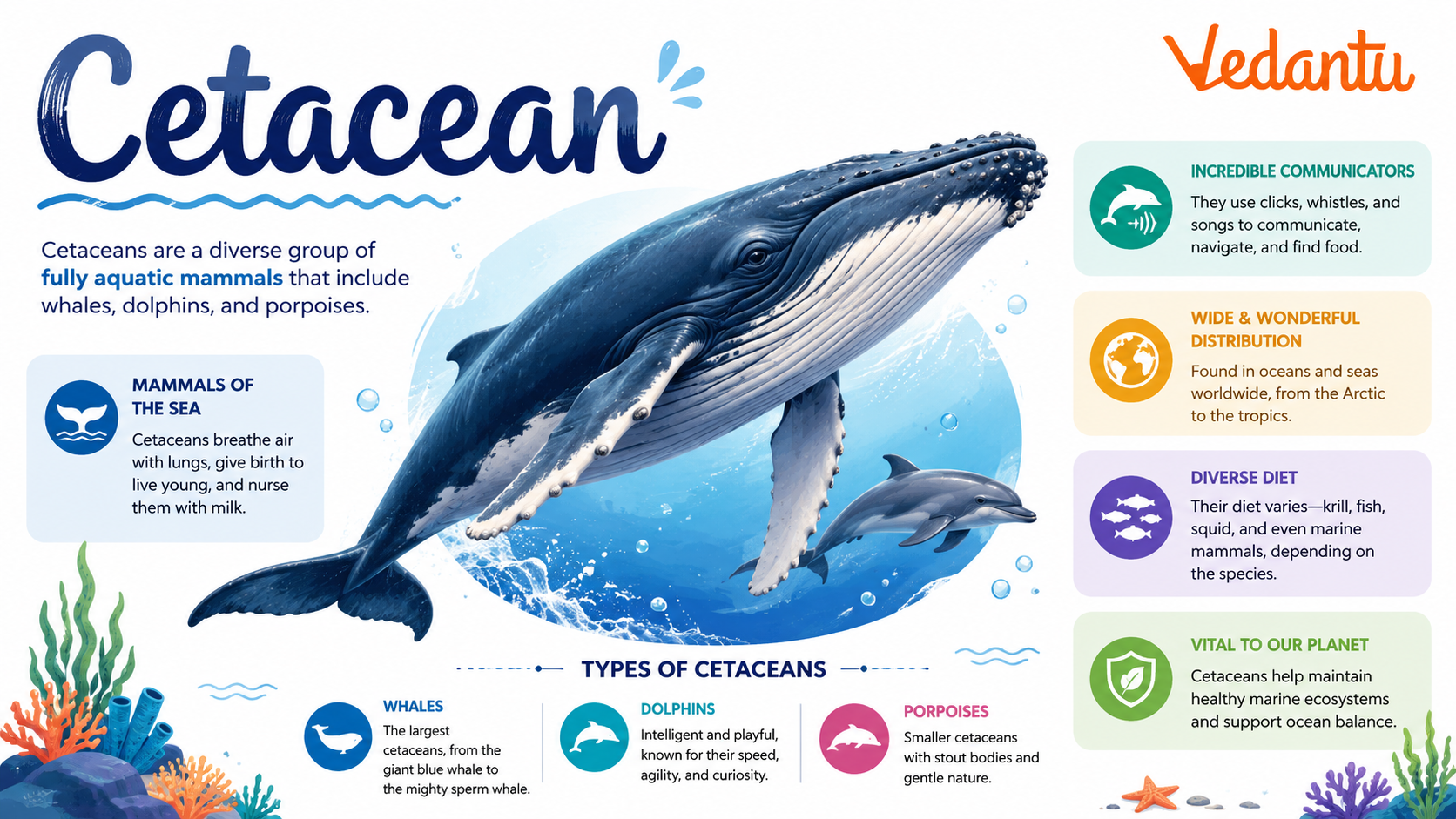
Quick Facts About Cetaceans
| Feature | Details |
|---|---|
| Animal Group | Mammal |
| Main Types | Whales, Dolphins, Porpoises |
| Scientific Order | Cetacea |
| Habitat | Oceans and some large rivers |
| Diet | Carnivorous (fish, squid, krill) |
| Lifespan | 20 to 100+ years (varies by species) |
| Breathing | Through blowhole on top of head |
| Conservation Status | Many species endangered |
Appearance and Physical Characteristics
- Streamlined, torpedo-shaped body for fast swimming.
- Smooth skin with little or no hair.
- Front limbs changed into flippers.
- Tail flukes move up and down to swim.
- Blowhole on top of the head for breathing.
- Thick layer of fat called blubber to stay warm.
Cetacean Habitat and Distribution
- Found in all major oceans of the world.
- Some species live in rivers (like the Amazon river dolphin).
- Prefer coastal waters, open oceans, or deep sea depending on species.
- Migrate long distances for feeding and breeding.
Diet and Feeding Habits
The cetacean diet depends on the type of species. All cetaceans are carnivores.
Two Main Feeding Groups
Have baleen plates instead of teeth. They filter tiny krill and plankton from water.
Have sharp teeth. They hunt fish, squid, and sometimes other marine animals.
Behaviour and Lifestyle
- Very social animals, especially dolphins.
- Live in groups called pods.
- Communicate using clicks, whistles, and songs.
- Some whales sing complex songs that travel long distances underwater.
- Highly intelligent and capable of problem-solving.
Sound and Communication
- Produce clicking sounds.
- Sound waves bounce back from objects.
- Helps them detect prey and obstacles.
Cetacean Life Cycle
- Birth: Female gives birth to a live calf in water.
- Calf Stage: Baby drinks mother’s milk and stays close for protection.
- Juvenile Stage: Learns hunting and social skills.
- Adult Stage: Reaches maturity and reproduces.
Types and Diversity of Cetaceans
Largest animal on Earth.
Known for beautiful songs.
Intelligent and playful.
Powerful top predator.
Importance and Role in Nature
- Help maintain balance in marine food chains.
- Whale waste supports ocean plankton growth.
- Important for marine biodiversity.
- Attract eco-tourism and support coastal economies.
Amazing Cetacean Facts
Interesting Facts About Cetaceans
- They evolved from land mammals millions of years ago.
- Their closest land relatives are hippos.
- They must come to the surface to breathe.
- Each dolphin has a unique whistle like a name.
Fun Facts for Kids
- Baby whales are called calves.
- Some dolphins love to surf ocean waves.
- Whales spout water from their blowholes.
- They cannot breathe underwater like fish.
- Cetaceans are warm-blooded animals.
FAQs on Cetacean Guide: Meaning, Species, and Ocean Adaptations
1. What is a cetacean?
A cetacean is a marine mammal that includes whales, dolphins, and porpoises.
- Cetacea is the scientific order of ocean mammals.
- They live fully in water but breathe air with lungs.
- Examples include blue whales, orcas, and bottlenose dolphins.
- They are warm-blooded and give birth to live young.
2. What are the main types of cetaceans?
There are two main types of cetaceans based on how they eat.
- Baleen whales (Mysticeti) – filter small food like krill using baleen plates.
- Toothed whales (Odontoceti) – have teeth and hunt fish or squid.
- Examples: humpback whales (baleen) and dolphins (toothed).
3. How do cetaceans breathe underwater?
Cetaceans cannot breathe underwater and must come to the surface for air.
- They breathe through a blowhole on top of their head.
- They hold their breath while diving.
- Some whales can stay underwater for over an hour.
- They exhale in a spout often called a whale blow.
4. What do cetaceans eat?
The diet of a cetacean depends on whether it has baleen or teeth.
- Baleen whales eat krill, plankton, and small fish.
- Toothed whales eat fish, squid, and sometimes seals.
- They are important ocean predators in the marine ecosystem.
5. Are dolphins and porpoises cetaceans?
Yes, dolphins and porpoises are both members of the cetacean family.
- They belong to the toothed whale group.
- Dolphins usually have curved dorsal fins and longer snouts.
- Porpoises have smaller mouths and spade-shaped teeth.
- Both are intelligent marine mammals.
6. How do cetaceans communicate?
Cetaceans communicate using sounds like clicks, whistles, and songs.
- Dolphins use clicks for echolocation to find food.
- Humpback whales sing complex songs.
- Sound travels far underwater, helping them stay connected.
- This ability is part of their advanced marine mammal communication system.
7. How big can cetaceans grow?
Some cetaceans are the largest animals ever to live on Earth.
- The blue whale can grow up to 100 feet long.
- It can weigh more than 150 tons.
- Smaller cetaceans like porpoises are about 5–6 feet long.
- Size varies widely among whale and dolphin species.
8. Where do cetaceans live?
Cetaceans live in oceans and some rivers around the world.
- Most species live in saltwater oceans.
- Some, like the Amazon river dolphin, live in freshwater.
- They can be found from the Arctic to the Antarctic.
- Habitats include coastal waters and deep seas.
9. Are cetaceans endangered?
Many cetacean species are endangered due to human activities.
- Threats include ocean pollution and plastic waste.
- Noise pollution affects whale communication.
- Climate change impacts food supply.
- Conservation efforts help protect whales and dolphins.
10. Why are cetaceans important to the ocean?
Cetaceans play a key role in keeping the ocean ecosystem healthy.
- They help balance marine food chains.
- Whale waste adds nutrients that support plankton growth.
- They support biodiversity in marine habitats.
- Healthy cetacean populations mean a healthier ocean.
