



What Do Coots Eat and Where Do They Live?
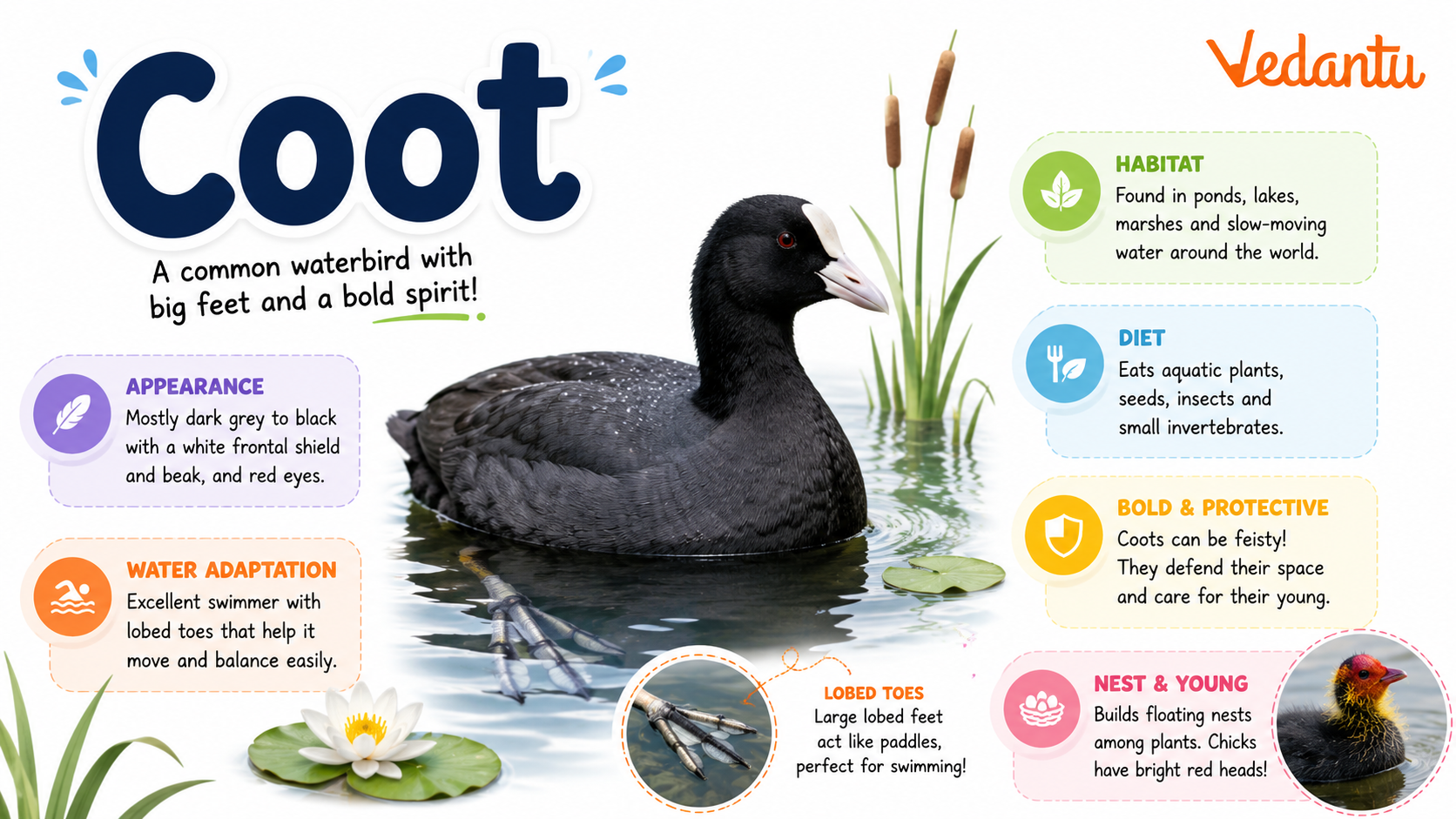
Quick Facts About Coot
| Feature | Details |
|---|---|
| Common Name | Coot |
| Scientific Name | Fulica atra (Common Coot) |
| Animal Group | Bird (Water Bird, Rail Family) |
| Size | 32–42 cm long |
| Wingspan | 70–80 cm |
| Diet | Omnivore (plants and small animals) |
| Habitat | Lakes, ponds, marshes, wetlands |
| Lifespan | Up to 10–15 years |
| Conservation Status | Least Concern |
Appearance and Physical Characteristics
- Dark grey or black body.
- Bright white bill and forehead shield.
- Red eyes that stand out clearly.
- Short tail and rounded body.
- Large lobed toes (not fully webbed like ducks).
Coot Habitat and Distribution
- Lakes and ponds
- Marshes and swamps
- Slow-moving rivers
- Wetlands with reeds and water plants
Coots are found in Europe, Asia, Australia, and parts of Africa. Some species are also found in North and South America. They prefer calm waters with plenty of vegetation where they can hide and find food.
Coot Diet and Feeding Habits
- Aquatic plants and algae
- Seeds and grasses
- Small fish and insects
- Snails and worms
Coots often dive underwater to collect food. They can also graze on land near water bodies. Their strong legs and lobed toes help them paddle and dive easily.
Behaviour and Lifestyle
Coots may live alone or in large groups, especially during winter.
During breeding season, they defend their nests aggressively.
They run across water while flapping wings to take off.
Coots are mostly active during daytime.
Life Cycle of a Coot
- Nest Building: Built from reeds and grasses near water.
- Egg Laying: Female lays 6–10 eggs.
- Incubation: Eggs hatch after about 21–24 days.
- Chicks: Young chicks have bright red and orange heads.
- Growth: Chicks learn to swim soon after hatching.
- Adult Stage: They grow into dark-feathered adults.
Flight Adaptations
- Strong wings for short to medium flights.
- Lightweight bones like other birds.
- Run across water to gain speed before take-off.
- Migrate short distances in colder regions.
Sound or Call
Coots make sharp croaking and grunting sounds. These calls are used to warn others, defend territory, and communicate with mates and chicks.
Importance and Role in Nature
They help control aquatic plant growth.
Coots are prey for larger birds and mammals.
They maintain balance in wetland ecosystems.
They help spread plant seeds across wetlands.
Amazing Coot Facts
- Coot chicks have brightly coloured heads when young.
- They can dive underwater for food.
- Large winter flocks may include hundreds of birds.
- The white shield on their forehead is called a frontal shield.
- They often appear to “walk” on water while taking off.
- Different coot species exist around the world.
Fun Facts for Kids
FAQs on Coot Bird: Identification, Habitat, and Behavior Guide
1. What is a coot?
A coot is a medium-sized water bird that lives near ponds, lakes, and marshes around the world.
- It belongs to the rail family (Rallidae)
- Often confused with ducks because it swims on water
- Known for its dark body and white facial shield
- Common species include the American Coot and Eurasian Coot
2. Where do coots live?
Coots live in freshwater habitats like lakes, ponds, and wetlands across many continents.
- Found in North America, Europe, Asia, Africa, and Australia
- Prefer marshes, swamps, and slow-moving rivers
- Build nests in thick water plants
- Some coots migrate during winter to warmer places
3. What does a coot look like?
A coot has a dark body with a bright white beak and forehead shield that makes it easy to recognize.
- Feathers are usually black or dark gray
- Has a white bill and frontal shield
- Strong legs with lobed toes for swimming
- Red eyes in many species like the Eurasian Coot
4. What do coots eat?
Coots are omnivores, meaning they eat both plants and small animals.
- Mainly feed on aquatic plants and algae
- Also eat insects, snails, and small fish
- Sometimes dive underwater to find food
- May steal food from ducks and other water birds
5. Can coots swim and fly?
Yes, coots are excellent swimmers and can also fly when needed.
- Use their lobed toes to paddle in water
- Run across the water surface before taking flight
- Strong but not very graceful flyers
- Spend most of their time swimming rather than flying
6. How are coots different from ducks?
Coots are different from ducks because they belong to another bird family and have unique feet and features.
- Coots are part of the rail family, not the duck family
- Have lobed toes instead of webbed feet
- Usually darker in color than most ducks
- More aggressive and territorial than many duck species
7. Are coots aggressive birds?
Yes, coots can be very territorial and protective, especially during breeding season.
- Fight to protect their nesting area
- Chase away other birds
- Use their feet and wings in fights
- More aggressive during spring breeding months
8. How do coots build their nests?
Coots build floating nests using water plants and reeds in shallow wetlands.
- Nests are made from twigs, reeds, and grasses
- Usually hidden in thick vegetation
- Female lays about 6 to 10 eggs
- Both parents help care for the chicks
9. What are baby coots called?
Baby coots are called chicks and look very different from adult birds.
- Have bright orange or reddish feathers on their head
- Born with soft down feathers
- Can swim shortly after hatching
- Depend on parents for food and protection
10. Why are coots important to the ecosystem?
Coots help keep wetlands healthy by controlling plants and insects.
- Eat excess aquatic vegetation
- Serve as prey for eagles, foxes, and large fish
- Help spread plant seeds through wetlands
- Are indicators of a healthy wetland ecosystem
