



How to Identify a Coral Snake and Tell It Apart from Similar Species
The coral snake is one of the most colourful yet mysterious snakes in the world. Known for its bright red, yellow (or white), and black bands, this snake is small but highly venomous. Coral snake facts often surprise students because these snakes are shy and rarely attack humans. Found mainly in the Americas and parts of Asia, coral snakes play an important role in controlling small animal populations in their habitat.
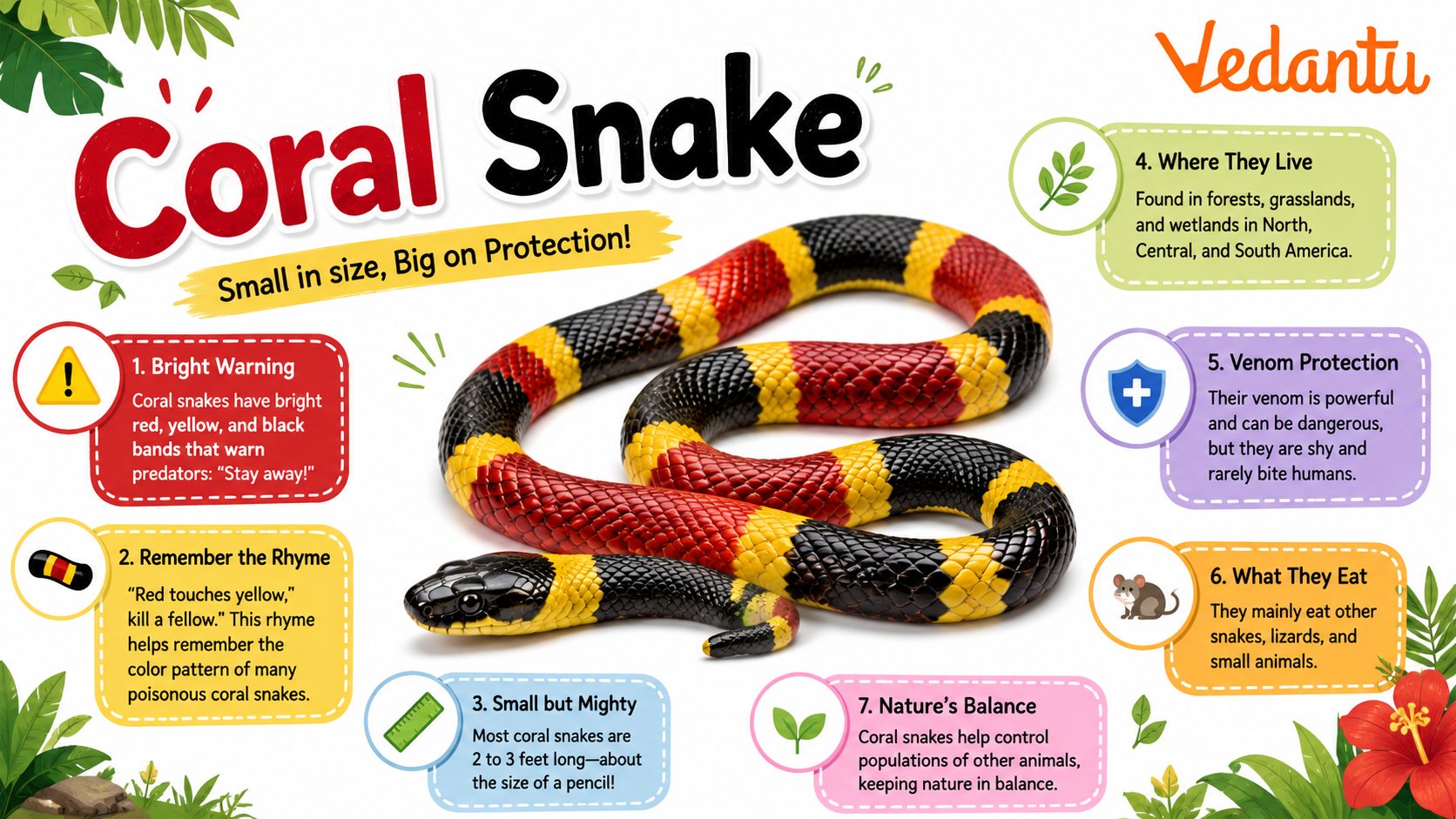
Quick Facts About Coral Snake
| Feature | Details |
|---|---|
| Common Name | Coral Snake |
| Scientific Family | Elapidae |
| Animal Group | Reptile |
| Length | 45–120 cm (varies by species) |
| Diet | Carnivore |
| Habitat | Forests, grasslands, deserts |
| Venom Type | Neurotoxic (affects nerves) |
| Conservation Status | Least Concern (most species) |
Appearance and Physical Characteristics
- Slender, smooth body with shiny scales.
- Bright red, yellow (or white), and black rings.
- Small head that is not clearly separate from the neck.
- Round pupils and short fangs.
- Usually smaller than many other venomous snakes.
Habitat and Distribution
- Found in North America, Central America, South America, and parts of Asia.
- Prefer warm climates.
- Live in forests, sandy areas, swamps, and grasslands.
- Often hide under leaves, logs, or underground burrows.
The coral snake habitat usually includes places where it can stay hidden and protected. They are rarely seen because they spend most of their time underground or beneath debris.
Coral Snake Diet and Feeding Habits
The coral snake diet mainly consists of cold-blooded animals. It bites and holds its prey to inject venom, unlike vipers that strike quickly and release.
Behaviour and Lifestyle
- Shy and secretive by nature.
- Mostly active at night (nocturnal).
- Rarely aggressive unless threatened.
- Uses bright colours as a warning sign to predators.
Coral snake characteristics include calm behaviour and a preference for hiding rather than fighting. They avoid human contact whenever possible.
Coral Snake Life Cycle
- Egg Stage: Female lays 3–12 eggs in a hidden place.
- Hatching: Baby snakes hatch fully formed and venomous.
- Juvenile Stage: Young snakes grow and shed their skin regularly.
- Adult Stage: Reach maturity in a few years.
The coral snake life cycle does not include metamorphosis. Young snakes look like smaller versions of adults and can hunt on their own.
What Makes Coral Snake Special?
Importance and Role in Nature
Amazing Coral Snake Facts
- There are more than 100 species of coral snakes worldwide.
- Their venom mainly affects breathing and muscle control.
- They belong to the same family as cobras and mambas.
- They have fixed front fangs.
- Many species are less than 1 metre long.
- They rarely bite humans unless handled.
- Their bright colours warn predators to stay away.
Fun Facts for Kids
FAQs on Coral Snake: Identification, Habitat, and Behavior Explained
1. What is a Coral Snake?
A Coral Snake is a small, brightly colored venomous snake found in the Americas.
- Belongs to the Elapidae family, like cobras and mambas
- Known for its red, yellow (or white), and black bands
- Has strong neurotoxic venom that affects the nervous system
- Often confused with non-venomous king snakes and milk snakes
2. Are Coral Snakes dangerous to humans?
Yes, Coral Snakes are venomous, but they rarely bite people.
- Their venom attacks the nervous system and can cause breathing problems
- Bites are uncommon because they are shy and secretive
- Most bites happen when someone tries to handle or disturb them
- Immediate medical treatment and antivenom are important
3. How can you tell a Coral Snake apart from other snakes?
You can identify a Coral Snake by its special color pattern.
- Famous rhyme: "Red on yellow, kill a fellow; red on black, friend of Jack"
- Red and yellow bands touch each other
- Bright warning colors act as aposematic coloration
- Similar-looking snakes like scarlet king snakes are not venomous
4. Where do Coral Snakes live?
Coral Snakes live in warm regions of the Americas.
- Found in the southern United States, Mexico, Central America, and South America
- Prefer forests, swamps, deserts, and grassy areas
- Often hide under leaves, logs, or underground
- Are mostly active in warm weather
5. What do Coral Snakes eat?
A Coral Snake eats small animals and other reptiles.
- Feeds on lizards, frogs, and small snakes
- Sometimes eats small rodents
- Uses venom to paralyze its prey
- Swallows food whole like most snakes
6. How big does a Coral Snake grow?
Most Coral Snakes are small to medium-sized snakes.
- Usually grow between 18 to 30 inches long
- Have slender, smooth bodies
- Some South American species can grow slightly longer
- They are thinner than many other venomous snakes
7. What happens if a Coral Snake bites someone?
A Coral Snake bite can cause serious symptoms if not treated quickly.
- May cause numbness, tingling, or slurred speech
- Can lead to muscle weakness and trouble breathing
- Symptoms may appear slowly
- Emergency care and antivenom are needed right away
8. Are Coral Snakes aggressive?
No, Coral Snakes are shy and non-aggressive by nature.
- Prefer to hide instead of fight
- Often curl their tail to confuse predators
- Bite mainly when handled or stepped on
- Play an important role in the ecosystem
9. Why are Coral Snakes brightly colored?
The bright colors of a Coral Snake warn predators to stay away.
- This is called warning coloration or aposematism
- Signals that the snake is venomous
- Other harmless snakes copy this pattern for protection
- Helps reduce attacks from birds and mammals
10. How do Coral Snakes reproduce?
Coral Snakes reproduce by laying eggs.
- They are oviparous snakes
- Females lay small clutches of eggs in hidden places
- Baby snakes hatch fully independent
- Young coral snakes already have bright warning colors
