



What Is an Echidna? Habitat, Diet, and Unique Adaptations Explained
The echidna is one of the most unusual mammals in the world. It looks like a small porcupine, lays eggs like a reptile, and has a long sticky tongue like an anteater. These amazing creatures are found mainly in Australia and New Guinea. Known for their strong claws and sharp spines, echidnas are shy animals that roll into a ball when they feel threatened. Let’s explore fascinating echidna facts, habitat, diet, characteristics, and life cycle in a fun and simple way.
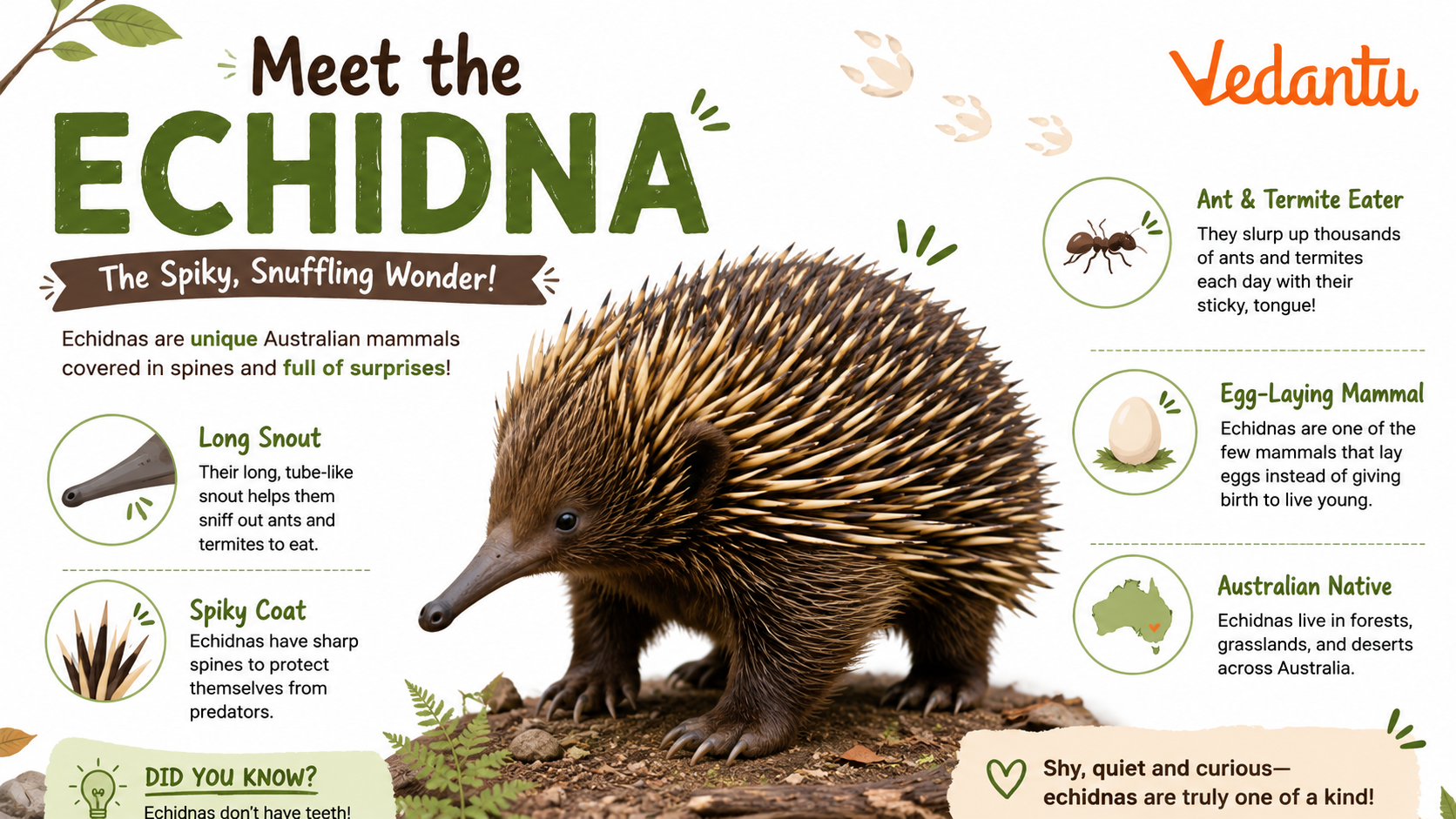
Quick Facts About Echidna
| Feature | Details |
|---|---|
| Common Name | Echidna (also called Spiny Anteater) |
| Scientific Name | Tachyglossidae |
| Animal Group | Mammal (Monotreme) |
| Length | 30–45 cm |
| Weight | 2–7 kg |
| Lifespan | Up to 50 years (in captivity) |
| Habitat | Forests, deserts, grasslands |
| Diet | Ants, termites, insects |
| Found In | Australia & New Guinea |
| Conservation Status | Least Concern (Short-beaked echidna) |
Appearance and Physical Characteristics
- Small, round body covered with sharp spines.
- Spines are made of keratin (same material as human nails).
- Has coarse brown or black fur between the spines.
- Long, narrow snout with no teeth.
- Strong digging claws on short legs.
- Sticky tongue up to 18 cm long to catch insects.
Echidna Habitat and Distribution
Echidnas are highly adaptable animals. They can survive in many different environments.
- Live in forests, mountains, deserts, and grasslands.
- Found across Australia and parts of New Guinea.
- Prefer areas with loose soil for digging.
- Hide in burrows, hollow logs, or under bushes.
The echidna habitat ranges from cold mountain regions to hot deserts. They adjust their body temperature and activity based on weather conditions.
Diet and Feeding Habits
What Do Echidnas Eat?
Echidnas are insectivores. They use their excellent sense of smell to find food underground and inside tree trunks.
Behaviour and Lifestyle
- Mostly solitary animals.
- Active during the day or night depending on temperature.
- Slow movers but strong diggers.
- Roll into a spiky ball when threatened.
- Can dig straight down into soil to escape predators.
Echidna Life Cycle
- Egg Laying: Female lays one soft, leathery egg.
- Pouch Stage: Egg is kept in a temporary pouch for about 10 days.
- Puggle: Baby echidna (called a puggle) hatches and stays in pouch for 6–8 weeks.
- Growing Up: When spines begin to grow, mother leaves baby in a burrow.
- Adult Stage: Becomes independent after several months.
The echidna life cycle is special because it is one of the only mammals that lay eggs, along with the platypus.
What Makes Echidna Special?
Importance and Role in Nature
- Control ant and termite populations.
- Improve soil health by digging.
- Part of the food chain in Australian ecosystems.
- Important symbol of Australia’s wildlife diversity.
Amazing Facts About Echidna
Interesting Facts About Echidna
- Baby echidnas are called puggles.
- They can curl into a tight ball like a hedgehog.
- Different species include short-beaked and long-beaked echidnas.
- The short-beaked echidna is the most common type.
Fun Facts for Kids
FAQs on Echidna: Amazing Facts About This Egg-Laying Mammal
1. What is an echidna?
An echidna is a small, spiny mammal that lays eggs and is also called a spiny anteater.
- It belongs to a rare group of mammals called monotremes.
- It has sharp spines like a porcupine.
- It uses a long, sticky tongue to catch ants and termites.
- It is native to Australia and New Guinea.
2. Is an echidna a mammal?
Yes, an echidna is a mammal, even though it lays eggs instead of giving birth to live babies.
- It is one of only two types of egg-laying mammals.
- The other monotreme is the platypus.
- Echidnas produce milk to feed their young.
- They have fur and spines, which are mammal traits.
3. Where do echidnas live?
Echidnas live mainly in Australia and New Guinea in many different habitats.
- They are found in forests, deserts, and mountains.
- They can survive in both hot and cold climates.
- They hide in burrows or under logs.
4. What do echidnas eat?
Echidnas eat ants, termites, and other small insects using their long sticky tongue.
- Their tongue can reach up to 18 cm long.
- They do not have teeth and crush food with their mouth pads.
- They use their strong claws to dig into anthills.
5. How do echidnas protect themselves?
Echidnas protect themselves with sharp spines and by curling into a ball.
- Their spines are made of keratin, like human nails.
- They roll into a tight spiky ball when threatened.
- They can quickly dig straight down to hide from predators.
6. How do echidnas reproduce?
Echidnas reproduce by laying eggs, which is very unusual for mammals.
- The female lays one soft-shelled egg.
- The egg is kept in a special pouch until it hatches.
- The baby, called a puggle, drinks milk from its mother.
7. What is a baby echidna called?
A baby echidna is called a puggle.
- Puggles hatch from eggs after about 10 days.
- They stay in their mother’s pouch for several weeks.
- They grow spines as they get older.
8. How long do echidnas live?
Echidnas can live a very long time for small mammals, sometimes up to 50 years.
- In the wild, they often live around 15–20 years.
- In zoos, they can live even longer.
- Their slow metabolism helps them survive longer.
9. Are echidnas endangered?
Most echidna species are not endangered, but some are at risk.
- The Short-beaked Echidna is not endangered.
- Some Long-beaked Echidnas are threatened.
- Main dangers include habitat loss and predators.
10. What are the different types of echidnas?
There are four main species of echidnas in the world.
- The Short-beaked Echidna (Tachyglossus aculeatus).
- The Eastern Long-beaked Echidna.
- The Western Long-beaked Echidna.
- Sir David’s Long-beaked Echidna.
11. Why are echidnas important to the ecosystem?
Echidnas are important because they control insect populations and improve soil health.
- They eat thousands of ants and termites.
- Their digging helps aerate the soil.
- This supports healthy ecosystems and plant growth.
