



Where Do Fisher Cats Live and What Do They Eat?
The Fisher Cat is not actually a cat and it rarely eats fish! It is a smart and powerful mammal that lives in North American forests. Known for its speed, sharp teeth, and climbing skills, this animal is a skilled hunter. Fisher Cat facts show that it plays an important role in keeping forest ecosystems balanced. Let’s explore its habitat, diet, characteristics, life cycle, and some truly interesting facts.
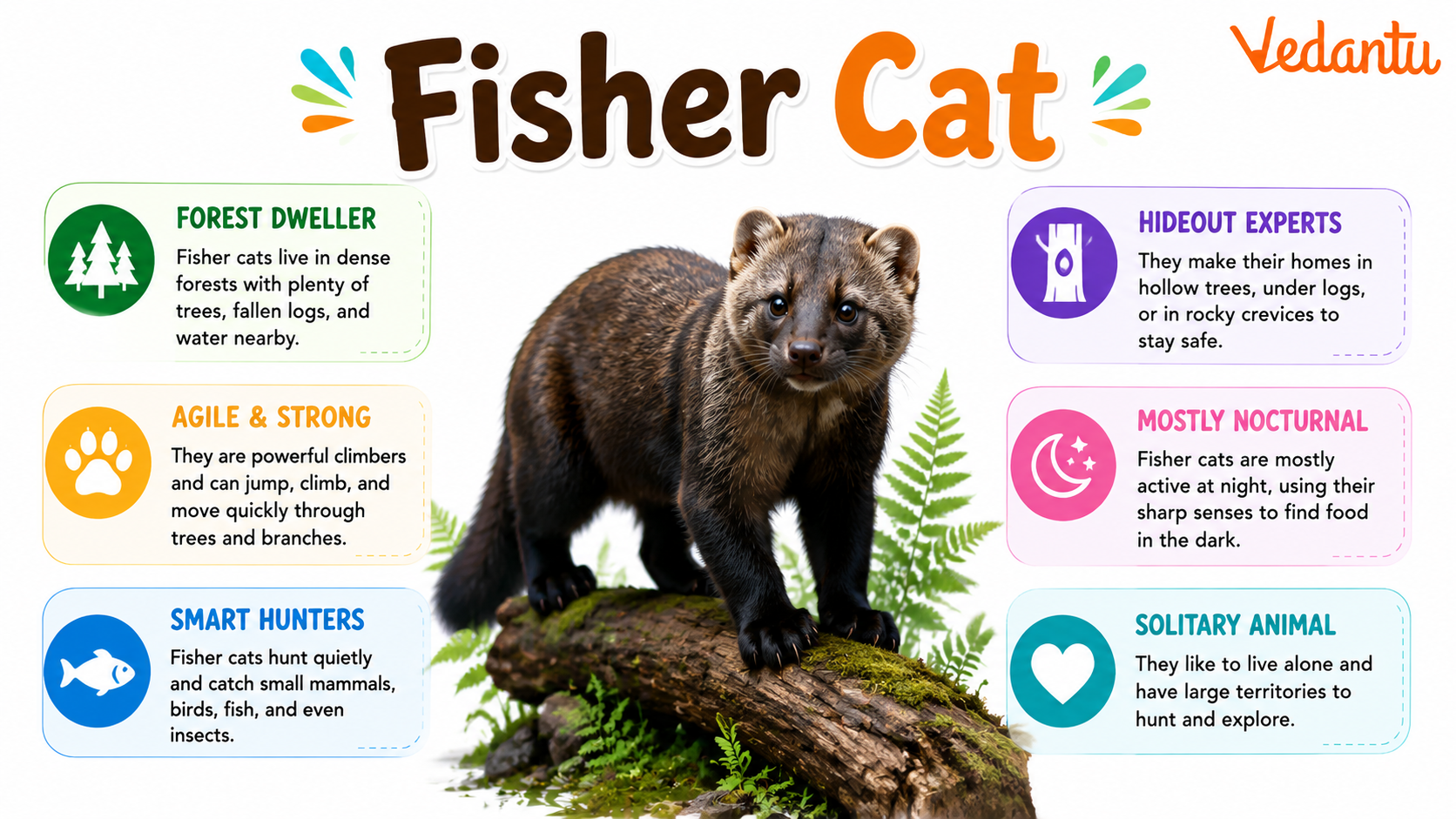
Quick Facts About Fisher Cat
| Feature | Details |
|---|---|
| Common Name | Fisher Cat |
| Scientific Name | Pekania pennanti |
| Animal Group | Mammal |
| Family | Mustelid (same family as weasels and otters) |
| Size | 75–120 cm (including tail) |
| Weight | 2–6 kg |
| Lifespan | Up to 10 years in the wild |
| Fisher Cat Habitat | Dense forests of North America |
| Diet | Small mammals, birds, porcupines |
| Conservation Status | Least Concern |
Appearance and Physical Characteristics
- Long, slender body with short legs.
- Dark brown fur with a bushy tail.
- Sharp claws for climbing trees.
- Pointed face and small rounded ears.
- Males are larger than females.
Fisher Cat Habitat and Distribution
- Found mainly in Canada and the northern United States.
- Prefers dense forests with thick trees.
- Lives in tree cavities, hollow logs, or underground burrows.
- Likes cool climates but can adapt to different forest types.
The Fisher Cat habitat provides shelter, hunting space, and protection from predators. Forests with large trees are especially important for their survival.
Diet and Feeding Habits
Type: Carnivore (meat-eater)
- Hunts rabbits, squirrels, mice, and birds.
- One of the few predators that can kill porcupines.
- Also eats fruits and berries occasionally.
- Hunts mostly at night.
Fisher Cat diet habits help control rodent populations in forests, making them important for ecological balance.
Behaviour and Lifestyle
Fisher Cats usually live alone except during mating season.
They are most active at night while hunting.
They can climb trees headfirst downwards.
They mark and defend their territory from others.
Fisher Cat Life Cycle
- Mating: Occurs in late winter or early spring.
- Birth: Female gives birth to 1–4 babies in a tree hollow.
- Young Ones: Babies are born blind and helpless.
- Growth: Kits learn hunting skills from their mother.
- Adult Stage: Become independent within a year.
What Makes the Fisher Cat Special?
Importance and Role in Nature
- Controls rodent populations.
- Keeps forest ecosystems balanced.
- Prevents overpopulation of small mammals.
- Acts as a mid-level predator in the food chain.
Amazing Fisher Cat Facts
Fun Facts for Kids
- The Fisher Cat doesn’t usually eat fish!
- It looks a bit like a large weasel.
- It can scream-like sounds that scare people at night.
- It loves living in tall trees.
- It is bigger than a house cat but smaller than a fox.
FAQs on Fisher Cat (Fisher) Animal Guide: Size, Diet, and Habitat
1. What is a Fisher Cat?
Fisher Cat is a common name for the fisher (Pekania pennanti), a wild mammal related to weasels—not a cat.
- Belongs to the weasel family (Mustelidae)
- Also called fisher or black cat in some regions
- Native to North America
- Known for being agile, smart, and a strong forest predator
2. Why is it called a Fisher Cat if it is not a cat?
The name Fisher Cat is misleading because the animal is not a cat and does not hunt fish.
- The name likely comes from the French word "fichet"
- It is actually related to otters, minks, and martens
- It rarely eats fish despite its name
- It behaves more like a weasel than a house cat
3. Where do Fisher Cats live?
Fisher Cats live in forests across North America, especially in wooded areas.
- Found in Canada and the northern United States
- Prefer dense forests with lots of trees
- Often live in tree cavities or hollow logs
- Can adapt to areas near towns and suburbs
4. What do Fisher Cats eat?
Fisher Cats are carnivores that eat a variety of small animals.
- Hunt rabbits, squirrels, and mice
- One of the few predators of porcupines
- Also eat birds, insects, and fruits
- Are skilled nighttime hunters
5. Are Fisher Cats dangerous to humans?
Fisher Cats are generally not dangerous to humans and avoid people.
- They are shy and secretive wild animals
- Rarely attack humans unless threatened
- May prey on small pets if left outside
- Prefer to escape rather than fight
6. What does a Fisher Cat look like?
A Fisher Cat looks like a large, dark brown weasel with a bushy tail.
- Has thick fur that is dark brown or blackish
- Measures about 2–4 feet long including tail
- Has sharp teeth and strong claws
- Males are usually larger than females
7. Are Fisher Cats nocturnal?
Yes, Fisher Cats are mostly nocturnal animals, meaning they are active at night.
- Hunt mainly during nighttime hours
- Sometimes active at dawn and dusk
- Use sharp senses to find prey in the dark
- Rest in trees or forest shelters during the day
8. How do Fisher Cats hunt porcupines?
Fisher Cats are famous for being skilled porcupine hunters.
- They repeatedly bite the porcupine’s face
- Avoid the sharp quills
- Flip the porcupine onto its back once weak
- This unique skill makes them important forest predators
9. How big do Fisher Cats get?
Fisher Cats are medium-sized mammals with long bodies and tails.
- Weigh between 4 to 15 pounds
- Grow up to 40 inches long including tail
- Males are nearly twice the size of females
- Have muscular bodies built for climbing trees
10. Do Fisher Cats climb trees?
Yes, Fisher Cats are excellent tree climbers and spend much time in trees.
- Can climb up and down headfirst
- Use sharp claws for gripping bark
- Rest and hunt in forest canopies
- Are agile like martens and minks
