



Great Dane Size, Temperament, Lifespan, and Care Needs
The Great Dane is one of the tallest and most impressive dog breeds in the world. Known for its giant size and calm personality, this dog is often called a “gentle giant.” Even though it looks powerful and strong, the Great Dane is friendly, loyal, and loves being around people. Let’s explore amazing Great Dane facts, characteristics, habitat, diet, life cycle, and why this breed is so special.
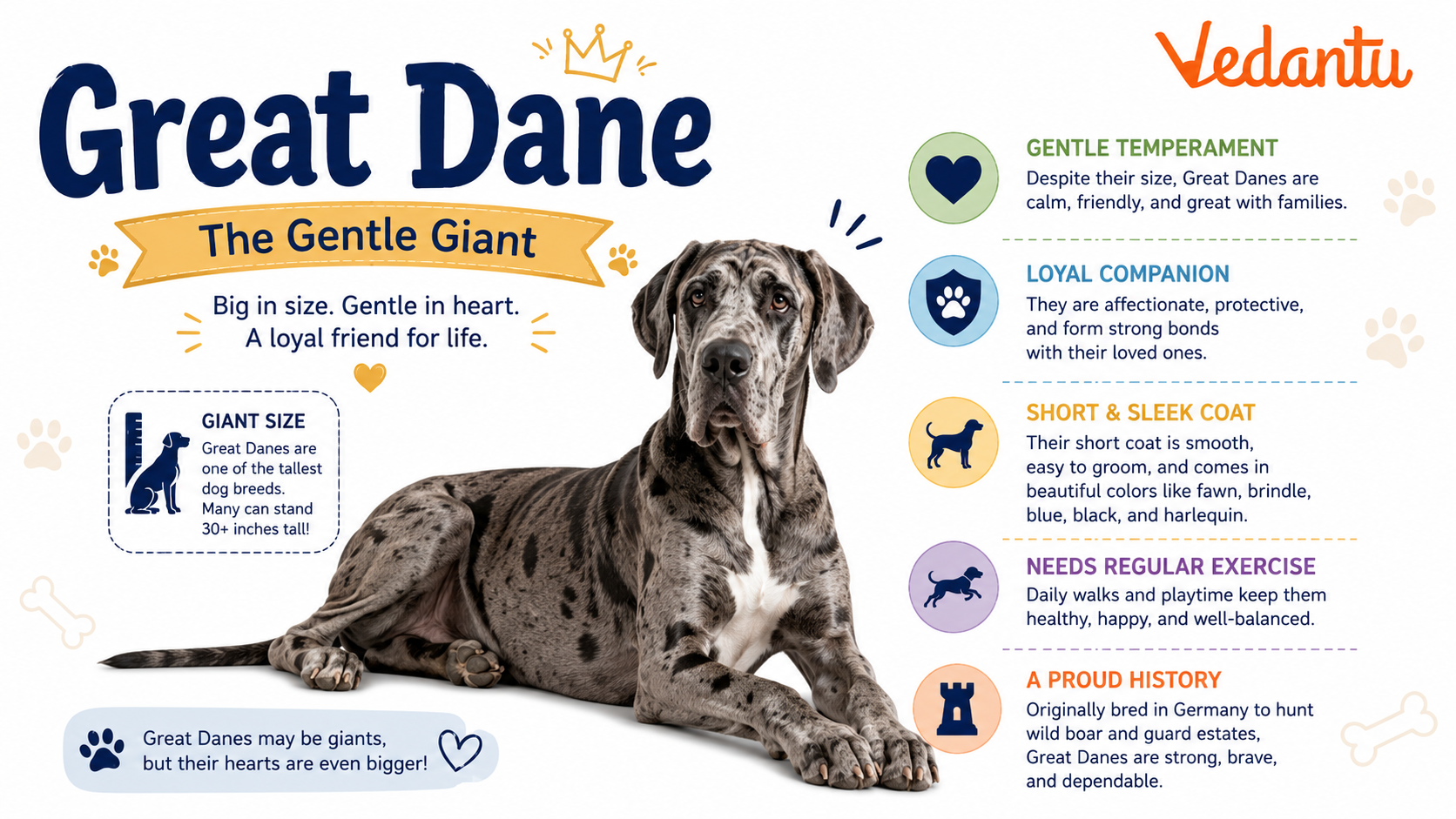
Quick Facts About Great Dane
| Feature | Details |
|---|---|
| Common Name | Great Dane |
| Scientific Name | Canis lupus familiaris |
| Animal Group | Mammal (Dog Breed) |
| Height | Up to 32–34 inches (or more) at the shoulder |
| Weight | 45–90 kg (varies by gender) |
| Lifespan | 7–10 years |
| Diet | Omnivore (mainly high-quality dog food, meat-based) |
| Origin | Germany |
| Young One | Puppy |
Appearance and Physical Characteristics
- Body Shape: Tall, muscular, and well-balanced.
- Head: Long and narrow with a strong jaw.
- Coat: Short, smooth, and shiny.
- Colors: Fawn, brindle, black, blue, harlequin (white with black patches), and mantle.
- Legs: Very long and powerful.
- Tail: Long and slightly curved.
Great Dane Habitat and Living Environment
Since the Great Dane is a domestic dog breed, it does not live in the wild. Instead, its habitat is usually human homes.
- Lives comfortably in large houses or apartments with enough space.
- Needs a soft bed and indoor shelter.
- Enjoys moderate climates (not extreme heat or cold).
- Requires daily walks and open space for movement.
Great Dane Diet and Feeding Habits
Omnivore, but mainly meat-based high-protein dog food.
Dry kibble, cooked meat, vegetables, and special dog formulas.
2–3 balanced meals per day to support growth.
Needs controlled portions to avoid obesity and stomach problems.
Because of their fast growth and large body, the Great Dane diet must be nutritious and carefully planned.
Behaviour and Personality
- Very loyal to family members.
- Gentle and patient with children.
- Protective but not usually aggressive.
- Intelligent and easy to train with positive methods.
- Enjoys companionship and dislikes being alone for long periods.
Great Dane Life Cycle
- Puppy Stage (0–1 year): Rapid growth; needs proper nutrition and training.
- Adolescent Stage (1–2 years): Gains full height but continues filling out.
- Adult Stage (2–6 years): Fully grown, strong, and active.
- Senior Stage (7+ years): Slower movement; needs extra care and regular vet visits.
The average Great Dane lifespan is shorter compared to smaller dogs because of its large size.
Temperament and Domestic Life
Excellent companion for families.
Responds well to early social training.
Daily walks and light playtime.
Large size naturally deters strangers.
What Makes the Great Dane Special?
Importance of Great Dane
- Serves as a loyal family companion.
- Acts as a guard dog due to large size.
- Participates in dog shows and competitions.
- Provides emotional comfort and companionship.
Amazing Great Dane Facts
- The tallest dog ever recorded was a Great Dane.
- Despite its name, the breed originated in Germany, not Denmark.
- They grow very fast during the first year of life.
- Their heart must work harder because of their large body size.
- They are surprisingly gentle with children.
- Some Great Danes can weigh as much as a small adult human.
- They were once used to hunt large animals like wild boars.
Fun Facts for Kids
FAQs on Great Dane: Gentle Giant Breed Overview
1. What is a Great Dane?
A Great Dane is a giant dog breed known for its tall size and gentle personality.
- The Great Dane dog is one of the tallest dog breeds in the world.
- It is often called the “gentle giant” because it is friendly and calm.
- Great Danes belong to the working group of dogs.
- They were originally bred in Germany to hunt large animals.
2. How big does a Great Dane grow?
A Great Dane can grow extremely tall and heavy compared to most dog breeds.
- Height: Up to 28–34 inches (or taller) at the shoulder.
- Weight: Around 100–175 pounds.
- Some Great Danes are taller than many children when standing!
- They are considered one of the largest dog breeds in the world.
3. Are Great Danes good family dogs?
Yes, Great Danes are loving and gentle, making them great family pets.
- They are known for being friendly and patient with kids.
- They enjoy spending time with their families.
- Despite their size, they are usually calm indoor dogs.
- Early training and socialization help them behave well.
4. Why are Great Danes called gentle giants?
Great Danes are called gentle giants because they are huge but very sweet-natured.
- They are usually calm and affectionate.
- They love cuddling with their owners.
- They are rarely aggressive when trained properly.
- Their kind behavior makes them popular as family companion dogs.
5. How long do Great Danes live?
The average Great Dane lifespan is shorter than many other dogs.
- They typically live about 7–10 years.
- Healthy food and regular veterinary care can help them live longer.
- Because of their large size, they may face certain health problems.
6. What do Great Danes eat?
Great Danes need high-quality food made for large or giant dog breeds.
- They eat specially balanced large-breed dog food.
- Puppies need controlled diets to support healthy growth.
- Fresh water should always be available.
- Overfeeding can cause weight and joint problems.
7. Do Great Danes need a lot of exercise?
Great Danes need daily exercise, but they are not super high-energy dogs.
- They enjoy daily walks and playtime.
- Too much jumping can hurt their growing joints.
- They also like relaxing indoors with their family.
- Regular activity keeps this giant breed healthy and happy.
8. Are Great Danes easy to train?
Yes, Great Danes are generally smart and respond well to training.
- They learn best with positive reinforcement.
- Training should start when they are puppies.
- Because of their size, early obedience training is very important.
- They aim to please their owners.
9. What colors do Great Danes come in?
Great Danes come in several beautiful coat colors and patterns.
- Fawn (golden yellow)
- Brindle (striped pattern)
- Blue (gray shade)
- Black
- Harlequin (white with black patches)
- Mantle (black and white pattern)
10. Where did the Great Dane originate?
The Great Dane breed originated in Germany, not Denmark as the name suggests.
- They were bred to hunt wild boar.
- Their German name is Deutsche Dogge.
- Over time, they became popular as companion dogs.
- Today, they are loved worldwide for their size and gentle nature.
