



Where Do Grouse Live and What Do They Eat in the Wild?
Grouse are medium-sized birds that live in forests, grasslands, and cold regions of the Northern Hemisphere. They are known for their excellent camouflage, strong legs, and dramatic courtship displays. These ground-dwelling birds belong to the pheasant family and are perfectly adapted to life in forests and open fields. Learning about grouse facts, habitat, diet, and behaviour helps us understand how these shy birds survive in changing environments.
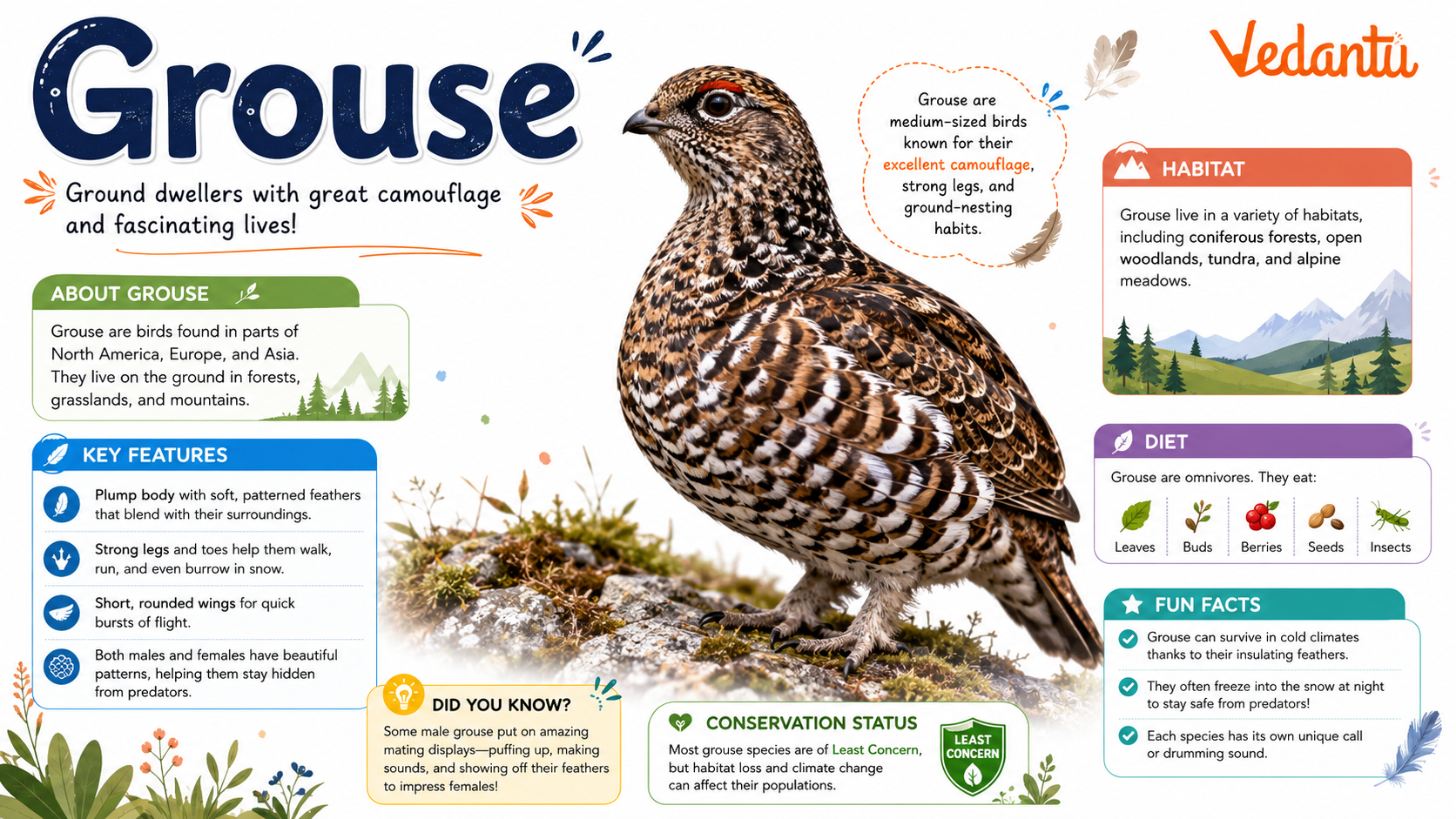
Quick Facts About Grouse
| Feature | Details |
|---|---|
| Common Name | Grouse |
| Scientific Family | Phasianidae |
| Animal Group | Bird |
| Size | 30–95 cm (varies by species) |
| Weight | 0.3–6.5 kg |
| Lifespan | 1–10 years in the wild |
| Habitat | Forests, tundra, grasslands |
| Diet | Seeds, berries, leaves, insects |
| Young One | Chick |
| Conservation Status | Varies by species (Least Concern to Endangered) |
Appearance and Physical Characteristics
- Body Shape: Plump body with a small head and short neck.
- Feathers: Thick, soft feathers for insulation in cold weather.
- Colour: Brown, grey, black, or reddish patterns for camouflage.
- Legs: Strong legs for running and scratching the ground.
- Feet: Feathered feet in some species to walk on snow.
Habitat and Distribution
Grouse habitat includes cool and temperate regions of the Northern Hemisphere. They prefer areas with thick vegetation for hiding and nesting.
- Found in North America, Europe, and Asia.
- Live in forests, tundra, moorlands, and grasslands.
- Often stay close to the ground.
- Build nests directly on the ground, hidden in grass or shrubs.
Diet and Feeding Habits
The grouse diet changes with seasons. They are mostly herbivores but may eat insects when young.
Leaves, buds, seeds, berries, and grasses form the main part of their diet.
Chicks eat insects for protein to grow quickly.
Scratch the ground using strong feet to find food.
Important prey for foxes, hawks, and other predators.
Behaviour and Lifestyle
- Mostly shy and avoid humans.
- Spend much of their time on the ground.
- Can fly, but only for short distances.
- Males perform dramatic courtship displays.
- Usually active during the day (diurnal).
Famous Courtship Display
Life Cycle of a Grouse
- Egg Stage: Female lays 5–12 eggs in a ground nest.
- Incubation: Eggs hatch after about 3–4 weeks.
- Chicks: Born covered in down and can walk soon after hatching.
- Juvenile Stage: Learn to fly within a few weeks.
- Adult Stage: Reach maturity within one year.
What Makes Grouse Special?
Feather colours blend perfectly with forest floors.
Thick feathers protect them from freezing temperatures.
Burrow into snow for warmth and safety.
Built for running quickly through dense vegetation.
Flight Adaptations
- Short, rounded wings for quick take-off.
- Strong chest muscles for sudden flight bursts.
- Prefer gliding short distances instead of long flights.
- Heavy bodies help them stay grounded and stable.
Importance and Role in Nature
Help spread plant seeds through droppings.
Important prey for many forest predators.
Maintain plant and insect populations.
Their population health shows forest ecosystem condition.
Amazing Grouse Facts
- There are about 10–20 species of grouse worldwide.
- The capercaillie is one of the largest grouse species.
- Some grouse change feather colour slightly in winter.
- They can explode into flight suddenly to escape predators.
- Grouse are closely related to pheasants and partridges.
- Males are often more colourful than females.
- They rely more on camouflage than speed for safety.
Interesting Facts About Grouse
Fun Facts for Kids
- Baby grouse can run just hours after hatching!
- They hide so well that you might walk past one without seeing it.
- Some grouse sleep inside snow tunnels.
- They love berries and leafy plants.
- They make funny puffing and drumming sounds.
FAQs on Grouse Bird: Complete Guide to Species, Habitat, and Behavior
1. What is a grouse?
A grouse is a medium-sized ground-dwelling bird that lives in forests and grasslands.
- Grouse belong to the Phasianidae family, related to chickens and turkeys.
- They are known as game birds and are often found in woodlands, moorlands, and tundra.
- Common types include the Ruffed Grouse, Spruce Grouse, and Sage Grouse.
- They are famous for their camouflage feathers and ground nesting habits.
2. Where do grouse live?
Grouse live in forests, grasslands, and cold northern regions around the world.
- They are found in North America, Europe, and parts of Asia.
- Many species prefer pine forests and conifer woodlands.
- Some, like the Ptarmigan, live in cold Arctic tundra.
- The Sage Grouse lives in dry sagebrush habitats.
3. What do grouse eat?
Grouse eat plants, seeds, berries, and insects depending on the season.
- Their diet includes leaves, buds, and berries.
- They eat insects especially during summer.
- In winter, they feed on tree buds and needles.
- Baby grouse chicks need more protein-rich insects to grow.
4. Can grouse fly?
Yes, grouse can fly, but they prefer to stay on the ground.
- They have short, rounded wings for quick bursts of flight.
- Grouse usually fly short distances to escape predators.
- They spend most of their time walking and foraging on the ground.
- Their sudden takeoff can make a loud wing-flapping sound.
5. What is special about a male grouse?
Male grouse are known for their unique courtship displays to attract females.
- The Ruffed Grouse performs a loud drumming sound with its wings.
- The Sage Grouse inflates air sacs on its chest during mating dances.
- These displays happen in spring during the breeding season.
- Bright feathers and sounds help them attract a mate.
6. Are grouse endangered?
Some grouse species are threatened due to habitat loss and climate change.
- The Greater Sage Grouse faces habitat destruction.
- Loss of grasslands and forests affects their survival.
- Climate change impacts cold-region species like the Ptarmigan.
- Conservation efforts help protect wildlife habitats.
7. How do grouse protect themselves from predators?
Grouse protect themselves using camouflage and quick flight.
- Their brown and gray feathers blend into natural surroundings.
- They freeze or stay still to avoid detection.
- If threatened, they burst into sudden flight.
- Predators include foxes, hawks, owls, and coyotes.
8. What is the difference between grouse and pheasant?
Grouse and pheasants are related birds but live in different habitats and look different.
- Grouse usually live in forests and colder regions.
- Pheasants often live in open fields and farmland.
- Pheasants have long colorful tails, while grouse have shorter tails.
- Both are members of the game bird family.
9. Do grouse migrate?
Most grouse do not migrate and stay in the same area all year.
- They are considered non-migratory birds.
- They adapt to cold winters by growing thicker feathers.
- Some move short distances to find food.
- The Ptarmigan changes feather color instead of migrating.
10. Why are grouse important to the ecosystem?
Grouse play an important role in keeping forest and grassland ecosystems balanced.
- They spread seeds by eating berries.
- They help control insect populations.
- They are food for larger animals like hawks and foxes.
- Their presence shows a healthy wildlife habitat.
