



What Do Herring Eat and Why Are They Important to the Ocean Ecosystem?
Herring are small, shiny fish that travel in huge groups in the ocean. Even though they are not very big, they play a very important role in the marine food chain. From feeding whales and seabirds to supporting large fishing industries, herring are one of the most important fish species in the world. Let’s explore fascinating Herring facts, their habitat, diet, characteristics, life cycle, and why they are so important to nature.
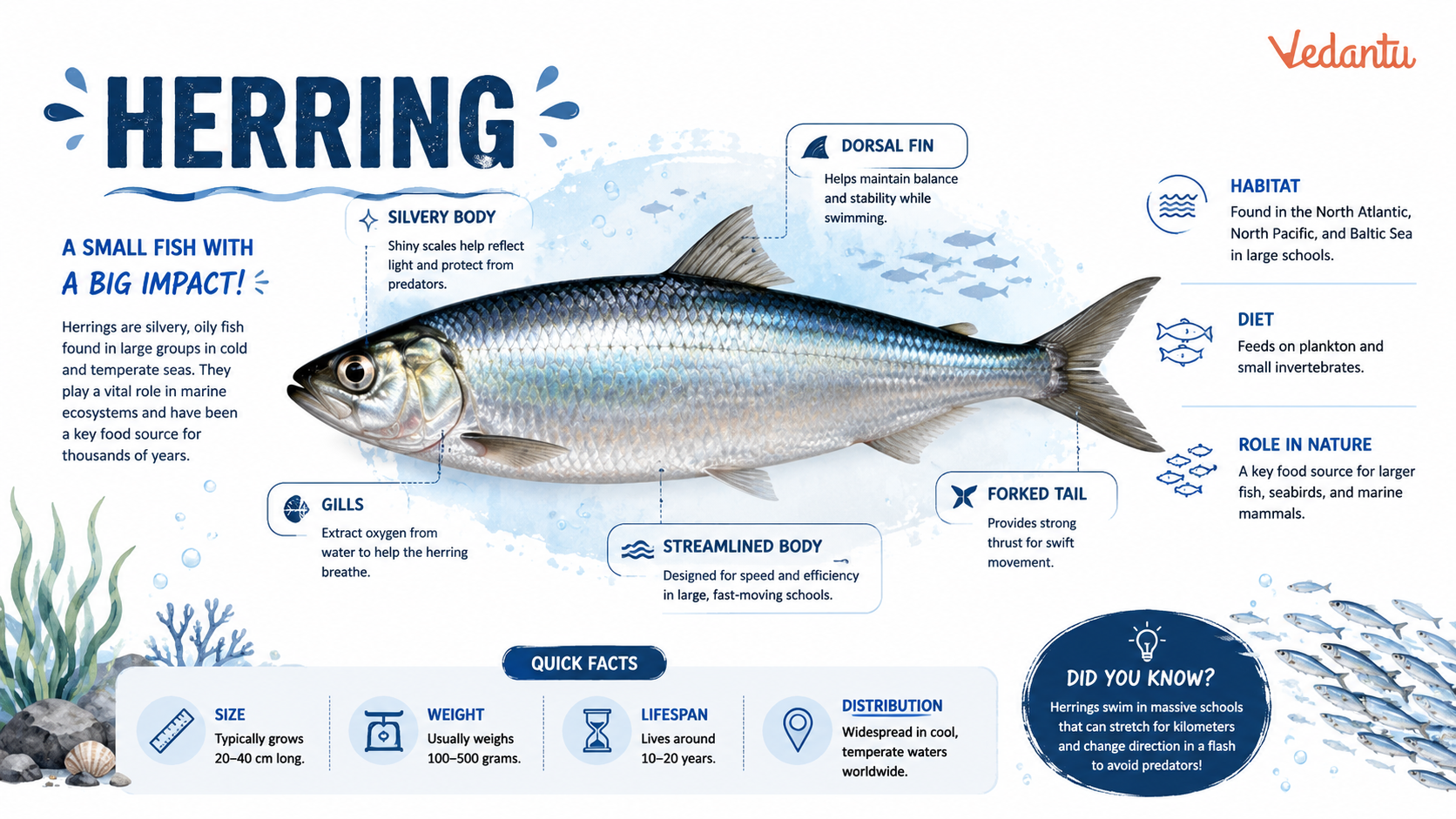
Quick Facts About Herring
| Feature | Details |
|---|---|
| Common Name | Herring |
| Scientific Family | Clupeidae |
| Animal Group | Fish |
| Size | 20–38 cm long (depending on species) |
| Weight | Up to 0.5 kg |
| Lifespan | Up to 15 years |
| Habitat | Cold and temperate oceans |
| Diet | Plankton and small marine organisms |
| Conservation Status | Mostly Least Concern (varies by species) |
Appearance and Physical Characteristics
- Slender, streamlined body built for fast swimming.
- Shiny silver sides with a bluish or greenish back.
- Single soft dorsal fin on the back.
- Forked tail that helps in quick movement.
- Large eyes for spotting predators and plankton.
Herring Habitat and Distribution
- Found in the North Atlantic and North Pacific Oceans.
- Prefer cold and temperate waters.
- Often swim near coastlines and continental shelves.
- Travel in large schools in open water.
- Some species move into bays and estuaries to spawn.
The Herring habitat includes both deep ocean waters and shallow coastal areas. They migrate seasonally in search of food and suitable breeding grounds.
Diet and Feeding Habits
Herring are plankton feeders.
Tiny crustaceans, fish larvae, and microscopic plankton.
Filter feeding while swimming with mouth open.
Important prey for whales, seals, seabirds, and larger fish.
Behaviour and Lifestyle
- Highly social fish that swim in huge schools.
- Schools may contain thousands or even millions of fish.
- Schooling helps protect them from predators.
- Active swimmers that move constantly in search of food.
- Migrate long distances during different seasons.
Herring Life Cycle
- Egg Stage: Females lay thousands of eggs in shallow waters on the seabed.
- Larva Stage: Eggs hatch into tiny transparent larvae.
- Juvenile Stage: Young fish grow quickly and join small schools.
- Adult Stage: Mature herring form large schools and reproduce.
The Herring life cycle is fast, which helps maintain their large population in oceans around the world.
What Makes Herring Special?
Importance and Role in Nature
- Support marine predators like whales, dolphins, cod, and seabirds.
- Help maintain balance in ocean ecosystems.
- Important commercial fish for many countries.
- Used as food, fish oil, and animal feed.
Amazing Herring Facts
Interesting Facts About Herring
- Herring are related to sardines and anchovies.
- They are often preserved by smoking, salting, or pickling.
- Their silver scales easily fall off when handled.
- They use both sight and smell to find food.
Fun Facts for Kids
FAQs on Herring Fish: Complete Guide to Habitat, Diet, and Life Cycle
1. What is herring?
Herring is a small, oily saltwater fish that lives in large groups called schools.
- Belongs to the Clupeidae family
- Found in the Atlantic Ocean and Pacific Ocean
- Known for its silver color and soft bones
- Commonly eaten fresh, smoked, or pickled
- Important in marine ecosystems and commercial fishing
2. Where do herring live?
Herring live in cold and temperate ocean waters around the Northern Hemisphere.
- Swim in the North Atlantic and North Pacific
- Prefer coastal waters but migrate in open seas
- Travel in large schools for protection
- Move seasonally for spawning and feeding
3. What do herring eat?
Herring eat tiny sea organisms that float in the water.
- Mainly feed on plankton
- Eat small crustaceans and fish larvae
- Use gill rakers to filter food from water
- Play a key role in the marine food chain
4. Why are herring important?
Herring are important for both oceans and people because they support wildlife and fishing industries.
- Serve as food for whales, seals, dolphins, and seabirds
- Support commercial fishing economies
- Used to make fish oil and animal feed
- Help maintain balance in marine ecosystems
5. Are herring good for you?
Herring are very healthy to eat because they are rich in nutrients.
- High in Omega-3 fatty acids
- Good source of protein
- Contain vitamin D and vitamin B12
- Support heart and brain health
6. How big do herring grow?
Most herring grow to a medium small size compared to other fish.
- Usually about 20–38 cm (8–15 inches) long
- Weigh less than 1 kilogram
- Grow quickly in their first years
- Can live up to 15 years in the wild
7. How do herring protect themselves from predators?
Herring protect themselves by swimming in huge groups called schools.
- Move in synchronized patterns
- Confuse predators like tuna and cod
- Use shiny scales to reflect light
- Rely on speed and teamwork for safety
8. What is pickled herring?
Pickled herring is herring preserved in vinegar or brine for longer storage and flavor.
- Popular in Scandinavian and European cuisine
- Often served with onions and spices
- Common during festivals and holidays
- Helps preserve fish before refrigeration
9. Do herring migrate?
Yes, herring migrate seasonally to spawn and find food.
- Travel long distances in oceans
- Return to specific spawning grounds
- Lay eggs in shallow coastal waters
- Migrations attract many marine predators
10. What animals eat herring?
Many ocean animals depend on herring as food in the marine food web.
- Large fish like salmon, cod, and tuna
- Marine mammals such as whales and seals
- Seabirds like gulls and puffins
- Humans through commercial fishing
