



What Do Kaka Birds Eat? Habitat, Behavior, and Conservation Explained
The Kaka bird is a large, playful parrot found only in New Zealand. Known for its strong curved beak and noisy calls, this forest bird is intelligent and curious. Kaka birds are famous for their climbing skills and social nature. Learning about Kaka bird facts, habitat, diet, characteristics, and life cycle helps us understand why this beautiful native parrot is so special and important to forest ecosystems.
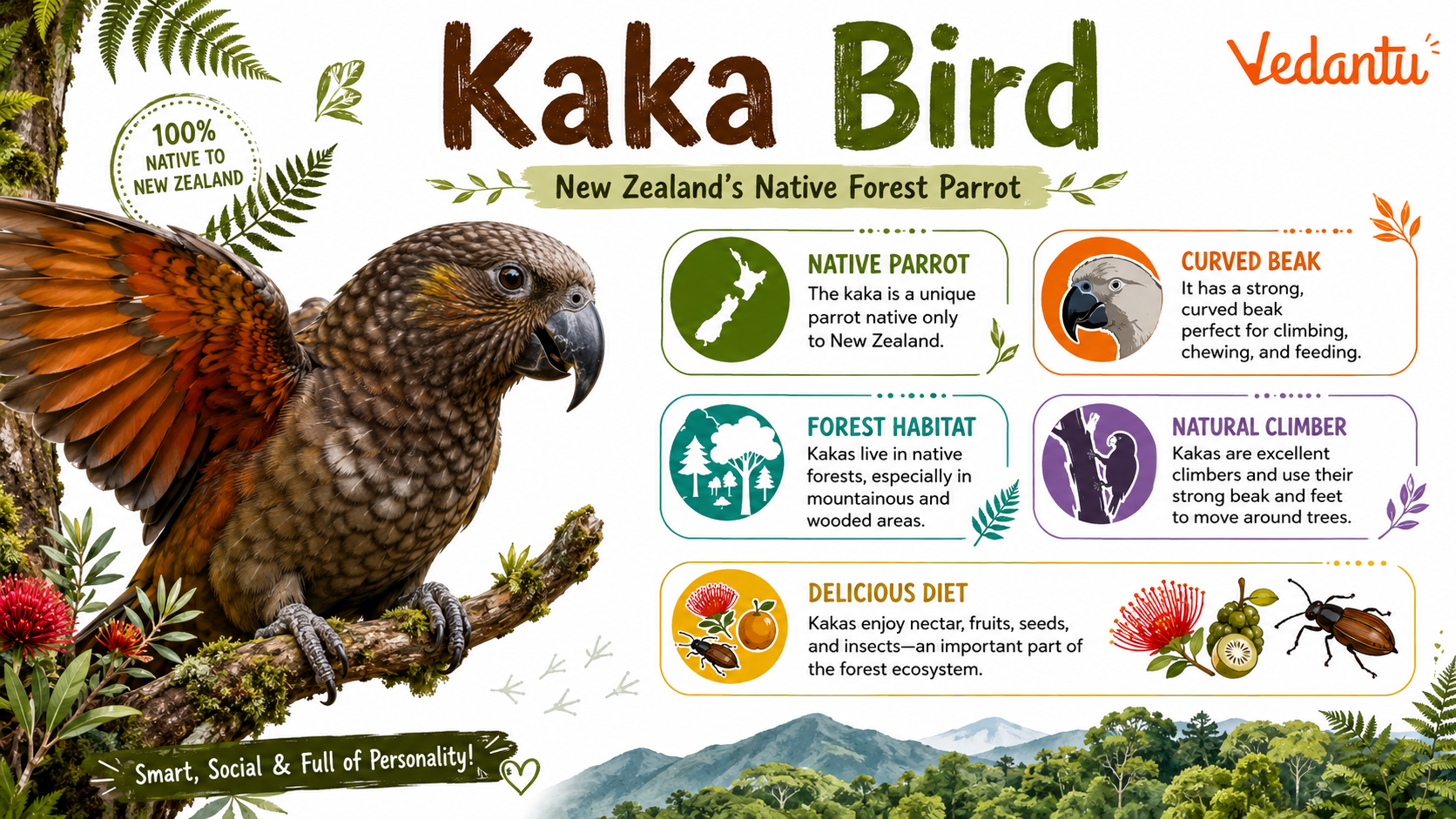
Quick Facts About Kaka Bird
| Feature | Details |
|---|---|
| Common Name | Kaka Bird |
| Scientific Name | Nestor meridionalis |
| Animal Group | Bird (Parrot Family) |
| Size | 45–50 cm long |
| Weight | 350–550 grams |
| Lifespan | Up to 20–25 years in the wild |
| Habitat | Native forests of New Zealand |
| Diet | Omnivore – fruits, nectar, insects |
| Conservation Status | Endangered |
Appearance and Physical Characteristics
- Medium to large-sized parrot with a strong body.
- Mostly olive-brown feathers with bright red and orange underwings.
- Curved grey beak designed for cracking wood and seeds.
- Short, broad wings and a long tail.
- Sharp claws for climbing tree trunks.
Kaka Bird Habitat and Distribution
- Found only in New Zealand.
- Lives mainly in native forests.
- Prefers tall trees for nesting and feeding.
- Often seen in forest reserves and protected islands.
- Nests in tree hollows high above the ground.
Diet and Feeding Habits
Eats fruits, berries, seeds, nectar, and tree sap.
Uses its strong beak to dig insects and larvae from wood.
Strips bark to drink sweet sap from trees.
Helps control insect populations and spread seeds.
Behaviour and Lifestyle
- Very social and often seen in small groups.
- Active during the day (diurnal).
- Climbs trees using beak and claws.
- Curious and playful behaviour.
- Can be noisy with loud screeching calls.
Kaka Bird Life Cycle
- Egg Stage: Female lays 2–4 eggs in tree hollows.
- Incubation: Eggs hatch after about 3–4 weeks.
- Chicks: Baby Kaka birds are blind and featherless at first.
- Fledging: Young birds leave the nest after about 8–10 weeks.
- Adult Stage: Grow into strong forest parrots and start breeding at a few years of age.
Flight Adaptations
- Strong wings for short, fast flights between trees.
- Lightweight bones like most birds.
- Tail feathers help with balance and direction.
- Powerful chest muscles for flapping flight.
Sound and Call
- Makes loud screeching and whistling sounds.
- Calls are used to communicate with other Kaka birds.
- Sounds are often heard echoing through forests.
What Makes the Kaka Bird Special?
Climbs trees using its beak like a third foot.
Highly intelligent and curious about surroundings.
Found nowhere else in the world.
Bright red and orange feathers hidden under brown body.
Importance and Role in Nature
- Helps spread seeds across forests.
- Controls insect populations.
- Supports forest ecosystem balance.
- Important part of New Zealand’s wildlife heritage.
Amazing Kaka Bird Facts
Fun Facts for Kids
- Kaka birds love to explore and investigate objects.
- They sometimes hang upside down while feeding.
- Their loud calls can be heard from far away.
- They are sometimes seen visiting gardens near forests.
- Baby Kaka birds stay in the nest for many weeks.
FAQs on Kaka Bird: Fascinating Facts About New Zealand’s Forest Parrot
1. What is a Kaka bird?
The Kaka bird is a smart and noisy forest parrot native to New Zealand.
- The scientific name is Nestor meridionalis.
- It belongs to the parrot family and is related to the Kea.
- Kaka parrots are known for their playful behavior and loud calls.
- They are often found in native forests and nature reserves.
2. Where do Kaka birds live?
The Kaka bird habitat is mainly in the forests of New Zealand.
- They live in native bush and wooded areas.
- Common locations include North Island and South Island.
- They prefer forests with tall trees for nesting.
- Some Kaka birds live in protected wildlife sanctuaries.
3. What does a Kaka bird eat?
The Kaka parrot diet includes a mix of plant and insect foods.
- They eat nectar from flowers.
- They enjoy fruits, seeds, and berries.
- They chew tree bark to find insects and larvae.
- They sometimes drink tree sap.
4. What does a Kaka bird look like?
The Kaka bird appearance is colorful and eye-catching.
- They have olive-brown feathers.
- Their chest has bright orange and red feathers.
- They have a strong, curved parrot beak.
- Their wings show flashes of red and orange when flying.
5. Are Kaka birds endangered?
Yes, the Kaka bird is considered an endangered species in some areas.
- They are threatened by predators like rats and stoats.
- Habitat loss has reduced their forest homes.
- Conservation programs protect their nests.
- Wildlife reserves help increase their population.
6. How big is a Kaka bird?
The Kaka parrot size is medium compared to other parrots.
- They grow about 45 centimeters long.
- They weigh between 390 to 560 grams.
- Males are usually slightly bigger than females.
- They have strong wings for forest flying.
7. How long do Kaka birds live?
The Kaka bird lifespan can be several decades in safe habitats.
- They can live up to 20–30 years.
- Life expectancy is higher in protected areas.
- Predators can shorten their lifespan in the wild.
- Good conservation improves survival rates.
8. How do Kaka birds reproduce?
The Kaka breeding season usually happens when food is plentiful.
- They nest in tree hollows.
- The female lays about 2–4 eggs.
- Eggs hatch after about 3 weeks.
- Both parents help feed the chicks.
9. What sounds do Kaka birds make?
The Kaka bird call is loud, harsh, and easy to recognize.
- They make screeching and whistling sounds.
- Their calls echo through the forest.
- They use sounds to communicate danger.
- Young Kaka learn calls from adults.
10. Why is the Kaka bird important?
The Kaka bird is important because it helps keep New Zealand forests healthy.
- They spread seeds while eating fruit.
- They help pollinate flowers when drinking nectar.
- They are part of New Zealand’s native wildlife.
- Protecting Kaka helps protect forest ecosystems.
