



Lizard Habitat, Diet, Behavior, and Adaptations Explained
Lizards are fascinating reptiles found almost everywhere on Earth. From tiny house geckos to giant Komodo dragons, these cold-blooded animals show amazing survival skills. With scaly skin, long tails, and sharp senses, lizards are true masters of adaptation. Learning about lizard facts, lizard habitat, and lizard characteristics helps us understand how these creatures play an important role in nature.
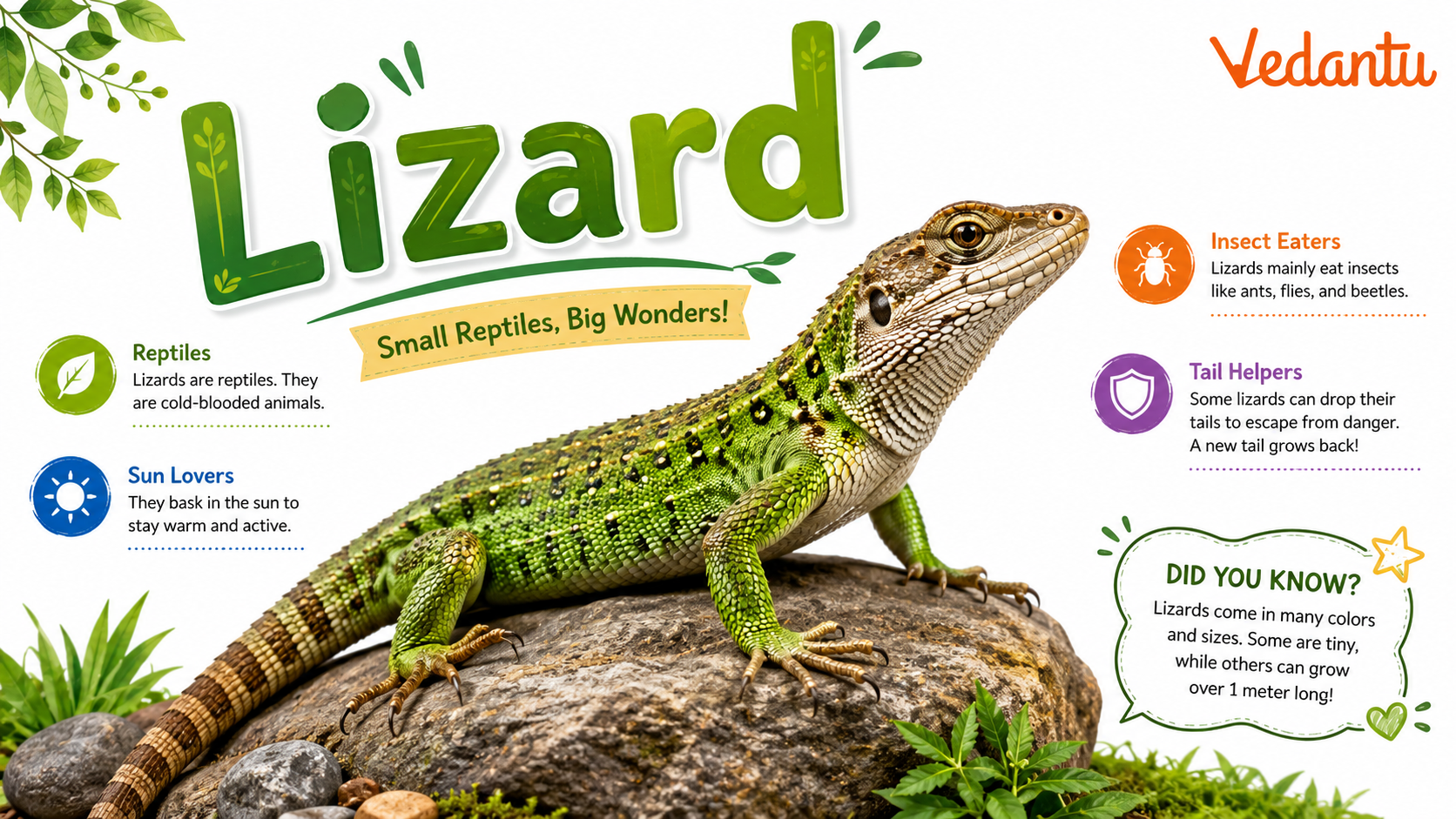
Quick Facts and Statistics
| Feature | Details |
|---|---|
| Common Name | Lizard |
| Animal Group | Reptile |
| Scientific Order | Squamata |
| Number of Species | More than 6,000 species |
| Size | 2 cm (tiny geckos) to 3 m (Komodo dragon) |
| Diet | Mainly insects; some eat plants or small animals |
| Habitat | Deserts, forests, grasslands, rocks, homes |
| Lifespan | 3–50 years (depends on species) |
Appearance and Physical Characteristics
- Covered with dry, scaly skin.
- Long body with a strong tail.
- Usually four legs, but some species have no legs.
- Sharp claws for climbing and digging.
- Movable eyelids in most species (unlike snakes).
- External ear openings.
Habitat and Distribution
Lizard habitat varies widely. They are one of the most adaptable reptiles on Earth.
- Found on every continent except Antarctica.
- Common in warm tropical and subtropical regions.
- Live in deserts, forests, grasslands, rocky areas, and even cities.
- Some species live in trees, while others stay underground.
Diet and Feeding Habits
The lizard diet depends on the species.
- Most lizards are insectivores and eat insects like ants, flies, and beetles.
- Some larger species eat small mammals, birds, or eggs.
- A few species are herbivores and eat leaves and fruits.
- They use quick tongue movements to catch prey.
Behaviour and Lifestyle
- Mostly active during the day (diurnal).
- Some species are nocturnal and hunt at night.
- Very alert and fast runners.
- Use camouflage to hide from predators.
- Communicate using body movements like head bobbing.
Lizard Life Cycle
- Egg Stage: Most lizards lay eggs in soil, sand, or hidden spots.
- Hatching: Baby lizards hatch fully formed and independent.
- Juvenile Stage: Young lizards grow by shedding their skin.
- Adult Stage: They mature and reproduce, continuing the life cycle.
What Makes Lizards Special?
Types and Diversity
Importance and Role in Nature
Amazing Lizard Facts
- There are over 6,000 species of lizards worldwide.
- The Komodo dragon can grow up to 3 metres long.
- Some lizards can glide from tree to tree.
- Horned lizards can squirt blood from their eyes for defence.
- Chameleons move their eyes independently.
- Some species can live up to 50 years.
Fun Facts for Kids
- House lizards eat mosquitoes and flies.
- Baby lizards look like tiny adults.
- Some lizards can run across water for short distances.
- They shed their skin as they grow.
- Many lizards love basking in the sun.
FAQs on Lizard: Fascinating Facts, Types, and Unique Traits
1. What is a lizard?
A lizard is a type of reptile with scaly skin, a long body, and usually four legs.
- Lizards belong to the class Reptilia
- They are cold-blooded (ectothermic) animals
- Most have long tails and movable eyelids
- They are related to snakes and geckos
- They live in many habitats like deserts, forests, and grasslands
2. Where do lizards live?
Lizards live in many different habitats around the world except Antarctica.
- Deserts (like the horned lizard)
- Rainforests and jungles
- Grasslands and rocky areas
- Trees (arboreal lizards like chameleons)
- Some even live near homes and gardens
3. What do lizards eat?
Most lizards are insect-eaters, but their diet depends on the species.
- Insects like ants, beetles, and crickets
- Spiders and worms
- Fruits and leaves (for plant-eating lizards like the iguana)
- Small animals like mice (for larger species)
4. Are lizards dangerous to humans?
Most lizards are harmless and not dangerous to humans.
- They usually run away from people
- Only a few species like the Komodo dragon are dangerous
- Some lizards may bite if scared
- They help control insect populations
5. How do lizards protect themselves?
Lizards use special defense tricks to escape predators.
- Dropping their tail (called autotomy)
- Changing color like a chameleon
- Camouflage to blend with surroundings
- Running quickly or hiding in holes
6. Do lizards lay eggs?
Most lizards lay eggs, but some species give birth to live young.
- Egg-laying species bury eggs in sand or soil
- Warm temperature helps eggs hatch
- Some species protect their eggs
- A few lizards give live birth in cold climates
7. What is the largest lizard in the world?
The Komodo dragon is the largest lizard in the world.
- It can grow up to 10 feet long
- It lives in Indonesia
- It is a powerful predator
- It uses sharp teeth and strong jaws to hunt
8. Can lizards change color?
Some lizards, especially chameleons, can change color.
- They change color to show mood or communicate
- Color change can help with camouflage
- Temperature and light affect color shifts
- Not all lizards can change color
9. How long do lizards live?
The lifespan of a lizard depends on its species and environment.
- Small lizards may live 3–5 years
- Pet lizards like bearded dragons can live 10–15 years
- Large species may live over 20 years
- Good habitat and diet increase lifespan
10. Why are lizards important to the ecosystem?
Lizards play an important role in keeping ecosystems balanced.
- They control insect populations
- They are food for birds and mammals
- They help maintain the food chain
- They support biodiversity in deserts and forests
