



Where Do Martens Live? Habitat, Diet, and Behavior Explained
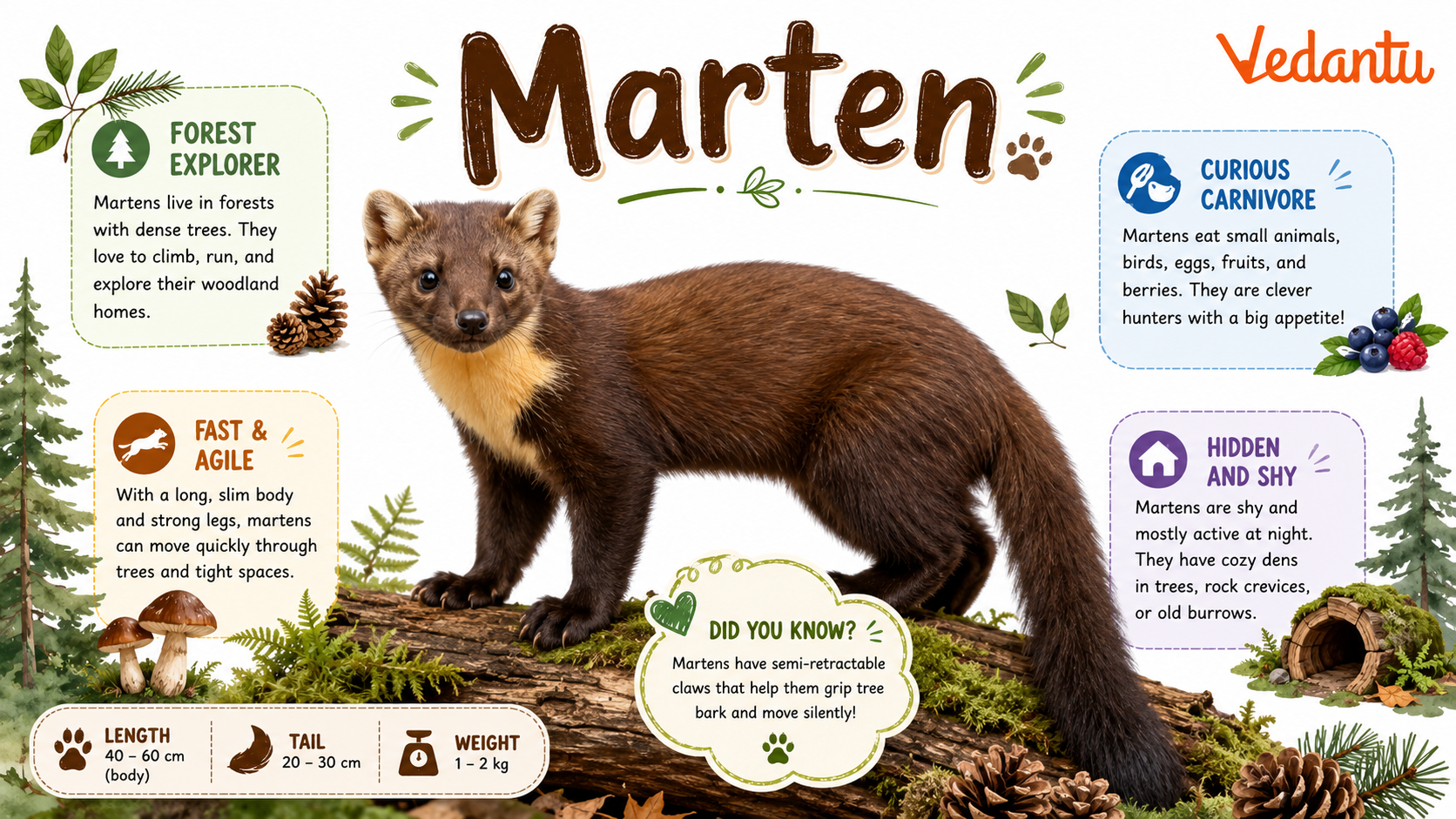
Quick Facts About Marten
| Feature | Details |
|---|---|
| Common Name | Marten |
| Scientific Genus | Martes |
| Animal Group | Mammal (Weasel family – Mustelidae) |
| Size | 45–65 cm (including tail) |
| Weight | 0.5–2 kg |
| Lifespan | 8–14 years (in the wild) |
| Habitat | Forests and woodlands |
| Diet | Carnivore (small animals, birds, fruits) |
| Conservation Status | Mostly Least Concern (varies by species) |
Marten Appearance and Physical Characteristics
- Long, slim body with short legs.
- Thick, soft fur – usually brown with a lighter throat patch.
- Long, bushy tail for balance.
- Sharp claws for climbing trees.
- Small rounded ears and bright eyes.
Marten Habitat and Distribution
Marten habitat mainly includes dense forests with plenty of trees. They prefer areas where they can easily climb and hide.
- Found in Europe, Asia, and North America.
- Live in coniferous and mixed forests.
- Rest in tree hollows, burrows, or abandoned nests.
- Prefer cool to temperate climates.
Marten Diet and Feeding Habits
Small mammals, squirrels, birds, eggs, insects, and fruits.
Quick and silent hunters; climb trees to catch prey.
Eat more fruits and berries in summer and autumn.
Mid-level predator that controls rodent populations.
Behaviour and Lifestyle
- Mostly solitary animals.
- Active during night (nocturnal).
- Excellent climbers and jumpers.
- Mark territory using scent glands.
- Very alert and cautious in the wild.
Marten Life Cycle
- Mating: Usually in summer.
- Delayed Implantation: Fertilised egg develops months later.
- Birth: 1–5 babies (kits) born in spring.
- Growth: Kits stay with mother for several months.
- Adult Stage: Independent by one year of age.
What Makes Marten Special?
Importance of Marten in Nature
- Control rodent populations.
- Help maintain balance in forest ecosystems.
- Spread seeds by eating fruits.
- Act as prey for larger predators like eagles and foxes.
Amazing Marten Facts
- There are several species like the Pine Marten and American Marten.
- They can leap up to 3–4 meters between trees.
- Martens have semi-retractable claws.
- Their fur was once highly valued in the fur trade.
- They can swim if needed.
- Martens are very curious animals.
Interesting Facts About Marten
Fun Facts for Kids
- Martens are part of the same family as otters and weasels.
- They love climbing more than running on the ground.
- Baby martens are called kits.
- They can move very quietly while hunting.
- Their fluffy tail helps them balance like a tightrope walker!
FAQs on Marten: Fascinating Facts About This Forest Mammal
1. What is a Marten?
A Marten is a small, furry mammal that belongs to the weasel family (Mustelidae).
- It is related to ferrets, otters, and weasels.
- Martens have long bodies, bushy tails, and sharp claws.
- They are known for being quick climbers and skilled hunters.
- Common types include the Pine Marten and American Marten.
2. Where do martens live?
Martens mainly live in forests and woodlands across the Northern Hemisphere.
- They are found in North America, Europe, and Asia.
- They prefer dense forests with lots of trees for climbing.
- Some species live in mountain forests and cold regions.
3. What do martens eat?
Martens are omnivores, which means they eat both animals and plants.
- They hunt small mammals like mice and squirrels.
- They eat birds, eggs, and insects.
- They also enjoy berries and fruits in summer.
4. Are martens dangerous to humans?
Martens are generally not dangerous to humans and avoid people.
- They are shy and prefer staying hidden.
- They may defend themselves if threatened.
- Wild martens should never be touched or fed.
5. What does a marten look like?
A marten has a slim body, pointed face, and bushy tail.
- Its fur is usually brown or dark chocolate.
- Many species have a cream or yellow patch on their chest.
- They have sharp teeth and curved claws for climbing.
6. Are martens nocturnal?
Martens are mostly nocturnal, meaning they are active at night.
- They hunt when it is dark.
- Some may also be active at dawn or dusk.
- They rest in tree hollows or dens during the day.
7. How big do martens grow?
Martens are small animals, usually about the size of a house cat.
- They grow to around 20–28 inches including their tail.
- They weigh between 1–3 pounds.
- Males are often slightly larger than females.
8. What are the different types of martens?
There are several species of martens found around the world.
- American Marten
- European Pine Marten
- Japanese Marten
- Sable (a type of marten)
9. How long do martens live?
Martens usually live around 8–10 years in the wild.
- They may live longer in protected areas.
- Predators include eagles, foxes, and larger carnivores.
- Habitat loss can affect their lifespan.
10. Why are martens important to the ecosystem?
Martens help keep the forest ecosystem balanced by controlling small animal populations.
- They reduce numbers of rodents.
- They spread seeds by eating fruits.
- They are part of the natural food chain.
