



What Is a Nutria? Habitat, Diet, Lifespan, and Environmental Impact
The Nutria, also called the coypu, is a large rodent that lives near water. It looks like a mix between a beaver and a rat! Native to South America, nutria are now found in many parts of the world. They are famous for their webbed feet, strong swimming skills, and bright orange front teeth. Let’s explore interesting nutria facts, their habitat, diet, life cycle, and why they are important to wetlands.
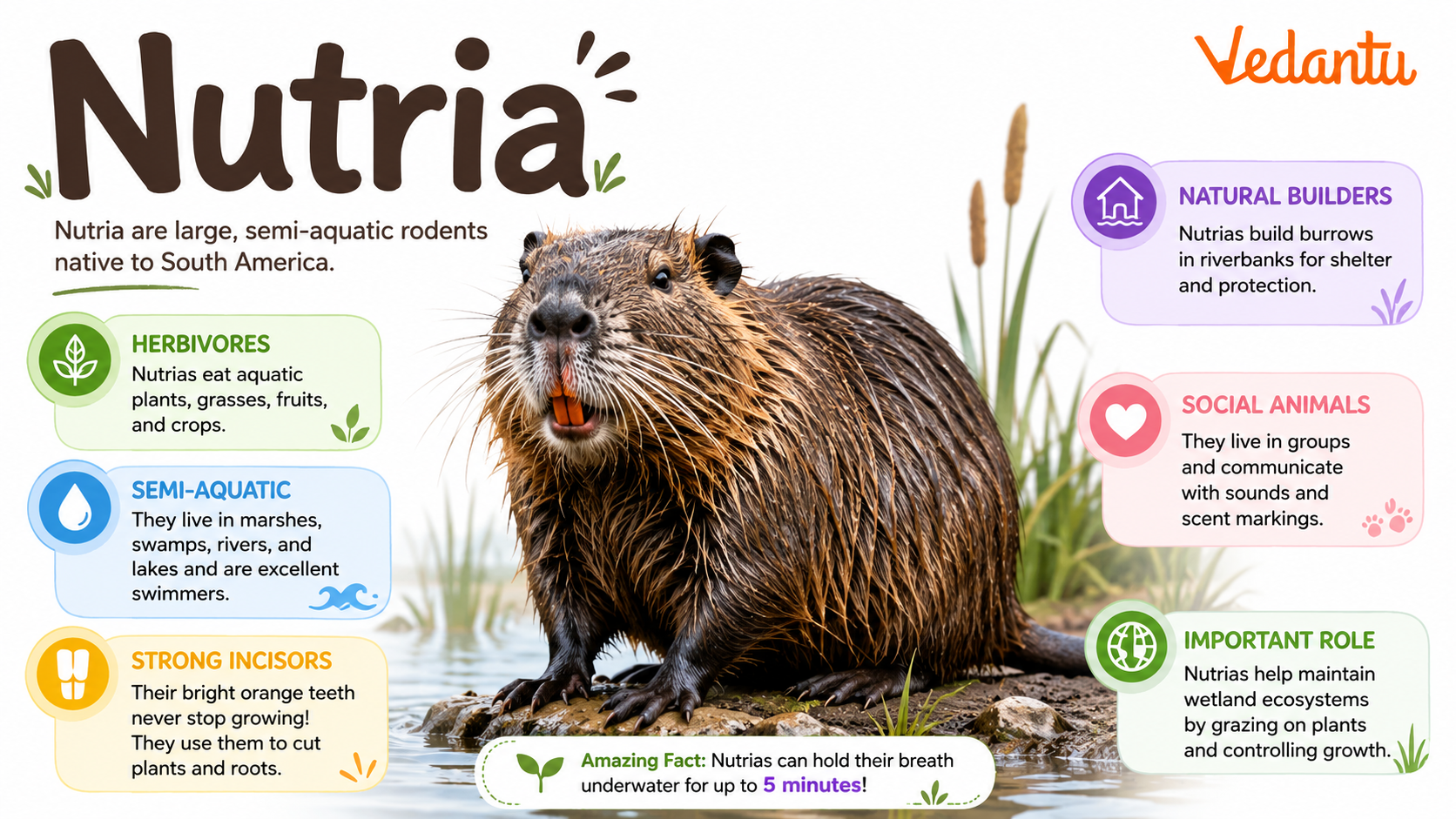
Quick Facts About Nutria
| Feature | Details |
|---|---|
| Common Name | Nutria or Coypu |
| Scientific Name | Myocastor coypus |
| Animal Group | Mammal (Rodent) |
| Size | 40–60 cm body length (tail almost same length) |
| Weight | 4–9 kg |
| Lifespan | 3–6 years (wild) |
| Habitat | Wetlands, rivers, lakes, marshes |
| Diet | Herbivore – aquatic plants |
| Movement | Swims and walks on land |
| Conservation Status | Least Concern (but invasive in many regions) |
Appearance and Physical Characteristics
- Large rodent with a round body and short legs.
- Long, thin, rat-like tail.
- Thick brown fur that keeps it warm in water.
- Bright orange front teeth due to strong enamel.
- Webbed hind feet for swimming.
- Long white whiskers to sense surroundings.
Nutria Habitat and Distribution
- Originally from South America.
- Now found in North America, Europe, Asia, and Africa.
- Lives in burrows dug along riverbanks.
- Active in both warm and mild climates.
Diet and Feeding Habits
- Herbivore – mainly eats aquatic plants.
- Feeds on roots, stems, leaves, and grasses.
- Can consume up to 25% of its body weight daily.
- Uses strong incisors to cut tough plants.
Behaviour and Lifestyle
- Mostly active at night (nocturnal).
- Good swimmers and can stay underwater for several minutes.
- Usually live in small family groups.
- Communicate using grunts, whistles, and squeaks.
- Spend time grooming their thick fur.
Nutria Life Cycle
- Mating: Can breed throughout the year.
- Gestation: About 130 days.
- Birth: 2–13 babies (called kits).
- Young Stage: Kits are born with fur and open eyes.
- Growth: Start eating plants within days.
- Adult: Reach maturity in about 4–6 months.
What Makes Nutria Special?
Importance and Role in Nature
Amazing Nutria Facts
- Nutria are sometimes mistaken for beavers or muskrats.
- Their teeth grow continuously throughout life.
- They were introduced to many countries for fur farming.
- Excellent swimmers with partially webbed feet.
- Can stay underwater for up to 5 minutes.
- Have large orange incisors visible even when mouth is closed.
Interesting Facts About Nutria
Fun Facts for Kids
- Nutria teeth are orange, not white!
- They love swimming and playing in water.
- Baby nutria can walk and swim very soon after birth.
- They build homes near rivers and lakes.
- They look like a mix of a beaver and a giant rat.
FAQs on Nutria: Facts, Habitat, Diet, and Behavior Explained
1. What is a nutria?
A nutria is a large semi-aquatic rodent that looks like a mix between a beaver and a rat.
- Scientific name: Myocastor coypus
- Also called a coypu
- Native to South America
- Lives near rivers, lakes, and wetlands
- Known for its big orange teeth and long round tail
2. Where do nutria live?
Nutria live in wetlands and warm freshwater areas around the world.
- Originally from South America
- Now found in North America, Europe, and Asia
- Prefer marshes, rivers, ponds, and lakes
- Build burrows along riverbanks
3. What do nutria eat?
Nutria are plant-eating animals that mostly feed on wetland vegetation.
- Eat grasses and aquatic plants
- Chew on roots and stems
- Sometimes eat small insects or snails
- Can destroy large amounts of marsh plants daily
4. Why are nutria considered invasive?
Nutria are called an invasive species because they damage ecosystems where they are not native.
- Reproduce very quickly
- Destroy wetland plants
- Cause soil erosion by digging burrows
- Compete with native wildlife
5. How big do nutria grow?
Nutria are large rodents that can grow as big as a small dog.
- Length: About 16–24 inches (body)
- Tail: About 12–18 inches long
- Weight: Between 15–20 pounds
- Have bright orange front teeth
6. How can you tell a nutria apart from a beaver or muskrat?
You can identify a nutria by its round tail and orange teeth.
- Nutria: Long round tail, orange teeth, medium size
- Beaver: Wide flat tail, much larger body
- Muskrat: Smaller body, thin tail
- Nutria have visible white whiskers
7. Are nutria dangerous to humans?
Nutria are generally not dangerous but can cause problems if disturbed.
- Usually shy and avoid people
- May bite if they feel threatened
- Can carry diseases like leptospirosis
- Damage crops and property
8. Why were nutria brought to other countries?
Nutria were introduced to many countries for their fur.
- Farmed for fur coats in the 1900s
- Escaped or were released into the wild
- Adapted quickly to new environments
- Now considered invasive in many regions
9. How fast do nutria reproduce?
Nutria reproduce very quickly, which helps their populations grow fast.
- Can have 2–3 litters per year
- Each litter has 4–13 babies
- Babies can swim shortly after birth
- Reach adulthood within months
10. How do people control nutria populations?
People control nutria to protect wetlands and native wildlife.
- Organized trapping programs
- Wildlife management plans
- Habitat restoration projects
- Public awareness campaigns
