



Where Do Ocelots Live, What Do They Eat, and How Do They Survive in the Wild?
The ocelot is a beautiful wild cat known for its golden coat covered in dark spots and stripes. Found mainly in Central and South America, this medium-sized feline is an expert climber, swimmer, and hunter. Ocelot facts reveal that it is mostly active at night and moves silently through forests in search of prey. With sharp senses and strong muscles, the ocelot is one of nature’s most graceful predators.
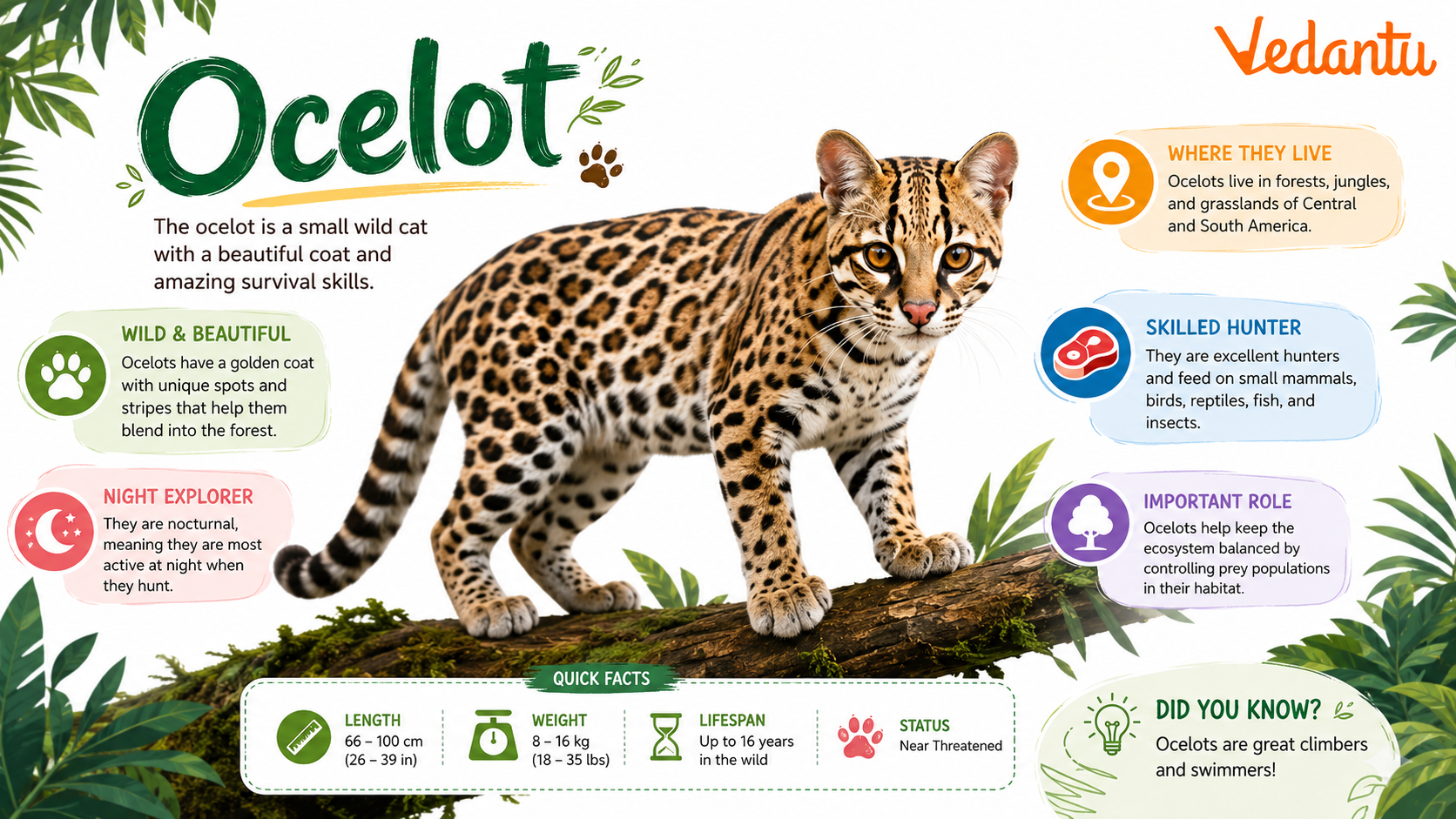
Quick Facts and Statistics
| Feature | Details |
|---|---|
| Common Name | Ocelot |
| Scientific Name | Leopardus pardalis |
| Animal Group | Mammal (Wild Cat) |
| Size | 55–100 cm (body length) |
| Weight | 8–16 kg |
| Lifespan | 10–15 years in the wild |
| Habitat | Tropical forests, grasslands, mangroves |
| Diet | Small mammals, birds, reptiles |
| Conservation Status | Least Concern (but threatened in some regions) |
Appearance and Physical Characteristics
- Golden-yellow or reddish fur with black spots and stripes.
- White underside and dark markings on the face.
- Long tail with dark rings.
- Sharp claws and strong legs for climbing trees.
- Large eyes adapted for night vision.
Habitat and Distribution
The ocelot habitat includes dense forests and warm regions with plenty of cover. They prefer areas where they can hide easily and hunt quietly.
- Found in Central and South America.
- Also seen in parts of Mexico and southern Texas (USA).
- Lives in rainforests, thorn forests, swamps, and grasslands.
- Needs thick vegetation for shelter and protection.
Diet and Feeding Habits
The ocelot diet mainly consists of meat. It is a carnivore and hunts mostly at night.
Behaviour and Lifestyle
- Mostly solitary and lives alone.
- Active during the night (nocturnal).
- Marks territory using scent.
- Excellent climber and swimmer.
- Very quiet and stealthy while hunting.
Life Cycle and Reproduction
- Female gives birth to 1–3 kittens.
- Gestation period is about 79–85 days.
- Kittens are born blind and open their eyes after about two weeks.
- Mother cares for and protects the young.
- Young ocelots become independent after about one year.
What Makes the Ocelot Special?
Importance and Role in Nature
The ocelot importance in the ecosystem is significant because it helps maintain balance in the food chain.
- Controls populations of small animals.
- Prevents overgrowth of rodents in forests.
- Indicates a healthy forest ecosystem.
Amazing Ocelot Facts
Fun Facts for Kids
- The name “ocelot” comes from an ancient Aztec word.
- Ocelots are smaller than leopards but look similar.
- They love hiding in thick bushes.
- Baby ocelots are called kittens.
- They are super quiet hunters!
FAQs on Ocelot: Fascinating Facts About This Wild Spotted Cat
1. What is an Ocelot?
An ocelot is a small wild cat with beautiful spotted fur that lives in the Americas.
- The ocelot (Leopardus pardalis) is a medium-sized wild cat.
- It is known for its golden-yellow coat with black spots and stripes.
- Ocelots are part of the Felidae (cat) family.
- They are often compared to leopards and jaguars, but they are much smaller.
2. Where do ocelots live?
Ocelots live in warm forests and grasslands across North, Central, and South America.
- They are found in rainforests, tropical forests, and savannas.
- Ocelots live in countries like Mexico, Brazil, and parts of Texas.
- They prefer areas with thick bushes for hiding and hunting.
3. What do ocelots eat?
Ocelots are carnivores that hunt small animals for food.
- They eat rodents, rabbits, and birds.
- Sometimes they catch lizards, frogs, and fish.
- Ocelots are skilled night hunters (nocturnal predators).
4. Are ocelots dangerous to humans?
Ocelots are not usually dangerous to humans and prefer to stay away from people.
- They are shy and secretive wild cats.
- Ocelots avoid towns and cities.
- They may defend themselves if threatened.
5. How big is an ocelot?
An ocelot is about twice the size of a house cat but smaller than a leopard.
- They grow about 28 to 35 inches long.
- Their tail adds another 12 to 18 inches.
- They usually weigh between 15 and 35 pounds.
6. Why do ocelots have spots?
Ocelots have spots to help them hide in the forest.
- Their spotted and striped coat provides camouflage.
- Spots help them blend into sunlight and shadows in the jungle.
- This makes it easier to hunt prey and avoid predators.
7. Are ocelots endangered?
Ocelots are not fully endangered worldwide, but they are protected in many areas.
- Their conservation status is Least Concern globally.
- In the United States, they are considered endangered.
- Main threats include habitat loss and illegal hunting.
8. How long do ocelots live?
Ocelots can live over a decade, especially in safe environments.
- In the wild, they live about 7 to 10 years.
- In zoos, they can live up to 20 years.
- Safe habitats and good care increase their lifespan.
9. Are ocelots good pets?
Ocelots are wild animals and do not make good pets.
- They need large wild territories to roam.
- Ocelots have strong hunting instincts.
- Keeping them as pets is illegal in many places.
10. What are some interesting facts about ocelots?
Ocelots are fascinating wild cats with unique behaviors and features.
- They are mostly nocturnal, meaning active at night.
- Each ocelot’s spot pattern is unique, like a fingerprint.
- They are excellent climbers and swimmers.
- Ocelots communicate using growls, yowls, and scent markings.
