



Otter Habitat, Diet, Behavior, and Unique Adaptations Explained
Otters are smart, energetic mammals that love to swim, slide, and play in rivers, lakes, and oceans. Known for their smooth fur and playful nature, otters are excellent swimmers and skilled hunters. There are many interesting otter facts that show how unique these animals are. From cracking shells with rocks to floating on their backs, otters are truly fascinating creatures of the wild.
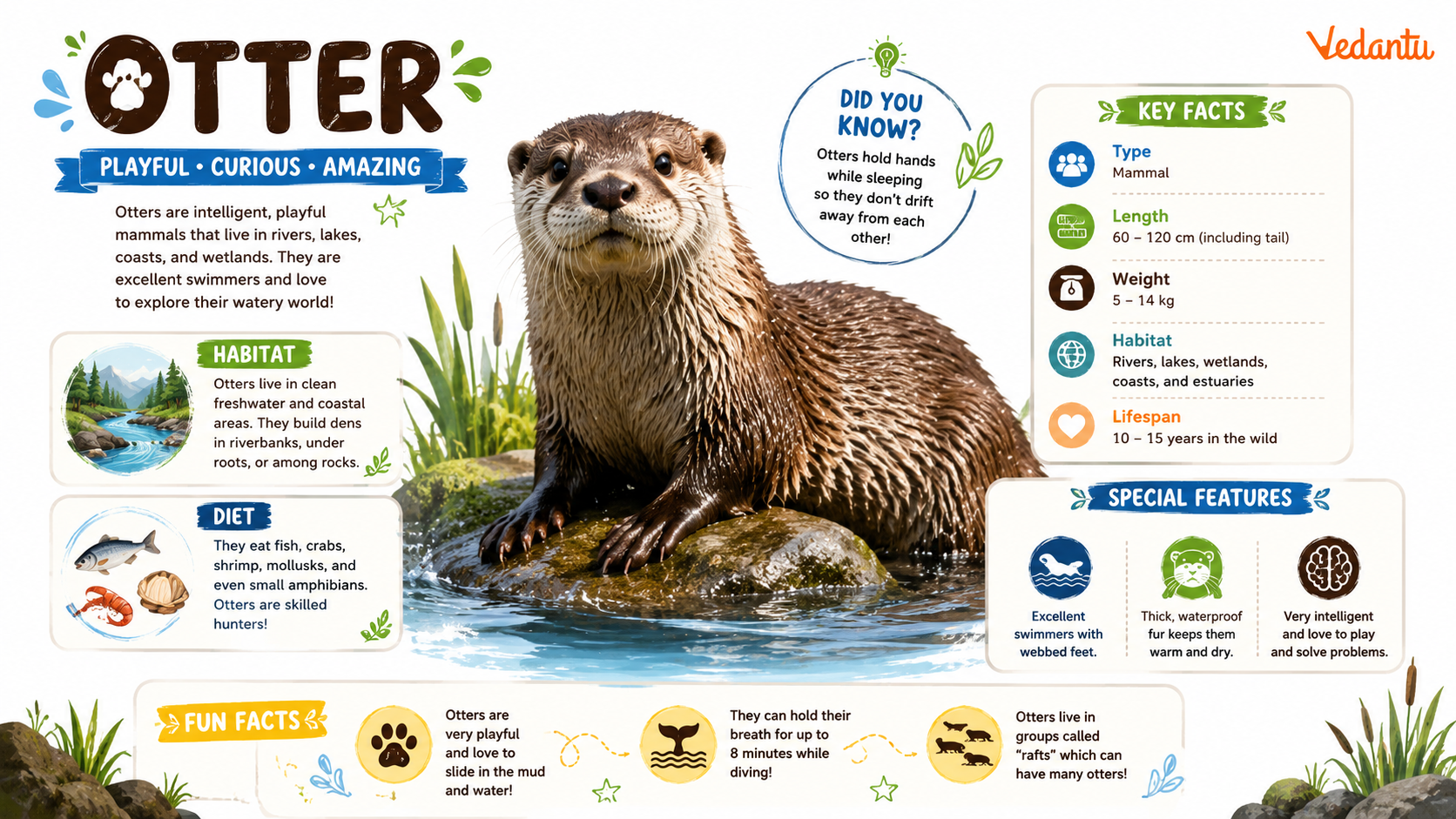
Quick Facts About Otters
| Feature | Details |
|---|---|
| Common Name | Otter |
| Scientific Family | Mustelidae |
| Animal Group | Mammal |
| Size | 60 cm to 1.8 m (including tail) |
| Weight | 3 kg to 45 kg (varies by species) |
| Lifespan | 8–16 years |
| Habitat | Rivers, lakes, wetlands, coastal areas |
| Diet | Fish, crabs, frogs, shellfish |
| Conservation Status | Varies by species (some endangered) |
Appearance and Physical Characteristics
- Long, streamlined body perfect for swimming.
- Thick, waterproof fur to keep warm in cold water.
- Webbed feet that help them paddle quickly.
- Strong tail used like a rudder for steering.
- Sharp teeth and strong jaws for catching prey.
Otter Habitat and Distribution
Otters live near clean water sources and are found on almost every continent except Australia and Antarctica.
- Freshwater rivers and lakes
- Wetlands and marshes
- Rocky sea coasts (sea otters)
- Underground burrows near water called “holts”
Otter Diet and Feeding Habits
- Otters are carnivores.
- They mainly eat fish.
- They also eat crabs, frogs, shellfish, and small water animals.
- Sea otters use rocks as tools to break open hard shells.
Behaviour and Lifestyle
- Very playful and active animals.
- Often seen sliding on mud or snow.
- Some species live alone, while others live in groups.
- Communicate through whistles, growls, and squeaks.
- Spend much of their time swimming and hunting.
Otter Life Cycle
- Birth: Baby otters are called pups.
- Early Stage: Pups stay with their mother and learn to swim.
- Learning Phase: Mothers teach them how to catch fish.
- Adult Stage: They become independent and start their own territory.
What Makes Otters Special?
Importance of Otters in Nature
Amazing Otter Facts
- There are 13 different species of otters worldwide.
- Sea otters can dive up to 90 meters deep.
- Otters can hold their breath for several minutes underwater.
- They have sensitive whiskers to detect movement in water.
- River otters can run fast on land too.
- They spend hours each day grooming their fur.
Interesting Facts About Otters
Fun Facts for Kids
- Otters love sliding down muddy riverbanks.
- They often juggle small stones while floating.
- They can sleep in the water.
- They have super-strong teeth for crunchy food.
- Otters are known as one of the most playful animals.
FAQs on Otter: Amazing Facts About These Playful Water Mammals
1. What is an otter?
An otter is a playful, semi-aquatic mammal that belongs to the weasel family.
- Otters are part of the Mustelidae family, which includes weasels and badgers.
- They are known for their webbed feet, thick fur, and long bodies.
- Otters live both on land and in water, making them semi-aquatic animals.
- They are famous for being smart, social, and excellent swimmers.
2. Where do otters live?
Otters live in rivers, lakes, oceans, and wetlands around the world.
- River otters live in freshwater habitats like rivers and lakes.
- Sea otters live in coastal ocean waters.
- They build homes called dens near water.
- Otters are found in North America, Europe, Asia, and Africa.
3. What do otters eat?
Otters are carnivores that mostly eat fish and other small aquatic animals.
- Their main food is fish.
- They also eat crabs, frogs, shellfish, and small mammals.
- Sea otters use rocks as tools to open shellfish.
- Otters must eat a lot to stay warm in cold water.
4. How do otters swim so well?
Otters are excellent swimmers because of their special body features.
- They have webbed feet that help them paddle.
- Their strong tails act like rudders.
- They have thick, waterproof fur for warmth.
- They can hold their breath underwater for several minutes.
5. Are otters friendly?
Otters may look friendly, but they are wild animals.
- They are playful with other otters.
- Otters can be protective and may bite if scared.
- It is best to observe wild otters from a safe distance.
- They are social animals that live in groups called rafts (sea otters).
6. What is the difference between river otters and sea otters?
River otters and sea otters differ in habitat, size, and behavior.
- River otters live in freshwater and are smaller.
- Sea otters live in oceans and float on their backs.
- Sea otters have thicker fur than river otters.
- River otters spend more time on land.
7. Why do otters hold hands?
Sea otters hold hands to stay together while floating in the water.
- This behavior prevents them from drifting apart.
- Groups of sea otters are called rafts.
- Holding hands helps them rest safely.
- It also keeps families connected.
8. How long do otters live?
Otters usually live between 8 to 15 years, depending on the species.
- River otters live around 8–12 years in the wild.
- Sea otters can live up to 15–20 years.
- Otters in zoos may live longer due to protection and care.
- Lifespan depends on habitat, predators, and food supply.
9. Are otters endangered?
Some otter species are endangered due to habitat loss and pollution.
- Sea otters were once hunted for their fur.
- Water pollution affects their food supply.
- Habitat destruction harms river otters.
- Conservation programs help protect endangered otters.
10. Why are otters important to the ecosystem?
Otters help keep aquatic ecosystems healthy and balanced.
- They control fish and shellfish populations.
- Sea otters protect kelp forests by eating sea urchins.
- Healthy otter populations mean clean water systems.
- They are considered a keystone species in marine environments.
