



Parrot Facts, Diet, Lifespan, Talking Ability & Habitat Explained
Parrots are bright, intelligent birds known for their colourful feathers and amazing ability to copy human speech. Found in tropical and subtropical regions, these birds are loved as pets and admired in the wild. From rainforests to grasslands, the parrot habitat is full of trees where they fly, feed, and build nests. Learning about parrot facts, parrot diet, and parrot characteristics helps us understand why these birds are so special in nature.
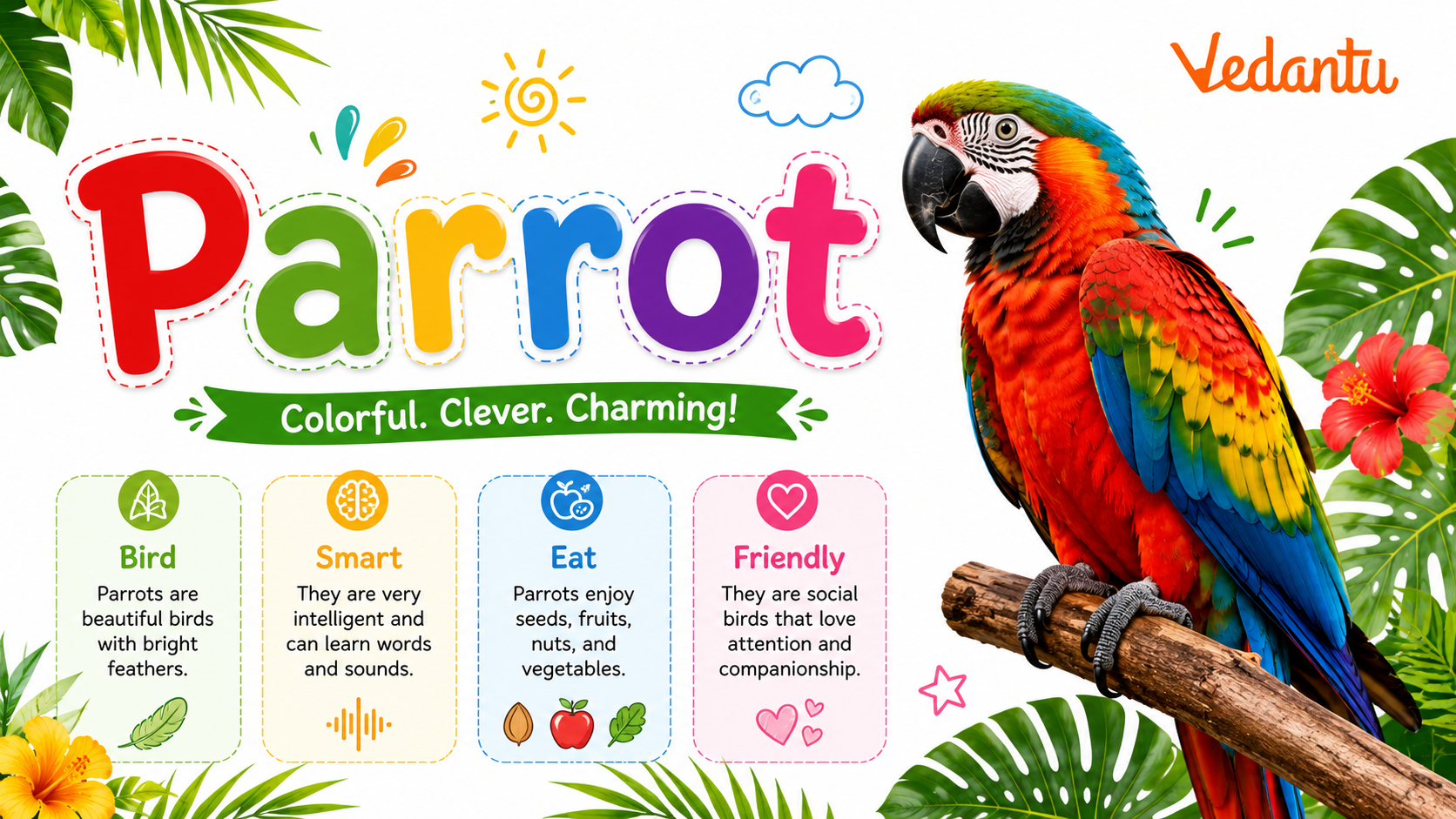
Quick Facts About Parrot
| Feature | Details |
|---|---|
| Common Name | Parrot |
| Scientific Order | Psittaciformes |
| Animal Group | Bird |
| Size | 8 cm to 100 cm (varies by species) |
| Weight | From 10 g to over 1.5 kg |
| Lifespan | 10 to 80 years (some live even longer) |
| Diet | Seeds, fruits, nuts, flowers |
| Habitat | Tropical forests, woodlands, grasslands |
| Young One | Chick |
Appearance and Physical Characteristics
- Brightly coloured feathers in green, red, blue, yellow, or mixed shades.
- Strong, curved beak used for cracking nuts and climbing trees.
- Zygodactyl feet (two toes forward and two backward) for gripping branches.
- Sharp eyesight and strong wings for flying long distances.
- Long tail feathers in many species.
Parrot Habitat and Distribution
- Mostly found in tropical and subtropical regions.
- Common in South America, Australia, Africa, and parts of Asia.
- Live in rainforests, woodlands, savannas, and even mountains.
- Build nests in tree holes or cavities.
The parrot habitat usually includes areas with plenty of trees and food sources. Some species adapt to cities and live near humans.
Parrot Diet and Feeding Habits
Most parrots are herbivores.
Seeds, fruits, nuts, berries, and flowers.
Use strong beaks to crack shells and hold food with their feet.
Help in seed dispersal and forest growth.
Behaviour and Lifestyle
- Highly social birds; often live in flocks.
- Communicate using loud calls and body movements.
- Active during the day (diurnal).
- Very intelligent and capable of problem-solving.
- Some species can imitate human speech.
Parrot Life Cycle
- Egg Stage: Female lays eggs in tree cavities.
- Chick Stage: Chicks hatch blind and featherless.
- Growing Stage: Parents feed and protect the chicks.
- Adult Stage: Young parrots learn to fly and find food.
The parrot life cycle includes strong parental care, and many species form long-term pair bonds.
Flight Adaptations
- Strong chest muscles for powerful wing movement.
- Lightweight bones that help in flying.
- Broad wings for controlled and flexible flight.
- Long tails for balance and direction control.
Sound and Call
- Make loud squawks, chirps, and whistles.
- Use calls to communicate with flock members.
- Some parrots can mimic human words and sounds.
What Makes Parrot Special?
Importance of Parrot in Nature
- Help spread seeds and grow new plants.
- Maintain forest ecosystem balance.
- Serve as indicators of healthy forests.
- Bring joy and companionship as pets.
The parrot importance in ecosystems is very high because they support plant growth and biodiversity.
Amazing Parrot Facts
Interesting Facts About Parrot
- Parrots have excellent problem-solving skills.
- They form strong emotional bonds with partners.
- Many species are endangered due to habitat loss.
- They preen their feathers to keep them clean.
Fun Facts for Kids
FAQs on Parrot: Amazing Facts, Behavior & Care Guide
1. What is a parrot?
A parrot is a colorful bird known for its curved beak and ability to mimic sounds.
- Parrots belong to the bird order Psittaciformes
- They have strong, curved beaks for cracking nuts and seeds
- Many species can imitate human speech
- They are also called talking birds or pet parrots
2. Where do parrots live?
Parrots mainly live in warm regions like tropical and subtropical areas.
- Found in rainforests, jungles, and woodlands
- Common in South America, Australia, Africa, and parts of Asia
- Some species adapt to cities and parks
- They prefer places with trees for nesting
3. What do parrots eat?
Parrots eat a variety of plant-based foods depending on their habitat.
- Seeds and nuts
- Fresh fruits like mangoes and bananas
- Berries and flowers
- Some species also eat small insects
4. Can parrots really talk?
Yes, many parrots can mimic human speech and other sounds.
- They copy words using their strong voice box (syrinx)
- Popular talking species include the African Grey Parrot and Macaw
- They repeat sounds they hear often
- Talking is a form of communication and social bonding
5. How long do parrots live?
Parrots are known for their long lifespan compared to many other birds.
- Small parrots live around 10–20 years
- Medium parrots may live 20–40 years
- Large parrots like Macaws can live up to 60–80 years
- Proper care increases lifespan in pet parrots
6. What are the different types of parrots?
There are over 350 species of parrots around the world.
- Macaws – large and colorful
- Parakeets (Budgies) – small and popular pets
- Cockatoos – known for their crests
- African Grey Parrots – famous for intelligence
7. Why are parrots so colorful?
Parrots are colorful because their bright feathers help them survive and communicate.
- Colors help them blend into tropical rainforests
- Bright feathers attract mates
- Feather pigments create reds, greens, blues, and yellows
- Colorful plumage is a key feature of exotic birds
8. Are parrots good pets for kids?
Parrots can be good pets, but they need special care and attention.
- They are smart and need mental stimulation
- Require daily interaction and social time
- Need a balanced diet and clean cage
- Some species can be noisy and live many years
9. How do parrots build their nests?
Parrots usually nest in tree holes rather than building open nests.
- Use natural holes in tree trunks
- Some nest in cliffs or termite mounds
- Lay 2–4 eggs in most species
- Both parents often help care for chicks
10. Are parrots endangered?
Some parrot species are endangered due to habitat loss and illegal trade.
- Deforestation destroys rainforest habitats
- Illegal pet trade reduces wild populations
- Conservation programs protect rare species
- Examples include the Spix’s Macaw
