



What Is a Pinniped? Habitat, Diet, Adaptations, and Key Differences
Pinnipeds are amazing marine mammals that include seals, sea lions, and walruses. They spend most of their lives in water but come onto land or ice to rest and give birth. With strong flippers, thick blubber, and sensitive whiskers, pinnipeds are perfectly adapted for cold oceans. Learning about pinniped facts, pinniped habitat, pinniped diet, and pinniped characteristics helps us understand how these ocean animals survive and why they are important to marine ecosystems.
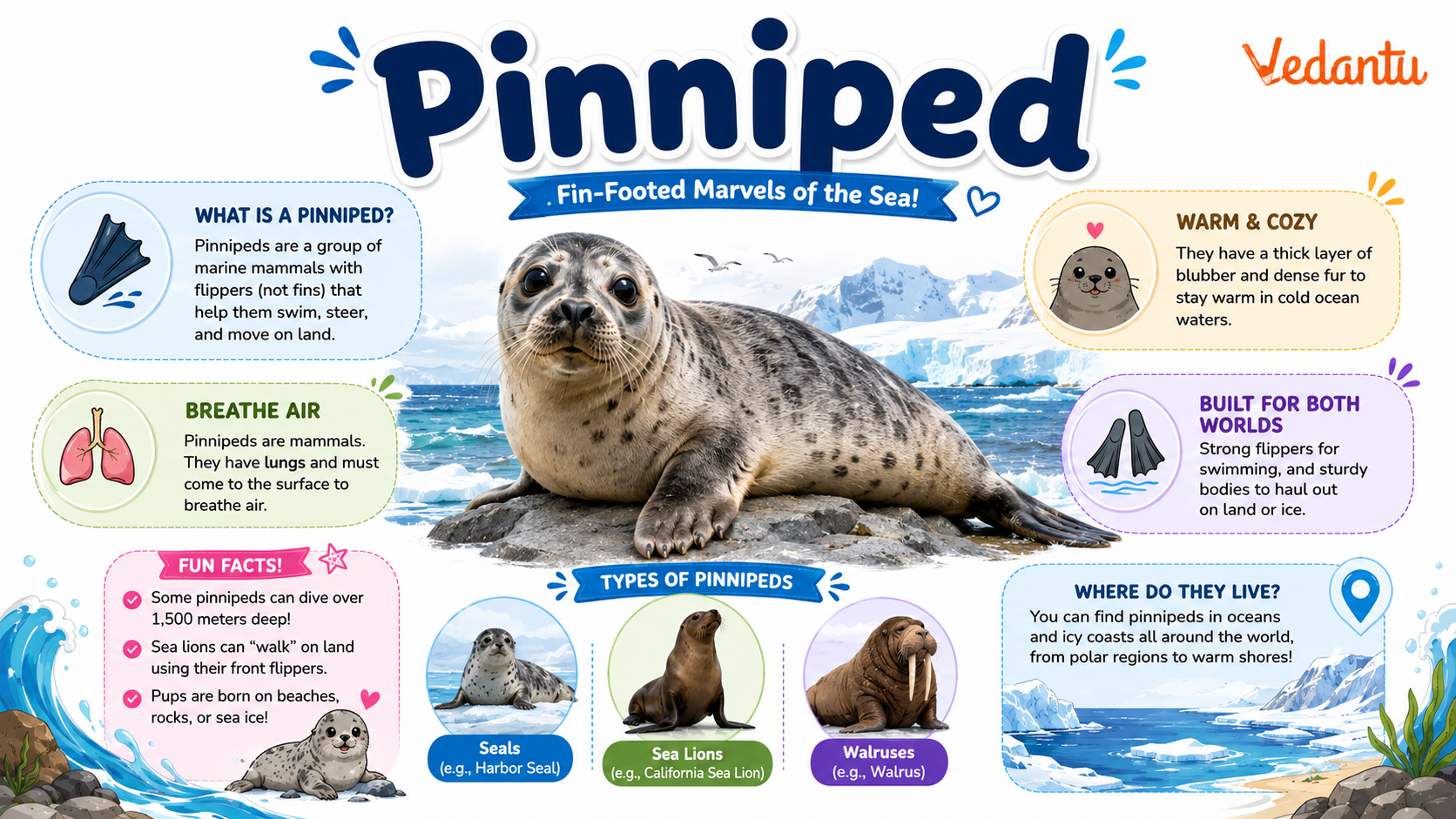
Quick Facts About Pinnipeds
| Feature | Details |
|---|---|
| Common Group Name | Pinnipeds (Seals, Sea Lions, Walruses) |
| Scientific Order | Pinnipedia |
| Animal Group | Mammal |
| Habitat | Oceans, coastal areas, sea ice |
| Diet | Fish, squid, crustaceans |
| Lifespan | 20–40 years (varies by species) |
| Movement | Swim with flippers, wriggle or walk on land |
| Special Feature | Thick blubber for warmth |
Appearance and Physical Characteristics
- Streamlined, torpedo-shaped body for smooth swimming.
- Four flippers instead of legs.
- Thick layer of blubber under the skin for warmth.
- Whiskers (vibrissae) to detect movement in water.
- Large eyes for better underwater vision.
Habitat and Distribution
- Found in Arctic, Antarctic, and many coastal regions.
- Some species prefer icy waters, others live in warmer seas.
- Rest on beaches, rocky shores, or floating sea ice.
- Rarely found in freshwater (mostly ocean animals).
Different species live in different parts of the world, but all pinnipeds depend on clean oceans and safe coastal resting places.
Diet and Feeding Habits
- Main diet includes fish, squid, and shellfish.
- Some larger species may eat penguins or other seals.
- Use sharp teeth to catch slippery prey.
- Whiskers help detect vibrations made by swimming fish.
Their pinniped diet plays an important role in keeping fish populations balanced in the ocean food chain.
Behaviour and Lifestyle
Life Cycle and Reproduction
- Birth: Female gives birth to a live baby called a pup.
- Pup Stage: The mother feeds the pup with rich milk.
- Growing Up: The pup learns to swim and hunt.
- Adult Stage: Becomes independent and joins colonies.
Pinniped mothers are very protective and care for their pups until they are strong enough to survive in the ocean.
Types of Pinnipeds
No external ear flaps and move by wriggling on land.
Have visible ear flaps and can walk using flippers.
Large body, long tusks, and thick whiskers.
What Makes Pinnipeds Special?
Importance and Role in Nature
- Help control fish and squid populations.
- Serve as prey for large predators like sharks and orcas.
- Indicate ocean health and environmental changes.
- Attract tourism and support coastal economies.
Amazing Pinniped Facts
Fun Facts for Kids
- Pinniped means “fin-footed.”
- Baby seals are called pups.
- Some seals sleep in water while floating.
- Sea lions can clap their flippers together.
- Walruses use their whiskers to find food on the sea floor.
FAQs on Pinniped Animals Explained: Seals, Sea Lions, and Walruses
1. What is a pinniped?
A pinniped is a group of marine mammals that includes seals, sea lions, and walruses.
- The word pinniped means “fin-footed.”
- They belong to the order Carnivora.
- They live both in the ocean and on land or ice.
- They are warm-blooded mammals that breathe air.
2. What animals are classified as pinnipeds?
The main animals classified as pinnipeds are seals, sea lions, and walruses.
- True seals (Phocidae)
- Sea lions and fur seals (Otariidae)
- Walrus (Odobenidae)
3. Where do pinnipeds live?
Pinnipeds live mostly in oceans and coastal waters around the world.
- Found in the Arctic and Antarctic regions
- Live along rocky shores, beaches, and sea ice
- Some species prefer cold waters, others live in warmer seas
4. What do pinnipeds eat?
Pinnipeds are carnivores that mainly eat fish and other sea animals.
- Fish such as herring and cod
- Squid and octopus
- Crustaceans like crabs
- Some larger species eat penguins or small sharks
5. How are seals and sea lions different?
Seals and sea lions are different types of pinnipeds with clear physical differences.
- Sea lions have visible ear flaps; true seals do not.
- Sea lions can rotate their back flippers to walk on land; seals crawl on their bellies.
- Sea lions are usually more social and noisy.
6. Are pinnipeds mammals?
Yes, pinnipeds are marine mammals just like whales and dolphins.
- They breathe air with lungs.
- They give birth to live young.
- Mothers produce milk to feed pups.
- They have a layer of fat called blubber to stay warm.
7. How do pinnipeds swim?
Pinnipeds swim using their strong flippers and streamlined bodies.
- Sea lions use their front flippers to “fly” through water.
- Seals move with side-to-side motions of their back flippers.
- Their bodies reduce water resistance for fast swimming.
8. What are baby pinnipeds called?
Baby pinnipeds are called pups.
- Pups are born on land or sea ice.
- They drink their mother’s rich milk.
- Many species have soft fur coats at birth.
9. What predators hunt pinnipeds?
Pinnipeds have natural predators in the ocean and on land.
- Orcas (killer whales)
- Sharks, especially great whites
- Polar bears in Arctic regions
10. Why are pinnipeds important to the ecosystem?
Pinnipeds play an important role in maintaining healthy marine ecosystems.
- They help control fish populations.
- They are food for larger predators.
- Their presence shows the health of the ocean environment.
