



Pomeranian Temperament, Grooming Needs, Health Issues, and Lifespan
The Pomeranian Breed Of Dog is one of the cutest and most popular toy dog breeds in the world. Known for its fluffy coat, fox-like face, and lively personality, this tiny dog has a big heart and an even bigger attitude. Though small in size, Pomeranians are brave, intelligent, and full of energy. Let’s explore fascinating Pomeranian facts, characteristics, diet, life cycle, and why this adorable breed is loved by families everywhere.
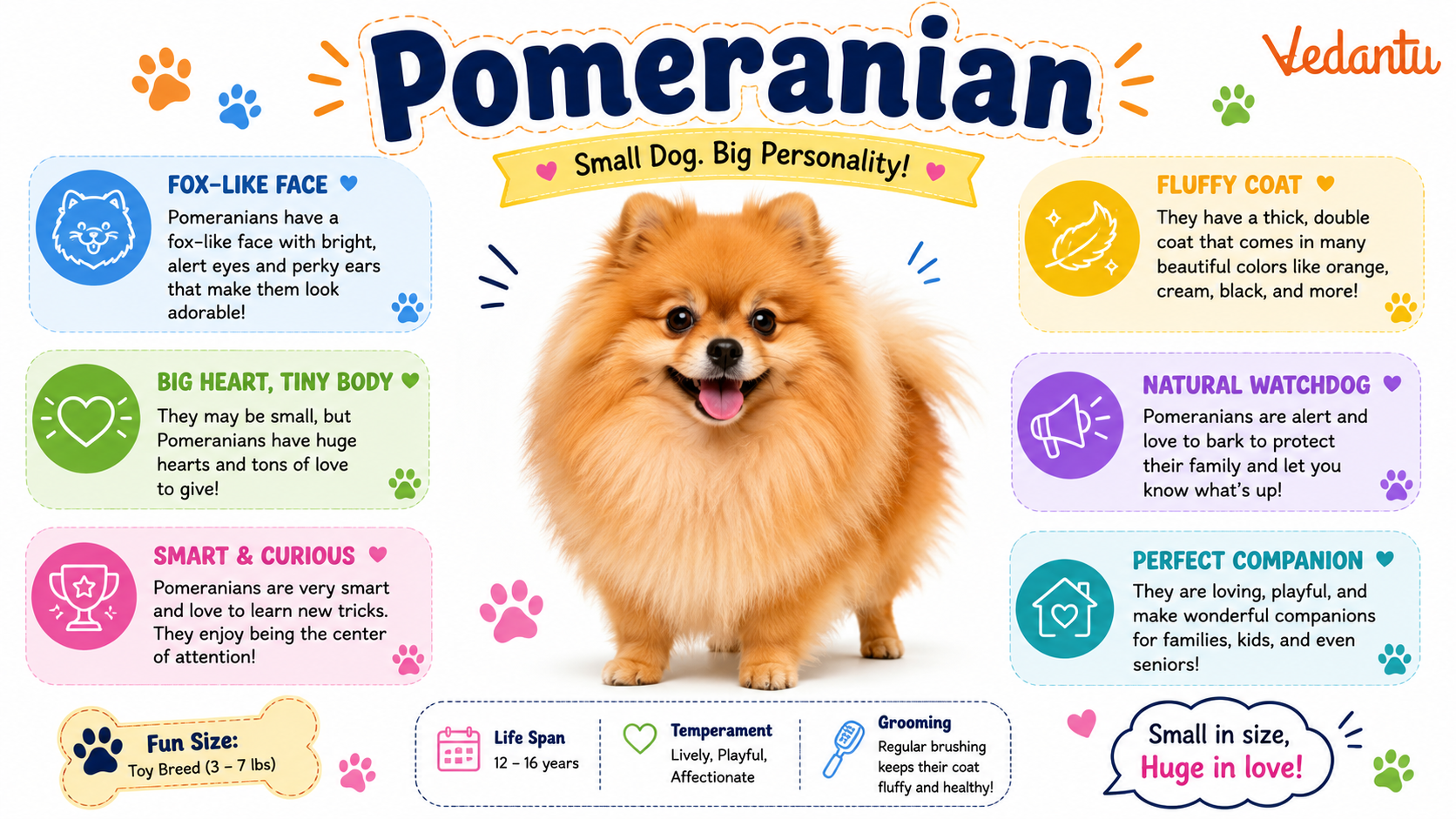
Quick Facts About the Pomeranian Breed Of Dog
| Feature | Details |
|---|---|
| Common Name | Pomeranian |
| Scientific Name | Canis lupus familiaris |
| Animal Group | Mammal |
| Breed Type | Toy Dog Breed |
| Height | 6–7 inches (15–18 cm) |
| Weight | 1.5–3.5 kg |
| Lifespan | 12–16 years |
| Diet | Omnivore (specially prepared dog food) |
| Origin | Pomerania (Germany & Poland region) |
| Young One | Puppy |
Appearance and Physical Characteristics
- Body Size: Very small, compact, and lightweight.
- Face: Fox-like face with bright, alert eyes.
- Ears: Small, upright, and pointed.
- Tail: Fluffy tail curled over the back.
- Coat: Thick double coat – soft undercoat and long outer coat.
- Colours: Orange, white, black, cream, brown, and many mixed shades.
Habitat and Distribution
The Pomeranian habitat is mainly human homes. This breed is a domestic dog and cannot survive in the wild.
- Lives in houses and apartments.
- Comfortable in both warm and cold climates.
- Popular in countries across Europe, America, and Asia.
- Needs indoor shelter and a safe resting place.
Diet and Feeding Habits
Omnivore – eats specially prepared dog food with both plant and animal ingredients.
High-quality dry kibble, wet food, cooked vegetables, and safe fruits.
Small portions 2–3 times a day due to their tiny stomach size.
Avoid chocolate, grapes, and spicy food as they are harmful.
Behaviour and Lifestyle
- Personality: Playful, confident, and curious.
- Nature: Loyal and protective of family members.
- Energy Level: Active and enjoys short walks.
- Social Behaviour: Friendly but may bark at strangers.
- Intelligence: Quick learner when trained patiently.
Life Cycle of the Pomeranian Breed Of Dog
- Birth: Born as tiny puppies in a litter of 1–4 pups.
- Puppy Stage (0–6 months): Rapid growth, playful, needs training.
- Young Adult (6 months–2 years): Full coat develops, active and energetic.
- Adult Stage (2–8 years): Mature behaviour, loyal companion.
- Senior Stage (8+ years): Slower movement, requires extra care.
Temperament and Domestic Life
Loves being around family members.
Perfect for small homes due to tiny size.
Responds well to positive reinforcement.
Requires regular brushing to maintain fluffy coat.
What Makes the Pomeranian Special?
Amazing Pomeranian Facts
- Queen Victoria loved Pomeranians and made them popular worldwide.
- They are related to large sled dogs like the Siberian Husky.
- Pomeranians can learn tricks quickly.
- Despite their size, they are very brave.
- Their fluffy coat makes them look bigger than they are.
- They are among the most popular toy dog breeds.
Interesting Facts About the Pomeranian Breed Of Dog
- The breed gets its name from the Pomerania region in Europe.
- They have a loud bark compared to their size.
- Regular grooming keeps their coat healthy and shiny.
- They form strong bonds with one special family member.
Fun Facts for Kids
FAQs on Pomeranian Dog Breed Guide: Personality, Care, and Key Facts
1. What is a Pomeranian dog?
A Pomeranian dog is a small, fluffy toy breed known for its big personality and fox-like face.
- Belongs to the toy dog breed group
- Famous for its thick double coat
- Very alert, lively, and playful
- Often called a Pom
- Descended from larger Spitz-type dogs
2. How big do Pomeranian dogs grow?
A full-grown Pomeranian is very small and lightweight compared to other dog breeds.
- Height: About 6–7 inches tall
- Weight: Around 3–7 pounds
- Considered a small companion dog
- Perfect for apartments and small homes
3. Are Pomeranians good pets for kids?
Yes, Pomeranians can be good pets for kids if treated gently and kindly.
- Very playful and energetic
- Love attention and family time
- Best for older children who understand small dogs
- Need supervision because of their tiny size
4. What do Pomeranian dogs eat?
A Pomeranian’s diet should include high-quality food made for small breeds.
- Small-breed dry kibble
- Protein-rich meals like chicken or fish
- Fresh water every day
- Limited treats to prevent obesity
5. How long do Pomeranians live?
The average Pomeranian lifespan is long for a dog, often reaching the teen years.
- Lives about 12–16 years
- Needs regular vet checkups
- Healthy diet and exercise increase lifespan
- Proper grooming supports overall health
6. Do Pomeranians bark a lot?
Yes, Pomeranians are known to bark because they are alert and protective.
- Excellent little watchdogs
- Bark at strangers or unusual sounds
- Can be trained to reduce excessive barking
- Very aware of their surroundings
7. How do you groom a Pomeranian?
Regular Pomeranian grooming keeps their fluffy coat clean and healthy.
- Brush their thick double coat 2–3 times a week
- Bathe every few weeks
- Trim nails regularly
- Clean ears and brush teeth often
8. Are Pomeranians easy to train?
Yes, Pomeranians are smart and can learn quickly with positive training.
- Respond well to praise and treats
- Good at learning tricks
- Need short, fun training sessions
- Early socialization helps good behavior
9. What colors do Pomeranian dogs come in?
The Pomeranian breed comes in many beautiful coat colors.
- Orange (most popular)
- Black, white, and cream
- Brown and blue
- Merle and mixed color patterns
10. What makes Pomeranians special?
The Pomeranian dog breed is special because of its bold personality in a tiny body.
- Fluffy lion-like appearance
- Confident and curious nature
- Loyal companion dog
- Popular among families and even royalty like Queen Victoria
