



What Are Silverfish and How Do You Get Rid of Them in Your Home?
Silverfish are small, wingless insects that move quickly and love dark, damp places. You may spot them in bathrooms, kitchens, or near old books. Though they do not bite humans, they are famous for eating paper, glue, and starchy materials. Learning about silverfish facts, silverfish habitat, and silverfish characteristics helps us understand how these tiny insects survive indoors and why they are considered household pests.
| Feature | Details |
|---|---|
| Common Name | Silverfish |
| Scientific Name | Lepisma saccharinum |
| Animal Group | Insect |
| Size | About 1–2 cm long |
| Colour | Silvery-grey with shiny scales |
| Lifespan | 2–8 years (long for an insect!) |
| Habitat | Damp, dark indoor spaces |
| Diet | Starch, paper, glue, sugar |
| Activity Time | Mostly active at night |
Appearance and Physical Characteristics
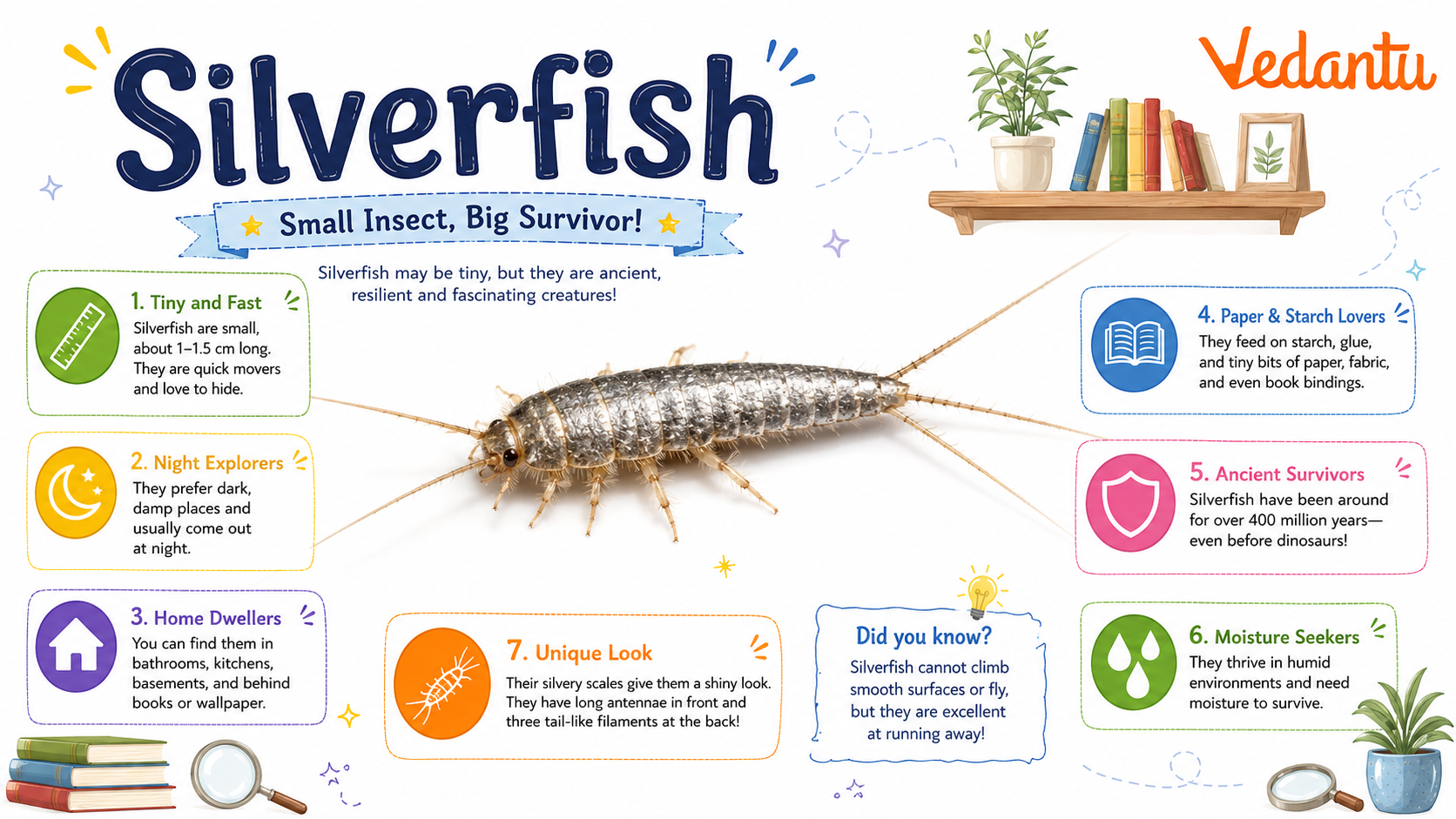
- Long, flat, carrot-shaped body.
- Covered with tiny, shiny scales that look silver.
- Two long antennae on the head.
- Three long bristles at the tail end.
- No wings, but they move very fast.
Silverfish Habitat and Distribution
- Common in homes all over the world.
- Prefer warm, humid environments.
- Often found in bathrooms, basements, kitchens, and attics.
- Hide in cracks, behind wallpaper, and inside bookshelves.
Silverfish Diet and Feeding Habits
Paper, book bindings, glue, flour, cereals, and sugar.
Paper contains starch, which silverfish love.
Mostly feed at night when it is dark and quiet.
Can survive months without food if needed.
Behaviour and Lifestyle
- Nocturnal insects – active mainly at night.
- Very shy and avoid light.
- Move quickly in a wriggling motion.
- Do not bite or sting humans.
- Prefer to live alone but may gather where food is available.
Silverfish Life Cycle
- Egg Stage: Females lay tiny white eggs in cracks and hidden spaces.
- Nymph Stage: Young silverfish look like small adults but are smaller and lighter in colour.
- Molting: They shed their skin many times as they grow.
- Adult Stage: Fully grown silverfish continue to molt even as adults.
What Makes Silverfish Special?
Importance and Role in Nature
- Help break down natural materials like dead plant matter.
- Serve as food for spiders and other small predators.
- In homes, they are considered pests because they damage books, clothes, and papers.
Amazing Silverfish Facts
- Silverfish are among the fastest running household insects.
- They have been around since before dinosaurs!
- They prefer temperatures between 21°C and 26°C.
- They do not spread diseases to humans.
- They can digest cellulose found in paper.
- They avoid bright light and quickly hide when disturbed.
- They do not have wings and cannot fly.
Interesting Facts About Silverfish
Fun Facts for Kids
- Silverfish wiggle like tiny fish when they run!
- They are older than dinosaurs.
- They love old books and newspapers.
- They hide during the day and come out at night.
- They are harmless but annoying house guests.
FAQs on Silverfish: Identification, Behavior and Prevention Guide
1. What is a silverfish?
A silverfish is a small, wingless insect with a shiny silver body that moves like a fish.
- It belongs to an ancient group of insects called Zygentoma.
- It has a long, flat body covered in tiny silver scales.
- It wiggles quickly from side to side when it runs.
- It is often found inside homes, especially in dark and damp places.
2. Why are they called silverfish?
Silverfish get their name from their silver color and fish-like movement.
- Their bodies are shiny and metallic, like silver.
- They move in a wavy motion, similar to how a fish swims.
- The name describes both their appearance and movement.
3. Where do silverfish live?
Silverfish live in dark, damp, and cool places where they can hide easily.
- Bathrooms and kitchens with high humidity.
- Basements and attics.
- Behind bookshelves, wallpaper, or cardboard boxes.
- Under sinks and near leaky pipes.
4. What do silverfish eat?
Silverfish eat starchy materials and sugary substances found in homes.
- Paper and book pages.
- Glue and wallpaper paste.
- Clothing made of cotton or linen.
- Cereal, flour, and other dry foods.
5. Are silverfish harmful to humans?
Silverfish are not dangerous to people but can damage household items.
- They do not bite or sting.
- They do not spread diseases.
- They may ruin books, papers, and clothes.
- They can trigger mild allergies in some people.
6. How long do silverfish live?
Silverfish can live for several years, which is long for an insect.
- They can live up to 2–8 years.
- They grow slowly and shed their skin many times.
- They continue molting even as adults.
7. How can you get rid of silverfish?
You can control silverfish by reducing moisture and keeping your home clean.
- Use a dehumidifier to lower humidity.
- Seal cracks and small openings in walls.
- Store food in airtight containers.
- Vacuum regularly to remove eggs and dust.
8. Why do silverfish come into homes?
Silverfish enter homes searching for food, moisture, and shelter.
- They like warm indoor temperatures.
- They find plenty of starch-based food indoors.
- Cracks and gaps allow easy entry.
- Damp areas attract them the most.
9. Can silverfish jump or fly?
Silverfish cannot fly or jump because they do not have wings.
- They are wingless insects.
- They move quickly by crawling.
- Their fast, wiggly motion helps them escape danger.
10. How can you prevent a silverfish infestation?
Preventing a silverfish infestation means removing moisture and food sources.
- Fix leaking pipes and faucets.
- Keep books and papers in dry areas.
- Clean crumbs and spills quickly.
- Improve ventilation in bathrooms and basements.
