



Tilapia Fish Facts: What They Eat, Where They Live, and Why They Matter
Tilapia is one of the most widely farmed fish in the world. Known for its fast growth, mild taste, and ability to survive in different water conditions, tilapia plays an important role in global food supply. These freshwater fish are easy to raise and are found in rivers, lakes, and fish farms. Learning about tilapia facts, tilapia habitat, tilapia diet, and tilapia characteristics helps us understand why this fish is so important to humans and aquatic ecosystems.
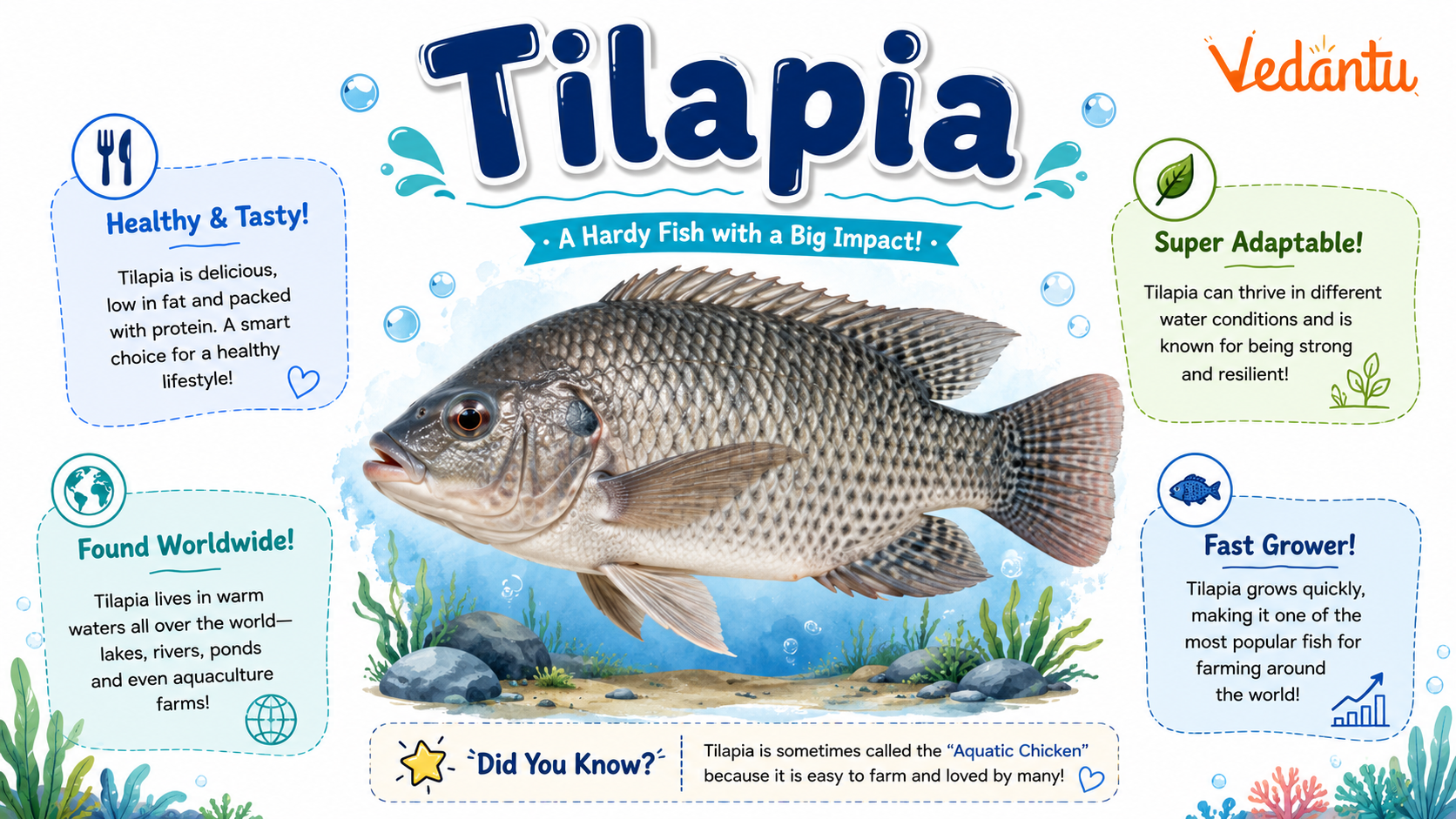
Quick Facts About Tilapia
| Feature | Details |
|---|---|
| Common Name | Tilapia |
| Scientific Group | Cichlidae family |
| Animal Group | Fish |
| Size | 20–60 cm (varies by species) |
| Weight | Up to 5 kg (large species) |
| Lifespan | 6–10 years |
| Habitat | Freshwater lakes, rivers, ponds |
| Diet | Mostly herbivore (plants, algae) |
| Conservation Status | Not endangered (widely farmed) |
Appearance and Physical Characteristics
- Flattened, deep body shape.
- Small mouth with fine teeth for scraping algae.
- Long dorsal fin running along the back.
- Usually silver, grey, or greenish in colour.
- Dark vertical stripes in many species.
Tilapia Habitat and Distribution
The natural tilapia habitat includes warm freshwater environments. Originally found in Africa and the Middle East, tilapia are now farmed and introduced in many countries.
- Lakes and slow-moving rivers
- Ponds and reservoirs
- Fish farms and aquaculture tanks
- Warm tropical and subtropical regions
Tilapia Diet and Feeding Habits
- Mainly herbivores – eat algae and aquatic plants.
- Also feed on plankton and small invertebrates.
- Scrape algae from rocks using small teeth.
- In fish farms, they are given plant-based feed.
Behaviour and Lifestyle
- Active during the day.
- Often live in groups.
- Adapt easily to crowded farming conditions.
- Can tolerate low oxygen levels better than many fish.
Tilapia are hardy fish, which means they can survive in changing water conditions. This is one reason why they are popular in aquaculture.
Tilapia Life Cycle
- Egg Stage: Females lay eggs in nests or hold them in their mouths.
- Mouth Brooding: In many species, mothers protect eggs inside their mouths until they hatch.
- Fry Stage: Baby tilapia (fry) stay close to the mother for safety.
- Juvenile Stage: Young fish grow quickly in warm water.
- Adult Stage: Ready to reproduce within 5–7 months.
What Makes Tilapia Special?
Importance and Role in Nature
Amazing Tilapia Facts
- Tilapia is one of the top farmed fish species in the world.
- They are sometimes called “aquatic chickens” because they grow quickly.
- Tilapia farming is common in Asia, Africa, and South America.
- They can reproduce multiple times a year.
- Some species build circular nests in shallow water.
- They are part of the cichlid fish family.
Fun Facts for Kids
FAQs on Tilapia Fish: Complete Guide to Diet, Habitat, and Farming
1. What is Tilapia?
Tilapia is a freshwater fish that is popular around the world because it is mild-tasting and easy to cook.
- It is a type of freshwater fish found in lakes, rivers, and fish farms.
- Tilapia is known for its white meat and mild flavor.
- It is one of the most commonly farmed fish in aquaculture.
- People often search: Is tilapia real fish? Where does tilapia come from?
2. Where does Tilapia come from?
Tilapia originally comes from Africa and the Middle East, but today it is farmed worldwide.
- Native to Africa and parts of the Middle East.
- Now widely farmed in Asia, the United States, and South America.
- Grows well in warm, freshwater environments.
- People also ask: Is tilapia farm-raised? Is tilapia found in the wild?
3. Is Tilapia healthy to eat?
Tilapia is a healthy fish because it is high in protein and low in fat.
- Rich in lean protein for muscle growth.
- Contains important nutrients like vitamin B12 and selenium.
- Lower in fat compared to oily fish like salmon.
- Common search: Is tilapia good for kids? Is tilapia safe to eat?
4. What does Tilapia taste like?
Tilapia tastes mild and slightly sweet, making it great for kids and beginners.
- Has a soft texture and flaky white meat.
- Does not have a strong “fishy” flavor.
- Absorbs spices and sauces easily.
- People also search: Does tilapia taste fishy? Is tilapia good for picky eaters?
5. How is Tilapia farmed?
Tilapia is mainly raised through aquaculture, which means fish farming in controlled water systems.
- Grown in ponds, tanks, or cages.
- Farmers feed them grains and plant-based food.
- They grow quickly and adapt well to warm water.
- People also ask: Why is tilapia farmed so much? Is farm-raised tilapia safe?
6. What do Tilapia eat?
Tilapia mostly eat plants and algae, which makes them easy to farm.
- Feed on algae in natural waters.
- Eat plant-based feeds in fish farms.
- Sometimes consume small insects or plankton.
- Common question: Are tilapia bottom feeders? What is tilapia’s natural diet?
7. How big can Tilapia grow?
Tilapia can grow up to 12–24 inches long depending on the species and environment.
- Average weight is about 1–5 pounds.
- Growth depends on water temperature and food supply.
- Farmed tilapia are harvested when they reach market size.
- People also search: How fast does tilapia grow? What is the biggest tilapia ever caught?
8. Why is Tilapia so popular?
Tilapia is popular because it is affordable, healthy, and easy to cook.
- Has a mild flavor loved by many families.
- Usually costs less than many other fish.
- Cooks quickly by baking, frying, or grilling.
- People also ask: Why is tilapia cheap? Is tilapia a good everyday fish?
9. Can kids eat Tilapia?
Yes, kids can eat tilapia because it is soft, mild, and full of protein.
- Easy to chew due to its flaky texture.
- Provides nutrients for growth and energy.
- Always cook thoroughly before serving.
- Common search: Is tilapia safe for toddlers? Best fish for children?
10. How do you cook Tilapia?
Tilapia can be baked, grilled, or pan-fried in just a few minutes.
- Baking: Cook in the oven with herbs and lemon.
- Grilling: Adds a smoky flavor.
- Pan-frying: Makes the outside crispy.
- People also ask: How long to cook tilapia? What spices go well with tilapia?
