



Zebra Fish Habitat, Diet, Lifespan, and Aquarium Care Tips
The zebra fish is a small, colourful freshwater fish famous for its beautiful stripes and its huge importance in science. Though tiny in size, zebra fish play a big role in medical and genetic research around the world. Found in rivers and ponds, these active swimmers are easy to spot because of their bold blue and silver stripes. Let’s explore fascinating zebra fish facts, their habitat, diet, characteristics, life cycle, and why they are so special.
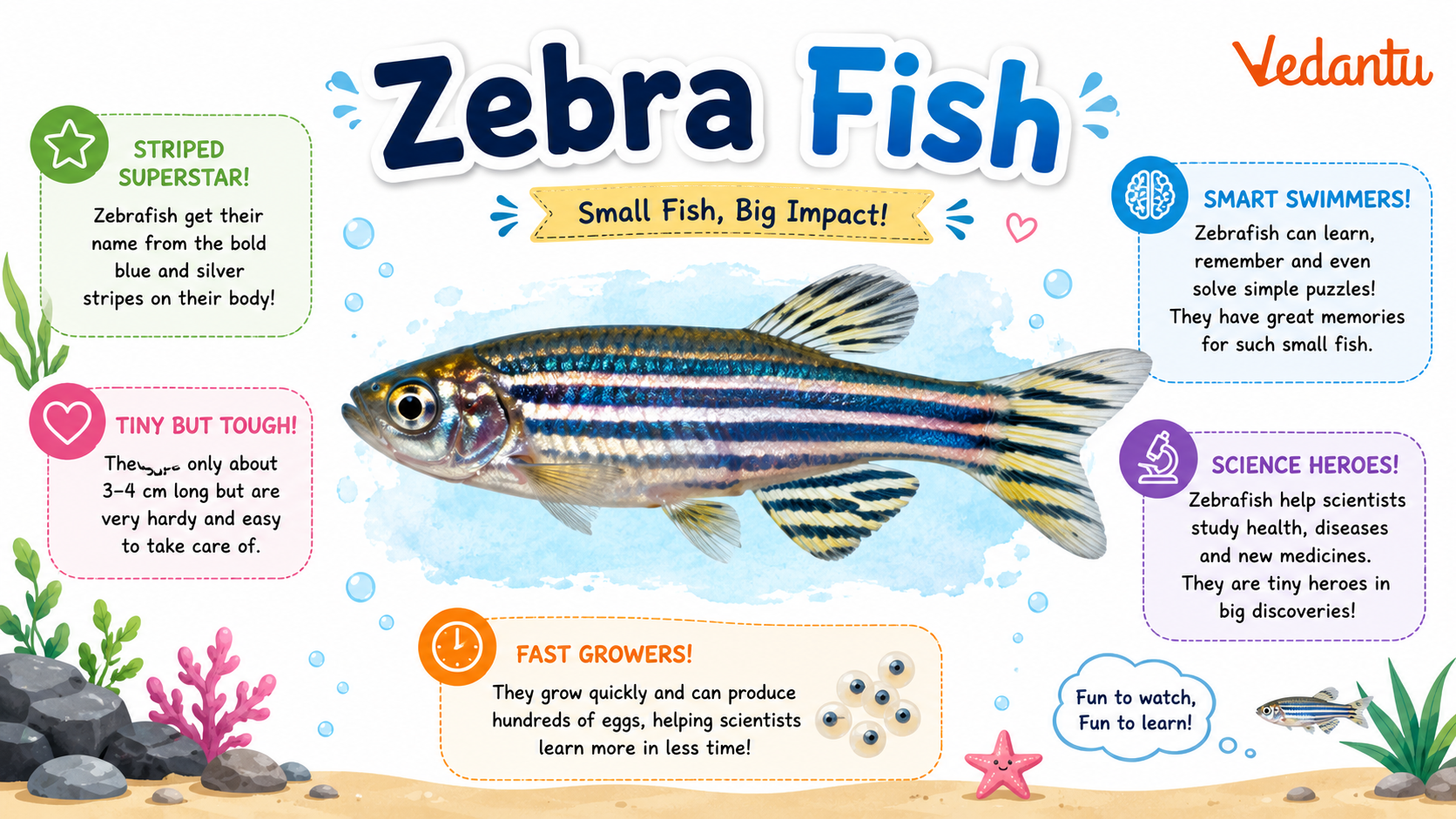
Quick Facts About Zebra Fish
| Feature | Details |
|---|---|
| Common Name | Zebra Fish |
| Scientific Name | Danio rerio |
| Animal Group | Fish |
| Size | About 4–5 cm long |
| Lifespan | 3–5 years |
| Habitat | Freshwater rivers, streams, ponds |
| Diet | Omnivore (plants and small animals) |
| Found In | South Asia (India, Bangladesh, Nepal) |
| Special Feature | Transparent embryos used in research |
Appearance and Physical Characteristics
- Small and slim body shape.
- Shiny silver body with dark blue horizontal stripes.
- Stripes run from head to tail, just like a zebra.
- Transparent fins with a slight yellow tint.
- Large eyes compared to body size.
Zebra Fish Habitat and Distribution
- Rivers and streams with gentle flow.
- Rice fields and ponds.
- Warm tropical and subtropical climates.
- Shallow waters with plants for shelter.
Zebra fish are mainly found in South Asian countries like India, Bangladesh, Pakistan, and Nepal. They prefer clean, oxygen-rich water and often swim near the surface.
Zebra Fish Diet and Feeding Habits
- Small insects and insect larvae.
- Tiny crustaceans and worms.
- Algae and plant material.
- Zooplankton in water.
They are active swimmers and quickly snap up tiny food particles. In the food chain, zebra fish act as both predators (of small organisms) and prey (for larger fish and birds).
Behaviour and Lifestyle
Zebra Fish Life Cycle
- Egg Stage: The female lays hundreds of tiny eggs in water.
- Embryo Stage: Eggs hatch within 2–3 days.
- Larva Stage: Baby fish (larvae) begin swimming and feeding.
- Adult Stage: They grow into fully striped adult fish within a few months.
The zebra fish life cycle is very fast, which makes it ideal for scientific research and genetic studies.
What Makes Zebra Fish Special?
Importance and Role in Nature
Amazing Zebra Fish Facts
- Zebra fish can sleep, even without eyelids.
- They can regrow damaged fins within weeks.
- Their heart can regenerate after injury.
- They were sent to space for experiments.
- They are one of the most studied fish in laboratories.
- They can recognize other fish in their group.
- They respond to light and dark changes quickly.
Interesting Facts About Zebra Fish
Fun Facts for Kids
FAQs on Zebra Fish: Complete Guide to Facts, Habitat, and Care
1. What is a Zebra Fish?
A Zebra Fish is a small freshwater fish known for its black-and-white stripes and is popular in aquariums and science labs.
- Scientific name: Danio rerio
- Native to South Asia
- Recognizable by bold horizontal zebra-like stripes
- Common in home aquariums and biological research
2. Where do Zebra Fish live in the wild?
Zebra Fish live in warm freshwater habitats in South Asia.
- Found in India, Bangladesh, Nepal, and Myanmar
- Live in rivers, streams, ponds, and rice fields
- Prefer slow-moving or still water
- Thrive in warm tropical climates
3. Why are Zebra Fish important in scientific research?
Zebra Fish are important model organisms because their genes are similar to humans and they grow very quickly.
- Used in genetics and medical research
- Share about 70% of genes with humans
- Transparent embryos help scientists study organ development
- Common in disease and drug testing studies
4. What do Zebra Fish eat?
Zebra Fish are omnivores, meaning they eat both plants and small animals.
- Eat small insects and larvae
- Feed on zooplankton
- In aquariums, eat fish flakes and pellets
- Enjoy brine shrimp as a treat
5. How big do Zebra Fish grow?
Zebra Fish are small fish that usually grow up to about 2 inches long.
- Average size: 1.5 to 2 inches
- Lightweight and slender body
- Perfect size for small aquariums
- Grow quickly within a few months
6. How long do Zebra Fish live?
Zebra Fish usually live for about 3 to 5 years with proper care.
- Average lifespan: 3–5 years
- Live longer in clean, well-maintained tanks
- Healthy diet increases life expectancy
- Common in both home aquariums and labs
7. Are Zebra Fish good pets for beginners?
Yes, Zebra Fish are great beginner pets because they are hardy and easy to care for.
- Adapt well to different water conditions
- Peaceful and active swimmers
- Do best in groups called schools
- Low maintenance compared to many tropical fish
8. How do Zebra Fish reproduce?
Zebra Fish reproduce by laying eggs, and their babies hatch very quickly.
- Females lay hundreds of tiny eggs
- Eggs hatch in about 2–3 days
- Babies are called fry
- Rapid development makes them useful for embryo studies
9. What makes Zebra Fish unique?
Zebra Fish are unique because of their stripes and their ability to help scientists study human diseases.
- Distinct horizontal striped pattern
- Can regenerate fins and heart tissue
- Transparent embryos for easy observation
- Widely used as a model organism in biology
10. Do Zebra Fish need to live in groups?
Yes, Zebra Fish are social fish and should live in groups for happiness and health.
- Best kept in groups of 5 or more
- Feel safer in a school
- Show natural swimming behavior in groups
- Less stress and better overall health
