




What are biotic and abiotic factors definition types and examples
In every ecosystem, various factors work together to create a balanced environment where life thrives. These factors are broadly categorised into biotic and abiotic components. Understanding the distinction and interplay between biotic and abiotic factors is crucial for comprehending how ecosystems function and sustain life.
Read More: Biotic and Abiotic Factors
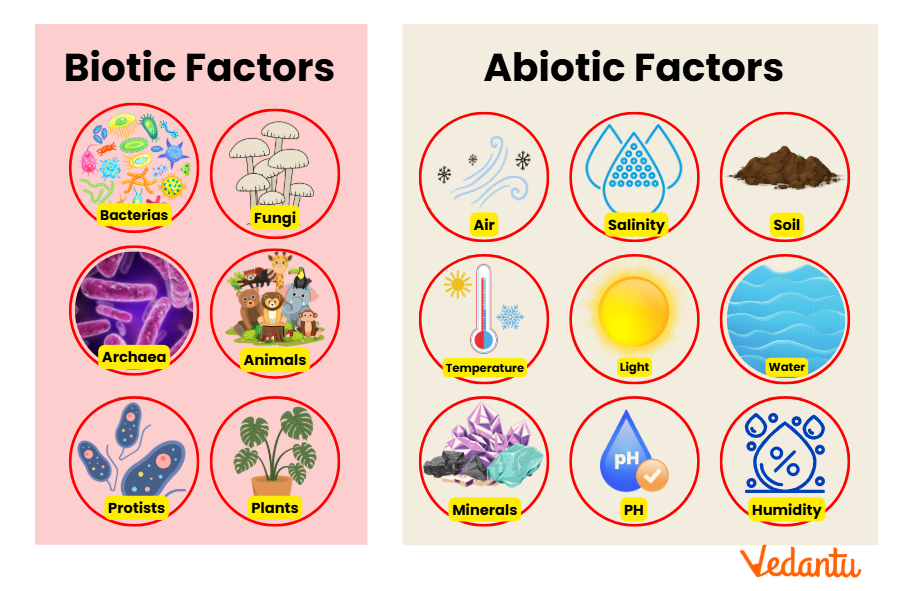
What are Biotic Factors?
Biotic factors are the living components of an ecosystem. The term "biotic" is derived from the Greek word "bios," meaning life. These factors encompass all living organisms that inhabit an ecosystem, including plants, animals, fungi, and microorganisms like bacteria.
Biotic Components of the Ecosystem
The biotic components of the ecosystem include:
Producers (Autotrophs): Organisms like plants and algae that produce their food through photosynthesis.
Consumers (Heterotrophs): Animals and humans that consume other organisms for energy.
Primary Consumers: Herbivores that eat producers.
Secondary Consumers: Carnivores that eat herbivores.
Tertiary Consumers: Top predators that eat other carnivores.
Decomposers and Detritivores: Organisms like fungi and bacteria that break down dead matter, recycling nutrients back into the ecosystem.
Examples of Biotic Factors
Biotic factors encompass all living entities within an ecosystem. Here are some common examples:
Plants: Trees, shrubs, grasses, and aquatic plants.
Animals: Mammals, birds, reptiles, amphibians, fish, and insects.
Fungi: Mushrooms, moulds, and yeasts.
Bacteria: Microorganisms that play vital roles in decomposition and nutrient cycling.
These biotic factors interact with each other and their environment, influencing the structure and dynamics of the ecosystem.
What are Abiotic Factors?
Abiotic factors are the non-living components of an ecosystem. The term "abiotic" comes from the Greek words "a" meaning "without" and "bios" meaning "life." These factors include physical and chemical elements that affect living organisms and their habitats.
Abiotic Components of the Ecosystem
The abiotic components of the ecosystem are found in three main spheres:
Atmosphere: Includes elements like air, temperature, humidity, and wind.
Hydrosphere: Comprises water bodies such as rivers, lakes, oceans, and the water cycle.
Lithosphere: Consists of landforms, soil, minerals, and sunlight.
Examples of Abiotic Factors
Abiotic factors vary depending on the type of ecosystem. Here are some common examples:
Terrestrial Ecosystems
Sunlight: Provides energy for photosynthesis.
Temperature: Influences the metabolic rates of organisms.
Humidity: Affects water availability and plant growth.
Soil Composition: Determines nutrient availability for plants.
Wind: Influences seed dispersal and temperature regulation.
Aquatic Ecosystems
Water Salinity: Affects the types of organisms that can thrive.
Oxygen Levels: Crucial for the respiration of aquatic life.
pH Levels: Influences the chemical processes in water.
Water Flow Rate: Impacts nutrient distribution and organism habitats.
Water Depth and Turbidity: Affect light penetration and photosynthesis.
Differences Between Biotic and Abiotic Factors
Understanding the differences between biotic and abiotic factors is essential for studying ecosystems. Below is a comparative overview:
Interaction Between Biotic and Abiotic Components
Biotic and abiotic factors are interdependent, constantly interacting to shape the ecosystem. For instance:
Sunlight (Abiotic) and Plants (Biotic): Sunlight is essential for photosynthesis, enabling plants to produce food. Without adequate sunlight, plant growth is stunted, affecting herbivores and, subsequently, predators.
Water (Abiotic) and Aquatic Life (Biotic): Water quality, including salinity and oxygen levels, directly impacts the survival of fish, amphibians, and other aquatic organisms.
Soil pH (Abiotic) and Plant Health (Biotic): Soil pH affects nutrient availability for plants, influencing their growth and the animals that depend on them.
These interactions highlight the delicate balance within ecosystems, where changes in abiotic factors can have cascading effects on biotic components.
Importance of Biotic and Abiotic Factors in Ecosystems
Both biotic and abiotic factors are crucial for the sustainability of ecosystems. They:
Maintain Balance: Ensure that energy flows smoothly through food chains and nutrient cycles.
Support Biodiversity: Provide varied habitats and resources for different species.
Influence Adaptation: Drive evolutionary changes as organisms adapt to their environment.
Regulate Ecosystem Functions: Control processes like decomposition, pollination, and primary production.
Understanding these factors helps in conservation efforts, ecosystem management, and addressing environmental challenges.
Conclusion
Understanding biotic and abiotic factors is fundamental to studying ecosystems. These components interact intricately, maintaining the balance and health of environments worldwide. By recognising the roles and examples of biotic and abiotic factors, students can better appreciate the complexity of natural systems and the importance of conserving them.
Quiz Section: Interactive MCQs
Test your understanding of biotic and abiotic factors by answering these questions:
Question 1: Which of the following is an example of a biotic factor?
A. Sunlight
B. Temperature
C. Plants
D. Water
Answer: C. Plants
Question 2: Abiotic factors include:
A. Fungi
B. Animals
C. Soil pH
D. Bacteria
Answer: C. Soil pH
Question 3: Which statement is true about the relationship between biotic and abiotic factors?
A. Abiotic factors depend on biotic factors.
B. Biotic factors rely on abiotic factors for survival.
C. Both are completely independent of each other.
D. Abiotic factors originate from living organisms.
Answer: B. Biotic factors rely on abiotic factors for survival.
Question 4: What happens if abiotic factors like sunlight are removed from an ecosystem?
A. Plants will thrive.
B. Herbivores will increase.
C. The ecosystem will become unbalanced.
D. Decomposers will stop functioning.
Answer: C. The ecosystem will become unbalanced.
Fun Fact
Did you know that the Amazon Rainforest, one of the largest ecosystems in the world, produces approximately 20% of the Earth’s oxygen? This vast biotic resource is often called the "lungs of the planet" because of its essential role in regulating oxygen and carbon dioxide levels.
Real-Life Example: Deforestation and Climate Change
Deforestation is a prime example of how the loss of biotic components can severely impact abiotic factors. When trees are cut down:
Carbon dioxide levels increase in the atmosphere because fewer trees are available to absorb it through photosynthesis.
Soil erosion occurs, affecting the abiotic quality of the soil and making it less fertile.
Local temperature and humidity change as forests help regulate microclimates.
This cascade of effects disrupts ecosystems, leading to global challenges like climate change and loss of biodiversity. To combat this, reforestation and conservation of biotic resources are essential steps.
Biology Related Links
Here are some related topics to explore for a better understanding of biology concepts:


FAQs on Biotic and Abiotic Factors in Ecosystems
1. What are biotic and abiotic factors in an ecosystem?
Biotic and abiotic factors are the living and non-living components of an ecosystem that interact to sustain life.
Biotic factors include all living organisms such as:
- Plants
- Animals
- Fungi
- Bacteria and other microorganisms
- Sunlight
- Water
- Temperature
- Soil
- Air and minerals
2. What is the difference between biotic and abiotic factors?
The main difference between biotic and abiotic factors is that biotic factors are living, while abiotic factors are non-living environmental components.
- Biotic factors: Living organisms that grow, reproduce, and respond to stimuli.
- Abiotic factors: Physical and chemical elements that do not live but influence life.
3. What are some examples of biotic factors?
Biotic factors are living organisms that directly or indirectly affect other organisms in an ecosystem.
Common examples include:
- Producers such as plants and algae
- Consumers such as herbivores, carnivores, and omnivores
- Decomposers such as fungi and bacteria
- Parasites and symbiotic organisms
4. What are some examples of abiotic factors?
Abiotic factors are the non-living physical and chemical elements that influence living organisms in an ecosystem.
Examples include:
- Sunlight (source of energy for photosynthesis)
- Temperature (affects metabolic rates)
- Water (essential for life processes)
- Soil composition and minerals
- pH levels and salinity
5. How do biotic and abiotic factors interact in an ecosystem?
Biotic and abiotic factors interact continuously to maintain balance and energy flow in an ecosystem.
Key interactions include:
- Plants using sunlight, water, and carbon dioxide for photosynthesis.
- Animals depending on plants and other animals for food.
- Decomposers breaking down dead organisms and returning nutrients to the soil.
6. Why are abiotic factors important for living organisms?
Abiotic factors are important because they determine the survival, growth, and distribution of living organisms.
For example:
- Temperature influences enzyme activity and metabolism.
- Water availability affects hydration and cellular processes.
- Light intensity controls the rate of photosynthesis.
7. What is the role of biotic factors in an ecosystem?
Biotic factors play the role of producing, consuming, and decomposing organic matter within an ecosystem.
Their roles include:
- Producers converting solar energy into chemical energy.
- Consumers transferring energy through food chains.
- Decomposers recycling nutrients back into the environment.
8. Can abiotic factors affect biotic factors?
Yes, abiotic factors directly affect the growth, behavior, and survival of biotic factors.
Examples include:
- Drought (lack of water) reducing plant growth.
- Extreme temperature causing migration or death of animals.
- Changes in soil pH affecting nutrient availability for crops.
9. Is soil biotic or abiotic?
Soil is primarily an abiotic factor, but it contains both abiotic and biotic components.
- The mineral particles, water, and air in soil are abiotic components.
- Organisms such as earthworms, bacteria, fungi, and insects are biotic components.
10. How do biotic and abiotic factors influence biodiversity?
Biotic and abiotic factors influence biodiversity by determining which species can survive and reproduce in a given habitat.
- Favorable climate and water availability increase species diversity.
- Strong competition or predation shapes population structure.
- Extreme abiotic conditions reduce the number of adaptable species.



