




What Is Camouflage Definition Types Mechanism and Examples
Camouflage is a natural process by which animals (and sometimes plants) blend into their surroundings. In simple words, it is a survival strategy that allows camouflage animals to hide from predators or to sneak up on prey by matching the colours, patterns, or textures of their environment.
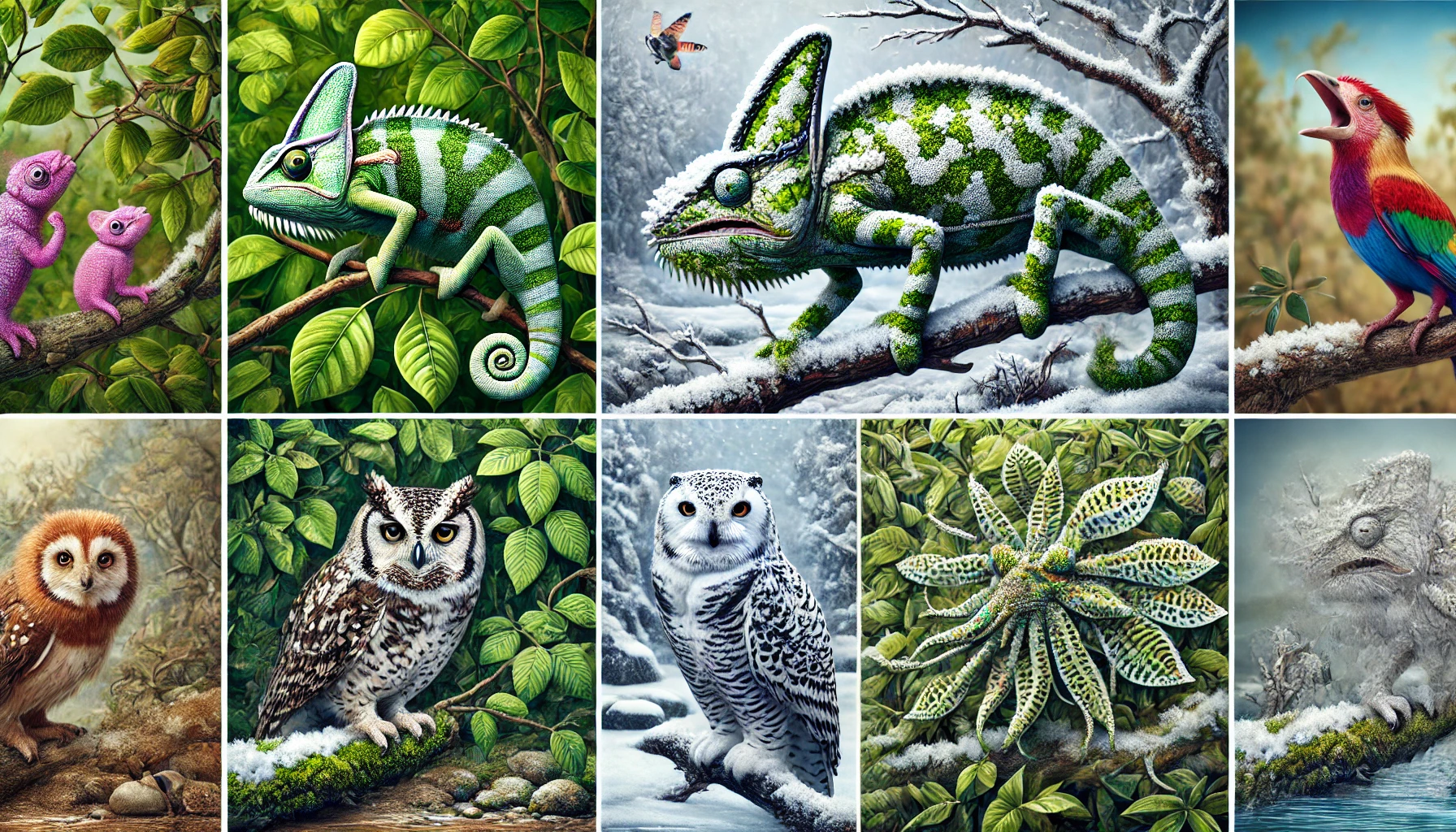
What are the 5 Types of Camouflage?
Concealing Colouration: Animals match the background colour of their environment. An Arctic hare, for instance, turns white in snowy conditions.
Disruptive Colouration: Bold patterns like stripes or spots break up an animal’s shape. Zebras’ stripes can confuse predators when they move in a herd.
Disguise: The creature looks like another object or organism, such as a leaf insect resembling a leaf or a stick insect mimicking a twig.
Mimicry: Animals impersonate other species’ looks, behaviours, or even odours, often to avoid predators. Certain butterflies mimic toxic species.
Countershading: An animal’s underside is lighter than its upper side, making it harder to detect under varying light conditions. Sharks often exhibit this trait.
12 Camouflage Animals Names and Examples
Below is a camouflage animals list showcasing various species that rely on blending into their surroundings:
Owl – Feathers match tree bark and surroundings.
Snow Leopard – Spotted fur helps it vanish among rocky terrain.
Seahorse – Can change colour and texture to match coral or sea plants.
Leaf-Tailed Gecko – Body shape and markings mimic leaves.
Stone Flounder – Lies flat on the ocean floor and adopts sandy colours.
Chameleon – Famous for changing skin pigments to suit its environment.
Stick Insect – Long, twig-like body blends seamlessly among branches.
Leopard – Rosette patterns offer disruptive colouration among dense foliage.
Frog – Many frogs match leaf litter or algae-laden ponds.
Katydid – Leaf-like wings hide it from predators in foliage.
Octopus – Uses specialised cells to shift skin colour and texture instantly.
Zebra – Bold stripes create a confusing visual mass when moving in groups.
Which Animal is Camouflage?
Actually, most of these species “use camouflage,” rather than “are camouflage.” One animal that represents camouflage iconically is the chameleon, often highlighted for its remarkable colour-changing ability.
How Do Animals Camouflage?
Camouflage animals rely on specialised cells (like chromatophores in octopuses) or fur, scales, and feathers that can change or reflect colours. Some use active camouflage, rapidly altering appearance; others depend on seasonal changes (e.g., Arctic hares). Each approach reduces visibility, making it tough for predators or prey to spot them.
What is Camouflage in Simple Words?
Camouflage meaning can be understood as an adaptation that enables an animal to become less visible—or even invisible—to others in its habitat. This usually involves changes in colour, pattern, or shape.
Quick Quiz (With Answers)
1. Question: Which animal from the list can alter both colour and skin texture?
Answer: The octopus can change its colour and surface texture.
2. Question: What are the 5 types of camouflage?
Answer: Concealing Colouration, Disruptive Colouration, Disguise, Mimicry, and Countershading.
3. Question: Which animal from the list displays disruptive colouration?
Answer: Zebras, with their stripe patterns, exemplify disruptive colouration.
Related Topics


FAQs on Camouflage in Living Organisms
1. What is camouflage in biology?
Camouflage in biology is a defense mechanism that allows an organism to blend into its surroundings to avoid detection by predators or prey. It works by reducing visibility through:
- Color matching with the environment
- Patterns that break up body outlines
- Shape adaptation to resemble objects like leaves or twigs
2. How does camouflage help animals survive?
Camouflage helps animals survive by reducing the chance of being seen by predators or prey. It improves survival through:
- Hiding from predators to avoid being eaten
- Allowing predators to approach prey unnoticed
- Enhancing success in feeding and reproduction
3. What are the main types of camouflage?
The main types of camouflage include cryptic coloration, disruptive coloration, and mimicry. These types function as follows:
- Cryptic coloration: Blending with the background, such as a green grasshopper in grass
- Disruptive coloration: Bold patterns that break up body shape, like stripes in zebras
- Mimicry: Resembling another organism or object, such as a stick insect looking like a twig
4. What is the difference between camouflage and mimicry?
The difference between camouflage and mimicry is that camouflage helps an organism blend into its environment, while mimicry allows it to resemble another organism or object. Key distinctions include:
- Camouflage: Matches the background to avoid detection
- Mimicry: Imitates another species (often harmful or toxic) or object
5. What is disruptive coloration in camouflage?
Disruptive coloration is a type of camouflage that uses bold patterns to break up the outline of an organism’s body. It works by:
- Creating contrasting stripes, spots, or patches
- Making it difficult for predators to recognize the animal’s true shape
- Confusing visual perception in natural habitats
6. Can you give examples of animals that use camouflage?
Many animals use camouflage to survive in their habitats. Common examples include:
- Chameleons that adjust skin color
- Arctic foxes with seasonal coat changes
- Leaf insects that resemble leaves
- Octopuses that rapidly change color and texture
7. How do chameleons change color for camouflage?
Chameleons change color by adjusting specialized skin cells called chromatophores and iridophores. The process involves:
- Expanding or contracting pigment-containing chromatophores
- Altering light reflection using iridophores
- Responding to environmental cues, temperature, or mood
8. Is camouflage an example of adaptation?
Yes, camouflage is an example of a structural and physiological adaptation that evolves through natural selection. It develops because:
- Individuals with better camouflage survive longer
- They reproduce and pass on favorable traits
- Over generations, the trait becomes common in the population
9. What is countershading in camouflage?
Countershading is a camouflage strategy where an animal has a darker upper side and a lighter underside to reduce shadows. It works by:
- Balancing light from above
- Minimizing visual depth cues
- Making the body appear flatter and less visible
10. Why is camouflage important in ecosystems?
Camouflage is important in ecosystems because it influences predator–prey interactions and maintains ecological balance. Its ecological roles include:
- Regulating population dynamics
- Supporting biodiversity through survival adaptations
- Driving evolutionary changes in both predators and prey



