




Why ATP Is Known as the Energy Currency of the Cell and How It Works
ATP, or Adenosine Triphosphate (ATP full form), is often described as the energy currency of the cell. In Class 9 biology, students frequently ask, "what is the energy currency of the cell class 9?" and "why is ATP called the energy currency of the cell class 9?" Understanding ATP is key to grasping how cells store and utilise energy to power life’s processes.
What is ATP?
ATP is a nucleotide that plays an essential role in almost every cellular activity. It is created within mitochondria, the powerhouse of the cell, by capturing chemical energy from digested food. This energy is then stored in ATP's three phosphate groups, making it a vital molecule that explains why ATP is called energy currency of the cell.
For instance, ATP is not just an abstract concept—its role can be seen in every muscle contraction, nerve impulse, and cell division. In fact, many students search for terms like atp as energy currency of cell pdf and energy currency of the cell notes to understand this fundamental concept.
Structure of the ATP Molecule
The structure of ATP is relatively simple yet incredibly efficient:
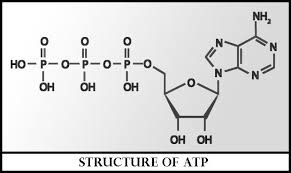
Adenine: A nitrogenous base.
Ribose: A five-carbon sugar that forms the backbone.
Three Phosphate Groups: Attached in a chain to the ribose sugar. The bonds between these phosphates are known as high-energy bonds. You might wonder, where are these high energy bonds found in atp? They are specifically located between the alpha, beta, and gamma phosphate groups.
These high-energy bonds store vast amounts of energy. When the outer phosphate bond is broken during hydrolysis (a process that involves the addition of a water molecule), a significant amount of energy is released. This process answers the query, how does ATP release energy, making ATP an ideal molecule for energy transfer within cells?
How does ATP Release Energy?
ATP releases energy through a process called hydrolysis. When the bond between the gamma and beta phosphate groups is broken, ATP is converted into ADP (Adenosine Diphosphate) plus an inorganic phosphate. This reaction is highly exergonic, meaning it releases energy that the cell harnesses for various functions. This mechanism is so central that many ask, why ATP is called energy currency of the cell because brainly—it literally powers processes like muscle contractions, nerve transmission, and active transport across cell membranes.
Functions and Importance of ATP in Metabolism
ATP is indispensable for metabolism—the sum of all chemical reactions in the body. Some of its key roles include:
Energy Transfer: ATP supplies energy for both exergonic (energy-releasing) and endergonic (energy-consuming) reactions.
Biosynthesis: It powers the synthesis of essential macromolecules required for growth and repair.
Cell Signalling: Acts as a neurotransmitter in the tissue present in the brain and functions in cell signalling pathways.
Mechanical Work: Fuels processes such as muscle contraction and cellular locomotion.
These diverse roles show why ATP is the energy currency of the cell example in real life. Detailed diagrams and notes are available in resources like energy currency of the cell ppt and energy currency of the cell pdf which provide a comprehensive view of ATP’s structure and function.
Also, read: Metabolism and Metabolic Pathways
Key Points to Remember
While many resources cover the basics, here are some unique points to enhance your understanding:
ATP Recycling: After energy is released, ATP can be regenerated from ADP through cellular respiration—a cycle that ensures a continuous energy supply.
Adaptability Across Organisms: ATP’s role is conserved across all life forms, from the simplest bacteria to complex human tissues, including the tissue present in the brain.
Environmental Impact: The efficiency of ATP production in mitochondria has implications in studying metabolic diseases and potential treatments for energy metabolism disorders.
Real-World Applications of ATP
Understanding ATP isn’t just academic—it has real-world applications:
Medical Science: Therapies targeting mitochondrial dysfunction can help treat metabolic and degenerative diseases.
Sports Science: Knowledge about ATP informs training regimes and recovery strategies in athletes.
Biotechnology: ATP-based assays are used to measure cell viability and contamination in various industries.
These applications underscore why many educators and students search for what is the energy currency of the cell class 9 and why is atp called the energy currency of the cell class 9 when exploring cellular energy.
Fun Facts about ATP
Universal Energy Molecule: ATP is found in every living cell, making it a universal energy carrier.
Rapid Turnover: The average human body recycles its entire mass of ATP several times per day.
High Energy Efficiency: The energy released from breaking ATP’s high energy bonds is almost perfectly transferred to other cellular processes.


FAQs on Energy Currency of the Cell and Role of ATP
1. What is the energy currency of the cell?
The energy currency of the cell is ATP (adenosine triphosphate), a molecule that stores and transfers energy for cellular processes. ATP provides immediate energy by releasing a phosphate group, converting into ADP (adenosine diphosphate).
- Composed of adenine, ribose sugar, and three phosphate groups
- Energy is stored in high-energy phosphate bonds
- Used in processes like active transport, muscle contraction, and protein synthesis
2. Why is ATP called the energy currency of the cell?
ATP is called the energy currency of the cell because it can be quickly spent and regenerated to power cellular activities. Just like money is exchanged for goods, ATP is exchanged for energy in metabolic reactions.
- Hydrolysis of ATP releases usable energy
- ATP is continuously regenerated during cellular respiration
- Acts as a universal energy carrier in almost all living organisms
3. How does ATP release energy in the cell?
ATP releases energy when its terminal phosphate bond is broken through hydrolysis. This reaction converts ATP into ADP and an inorganic phosphate (Pi).
- ATP → ADP + Pi + energy
- Energy is released from breaking the high-energy phosphate bond
- The released energy powers cellular work such as transport and biosynthesis
4. Where is ATP produced in the cell?
ATP is mainly produced in the mitochondria during cellular respiration in eukaryotic cells. It is synthesized through processes that extract energy from nutrients.
- Glycolysis (in cytoplasm)
- Krebs cycle (in mitochondrial matrix)
- Electron transport chain (in inner mitochondrial membrane)
5. What are the components of an ATP molecule?
An ATP molecule consists of adenine, ribose sugar, and three phosphate groups. These components together form adenosine triphosphate.
- Adenine: Nitrogenous base
- Ribose: Five-carbon sugar
- Three phosphate groups: Store high-energy bonds
6. What is the difference between ATP and ADP?
The main difference between ATP and ADP is that ATP has three phosphate groups, while ADP has two. ATP stores more energy compared to ADP.
- ATP: Adenosine triphosphate (three phosphates, high energy)
- ADP: Adenosine diphosphate (two phosphates, lower energy)
- ATP converts to ADP when energy is released
7. How is ATP regenerated in the cell?
ATP is regenerated by adding a phosphate group to ADP using energy from cellular respiration. This process is called phosphorylation.
- Oxidative phosphorylation in mitochondria
- Substrate-level phosphorylation in glycolysis and Krebs cycle
- In plants, photophosphorylation during photosynthesis
8. What processes in the cell require ATP?
ATP is required for active transport, muscle contraction, biosynthesis, and cell division. It powers both mechanical and chemical work in cells.
- Active transport across membranes
- Muscle contraction via actin-myosin interaction
- Protein synthesis and DNA replication
- Cell division and movement
9. Is ATP the only energy molecule in the cell?
ATP is the primary energy currency of the cell, but other molecules like NADH and FADH2 also store energy temporarily. However, ATP is the direct source of usable energy for most cellular functions.
- NADH and FADH2 carry high-energy electrons
- These molecules help produce ATP in the electron transport chain
- ATP directly powers cellular activities
10. How much energy does ATP provide to the cell?
ATP provides about 30.5 kJ/mol (7.3 kcal/mol) of energy when one phosphate bond is hydrolyzed under standard conditions. This amount of energy is sufficient to drive many biological reactions.
- Energy released during ATP → ADP + Pi
- Actual energy yield varies inside living cells
- Essential for coupling endergonic reactions with energy release



