




What Are Plants Definition Characteristics Types and Importance
Plants are vital, living organisms found everywhere on Earth. They play a major role in sustaining life, producing oxygen and food through photosynthesis. Along with forming the base of most food chains, plants offer shelter, raw materials, and medicines. Their diverse types, from tiny algae to tall trees, are central to environmental balance and our everyday lives.
What are Plants?
Plants are multicellular organisms in the kingdom Plantae. They make their own food through photosynthesis, using sunlight, water, and carbon dioxide. This natural process, along with respiration in plants, is crucial for recycling oxygen and carbon dioxide in ecosystems. Understanding the parts of plants, such as roots, stems, leaves, and flowers, helps us appreciate their structure and role in nature. For example, leaves capture sunlight, while roots anchor and absorb water.
Types of Plants and Their Habitats
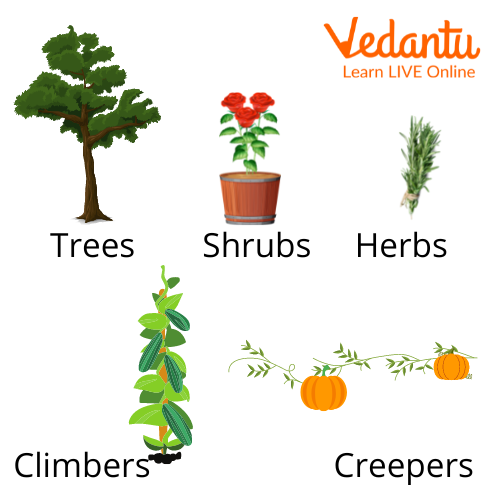
There are many types of plants, adapted to a wide range of conditions. Indoor plants are grown for decoration and air purification inside homes or offices. Some examples include snake plant and peace lily. Outdoor varieties include towering trees, shrubs, grasses, as well as desert plants like cacti that thrive in arid regions or water plants that float in ponds. Special forms like bonsai plants are cultivated for aesthetics, while medicinal plants such as tulsi and aloe vera have healing properties widely valued in traditional medicine.
- Desert plants: Cactus, agave – they survive extreme dryness.
- Water plants: Lotus, water hyacinth – adapted to wet conditions.
- Indoor plants: Money plant, ficus – ideal for low-light spaces.
- Bonsai plants: Miniature trees grown in pots.
- Medicinal plants: Neem, ashwagandha – used in herbal remedies.
Each group of plants exhibits special adaptations suited to their environments. You can read more about adaptations in plants and the parts of plants on Vedantu for detailed insights.
Parts of Plants: Structure and Function
All plants, regardless of their type, share basic structural parts. Understanding these parts of plants helps us learn how they grow and function. The main parts include:
- Root: Absorbs water and nutrients from the soil.
- Stem: Supports the plant and transports food and water.
- Leaves: Perform photosynthesis and gas exchange.
- Flowers: Enable reproduction through seeds.
- Fruits & Seeds: Protect and help disperse the next generation.
To explore plant structure in more depth, visit our page on plant cell structure and morphology of flowering plants.
How Do Plants Grow and Breathe?
Plants grow from seeds, roots, or cuttings. Key processes like photosynthesis and respiration in plants drive their growth and energy cycles. The steps of photosynthesis are:
- Leaves absorb sunlight and carbon dioxide from the air.
- Roots take up water from the soil.
- Chlorophyll in leaves uses sunlight to convert water and carbon dioxide into glucose (food).
- Oxygen is released as a byproduct.
During respiration, plants take in oxygen to break down glucose for energy, releasing carbon dioxide and water. For more details, read about respiration in plants and photosynthesis.
Importance and Applications of Plants
Plants play a central role in maintaining ecological balance. They provide:
- Oxygen for breathing
- Food crops (wheat, rice, fruits, vegetables)
- Raw materials (wood, cotton, paper)
- Medicines from medicinal plants
- Habitat for animals and insects
- Natural air and water filters
Plants help control soil erosion and act as carbon sinks, thus reducing the impact of climate change. For real-world relevance, learn more about the effects of climate changes and how plants are used in food science and medicine.
Plant Diversity: From Ancient to Modern Times
There are more than 390,000 known species of plants worldwide. Plant diversity ensures ecosystem stability and biodiversity. Ancient civilizations cultivated plants for food, shelter, and as medicinal plants. Many cultures still use these traditions today. Plants, from tiny mosses to giant sequoias, contribute to Earth's rich biodiversity.
Interesting Facts about Plants
- Some plants can survive in extreme deserts or underwater for years.
- Many indoor plants improve indoor air quality by filtering pollutants.
- Certain water plants provide natural habitats for fish and aquatic animals.
- Plants can “communicate” with each other via root and chemical signals.
If you want to identify more plants name or study their differences, see parts of plants or explore plant traits on Vedantu.
Summary
Plants are essential for life, offering food, oxygen, and environmental benefits. Their incredible diversity adapts to every corner of our planet. Whether you’re interested in indoor plants, medicinal plants, or learning about parts of plants, understanding their science helps us value and protect them for a sustainable future.


FAQs on Plants Overview of Structure Functions and Life Cycle
1. What are plants in biology?
Plants are multicellular, photosynthetic eukaryotic organisms that belong to the kingdom Plantae. They produce their own food using photosynthesis and contain the green pigment chlorophyll in specialized structures called chloroplasts.
- They have cell walls made of cellulose.
- They are generally non-motile (do not move from place to place).
- They form the base of most food chains in ecosystems.
2. How do plants perform photosynthesis?
Plants perform photosynthesis by converting light energy into chemical energy in the form of glucose. This process occurs mainly in the chloroplasts of leaf cells.
- Step 1: Light-dependent reactions capture sunlight and produce ATP and NADPH.
- Step 2: The Calvin cycle uses carbon dioxide to form glucose.
- Overall equation: Carbon dioxide + water → glucose + oxygen.
3. What are the main parts of a plant and their functions?
The main parts of a plant are the roots, stem, leaves, and reproductive structures such as flowers. Each part performs a specific function.
- Roots: Anchor the plant and absorb water and minerals.
- Stem: Supports the plant and transports substances.
- Leaves: Carry out photosynthesis.
- Flowers: Enable reproduction and seed formation.
4. What is the difference between vascular and nonvascular plants?
The main difference between vascular and nonvascular plants is the presence of vascular tissues for transport. Vascular plants have specialized tissues called xylem and phloem, while nonvascular plants do not.
- Vascular plants: Transport water and nutrients efficiently; examples include ferns, gymnosperms, and angiosperms.
- Nonvascular plants: Lack true roots, stems, and leaves; example: mosses.
5. What is transpiration in plants?
Transpiration is the process by which plants lose water vapor through small openings called stomata in their leaves. It plays a key role in water movement.
- Creates a transpiration pull that helps draw water upward through the xylem.
- Helps cool the plant.
- Maintains nutrient transport from roots to leaves.
6. How do plants reproduce?
Plants reproduce through sexual and asexual reproduction. The method depends on the type of plant.
- Sexual reproduction: Involves flowers, pollination, fertilization, and seed formation.
- Asexual reproduction: Involves vegetative parts like stems or roots (e.g., runners in strawberries).
7. What is the role of chlorophyll in plants?
Chlorophyll is the green pigment that absorbs light energy for photosynthesis. It is located in the chloroplasts of plant cells.
- Absorbs mainly blue and red wavelengths of light.
- Reflects green light, giving plants their green color.
- Initiates the conversion of light energy into chemical energy.
8. What is the function of xylem and phloem in plants?
The function of xylem and phloem is to transport water, minerals, and food throughout the plant. These tissues form the plant’s vascular system.
- Xylem: Transports water and dissolved minerals from roots to leaves.
- Phloem: Transports sugars (food) from leaves to other parts of the plant.
9. Why are plants important to the ecosystem?
Plants are important to the ecosystem because they are primary producers that convert sunlight into food. They form the base of most terrestrial and aquatic food chains.
- Produce oxygen through photosynthesis.
- Provide food and habitat for animals.
- Help regulate the carbon cycle and climate.
10. What is the difference between gymnosperms and angiosperms?
The main difference between gymnosperms and angiosperms is how their seeds are enclosed. Gymnosperms have "naked" seeds, while angiosperms have seeds enclosed within a fruit.
- Gymnosperms: Produce cones; example: pine trees.
- Angiosperms: Produce flowers and fruits; example: apple plants.



