




What are Stomata Definition Structure Types and Functions in Plants
Stomata are tiny pores present mainly on the surfaces of leaves and young stems in plants. These microscopic openings play a crucial role in gas exchange, allowing plants to absorb carbon dioxide and release oxygen during photosynthesis. Understanding stomata is vital for biology students as it connects plant physiology, environmental responses, and essential concepts like transpiration and photosynthesis.
Stomata Definition
Stomata (singular: stoma) are small openings in the epidermis of plant leaves, stems, and other organs. They are surrounded by specialized guard cells that control the opening and closing of the pore. The main function of stomata is to facilitate gas exchange and regulate water vapor loss through transpiration.
Structure of Stomata
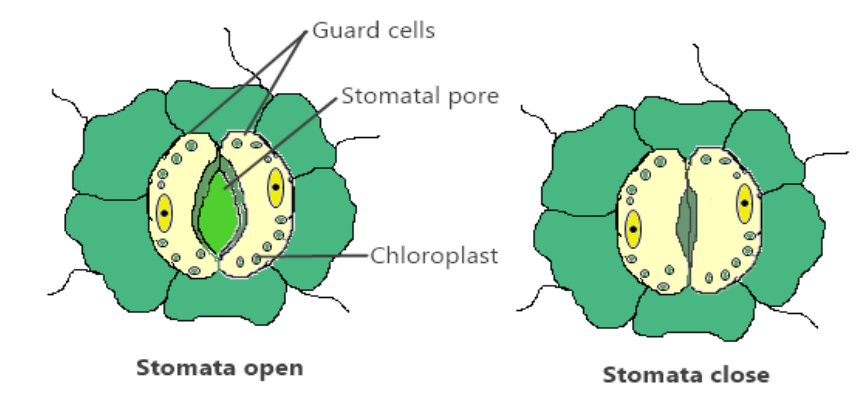
A typical stoma consists of two kidney-shaped guard cells surrounding a tiny pore. The guard cells contain chloroplasts and can change shape based on water content. When they absorb water, they swell and open the pore; when water is lost, they shrink and close it. This dynamic structure is essential for balancing gas exchange and water conservation in plants.
Functions of Stomata
The primary functions of stomata extend well beyond simple openings. They are essential to plant survival, environmental adaptation, and maintaining the planet’s oxygen balance.
- Gas Exchange: Enable entry of carbon dioxide for photosynthesis and release of oxygen.
- Transpiration: Allow water vapor to exit the plant, driving the transpiration stream which helps transport minerals.
- Regulation: Guard cells adjust the stomatal opening to prevent excessive water loss, especially during drought.
- Cooling Mechanism: Transpiration through stomata helps in cooling plant surfaces.
Stomata Diagram and Explanation
A stomata diagram typically illustrates the upper or lower epidermis of a leaf, with identifiable guard cells enclosing the stoma. For stomata class 12 and higher, understanding this diagram helps connect theory to microscopic observations. The guard cells’ shape changes due to osmotic pressure, demonstrating plant responses to environmental conditions.
Types and Distribution of Stomata
The distribution and types of stomata differ among plant species. In most dicots, stomata are more common on the lower leaf surface, while in monocots, they are usually evenly distributed. Some aquatic plants have them only on the upper surface; desert plants may have sunken stomata to reduce water loss. These adaptations relate to their habitats and help with survival.
Mechanism: Opening and Closing of Stomata
- Daytime: Sunlight triggers guard cells to take in potassium ions, increasing their internal osmotic pressure, causing them to swell and open the pore.
- Nighttime or Stress: Loss of potassium and water from guard cells causes them to shrink, and the stoma closes.
- Environmental Triggers: Factors like drought, high CO2 levels, or plant hormones (e.g., abscisic acid) can force stomata to close for water conservation.
This cycle is key for regulating water use, especially important in crop science and environmental studies (see how climate affects plants).
Stomata Examples in Everyday Plants
Stomata are found in nearly all green plants but the structure and number can differ. Here are a few examples:
- Mango, Rose, Hibiscus: Typical dicots with stomata mostly on the lower leaf surface.
- Wheat, Rice, Maize: Monocots with stomata on both leaf surfaces.
- Water Lily: Aquatic plant with stomata only on the upper surface.
- Cactus: Has sunken stomata to minimize water loss (understand plant adaptations).
Importance and Applications of Stomata
Stomata are crucial for life on Earth. They help plants adapt to changing environments, directly impact productivity in agriculture, and influence water cycles. Stomatal behavior also plays a role in studies of climate change and pollution response (effects of climate explained). In food science and crop improvement, understanding stomata helps optimize water use, improve drought resistance, and enhance photosynthesis.
Stomata Questions and MCQs
For exams, focus on stomata definition, structure, diagram, and process. Practice questions often test diagram interpretation, types, and stomatal opening mechanisms—common in stomata class 12 and competitive exams. Try drawing a stomata diagram or explaining how guard cells function as sample questions. To boost preparation, explore more MCQs and diagrams on Vedantu’s biology resources.
Quick Table: Differences Between Stomata in Monocots and Dicots
| Feature | Monocot Stomata | Dicot Stomata |
|---|---|---|
| Distribution | Both surfaces | Mainly lower surface |
| Shape of Guard Cells | Dumbbell-shaped | Kidney-shaped |
| Example Plants | Wheat, Maize, Grass | Mango, Hibiscus, Rose |
This table helps clarify key differences, ideal for quick revision or MCQs on stomata in class 12 and competitive exams.
Explore More in Biology
Dive deeper into related topics like Photosynthesis, Life Processes, and Cell Theory to understand how stomata fit into the bigger picture of plant and human life science.
Stomata are microscopic portals critical for plant life. Their dynamic structure and functions are central to photosynthesis, transpiration, and environmental adaptation. Knowledge of stomata—including their definition, process, diagram, and real-world applications—is vital for academic success and practical understanding of the natural world.


FAQs on Stomata in Plants Structure Functions and Role in Gas Exchange
1. What are stomata?
Stomata are tiny microscopic pores found mainly on the surface of plant leaves that regulate gas exchange and water loss. Stomata are surrounded by two specialized guard cells that control their opening and closing.
- They allow carbon dioxide (CO₂) to enter for photosynthesis.
- They release oxygen (O₂) as a by-product of photosynthesis.
- They help in transpiration, the loss of water vapor from the plant.
2. What is the function of stomata in plants?
The main function of stomata is to control gas exchange and regulate water loss in plants. Through the opening and closing of stomatal pores, plants maintain balance between photosynthesis and water conservation.
- Permit entry of carbon dioxide for photosynthesis.
- Release oxygen produced during photosynthesis.
- Control transpiration to prevent excessive water loss.
3. How do stomata open and close?
Stomata open and close due to changes in water pressure (turgor pressure) inside the guard cells. When guard cells absorb water, they become turgid and the pore opens; when they lose water, they become flaccid and the pore closes.
- In light, potassium ions enter guard cells.
- Water moves in by osmosis.
- The stomatal pore opens due to cell swelling.
- In darkness or water stress, water leaves the cells.
- The pore closes as cells shrink.
4. Where are stomata located in plants?
Stomata are mainly located on the epidermis of leaves, especially on the lower surface in most terrestrial plants. The distribution of stomata varies depending on the type of plant.
- In dicot plants, they are mostly on the lower epidermis.
- In monocots, they are present on both upper and lower surfaces.
- In aquatic plants with floating leaves, they are usually on the upper surface.
5. What is the structure of a stoma?
A stoma consists of a pore surrounded by two guard cells and sometimes subsidiary cells. The stomatal apparatus includes:
- A central stomatal pore.
- Two kidney-shaped (dicots) or dumbbell-shaped (monocots) guard cells.
- Supporting subsidiary cells in some plants.
6. What is transpiration and how are stomata involved?
Transpiration is the loss of water vapor from the aerial parts of a plant, mainly through stomata. Stomata act as the primary pathway for this water loss.
- Water evaporates from mesophyll cells.
- Water vapor diffuses out through open stomata.
- This creates a transpiration pull that helps in water transport from roots to leaves.
7. What is the difference between stomata and lenticels?
Stomata are microscopic pores in leaves for gas exchange, while lenticels are openings in woody stems for gaseous exchange. The key differences include:
- Location: Stomata are in leaf epidermis; lenticels are in bark of woody stems.
- Control: Stomata open and close via guard cells; lenticels remain generally open.
- Function: Both allow gas exchange, but stomata also regulate transpiration.
8. Why are stomata more numerous on the lower surface of leaves?
Stomata are more numerous on the lower leaf surface to reduce water loss due to direct sunlight and heat. The lower epidermis is less exposed to sunlight and wind, which helps limit excessive transpiration.
- Reduces evaporation caused by high temperature.
- Maintains efficient gas exchange.
- Protects the plant from dehydration.
9. Do stomata open at night?
In most plants, stomata close at night and open during the day, but some plants show the opposite pattern. Typically, stomata open in daylight for photosynthesis and close in darkness to conserve water.
- Daytime: Open for CO₂ intake.
- Nighttime: Closed to reduce water loss.
- In CAM plants (e.g., cactus), stomata open at night to minimize water loss.
10. What factors affect the opening and closing of stomata?
The opening and closing of stomata are influenced by environmental and internal factors that affect guard cell turgor. Major factors include:
- Light intensity – promotes opening.
- Carbon dioxide concentration – high CO₂ promotes closing.
- Water availability – water stress causes closure.
- Temperature – high temperature may increase transpiration.
- Plant hormones like abscisic acid (ABA) – induce closure during drought.



