




Detailed structure of RNA and its biological functions and types
Ribonucleic Acid (RNA) is a vital biomolecule present in all living cells. It carries genetic information, aids in protein synthesis, and performs various regulatory and catalytic functions. Unlike DNA, RNA is mostly single-stranded, allowing it to form many three-dimensional shapes, making it versatile for cellular activities.
Properties of RNA
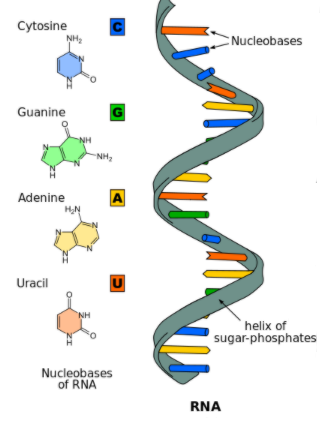
RNA is usually single-stranded and not a double helix like DNA. This single-stranded nature enables RNA to fold into complex three-dimensional structures, which are crucial for its function. The nucleotide of RNA contains a ribose sugar, which differs from DNA's deoxyribose by having an additional OH group on the 2' carbon atom.
This 2' OH group makes RNA more prone to hydrolysis, leading to lower stability than DNA. Due to this, RNA is typically used by cells for short-term roles, whereas DNA serves as the long-term genetic information storehouse. RNA includes the nitrogenous bases adenine (A), guanine (G), cytosine (C), and uracil (U) — with uracil replacing the thymine (T) found in DNA.
Structure of RNA
RNA is a biopolymer composed of ribonucleotides linked by phosphodiester bonds. Each ribonucleotide contains a ribose sugar, a phosphate group, and one of four nitrogenous bases (A, G, C, U). RNA strands are synthesized in the 5’ to 3’ direction using DNA as a template.
The unique structure of RNA, with its extra 2’ OH group, limits its lifespan and creates the potential for a wide range of functional three-dimensional structures, including folds and loops. These structural features allow RNA to serve as catalysts, messenger molecules, adaptors, and even structural elements within the cell.
Composition of RNA
Every RNA molecule comprises three main components:
- Ribose sugar – a five-carbon cyclic sugar with two OH groups at the 2’ and 3’ carbon positions.
- Phosphate group – bonds with the ribose sugars to form the RNA backbone via phosphodiester linkage.
- Nitrogenous bases – Adenine (A), Guanine (G), Cytosine (C), and Uracil (U). G pairs with C, and A pairs with U through hydrogen bonding in complementary regions.
Types of RNA
Among the many types of RNA found in organisms, three major types play primary roles in cells:
- Messenger RNA (mRNA): A single-stranded molecule complementary to a DNA strand, mRNA carries genetic code from the nucleus to the cytoplasm. Ribosomes read the codons on mRNA and translate them to produce proteins. Without mRNA, the information in DNA cannot be expressed as proteins.
- Ribosomal RNA (rRNA): A component of ribosomes, rRNA is synthesized in the nucleolus. Multiple forms of rRNA combine with ribosomal proteins to form the large and small subunits of ribosomes, facilitating mRNA and tRNA binding and catalyzing peptide bond formation during protein synthesis.
- Transfer RNA (tRNA): This small molecule translates the genetic code carried by mRNA into specific proteins. It has a cloverleaf structure with three arms (DHU arm for enzyme recognition, T arm for ribosome recognition, and Anticodon arm for mRNA binding). The open 3’ end attaches to the corresponding amino acid. By matching its anticodon with mRNA codons, tRNA ensures that amino acids are added in the correct order to build proteins.
Other Types of RNA
Some RNA molecules act as enzymes (ribozymes) and are found in cellular processes like RNA splicing, tRNA biosynthesis, and viral replication. Antisense RNAs are single-stranded RNAs with sequences complementary to mRNA. While they do not code for proteins, they can bind to mRNA and inhibit translation, serving as natural regulators of gene expression.
Due to their unique ability to silence specific genes, artificial antisense RNAs have been developed for therapeutic uses against diseases and faulty gene expression.
Functions of RNA
- RNA is essential for protein synthesis. Without RNA, the genetic code in DNA could not be used to build proteins needed by cells.
- mRNA is widely utilized in developing vaccines and novel medicines. It also enables the creation of cDNA libraries for research.
- rRNA forms the core of ribosomes, which are the "machines" for protein synthesis in all cells.
- Ribozymes and antisense RNAs can regulate gene expression by cleaving or inhibiting specific mRNA molecules, aiding cellular control and defense mechanisms.
| Type of RNA | Main Function |
|---|---|
| Messenger RNA (mRNA) | Conveys genetic instructions from DNA to ribosome for protein synthesis |
| Ribosomal RNA (rRNA) | Structural and enzymatic part of ribosome; catalyzes peptide bond formation |
| Transfer RNA (tRNA) | Brings amino acids to ribosome; deciphers mRNA code during translation |
| Ribozymes/Antisense RNA | Enzymatic activity (e.g. RNA splicing) or gene silencing |
| Feature | RNA | DNA |
|---|---|---|
| Sugar | Ribose | Deoxyribose |
| Strands | Usually single-stranded | Double-stranded helix |
| Nitrogenous Bases | A, G, C, U | A, G, C, T |
| Stability | Less stable due to extra OH group | More stable |
| Primary Function | Protein synthesis, regulation | Genetic information storage |
Key Points for Students
- RNA enables the use of genetic information for vital functions like protein synthesis.
- The structural differences between RNA and DNA influence their stability and cellular roles. Learn more at Difference Between DNA and RNA.
- Three main types of RNA— tRNA, and rRNA—work together for protein synthesis.
Practice Questions
- List and describe the main types of RNA found in cells.
- Explain how tRNA reads the genetic code during protein synthesis.
- Why is RNA generally less stable than DNA?
- What role do antisense RNAs play in gene regulation?
- Compare the structures of RNA and DNA in terms of their sugar and base content.
For deeper understanding and structured notes, visit:
Messenger RNA (mRNA)
Transfer RNA (tRNA)
Difference Between DNA and RNA


FAQs on Structure and Functions of RNA in Cells
1. What is the structure of RNA?
The structure of RNA consists of a single-stranded chain of ribonucleotides linked by phosphodiester bonds. Each ribonucleotide contains:
- A ribose sugar
- A phosphate group
- A nitrogenous base: adenine (A), uracil (U), cytosine (C), or guanine (G)
Unlike DNA, RNA is usually single-stranded and contains uracil instead of thymine. The strand can fold into complex three-dimensional shapes due to complementary base pairing (A–U and C–G).
2. What are the main functions of RNA?
The main functions of RNA are to carry genetic information and help in protein synthesis. RNA performs its role through different types:
- mRNA (messenger RNA) – carries genetic code from DNA to ribosomes
- tRNA (transfer RNA) – brings amino acids to the ribosome
- rRNA (ribosomal RNA) – forms the core structure of ribosomes
Together, these RNAs ensure that genetic information is accurately translated into proteins.
3. What is the difference between DNA and RNA?
The main difference between DNA and RNA is that DNA is double-stranded and stores genetic information, while RNA is single-stranded and helps express that information. Key differences include:
- Sugar: DNA has deoxyribose; RNA has ribose
- Bases: DNA contains thymine; RNA contains uracil
- Structure: DNA is double helix; RNA is usually single-stranded
- Function: DNA stores genes; RNA helps in protein synthesis
4. What are the types of RNA and their functions?
The three major types of RNA are mRNA, tRNA, and rRNA, and each has a specific function in protein synthesis.
- mRNA – carries genetic instructions from DNA to ribosomes
- tRNA – transfers specific amino acids to the growing polypeptide chain
- rRNA – combines with proteins to form ribosomes
Other types like snRNA and miRNA are involved in RNA processing and gene regulation.
5. How does RNA help in protein synthesis?
RNA helps in protein synthesis by converting genetic information from DNA into a sequence of amino acids. This occurs in two main steps:
- Transcription – DNA is copied into mRNA in the nucleus
- Translation – mRNA is decoded by ribosomes to form a protein
During translation, tRNA matches its anticodon with mRNA codons, ensuring the correct amino acids are added to the growing polypeptide chain.
6. What is the structure and function of mRNA?
The structure of mRNA is a single-stranded linear molecule that carries genetic information from DNA to ribosomes. Its key features include:
- A sequence of codons (three-nucleotide units)
- In eukaryotes, a 5' cap and poly-A tail
The main function of mRNA is to serve as a template during translation, directing the order of amino acids in a protein.
7. What is the structure and function of tRNA?
The structure of tRNA is a cloverleaf-shaped molecule that carries a specific amino acid to the ribosome during translation. Its main parts include:
- An anticodon loop that pairs with mRNA codons
- An amino acid attachment site at the 3' end
The function of tRNA is to ensure the correct amino acid is added to the growing polypeptide chain according to the genetic code.
8. What is the structure and function of rRNA?
The structure of rRNA consists of highly folded RNA molecules that combine with proteins to form ribosomes. rRNA:
- Forms the large and small subunits of ribosomes
- Provides a site for mRNA binding
- Catalyzes peptide bond formation
Thus, rRNA plays both a structural and catalytic role in protein synthesis.
9. Why is RNA usually single-stranded?
RNA is usually single-stranded because its role in gene expression requires flexibility and the ability to fold into various functional shapes. The presence of ribose sugar with a 2′-OH group makes RNA more reactive and less stable than DNA. This allows RNA to:
- Fold into complex three-dimensional structures
- Act as enzymes (e.g., ribozymes)
- Interact easily with other molecules
Its single-stranded nature supports its diverse biological functions.
10. Where is RNA found in the cell?
RNA is found in both the nucleus and cytoplasm of a cell, depending on its type and function. In eukaryotic cells:
- mRNA is synthesized in the nucleus and moves to the cytoplasm
- rRNA is produced in the nucleolus and forms ribosomes
- tRNA functions in the cytoplasm during translation
Thus, RNA plays roles in multiple cellular locations during gene expression.



