




What is a virus structure types and replication cycle
Viruses are one of nature’s most intriguing entities, straddling the line between the living and non-living. In this guide, we explore what is virus, delving into the structure of virus, its properties of virus, and its classification of viruses. Our aim is to present this information in a simple, conversational style that makes even the most complex topics accessible for students of all grades.
What is Virus?
A virus is a microscopic infectious agent that requires a host cell to reproduce. Unlike cells, viruses do not have the full machinery for metabolism or independent reproduction. Instead, once they attach to a host cell, they inject their genetic material and commandeer the host’s systems to generate new viruses. This process is a prime example of unique virus characteristics that set them apart from other living organisms.
Key Points:
Viruses are non-cellular and consist of a nucleic acid core (DNA or RNA) wrapped in a protective protein coat.
They can be crystallised, a feature not observed in other living organisms.
Viruses cannot reproduce on their own and must invade host cells to replicate.
Structure of Virus: The Blueprint of Infection
The structure of virus is both elegant and efficient. Despite their small size (typically 20–250 nanometres), their design is perfectly suited to their role as infectious agents. Key components include:
Nucleic Acid Core: Contains either DNA or RNA, which carries the genetic instructions.
Capsid (Protein Coat): A robust shell that protects the genetic material and aids in attachment to host cells.
Ultrastructure of Virus: Many viruses exhibit additional layers such as envelopes or spikes, which further assist in binding to host cells. A detailed viruses diagram can illustrate these features, showing how the ultrastructure of virus facilitates the infection process.
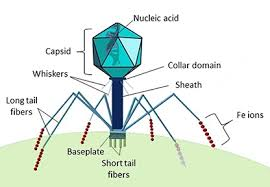
This refined structure of virus is critical for the successful invasion and replication within a host cell, and understanding these details is essential for fields like vaccine development and gene therapy.
Properties of Virus
The properties of virus are distinctive:
Infectivity: They can infect a wide range of organisms, from bacteria to plants and animals.
Reproduction: Viruses reproduce only within host cells, using the host’s metabolic machinery.
Dormancy and Activation: While viruses are inactive outside of host cells, they become highly active once they invade.
Genetic Diversity: Viruses can carry either DNA or RNA, influencing their mode of replication and mutation rates.
Unique Biochemical Reactions: They can be crystallised, showcasing a rare property among biological entities.
Understanding these properties of virus helps scientists classify and study the different types of virus effectively.
Classification of Viruses and Types of Virus
The classification of viruses is based on several criteria including genetic material, structure, replication methods, and host range. Here are the main groups:
Based on Genetic Material:
DNA Viruses: Can be single-stranded or double-stranded.
RNA Viruses: Further divided into single-stranded (positive or negative sense) and double-stranded RNA viruses.
Based on Structure or Symmetry:
Helical (Rod-shaped) Viruses
Icosahedral (Cubical) Viruses
Complex Viruses: Such as poxviruses with intricate structures.
Based on Host Range:
Animal Viruses: Infect animals and humans (e.g. Influenza, Rabies).
Plant Viruses: Affect plants (e.g. Tobacco mosaic virus).
Bacteriophages: Target bacteria.
Insect Viruses: Infect insects and can be used as biocontrol agents.
This systematic classification of viruses not only clarifies the types of virus but also enhances our understanding of virus characteristics such as the ultrastructure of virus and viruses diagram representations.
Explore: Bacteriophage
Virus Reproduction: The Lytic Cycle
Most viruses reproduce via a lytic cycle, which involves:
Attachment: The virus binds to the host cell.
Entry: Its genetic material is injected into the cell.
Replication: The host cell’s machinery is hijacked to replicate viral components.
Assembly: New virus particles are assembled.
Release: The host cell bursts (lyses), releasing the new viruses to infect other cells.
This replication strategy exemplifies the clever virus characteristics and highlights the dynamic interplay between viruses and their hosts.
Real-World Applications
Understanding what is virus and its structure of virus is not only academically fascinating—it has real-world significance:
Medical Advancements: Vaccines and antiviral therapies are designed by studying the properties of virus and types of virus.
Biotechnology: Viruses are employed in gene therapy and as vectors in genetic engineering due to their precise ability to deliver genetic material.
Environmental Impact: Viruses play a crucial role in regulating bacterial populations in oceans, influencing global biogeochemical cycles.
Nanotechnology: Their uniform ultrastructure of virus makes them ideal templates for nanoscale material assembly.
These applications underline the importance of a thorough grasp of virus characteristics in modern science.
Fun Facts about Viruses
Biodiversity in a Teaspoon: A single teaspoon of seawater can contain over a million viruses, making them the most abundant biological entities on Earth.
Dual Identity: Viruses challenge the traditional definitions of life, as they possess features of both living and non-living matter.
Crystallisation Capability: Unlike other living organisms, viruses can be crystallised, which has advanced our understanding of their molecular structures.
Additional Points
Beyond the basics, it’s worth noting:
Virus Evolution: Viruses evolve rapidly, often outpacing their hosts in adapting to environmental changes.
Interdisciplinary Research: The study of the classification of viruses intersects with fields like epidemiology, immunology, and nanoscience.
Educational Value: Detailed virus diagrams and interactive models are excellent educational tools, linking theoretical knowledge with practical understanding.


FAQs on Virus in Biology Complete Concept Guide
1. What is a virus in biology?
A virus is a microscopic infectious agent that can only replicate inside a living host cell. Unlike cells, viruses are not considered fully living because they cannot carry out metabolism or reproduce on their own. A typical virus consists of:
- A core of genetic material (DNA or RNA)
- A protective protein coat called a capsid
- Sometimes a lipid envelope derived from the host cell membrane
2. Are viruses living or non-living?
Viruses are considered non-living outside a host cell but show living characteristics inside a host. They lack cellular structure, cannot perform metabolism, and cannot reproduce independently. However, once inside a host cell, they:
- Use the host’s machinery to replicate
- Direct the synthesis of viral proteins
- Produce new virus particles
3. What are the main parts of a virus?
The main parts of a virus are the genetic material, capsid, and sometimes an envelope. Specifically, a virus includes:
- Genetic material – either DNA or RNA that carries viral instructions
- Capsid – a protein coat that protects the genetic material
- Envelope (in some viruses) – a lipid membrane with viral proteins
4. How do viruses reproduce?
Viruses reproduce by hijacking a host cell’s machinery to make new virus particles. The basic steps of viral replication are:
- Attachment – virus binds to specific receptors on the host cell
- Entry – viral genetic material enters the cell
- Replication – viral genome is copied using host enzymes
- Protein synthesis – viral proteins are produced
- Assembly – new viruses are assembled
- Release – viruses exit the cell, often by lysis or budding
5. What is the difference between lytic and lysogenic cycles?
The lytic cycle destroys the host cell immediately, while the lysogenic cycle integrates viral DNA into the host genome without immediate destruction. In detail:
- Lytic cycle: rapid replication, host cell bursts (lysis), new viruses released
- Lysogenic cycle: viral DNA becomes a prophage, replicates with host DNA, may later enter lytic cycle
6. What is the difference between DNA and RNA viruses?
DNA viruses contain DNA as their genetic material, while RNA viruses contain RNA. The key differences include:
- DNA viruses: usually replicate in the nucleus using host enzymes
- RNA viruses: often replicate in the cytoplasm and may use RNA-dependent RNA polymerase
- RNA viruses generally mutate faster than DNA viruses
7. How do viruses infect human cells?
Viruses infect human cells by binding to specific receptors and entering the cell to replicate. The infection process involves:
- Recognition of specific cell surface receptors
- Fusion with the cell membrane or entry by endocytosis
- Release of viral genetic material inside the cell
- Replication and assembly of new viruses
8. Can viruses infect bacteria?
Yes, viruses that infect bacteria are called bacteriophages or phages. These viruses attach to bacterial cells and inject their genetic material. They may:
- Enter a lytic cycle, destroying the bacterium
- Enter a lysogenic cycle, integrating into bacterial DNA
9. Why are antibiotics not effective against viruses?
Antibiotics are not effective against viruses because they target bacterial structures and processes that viruses do not have. Antibiotics typically act on:
- Cell walls (like peptidoglycan in bacteria)
- Bacterial ribosomes
- Specific bacterial metabolic pathways
10. What are some common examples of viral diseases?
Common viral diseases are illnesses caused by infection with specific viruses in humans, animals, or plants. Examples include:
- Influenza – caused by influenza virus
- COVID-19 – caused by SARS-CoV-2
- Measles – caused by measles virus
- HIV/AIDS – caused by human immunodeficiency virus
- Polio – caused by poliovirus



