



Structure of Ovule with Labelled Parts and Embryo Sac in Angiosperms
An ovule is the structure present inside the ovary of flowering plants where the female gametophyte develops. It contains the integuments, nucellus, and embryo sac, and after fertilisation it develops into a seed.
Ovule: An Overview
An ovule is the structure present inside the ovary of seed plants where the female gametophyte develops. It is the structure that later becomes the seed after fertilisation. In flowering plants, the ovule contains the tissues needed for megaspore formation, embryo sac development, and ultimately seed formation. This makes the ovule one of the most important reproductive structures in angiosperms.
The ovule contains:
protective coverings called integuments
the nucellus
the female gametophyte or embryo sac
After fertilisation, the ovule develops into a seed containing the embryo, endosperm, and seed coat. Under suitable conditions, this seed can grow into a new plant.
What is Ovule? Understand the Basics
An ovule is the female reproductive structure found in the ovary of a flower. It is the site where the female gametophyte develops and where fertilisation takes place. In simple words, the ovule is the seed precursor.
This is why, in plant reproduction, the ovule is highly important:
Before fertilisation, it contains the embryo sac
During fertilisation, it receives the male gametes
After fertilisation, it transforms into the seed
Structure of Ovule
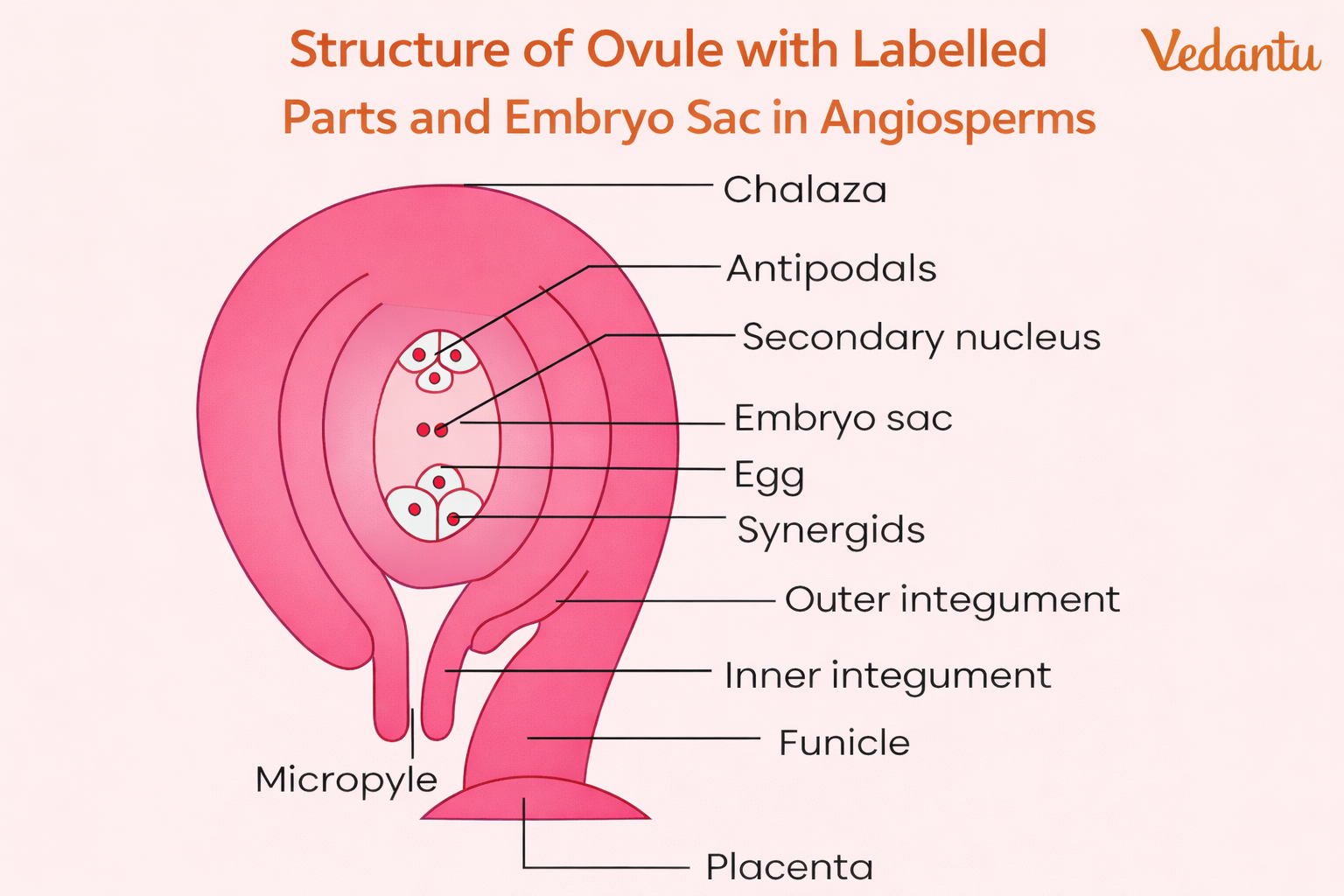
The structure of the ovule includes three major parts:
Integuments
Nucellus
Female gametophyte or embryo sac
The embryo sac lies in the centre, enclosed by the nucellus, which in turn is covered by one or two integuments.
Main Components of Ovule Structure
In angiosperms, the female gametophyte is called the embryo sac. It usually develops from a single functional megaspore.
Ovule Diagram and the Parts
An ovule diagram generally includes the following labelled parts:
funicle
hilum
integument
micropyle
chalaza
nucellus
embryo sac
Parts of Ovule
1. Funicle
The funicle is the stalk-like structure by which the ovule is attached to the placenta inside the ovary. It serves as the connecting stalk of the ovule.
2. Hilum
The hilum is the region where the body of the ovule joins the funicle. It represents the junction between the ovule and the funicle.
3. Integument
The integuments are protective envelopes surrounding the ovule. Each ovule may have one or two integuments. These coverings protect the inner tissues of the ovule and later develop into the seed coat after fertilisation.
4. Micropyle
The micropyle is the small opening left at the tip of the ovule where the integuments do not completely cover the nucellus.
Functions of Micropyle
Allows pollen tube entry during fertilisation
During germination, the radicle emerges through it
helps in the entry of water and gases
This makes the micropyle a very important part of the ovule structure.
5. Chalaza
The chalaza is the basal part of the ovule opposite to the micropyle. It is the region where the integuments and nucellus meet at the base.
6. Nucellus
The nucellus is the central mass of cells present inside the integuments. It contains abundant reserve food material and surrounds the embryo sac.
Important facts:
It is a diploid tissue
It is structurally and functionally equivalent to the megasporangium
In immature ovules, it contains the megaspore mother cell (MMC)
After fertilisation, the nucellus may persist as perisperm, which can nourish the developing embryo.
7. Embryo Sac or Female Gametophyte
The embryo sac is the female gametophyte present inside the nucellus. In angiosperms, an ovule generally has a single embryo sac formed from one megaspore.
A common question is: how many embryo sacs are present in an ovule?
The standard answer is: Usually, one embryo sac is present in one ovule
Interesting Fact: In Ovule, meiosis occurs in the megaspore mother cell (MMC), which is present in the nucellus. The MMC undergoes meiotic division to produce megaspores.
Megasporogenesis
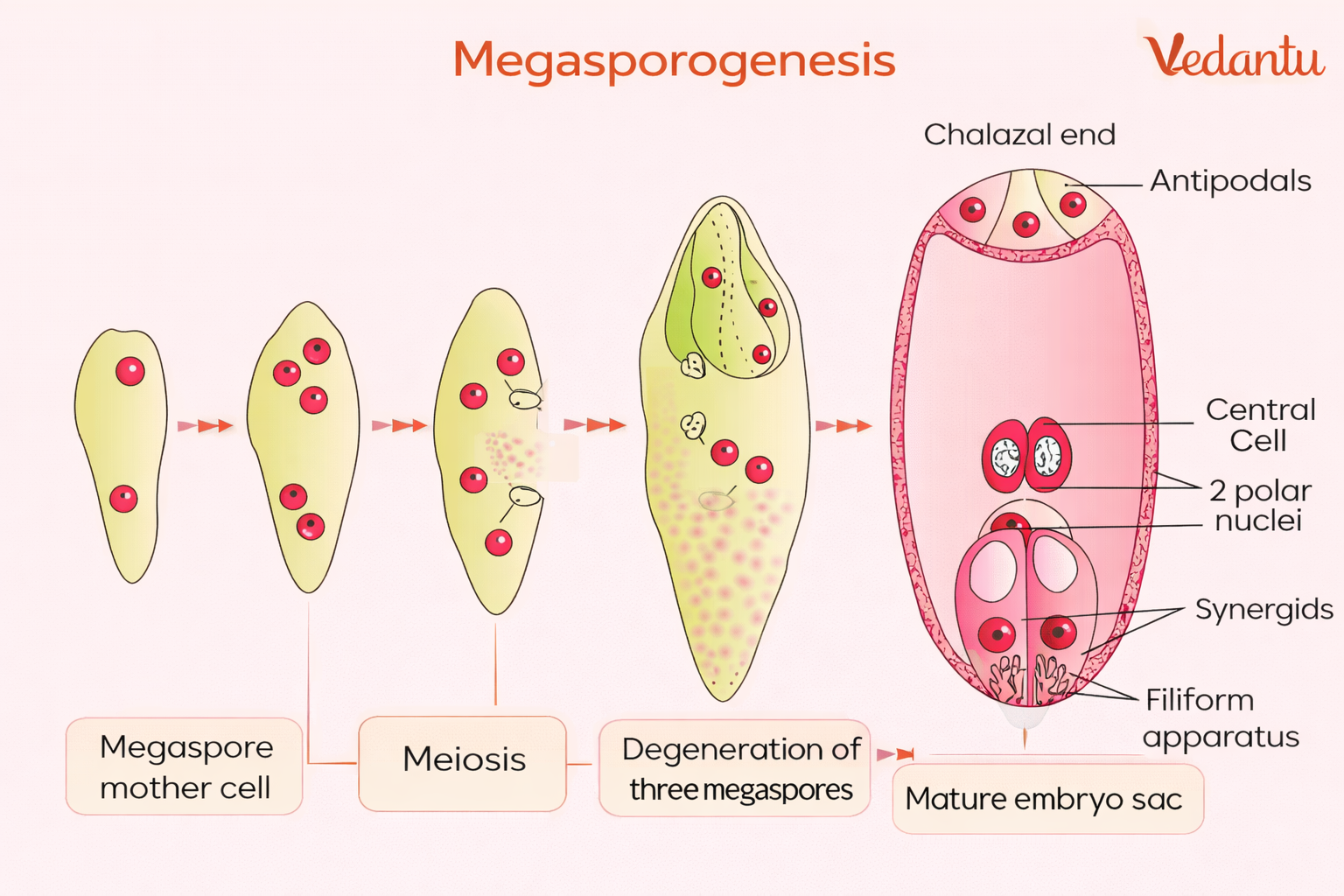
The process of megaspore formation from the megaspore mother cell is called megasporogenesis.
Important Points
Usually, a single megaspore mother cell differentiates in the nucellus
It is generally present in the micropylar region
It is a large cell with dense cytoplasm and a prominent nucleus
It undergoes meiosis to form megaspores
This process is a key part of ovule development.
Embryo Sac Development
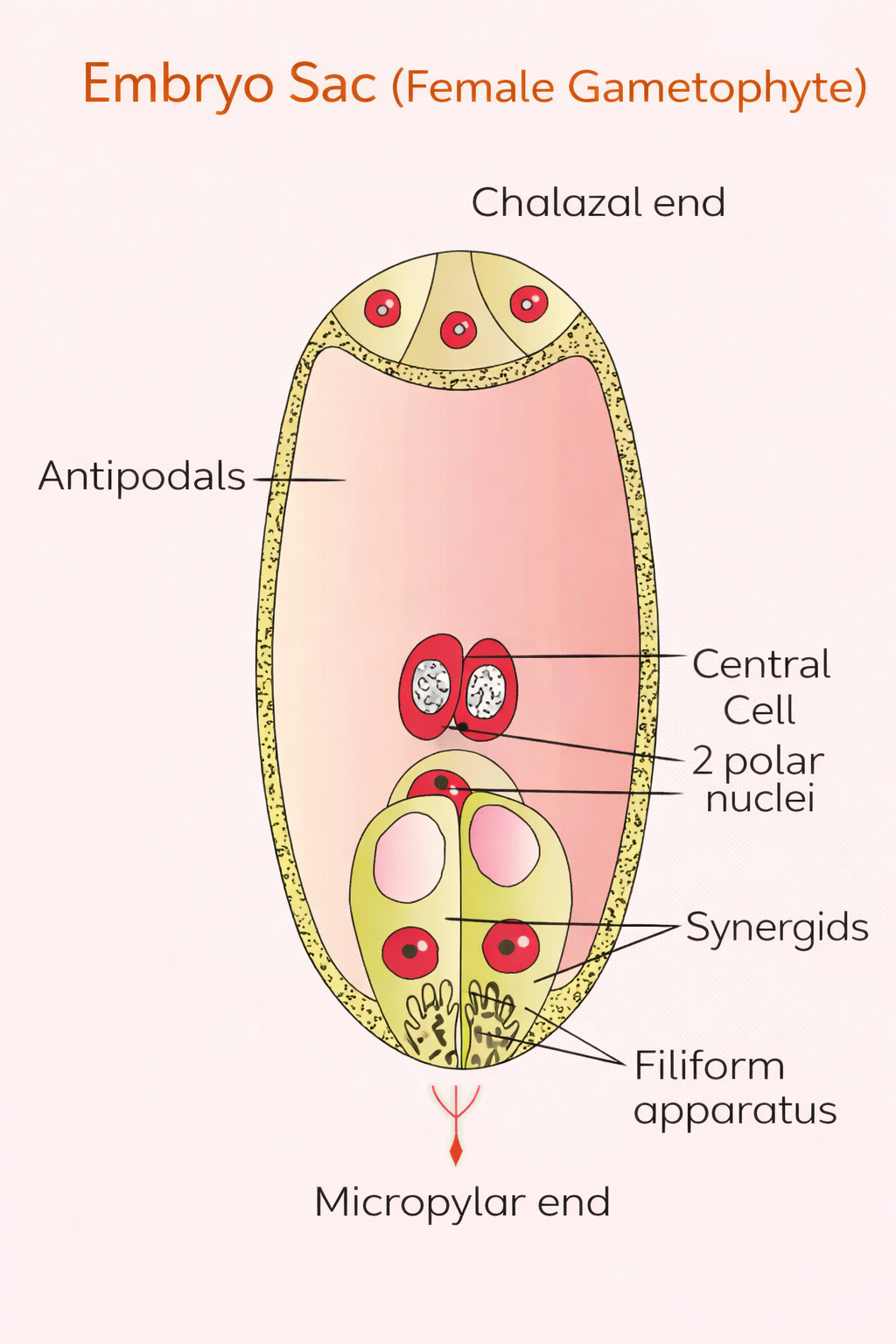
The embryo sac or female gametophyte develops from a megaspore. A common pattern in angiosperms is:
One megaspore remains functional
This functional megaspore undergoes three rounds of mitosis
The embryo sac is formed
Thus, the embryo sac is the mature female gametophyte found inside the ovule.
Location of Ovule
In flowering plants, the ovule is found inside the ovary, which is part of the gynoecium, the female reproductive organ of the flower.
The ovule is attached to the placenta of the ovary by a stalk-like structure called the funiculus or funicle. After fertilisation:
The ovary becomes the fruit
The ovule becomes the seed
Types of Ovules
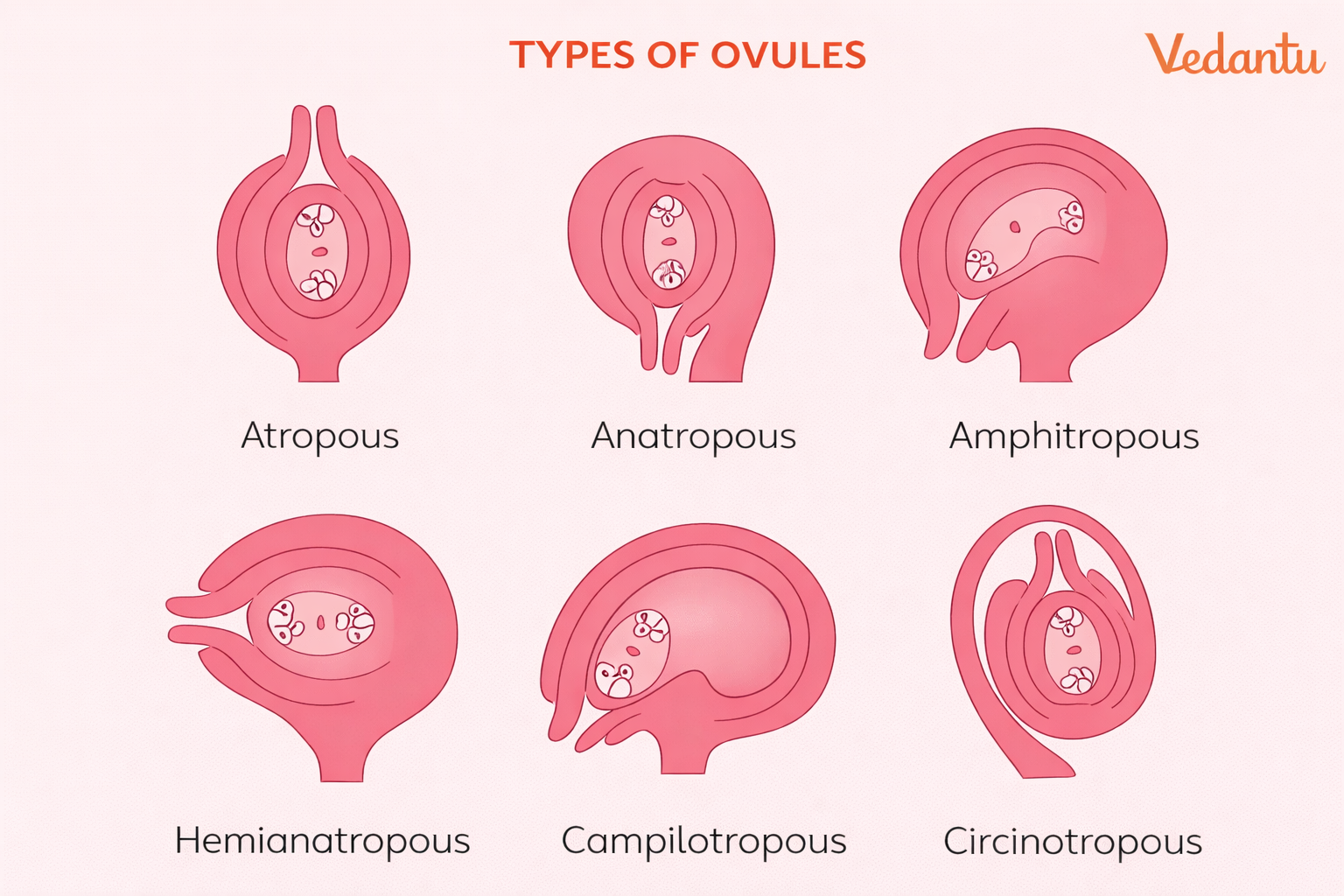
The types of ovule can be classified on two main bases:
Based on the number of integuments
Based on the position of the micropyle, chalaza, hilum, and orientation of the funicle
Types of Ovule Based on Number of Integuments
1. Unitegmic Ovule
Ovules having one integument are called unitegmic ovules. This type is common in many gymnosperms.
2. Bitegmic Ovule
Ovules having two integuments are called bitegmic ovules. This is the most common condition in angiosperms.
3. Ategmic Ovule
Ovules having no integuments are called ategmic ovules. Examples:
Loranthus
Olax
Liriosma
Santalum
Types of Ovule Based on Position and Orientation
This classification depends on the relationship between:
micropyle
chalaza
hilum
funiculus
These are the main types of ovules in angiosperms.
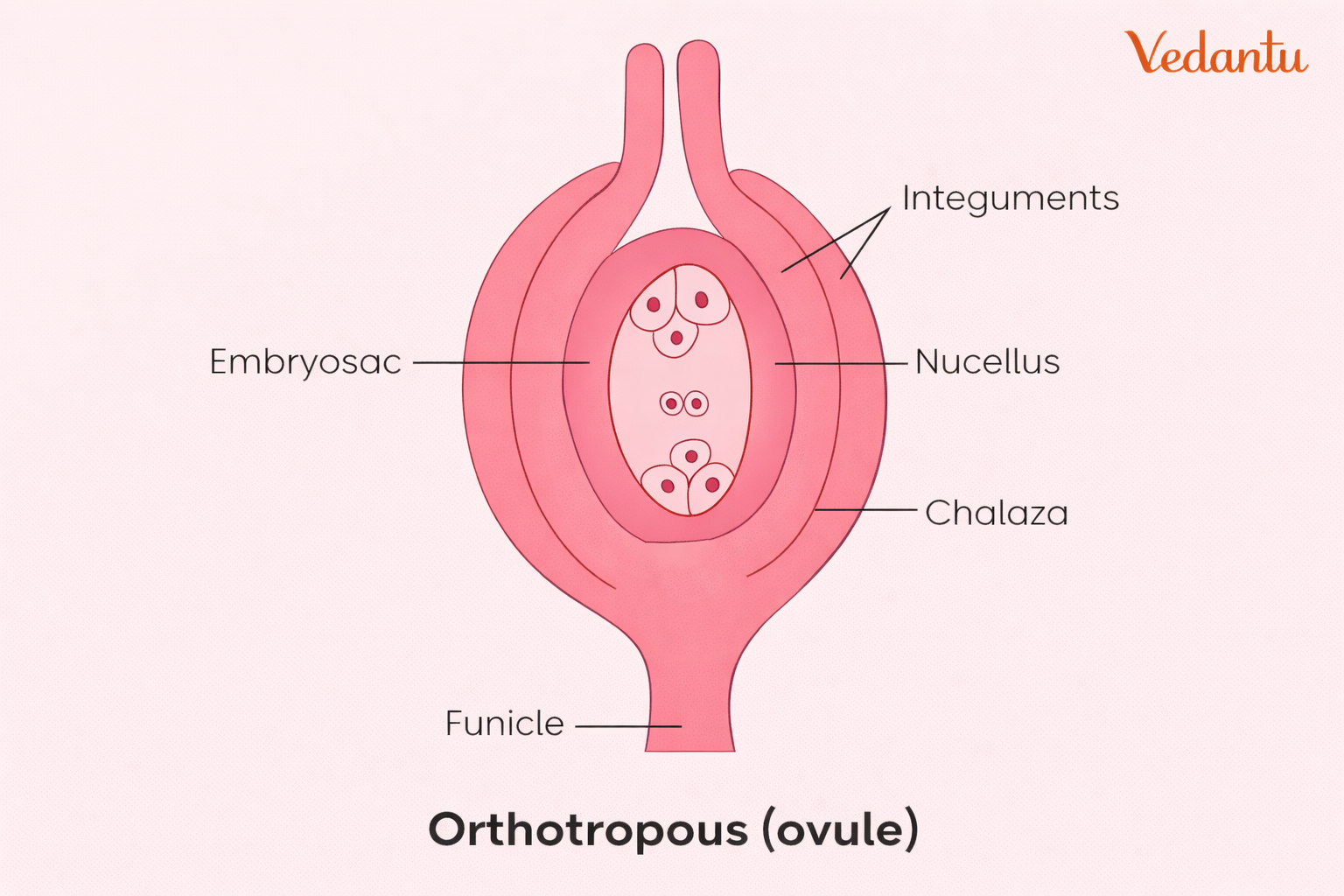
1. Orthotropous Ovule or Atropous Ovule
The orthotropous ovule is also called the atropous ovule.
Features
The ovule is straight and upright
micropyle, chalaza, and hilum lie in one straight line
Raphe is absent
Occurrence
It is found in primitive angiosperms and gymnosperms, including:
betel
piper
Polygonum
This is an important type because questions often ask about the difference between orthotropous and anatropous ovules.
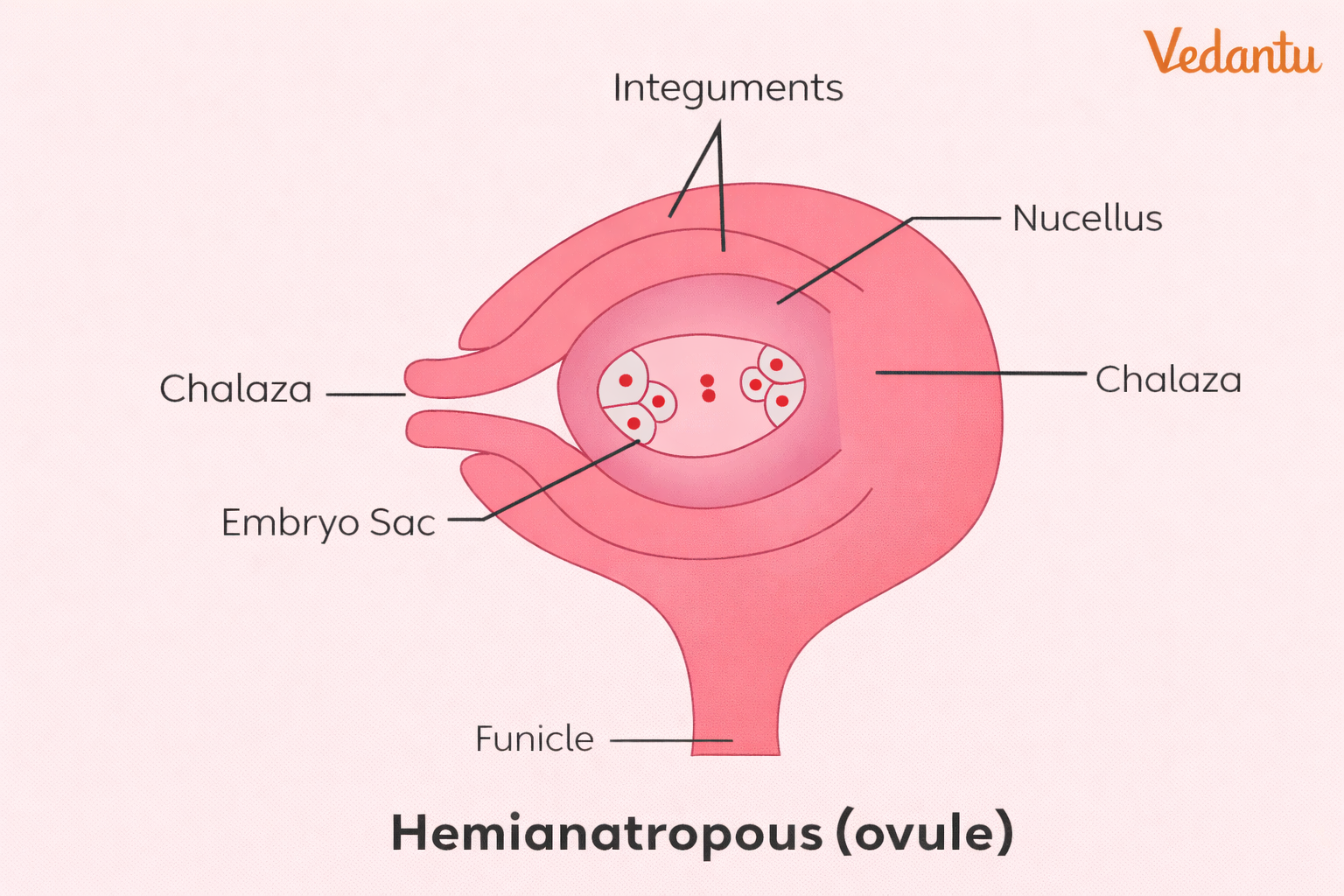
2. Hemitropous or Hemianatropous Ovule
Features
ovule bends at about 90°
The body of the ovule becomes horizontal
micropyle and chalaza remain in one line
Micropyle stays away from the hilum
Examples
Ranunculus
Primula
3. Anatropous Ovule
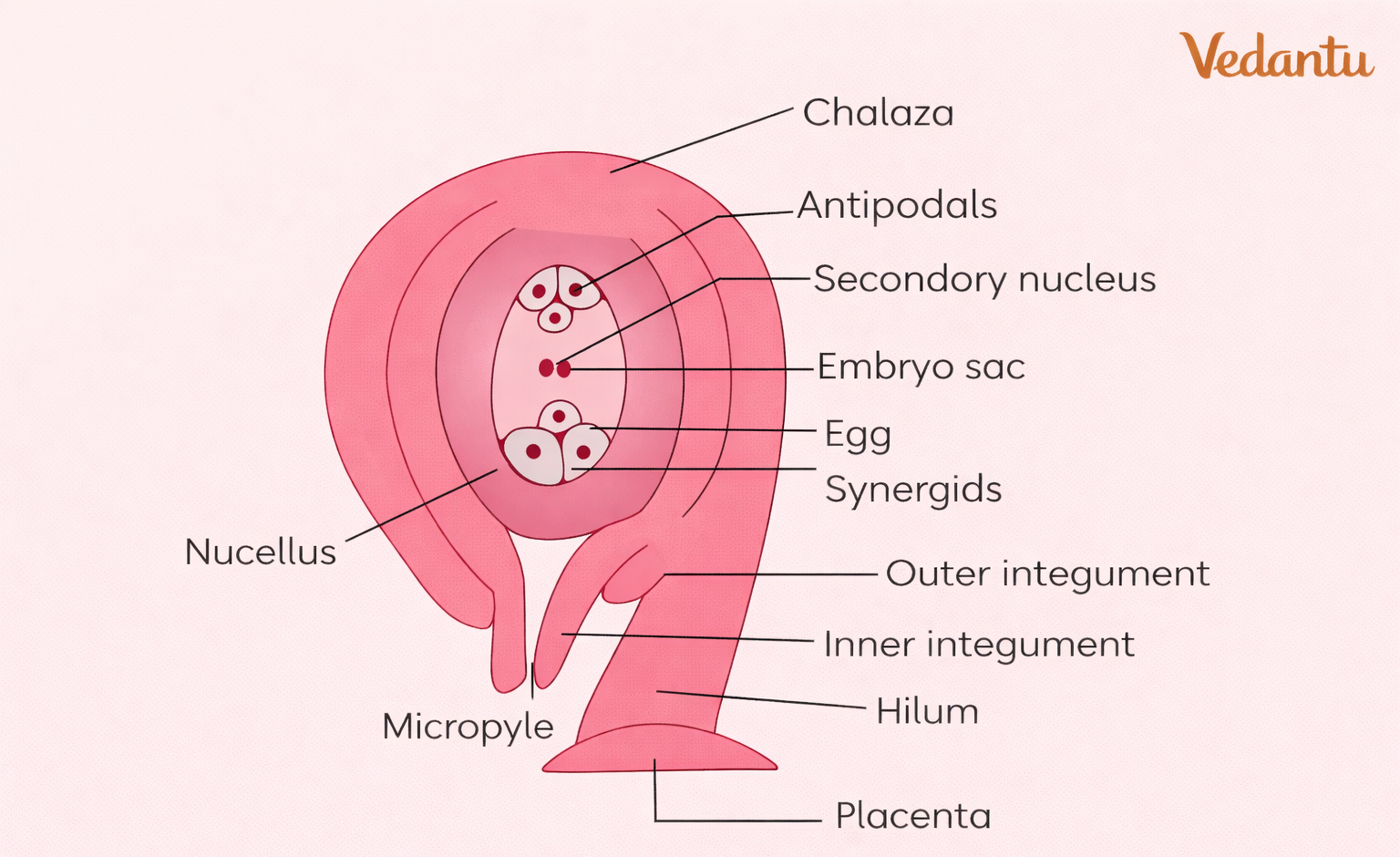
The anatropous ovule is the most important and the most common type.
Features of an anatropous ovule
The ovule gets inverted by 180°
This happens due to unilateral growth of the funiculus
The micropyle comes to face downward
chalaza and micropyle come close to each other
Raphe is present
Importance
It is the most common type of ovule
found in about 80% of angiosperm families
Exceptions include Capsella
Examples
Malvaceae
Cucurbitaceae
Solanaceae
Compositae
Because it is so common, the anatropous ovule diagram is the standard diagram shown in most biology textbooks.
4. Amphitropous Ovule
Features
Curvature affects the nucellus
The embryo sac becomes horseshoe-shaped
Micropyle comes close to the hilum
also called a transverse ovule
Examples
Mirabilis
Lemna
Papaver
5. Campylotropous Ovule
Features
The ovule body is curved
The micropyle and chalaza do not lie in one straight line
Nucellus is curved
The embryo sac remains straight
The micropyle lies close to the hilum
Examples
Leguminosae
Cruciferae
Capsella
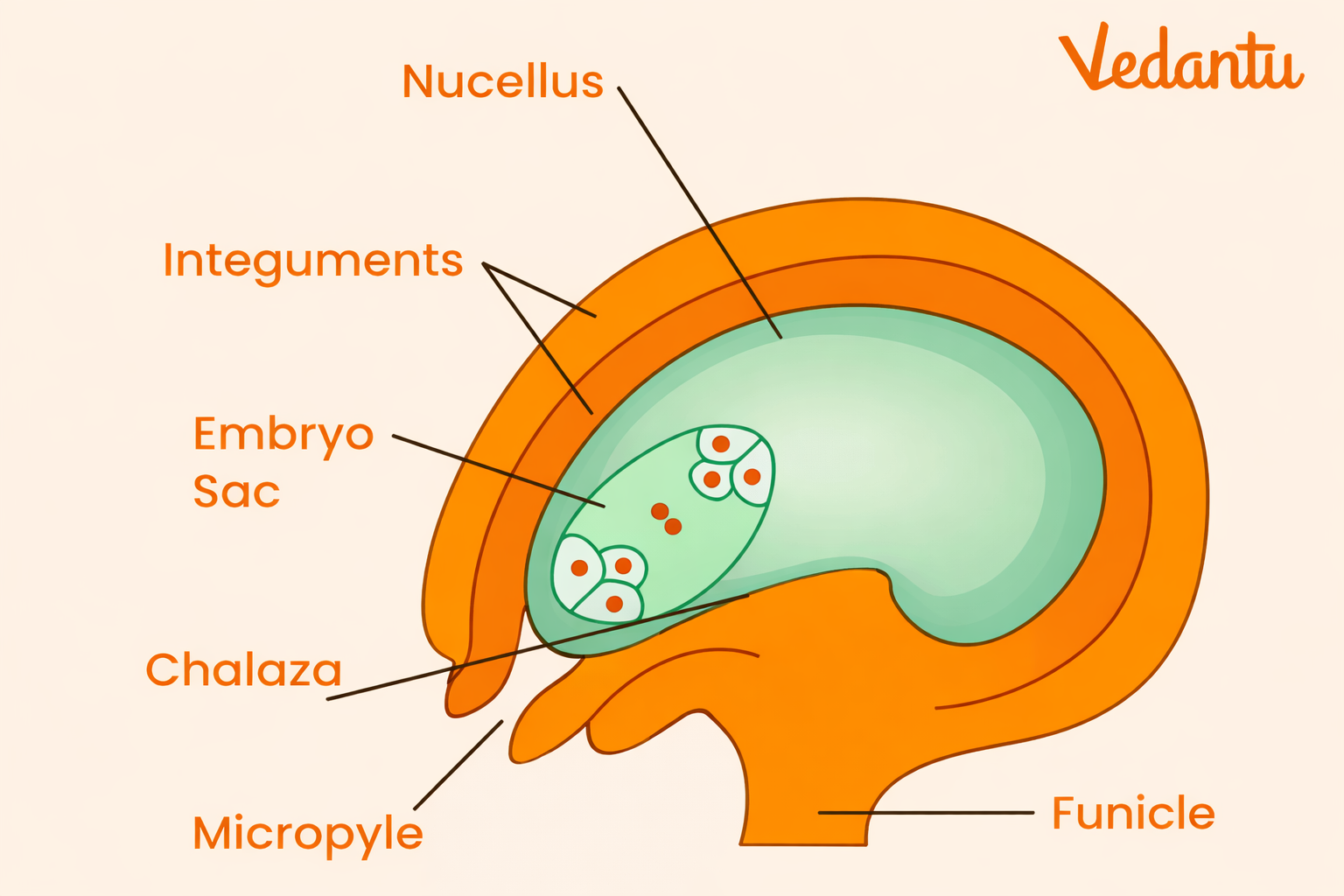
6. Circinotropous Ovule
Features
The ovule first becomes inverted and then straightens again
The funiculus grows around the ovule in a coiled manner
also called a coiled ovule
Micropyle remains away from the hilum
Example
Opuntia of the family Cactaceae
Types of Ovule at a Glance
Orthotropous Ovule vs Anatropous Ovule
This comparison is very useful for board exams and entrance exams.
The nucellus is structurally and functionally equivalent to the megasporangium
The ovule as a whole is the megasporangium together with its protective coverings and internal gametophytic tissues
So, when asked in either objective or conceptual form, the accepted technical equivalence is usually linked to the megasporangium via the nucellus.
Important Points to Remember About Ovule
An ovule is the structure inside the ovary where the female gametophyte develops.
After fertilisation, the ovule becomes the seed.
The main parts of the ovule are the integuments, the nucellus, and the embryo sac.
Meiosis in the ovule occurs in the megaspore mother cell.
Usually, one embryo sac is present in an ovule.
Nucellus is equivalent to the megasporangium.
Anatropous ovule is the most common type in angiosperms.
The orthotropous ovule is straight, and the raphe is absent.
Bitegmic ovule is a common condition in angiosperms.
Related Topics for Interlinking of Ovule
FAQs on Ovule: Structure, Parts, Location, Types, Diagram, and More
1. What is an ovule?
An ovule is the structure inside the ovary where the female gametophyte develops, and which later becomes the seed after fertilisation.
2. What are the main parts of an ovule?
The main parts of the ovule are the integuments, nucellus, embryo sac, funicle, hilum, micropyle, and chalaza.
3. In which ovule does meiosis occur?
In the ovule, meiosis occurs in the megaspore mother cell present in the nucellus.
4. How many embryo sacs are present in an ovule?
Usually, one embryo sac is present in one ovule.
5. What is an anatropous ovule?
An anatropous ovule is an inverted ovule turned by 180° and is the most common type in angiosperms.
6. What is an orthotropous ovule?
An orthotropous ovule is a straight ovule in which the micropyle, chalaza, and hilum lie in one straight line.
7. What are the types of ovules?
The main types are orthotropous, hemitropous, anatropous, amphitropous, campylotropous, and circinotropous ovules.
8. What is the function of the micropyle in the ovule?
Micropyle allows the entry of the pollen tube during fertilisation and helps the radicle emerge during germination.
9. What is nucellus?
Nucellus is the tissue mass inside the ovule that surrounds the embryo sac and is equivalent to the megasporangium.
10. The ovule of an angiosperm is technically equivalent to what?
The nucellus of the ovule is structurally and functionally equivalent to the megasporangium.
