



Why are Protozoa Important in Biology and NEET Preparation? Learn from the Basics
Protozoa are unicellular eukaryotic organisms that include both free-living and parasitic species. These tiny beings exhibit diverse shapes, sizes, and modes of survival and are often studied in NEET for their significant roles in causing some of the world’s most prevalent diseases. Below, we will explore their classification, characteristics, life cycle, and diseases in a simple yet detailed manner.
General Characteristics of Protozoa
Habitat
Found predominantly in aquatic environments such as freshwater bodies or oceans.
Some protozoa live freely, while others are parasitic in plants and animals.
Most protozoans are aerobic, although some (like those in the rumen of cattle or the human intestine may be anaerobic.
Size and Shape
Range widely in size—from microscopic forms of about 1 µm to large shells of certain foraminifera measuring up to 20 cm.
Lack a rigid cell wall, giving them flexibility. However, some species have external shells or pellicles that maintain shape.
Cellular Structure
Eukaryotic cells with a membrane-bound nucleus (often containing diffuse chromatin).
Pellicle is present in many species, providing shape and protection.
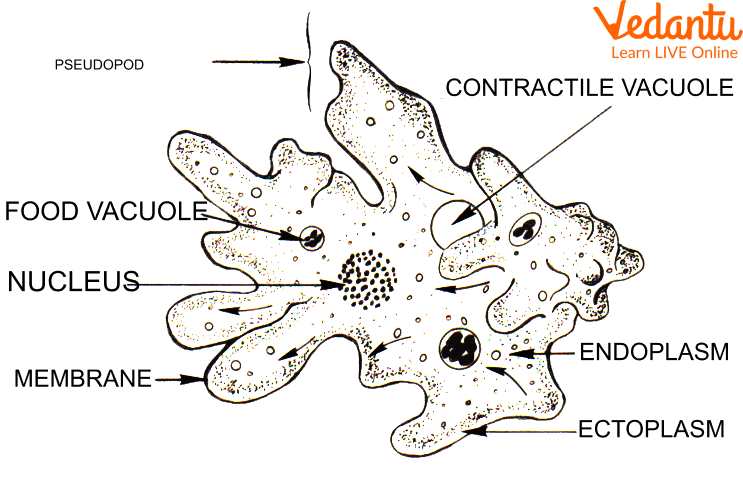
Cytoplasm is divided into an outer clear layer (ectoplasm) and an inner granular layer (endoplasm) containing organelles.
Contractile vacuoles help in osmoregulation, especially in freshwater species.
Locomotory structures such as flagella, cilia, or pseudopodia are often present.
Nutrition
Protozoa are largely heterotrophic (holozoic nutrition).
Phagocytosis is a common method to ingest food, with certain species having a cytostome (cell mouth).
Food vacuoles store ingested food for digestion using enzymes.
Locomotion
Flagellated protozoans use flagella.
Ciliated protozoans use cilia.
Amoeboid protozoans use pseudopodia.
Sporozoans usually have no obvious locomotive organelles but can move with slow, gliding movements via subpellicular microtubules.
Life Cycle Stages
Often include a dormant cyst stage capable of surviving harsh conditions.
The trophozoite stage is typically active, feeding, and frequently infectious in parasitic species.
Reproduction
Commonly reproduced asexually by binary fission, budding, or multiple fission.
Some protozoa exhibit sexual reproduction through conjugation or gametocyte formation.
Classification of Protozoa
Protozoa can be broadly grouped into four main classes based on their morphology and mode of locomotion.
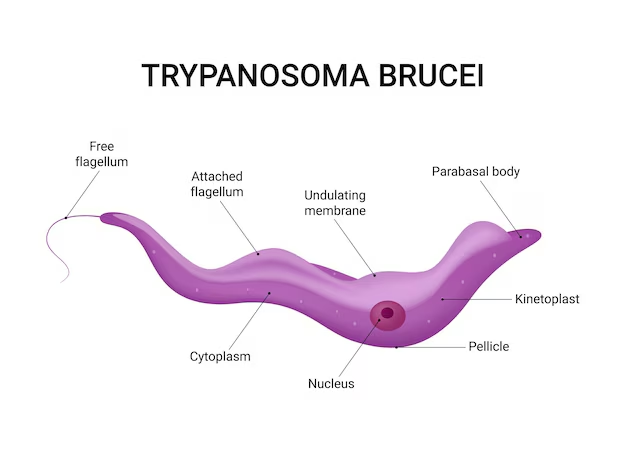
Mastigophora (Flagellated Protozoans)
Use flagella for locomotion.
The body may be covered by a pellicle.
Reproduction typically via longitudinal binary fission.
Common examples include Trypanosoma, Trichomonas, Giardia, and Leishmania.
Sarcodina (Amoeboid Protozoans)
Move and capture food using pseudopodia.
Typically irregular in shape; no pellicle.
Examples: Amoeba, Entamoeba (notable for causing amoebic dysentery).
Sporozoa (Sporozoans)
Mostly endoparasitic and lack locomotive organelles in their mature form.
Move slowly via subpellicular microtubules.
Reproduce by forming sporozoites.
Example: Plasmodium (the malaria protozoan).
Ciliophora (Ciliated Protozoans)
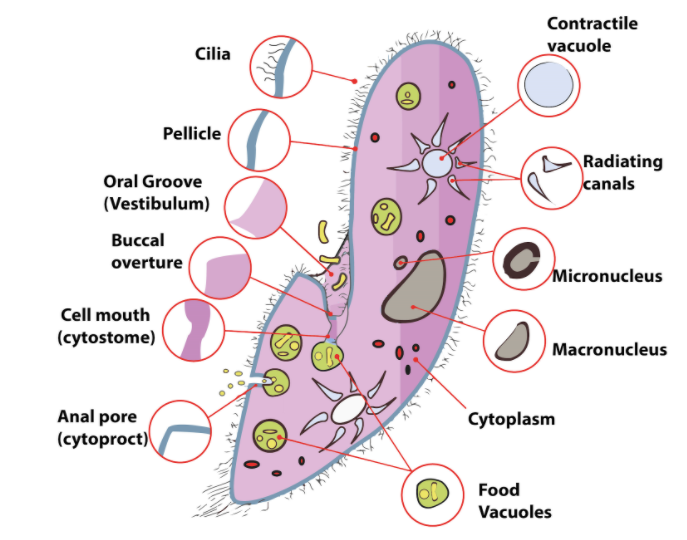
Possess numerous cilia for both locomotion and feeding.
Characterised by a pellicle that gives them a definite shape.
Examples: Paramecium, Balantidium, Vorticella.
Diseases Caused by Protozoa
Certain protozoans are pathogenic and lead to significant diseases in humans and animals. These protozoan diseases often spread through contaminated water, insect vectors, or direct contact. Below are some major diseases caused by protozoa:
Malaria
Causative Agents: Plasmodium falciparum, P. vivax, P. malariae, P. ovale
Vector: Female Anopheles mosquito
Key Features: Infect liver cells, then invade and rupture red blood cells; produce fever, chills, and sometimes life-threatening complications.
Amoebic Dysentery (Amoebiasis)
Causative Agent: Entamoeba histolytica
Transmission: Contaminated food or water
Key Features: Causes ulcers in the intestinal lining leading to bloody diarrhoea, abdominal pain, and in severe cases may spread to the liver.
African Sleeping Sickness (Trypanosomiasis)
Causative Agent: Trypanosoma brucei gambiense / T. brucei rhodesiense
Vector: Tsetse fly
Key Features: Characterised by fever, joint pain, and progressive damage to the central nervous system, eventually causing severe neurological symptoms.
Trichomoniasis
Causative Agent: Trichomonas vaginalis
Transmission: Sexual contact (STD)
Key Features: Inflammation and irritation in the genital tract, with symptoms such as itching and discharge.
Toxoplasmosis
Causative Agent: Toxoplasma gondii
Transmission: Contaminated soil, water, or from animals (e.g., cats)
Key Features: Often causes flu-like symptoms or mild infections, but can lead to serious complications in pregnant women and immunocompromised individuals.
Giardiasis
Causative Agent: Giardia lamblia
Transmission: Contaminated water or food
Key Features: Affects the intestinal tract, leading to watery diarrhoea, flatulence, and weight loss in prolonged cases.
Kala-azar (Leishmaniasis)
Causative Agent: Leishmania donovani
Vector: Female sandflies
Key Features: Causes fever, enlarged spleen and liver, and discolouration of the skin, also known as “Black Fever”.
Life Cycle of Protozoa
Cyst Stage
Dormant form capable of surviving unfavourable environments.
Promotes transmission between hosts in parasitic species.
Trophozoite Stage
Active, feeding, and often the disease-causing stage.
Multiplies rapidly, especially in warm and nutrient-rich conditions within the host.
Locomotion in Protozoa
Protozoa show four main types of locomotion; amoeboid, flagellar, ciliary, and metabolic (gliding); using specialised structures to move, find food, and avoid predators. Most protozoa move either through cytoplasmic flow (pseudopodia) or by the movement of tiny hair-like structures such as cilia and flagella, especially in aquatic environments.
Types of Locomotion in Protozoa
1. Amoeboid Movement (Pseudopodia):
Seen in organisms like Amoeba, this type of movement involves the formation of temporary projections called pseudopodia or “false feet.” These extensions help the organism crawl and capture food. Different forms of pseudopodia include:
Lobopodia – broad and lobe-like
Filopodia – thin and thread-like
Reticulopodia – branched and network-like
Axopodia – stiff and radiating
This movement is explained by the sol-gel theory, where the cytoplasm alternates between a fluid state (plasmasol) and a more solid state (plasmagel).
2. Flagellar Movement (Flagella):
Organisms like Euglena and Trypanosoma move using flagella, which are long, whip-like structures. These structures beat in a wave-like pattern, allowing the organism to move forward or in a spiral direction.
3. Ciliary Movement (Cilia):
In protozoa such as Paramecium, movement occurs with the help of numerous short, hair-like structures called cilia. These cilia beat in a coordinated manner, with effective strokes pushing the organism forward and recovery strokes resetting their position.
4. Metabolic or Gliding Movement:
Some protozoa move by contracting their entire body or using internal contractile structures called myonemes. This results in a slow gliding or creeping motion, commonly seen in sporozoans or during euglenoid movement.
Key Locomotory Structures
Pseudopodia: Temporary cytoplasmic extensions used for movement and feeding
Flagella: Long, whip-like structures (usually few in number)
Cilia: Short, numerous hair-like projections
Myonemes: Contractile fibres that enable body movement
Importance of Locomotion
Locomotion is essential for protozoa as it helps them:
move towards food sources
escape from predators
adapt to different environments
survive and reproduce effectively
Overall, locomotion plays a crucial role in the survival and functioning of protozoa.
Reproduction in Protozoa
Asexual Methods
Binary Fission: Parent cell divides into two similar cells.
Multiple Fission: One parent cell divides into multiple offspring.
Budding: Outgrowth from the parent’s body develops into a new individual.
Sexual Methods
Conjugation: Temporary union of two cells with exchange of genetic material (common in ciliates like Paramecium).
Syngamy: Fusion of male and female gametes.
Gametocyte Formation: In sporozoans, specialised cells produce gametes that fuse within the host or vector.
Quick Quiz on Protozoa (with Answers)
Which protozoan is responsible for African Sleeping Sickness?
A. Trypanosoma brucei
B. Giardia lamblia
C. Entamoeba histolytica
D. Toxoplasma gondii
Answer: A. Trypanosoma brucei
Which stage of the protozoan life cycle is typically dormant?
A. Trophozoite
B. Sporozoite
C. Cyst
D. Gametocyte
Answer: C. Cyst
Identify the mode of transmission for Entamoeba histolytica.
A. Contaminated water/food
B. Cattle
C. Mosquito bites
D. Respiratory droplets
Answer: A. Contaminated water/food
Which of the following protozoans reproduce via binary fission?
A. Plasmodium
B. Entamoeba
C. Leishmania
D. Trypanosoma
Answer: B. Entamoeba (though Leishmania and Trypanosoma can also use binary fission, Entamoeba is a classic example taught in basic protozoan biology).
Related Topics


FAQs on Protozoa: Definition, Classification, Structure, Examples, and Life Processes
1. Which protozoans commonly cause diseases in humans?
Plasmodium, Entamoeba histolytica, Giardia lamblia, Trypanosoma brucei, Trichomonas vaginalis, Toxoplasma gondii, and Leishmania donovani are some of the most common.
2. Why is the trophozoite stage considered infectious?
The trophozoite stage is when the protozoan actively feeds, multiplies, and can invade tissues or cells, making it responsible for causing clinical symptoms.
3. How do protozoa survive outside the host?
Many protozoa form cysts. These dormant structures are resistant to harsh conditions, enabling the organism to survive until they enter a new host.
4. Are all protozoa harmful?
No. Most protozoa are either beneficial or neutral in their environments. Only a small fraction are parasitic and cause diseases.
5. Why is malaria called a sporozoan disease?
Plasmodium (the malaria pathogen) produces and transmits sporozoites within the host and vector stages, so it belongs to the Sporozoa group.
6. What defines a protozoa?
Protozoa are single-celled, eukaryotic microorganisms that belong to Protista. It refers to tiny organisms that behave like animals; they move, feed on organic matter, and live in water, soil, or inside hosts. They show features like locomotion in protozoa, feeding, and reproduction within a single cell.
7. What is protozoa and its disease?
Protozoa can cause many human diseases. Common diseases caused by protozoa include:
Malaria is caused by protozoa (Plasmodium)
Amoebiasis (Entamoeba histolytica)
Giardiasis (Giardia)
Toxoplasmosis
Leishmaniasis
These diseases affect organs like the intestine, blood, and liver.
8. Is protozoa a virus or parasite?
Protozoa are parasites, not viruses.
They are living cells with a nucleus and organelles, while viruses are non-living and need a host cell to survive.
9. What are three examples of protozoa?
Some common protozoa examples are:
Amoeba – shows amoeboid movement
Paramecium – uses cilia for movement
Plasmodium – causes malaria
10. Who is the father of protozoa?
Antonie van Leeuwenhoek is called the father of protozoology. He first observed protozoa using a microscope.
11. What are the most common protozoa?
Common types of protozoa include:
Plasmodium
Trypanosoma
Giardia
Entamoeba
Paramecium
These are important in both classification of protozoa and medical biology.
