



What are Plant Hormones, Types of Plant Growth Hormones and Their Functions Explained in Detail
Plant hormones, also known as phytohormones, are chemical substances present in extremely small quantities that regulate plant growth, development, reproduction, and survival. They act as internal signaling molecules that coordinate different physiological processes such as cell division, elongation, flowering, dormancy, and senescence.
Plants depend on both external factors (light, water, oxygen, minerals) and internal factors (plant hormones) for proper growth. While external factors provide resources, plant hormones ensure proper coordination and regulation of these processes.
Plant hormones are chemically diverse:
Auxins → derived from indole compounds
Gibberellins → derived from terpenes
Cytokinins → derived from adenine
Abscisic acid → derived from carotenoids
Ethylene → gaseous hormone
These hormones are produced in almost all plant parts and transported to target tissues where they perform specific functions. They may act:
Individually
Synergistically (working together)
Antagonistically (opposite effects)
They regulate key processes like phototropism, vernalisation, seed germination, dormancy, and overall plant development.
Functions of Plant Hormones
The plant hormones and their functions are central to plant life. They regulate almost every stage of development.
Major Functions:
Control cell division and elongation
Regulate flowering and fruit development
Initiate seed germination
Maintain dormancy and senescence
Control abscission (leaf and fruit fall)
Coordinate responses to environmental stimuli
Plant hormones act as master regulators ensuring balanced growth and survival under changing environmental conditions.
Types of Plant Hormones
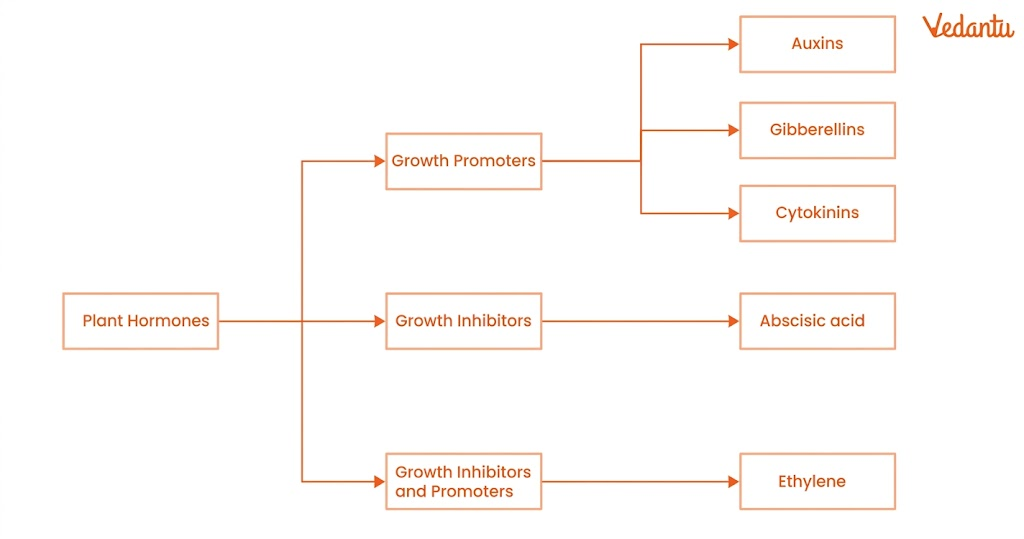
The types of plant hormones are broadly classified based on their role:
1. Plant Growth Promoters
Auxins
Gibberellins
Cytokinins
2. Plant Growth Inhibitors
Abscisic Acid (ABA)
Ethylene (acts as both promoter and inhibitor)
Plant Hormones At a Glance
Auxins (Major Plant Growth Hormones)
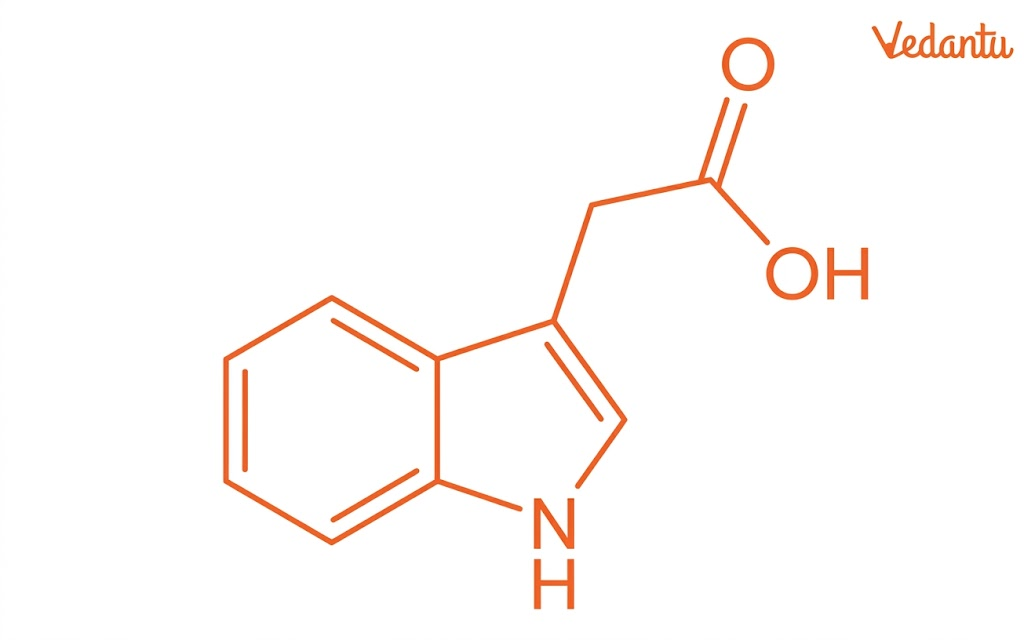
Auxins are one of the most important plant growth hormones responsible for elongation and directional growth.
Source:
Growing tips of roots and shoots
Types:
Natural: IAA (Indole-3-acetic acid), IBA
Synthetic: 2,4-D, NAA
Functions of Auxins:
Promote cell elongation in stems and roots
Maintain apical dominance (inhibits lateral buds)
Induce parthenocarpy (seedless fruits like tomato)
Prevent premature fall of leaves and fruits
Promote rooting in stem cuttings
Stimulate flowering (e.g., pineapple)
Help in xylem differentiation
Used as herbicides (2,4-D)
Auxins are widely used in agriculture and horticulture practices.
Gibberellins
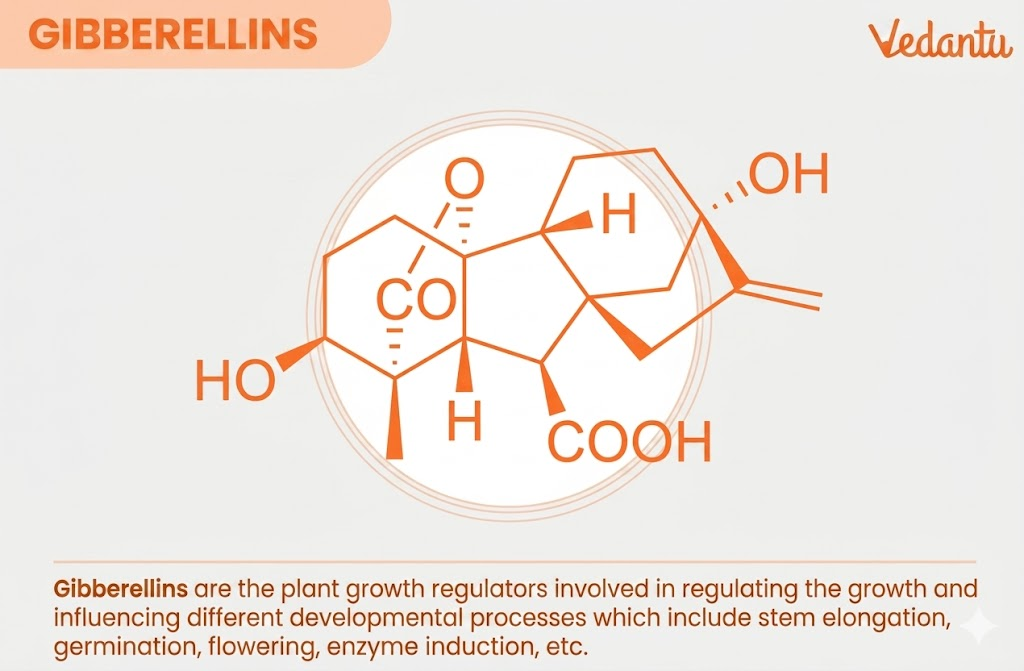
Gibberellins are growth hormones mainly responsible for stem elongation and reproductive development.
Key Features:
More than 100 types identified (GA₁, GA₂, GA₃…)
Found in higher plants and fungi
Functions:
Promote bolting (rapid internode elongation)
Induce parthenocarpy
Reverse dwarfism
Delay senescence
Break seed dormancy
Stimulate enzymes like amylase in germinating seeds
Induce maleness in some plants
They play a crucial role in plant height and seed germination.
Cytokinins
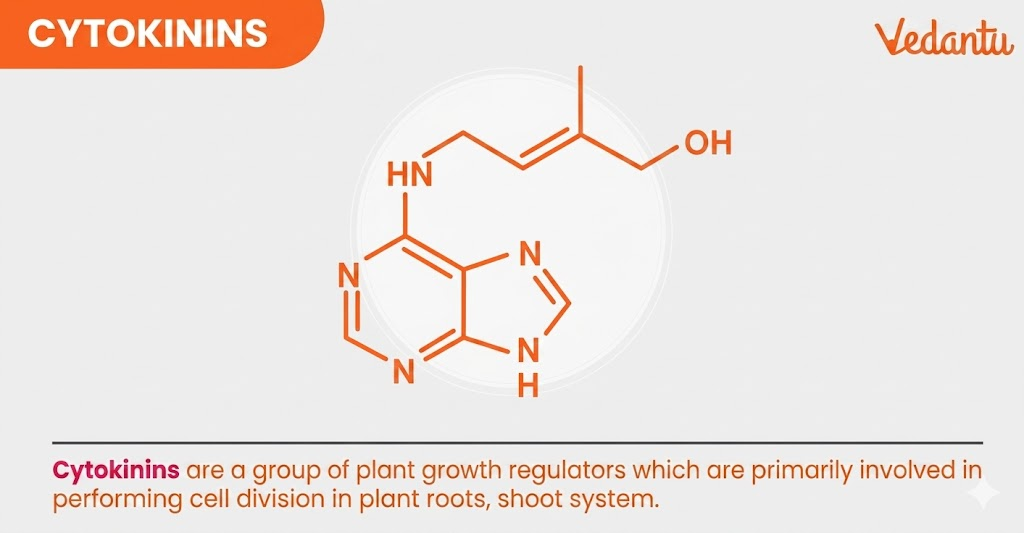
Cytokinins are hormones involved in cell division and growth regulation.
Source:
Root apices, shoot buds, young fruits
Movement:
Basipetal (from top to bottom)
Types:
Natural: Zeatin, isopentenyladenine
Synthetic: Kinetin, benzyladenine
Functions:
Promote cell division (cytokinesis)
Stimulate lateral and adventitious shoot growth
Overcome apical dominance
Promote chloroplast formation
Delay leaf senescence
Help in nutrient mobilization
They are widely used in plant tissue culture techniques.
Abscisic Acid (ABA)
Abscisic acid is a growth-inhibiting plant hormone often called the stress hormone.
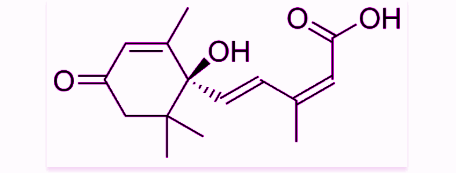
Key Role:
Antagonist to gibberellins
Functions:
Induces abscission of leaves and fruits
Inhibits seed germination
Promotes senescence
Induces seed dormancy (important for storage)
Causes stomatal closure during water stress
ABA helps plants survive under adverse environmental conditions.
Ethylene (Unique Gaseous Hormone)
Ethylene is the only gaseous plant hormone and has both promoting and inhibiting effects.
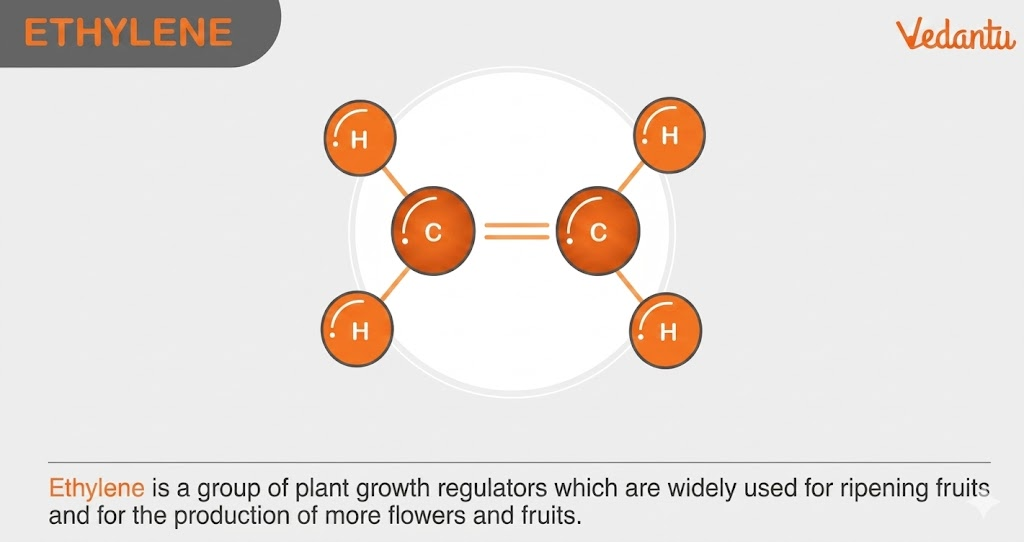
Source:
Ripening fruits
Senescing tissues
Functions:
Accelerates fruit ripening
Controls epinasty (downward bending of leaves)
Breaks seed and bud dormancy
Promotes senescence and abscission
Stimulates root hair formation
Induces femaleness in plants
Helps in apical hook formation
Ethylene is widely used in agriculture for controlled fruit ripening.
Role of Plant Hormones in Plant Growth
The role of plant hormones is highly coordinated and complex.
Key Roles:
Maintain balance between growth and inhibition
Regulate developmental stages
Help plants respond to environmental changes
Control agricultural productivity
Interaction Example:
Auxin suppresses lateral buds
Cytokinins promote lateral growth. Together they regulate plant shape
Additional Plant Hormones
Apart from the five major hormones, other important regulators include:
Brassinosteroids
Jasmonates
Salicylic acid
Strigolactones
These also influence plant defense and development.
Final Verdict from Experts
Plant hormones are essential chemical regulators that control every aspect of plant life. These hormones work together to ensure proper growth, development, reproduction, and survival of plants.
FAQs on Plant Hormones: Types, Functions, Diagram and Role in Plant Growth for NEET
1. What are the 7 plant hormones?
The seven important plant hormones are auxin, gibberellin, cytokinin, abscisic acid, ethylene, brassinosteroids, and jasmonates. Among these, the five major plant growth hormones commonly studied are auxin, gibberellin, cytokinin, abscisic acid, and ethylene.
2. What is a plant hormone class 10?
A plant hormone is a natural chemical substance produced in very small amounts in plants that controls growth, development, and responses to the environment.
3. What are the 5 functions of hormones?
In plants, the main plant hormones and their functions include controlling:
cell division
cell elongation
flowering
fruit formation
seed dormancy and germination
These functions explain the overall role of plant hormones in plant growth and development.
4. What is auxin in plants?
Auxin is one of the major plant growth hormones. It mainly promotes cell elongation, maintains apical dominance, helps in root initiation, and supports fruit development. It is commonly produced in the growing tips of shoots and roots.
5. What was the first hormone discovered in plants?
Auxin was the first plant hormone discovered. Charles Darwin first observed its effect in phototropism, and later F. W. Went isolated auxin from oat coleoptiles.
6. What are two uses of auxin?
Two important uses of auxin are:
promoting root formation in stem cuttings
inducing parthenocarpy or seedless fruit formation
Auxin is also widely used in agriculture and horticulture.
7. Which hormone is naturally found in plants?
All major plant hormones are naturally found in plants. These include auxin, gibberellin, cytokinin, abscisic acid, and ethylene. Ethylene is a natural gaseous hormone present in ripening fruits and ageing plant tissues.
8. What are the uses of gibberellins?
Gibberellins are used to:
break seed dormancy
promote stem elongation
improve fruit size
support seed germination
They are also used in crop improvement and agricultural practices.
9. Name four different types of plant hormones.
Four different types of plant hormones are:
Auxin
Gibberellin
Cytokinin
Abscisic acid
Ethylene is also an important fifth major hormone.
