




How to Answer Drawing Conclusion Questions in Reading Comprehension
Read the Story and Answer the Questions
Read each short story carefully. Use the clues in the story to figure out what is happening. Then, answer the questions that follow.
Ria is holding a big, red umbrella. She is wearing yellow rain boots. Dark clouds are in the sky, and she can hear a rumbling sound.
1. What will likely happen next?
(a) The sun will come out.
(b) It will start to rain.
(c) It will snow.
2. Is Ria dressed to play in the sun? (Yes / No)
____________________
3. Complete the sentence: Ria is ready for a ________ day.
____________________
Tom's tummy is making a loud rumbling noise. He looks at the clock on the wall. It is 1 o'clock in the afternoon. He walks to the kitchen and opens the fridge.
4. What is Tom most likely going to do?
(a) Go to sleep
(b) Eat lunch
(c) Watch TV
5. Tick the statement that is true.
[ ] Tom is going to play outside.
[ ] Tom feels hungry.
[ ] Tom is tired.
6. Why do you think Tom went to the kitchen?
____________________________________________________
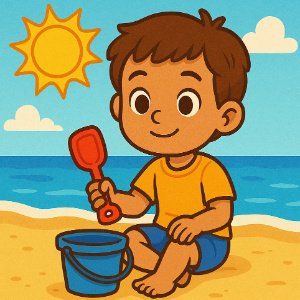
Leo has a bucket and a shovel. He is wearing his swimming shorts. The sun is shining brightly, and he is sitting on warm sand near the water.
7. Where is Leo?
(a) In the park
(b) In his garden
(c) At the beach
8. Leo is probably feeling cold. (True / False)
____________________
9. What do you think Leo will build with his bucket and shovel?
____________________
The dog wags its tail very fast. It barks happily when it sees Sam pick up the long, red rope. The dog runs to the front door and waits.
10. What does the dog want to do?
(a) Eat its food
(b) Go for a walk
(c) Take a nap
11. Is the dog sad? (Yes / No)
____________________
Match the Clues to the Conclusion
12. Read the clues in Column A and draw a line to match them with the correct conclusion in Column B.
Answer Key
1. (b) It will start to rain.
2. No
3. rainy
4. (b) Eat lunch
5. [✓] Tom feels hungry.
6. Because he is hungry.
7. (c) At the beach
8. False
9. A sandcastle
10. (b) Go for a walk
11. No
12.
1. matches with c. It is a birthday party.
2. matches with a. It is bedtime.
3. matches with b. The boy is sick.
How This Worksheet Helps You Learn?
This Class 1 English Reading Comprehension: Drawing Conclusions worksheet helps young learners develop critical reading and inference skills. With short, age-appropriate passages and guiding questions, your child will practice drawing conclusions and understanding information not directly stated in the text. This printable worksheet is perfect for Grade 1 students and supports their journey towards stronger understanding and independent thinking.
Designed for both classroom and home use, this free PDF practice sheet includes clear instructions and sample questions, helping students confidently read and answer each comprehension task. Supporting their growth in reading comprehension for Class 1, the worksheet provides lots of opportunities for repeated practice and learning.
Usage Tips for Parents and Teachers
- Print the worksheet for easy offline practice, using the answer key for review and feedback.
- Preview passages together on mobile, then let your child try to answer questions independently.
- Encourage your child to use clues from the text and pictures to make predictions and draw conclusions.
- Supplement daily reading with one or two passages to gradually build comprehension confidence.
Explore Related Worksheets
- Class 1 English Marigold Worksheets Chapter 1
- Class 1 English Worksheets
- Class 1 English Marigold Poem Worksheets
- Class 2 English Reading Comprehension Worksheets
- Class 1 English Marigold Worksheets Chapter 6
What You Learned
This page offers a free, printable worksheet for Class 1 English on the Reading Comprehension: Drawing Conclusions topic. Students practice reading short passages, using clues to make predictions and draw conclusions. The worksheet includes clear instructions, sample questions, and an answer key, making it ideal for both classroom and at-home revision. Download the PDF to help your child strengthen reading comprehension and inference skills in Grade 1 English.
FAQs on Practice Drawing Conclusions with Class 1 English Passages
1. What is drawing conclusions in reading for kids?
Drawing conclusions in reading for kids is the skill of using clues from a story and personal knowledge to figure out something that the author has not stated directly. It is a key part of reading comprehension for Class 1 and helps children understand the text on a deeper level.
- It involves being a 'text detective' and looking for text evidence.
- Kids use it to understand a character's feelings, the setting, or what might happen next.
- This skill is fundamental for building critical thinking and inference skills from a young age.
2. What is an example of drawing a conclusion for grade 1?
A simple example for a grade 1 student involves reading a short passage and using the clues to understand an unstated idea. For instance, after reading a short story, a student can draw a conclusion about the weather or a character's mood.
- Passage Example: 'Ria put on her boots and a big yellow coat. She grabbed her red umbrella and went outside to splash.'
- Question: 'What is the weather like in the story?'
- Conclusion Drawn: The student concludes that it is raining, based on the clues of boots, a coat, and an umbrella.
3. How can I use this worksheet at home?
This worksheet is designed for easy use at home to support your child's learning and provide extra practice. As a free printable worksheet, it is an excellent resource for parents looking to reinforce classroom concepts.
- Download the PDF and print it for a screen-free activity.
- Use it for at-home learning, holiday homework, or weekend revision.
- Read the short passages with your child and discuss the questions to guide their thinking.
- Use the included answer key to check their work and explain any mistakes.
4. Does this include an answer key?
Yes, this drawing conclusions for class 1 worksheet includes a complete answer key. Having the worksheet with answers makes it easy for parents and teachers to check a student's work and provide immediate feedback.
- The answer key is provided on a separate page for convenience.
- It enables self-assessment for students who are ready to check their own work.
- This helps reinforce correct understanding and clarifies any confusion from the practice exercises.
5. Is this worksheet printable?
Absolutely, this Class 1 English worksheet is available as a free, downloadable PDF that is designed to be easily printed. The format is optimised for standard A4 paper, ensuring clear text and images for young learners.
- Simply click the download button to get the drawing conclusions worksheet PDF.
- It is perfect for parents needing quick resources for academic support.
- The printable format allows children to practice writing and circling answers directly on paper.
6. What skills are built by this activity?
This activity builds several crucial early literacy and cognitive skills that are foundational for academic success. The primary focus is on enhancing reading comprehension skills in young students.
- Drawing Conclusions: The main skill of using text clues to understand unstated information.
- Inference Skills: Making logical guesses based on evidence found in the short stories for grade 1.
- Critical Thinking: Analysing information and making judgements rather than just reading words.
- Attention to Detail: Encouraging students to read carefully to find clues.
7. How to teach drawing conclusions in grade 1?
Teaching drawing conclusions to Grade 1 students should be done with simple, relatable examples and guided practice. Using structured drawing conclusions activities like this worksheet is an effective method.
- Use Picture Clues: Start with pictures and ask 'What is happening here?' to build basic inference skills.
- Read Aloud: Read short passages aloud and pause to ask questions like, 'How do you think he feels? Why?'
- Think Aloud: Model your own thinking process by saying, 'The text says the boy is smiling, so I can conclude he is happy.'
- Practice Regularly: Use grade 1 reading comprehension worksheets with short passages and multiple-choice questions to build confidence.
8. What age group is it best for?
This worksheet is specifically designed for students in Grade 1, which typically includes children who are 6 to 7 years old. The content and difficulty level are aligned with the learning objectives for this age group.
- The passages are short and use age-appropriate vocabulary.
- The large, clear font is easy for early readers to follow.
- The questions are structured to introduce the concept of inference without being overwhelming.
9. How does this worksheet reinforce concept retention?
This worksheet reinforces concept retention through focused and repeated practice in a simple format. By engaging with multiple short passages, students apply the skill of drawing conclusions in different contexts, which strengthens their understanding.
- Repeated Practice: Several short passages allow the student to practise the same skill multiple times in one session.
- Immediate Application: Students must immediately read and answer questions, connecting the concept to the text.
- Simple Format: The clear, uncluttered layout minimises distractions, helping students focus on the core skill.
10. What questions help students draw conclusions?
Questions that encourage students to think beyond the literal text are most effective for helping them draw conclusions. These questions often require them to connect clues from the story to make a judgement.
- Predictive Questions: 'What do you think will happen next?'
- Feeling/Emotion Questions: 'How does the character feel? How do you know?'
- 'Why' Questions: 'Why did the girl bring an umbrella?'
- Location/Time Questions: 'Where do you think this story takes place?' or 'What time of day is it?'
