



Bichon Frise Temperament, Grooming Needs, Health Issues, and Family Suitability
The Bichon Frise is a small, fluffy dog breed known for its bright personality and soft white coat. These cheerful companions are popular family pets because of their playful nature and loving behaviour. Originally bred as companion dogs, Bichon Frise dogs enjoy spending time with people and are famous for their happy expressions. Let’s explore amazing Bichon Frise facts, characteristics, habitat, diet, life cycle, and why they are such special pets.
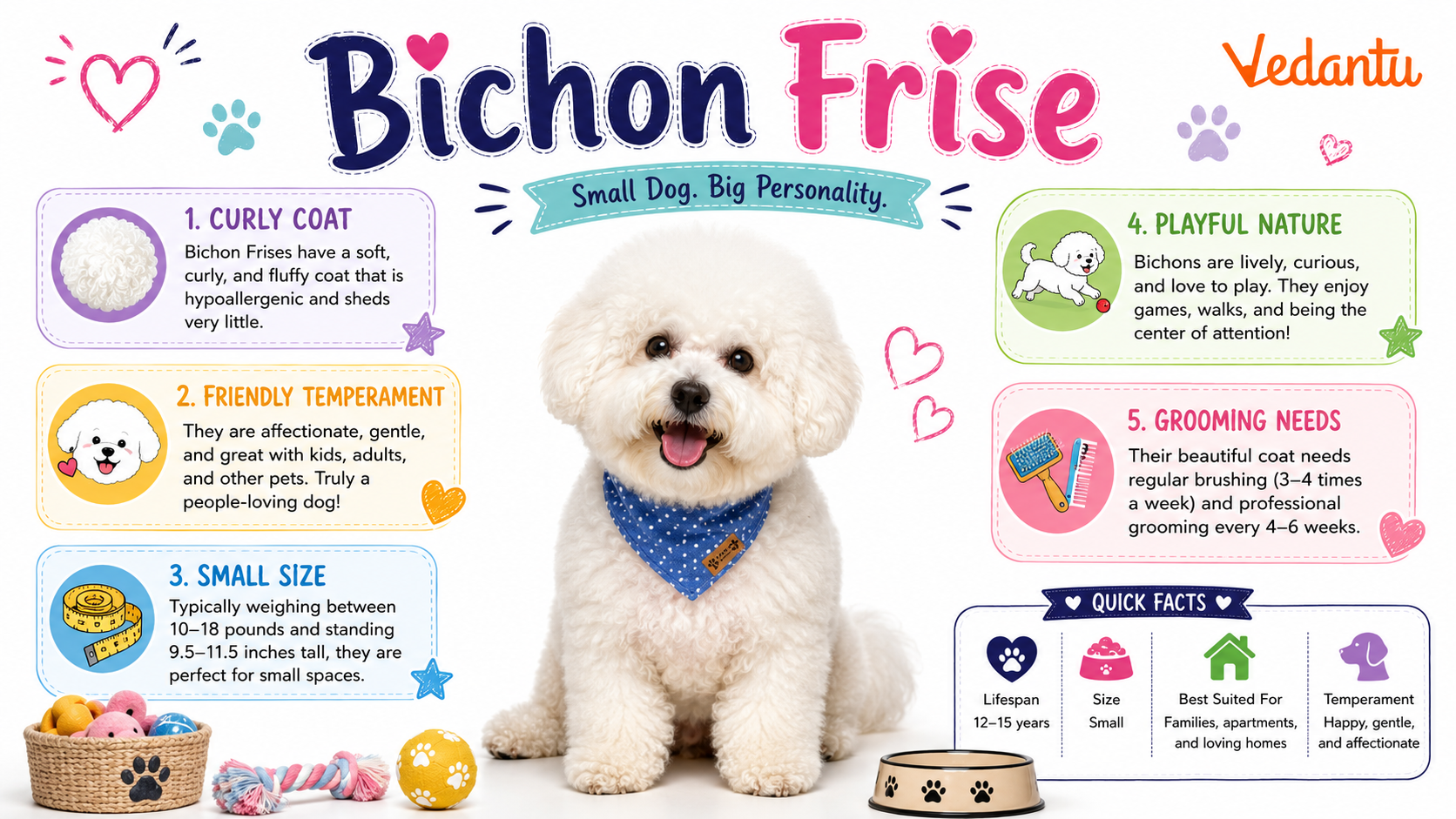
Quick Facts About Bichon Frise
| Feature | Details |
|---|---|
| Common Name | Bichon Frise |
| Scientific Name | Canis lupus familiaris |
| Animal Group | Mammal (Dog Breed) |
| Size | 23–30 cm tall |
| Weight | 5–8 kg |
| Lifespan | 12–15 years |
| Habitat | Homes and apartments (domestic life) |
| Diet | Omnivore (mainly dog food, meat, vegetables) |
| Origin | Mediterranean region |
Appearance and Physical Characteristics
- Small, compact, and sturdy body.
- Round face with dark, expressive eyes.
- Black nose that stands out against white fur.
- Soft, curly double coat that feels like cotton.
- Plumed tail that curls gently over the back.
Bichon Frise Habitat and Distribution
The Bichon Frise habitat is not forests or jungles. These dogs are fully domesticated and live with humans.
- Found in homes all over the world.
- Adapt well to apartments and small houses.
- Prefer moderate climates but can live in various weather conditions with proper care.
- Enjoy indoor living but need daily outdoor walks.
Bichon Frise Diet and Feeding Habits
The Bichon Frise diet must be balanced to keep their coat shiny and body healthy.
Behaviour and Lifestyle
- Very social and love being around people.
- Playful and energetic, especially as puppies.
- Intelligent and easy to train.
- Can develop separation anxiety if left alone for long hours.
- Enjoy games, tricks, and short walks.
Bichon Frise Life Cycle
- Puppy Stage (0–12 months): Very playful, curious, and fast learners.
- Young Adult (1–3 years): Energetic and fully grown in size.
- Adult (3–8 years): Calm, loyal, and affectionate companions.
- Senior (8+ years): Slower movement, need extra care and regular health checkups.
Female Bichon Frise dogs usually give birth to 3–5 puppies at a time.
Temperament and Domestic Life
What Makes the Bichon Frise Special?
Importance and Role with Humans
- Provide emotional support and companionship.
- Help reduce stress and loneliness.
- Participate in therapy and support programs.
- Encourage physical activity through walks and play.
Amazing Bichon Frise Facts
Fun Facts for Kids
- Bichon Frise dogs look like walking cotton balls!
- They love playing fetch and learning fun tricks.
- Their white coat makes them easy to recognise.
- They enjoy cuddling on laps.
- They wag their tails happily when excited.
FAQs on Bichon Frise Dog Breed Guide: Temperament, Care, and Fun Facts
1. What is a Bichon Frise?
A Bichon Frise is a small, fluffy white dog known for its happy personality and curly coat.
- Breed type: Toy dog breed
- Size: Small and lightweight
- Coat: Soft, curly, and white
- Personality: Cheerful, playful, and friendly
- Often searched as: “What kind of dog is a Bichon Frise?” and “Is Bichon Frise a good family dog?”
2. How big does a Bichon Frise grow?
A Bichon Frise stays small even when fully grown.
- Height: About 9–12 inches tall
- Weight: Around 10–18 pounds
- Category: Small companion dog
- Perfect for: Apartments and small homes
- People also ask: “Is Bichon Frise a small or medium dog?”
3. Are Bichon Frise dogs good with kids?
Yes, Bichon Frise dogs are usually very gentle and friendly with children.
- They love to play and cuddle
- They are patient and social
- They enjoy being part of a family
- Need supervision with very small kids
- Common search: “Is Bichon Frise good for families?”
4. Do Bichon Frise dogs shed a lot?
A Bichon Frise is a low-shedding dog, which makes it popular for allergy-sensitive families.
- Considered hypoallergenic (low dander)
- Loose hair gets trapped in curls
- Needs regular brushing
- Still requires grooming despite low shedding
- People also search: “Are Bichon Frise hypoallergenic?”
5. How long do Bichon Frise dogs live?
The Bichon Frise lifespan is quite long for a small dog.
- Average life expectancy: 12–15 years
- Some live even longer with good care
- Healthy diet and exercise help
- Regular vet checkups are important
- Common query: “How long does a Bichon Frise live?”
6. Are Bichon Frise dogs easy to train?
Yes, Bichon Frise puppies are smart and usually easy to train with patience.
- Quick learners
- Respond well to positive reinforcement
- Enjoy treats and praise
- May need extra help with potty training
- People also ask: “Is Bichon Frise easy to train?”
7. What do Bichon Frise dogs eat?
A Bichon Frise diet should include balanced, high-quality dog food.
- Small-breed dry or wet food
- Protein-rich meals
- Fresh water daily
- Limited treats to avoid weight gain
- Common search: “What is the best food for Bichon Frise?”
8. How much grooming does a Bichon Frise need?
A Bichon Frise coat needs regular grooming to stay fluffy and clean.
- Brush 3–4 times a week
- Professional grooming every 4–6 weeks
- Regular baths
- Trim around eyes and paws
- People also search: “How often should you groom a Bichon Frise?”
9. Do Bichon Frise dogs bark a lot?
A Bichon Frise may bark to alert their family but is not usually too noisy.
- Alert and watchful
- May bark at strangers
- Training reduces excessive barking
- Socialization helps calm behavior
- Common question: “Does Bichon Frise bark a lot?”
10. What health problems are common in Bichon Frise dogs?
Like many small breeds, the Bichon Frise can have certain health issues.
- Allergies and skin problems
- Dental disease
- Ear infections
- Patellar luxation (knee problem)
- Regular vet visits help prevent serious issues
- People also ask: “What health issues do Bichon Frise have?”
