



Bull Terrier Temperament, Training Tips, Health Issues, and Daily Care Explained
The Bull Terrier is a strong and energetic dog breed famous for its unique egg-shaped head and muscular body. Originally bred in England, this breed is known for its courage, loyalty, and playful personality. Today, Bull Terriers are popular family pets because of their affectionate nature and protective instincts. Let’s explore interesting Bull Terrier facts, characteristics, diet, habitat, and lifestyle in a fun and easy way!
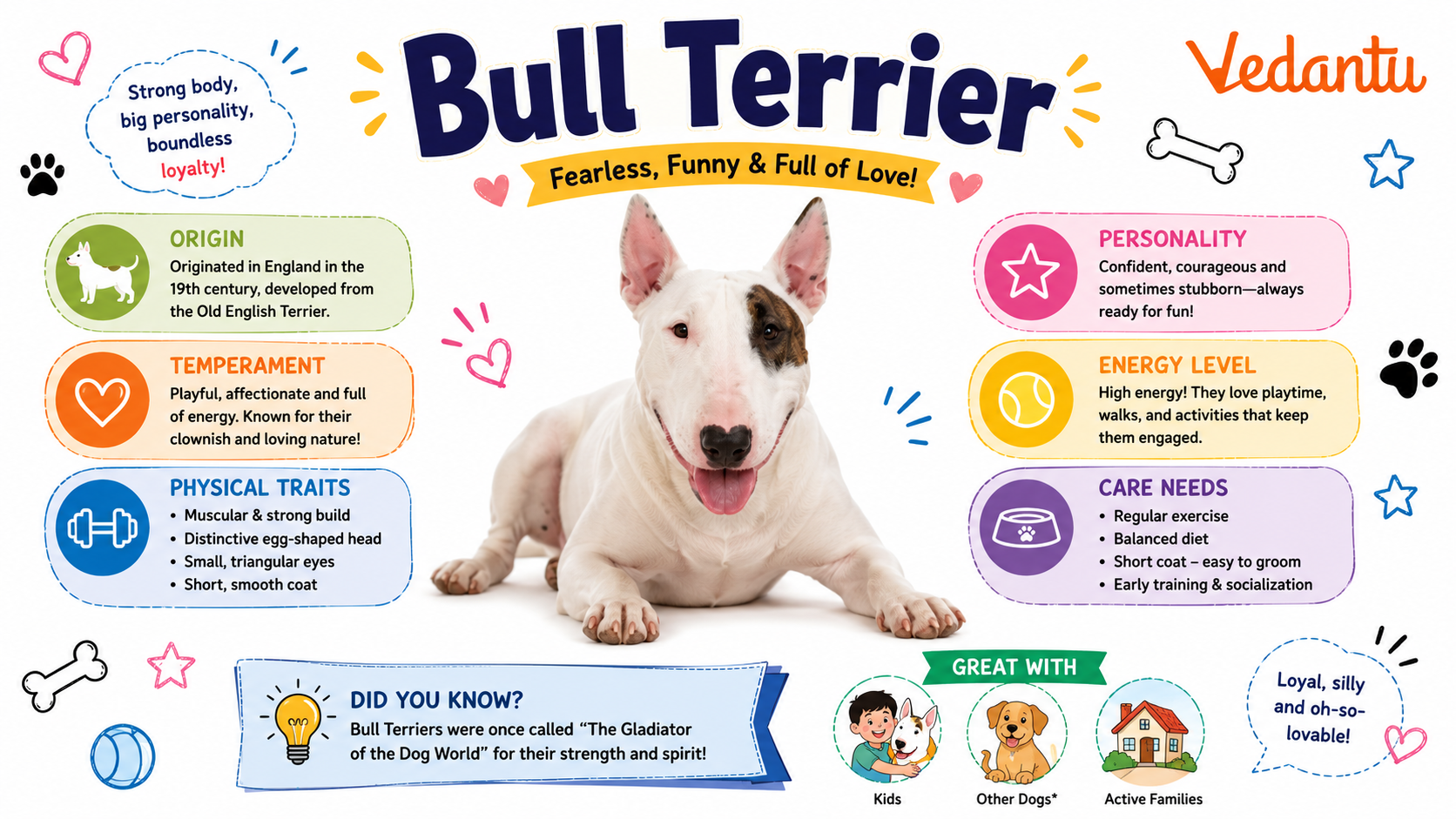
Quick Facts About Bull Terrier
| Feature | Details |
|---|---|
| Common Name | Bull Terrier |
| Scientific Name | Canis lupus familiaris |
| Animal Group | Mammal |
| Origin | England |
| Height | 45–55 cm |
| Weight | 22–38 kg |
| Lifespan | 10–14 years |
| Diet | Omnivore (mainly meat-based dog food) |
| Young One | Puppy |
Appearance and Physical Characteristics
- Head Shape: Long, egg-shaped head with no stop (dip) between forehead and nose.
- Eyes: Small, dark, and triangular.
- Body: Strong, muscular, and well-balanced.
- Coat: Short, smooth, and shiny.
- Colours: White, black, brindle, red, fawn, or mixed patterns.
Habitat and Living Environment
The Bull Terrier habitat today is mainly human homes. They are domestic animals and depend on people for care and shelter.
- Lives comfortably in houses and apartments.
- Needs daily exercise and playtime.
- Prefers moderate climates.
- Should not be left alone for long hours.
Diet and Feeding Habits
The Bull Terrier diet should be balanced and nutritious to maintain its muscular body.
- High-quality dog food rich in protein.
- Lean meats like chicken or lamb.
- Vegetables and grains in controlled amounts.
- Fresh water at all times.
Behaviour and Lifestyle
- Very playful and energetic.
- Loyal and protective towards family.
- Can be stubborn but intelligent.
- Enjoys games, running, and training sessions.
- Needs early socialisation with people and pets.
Life Cycle of a Bull Terrier
Puppies are born after about 63 days of pregnancy.
Very playful and curious. Requires training and vaccinations.
Fully grown by 12–18 months. Strong and active.
Around 8–10 years onward. Needs special care and regular health checks.
Temperament and Domestic Life
Loves spending time with family members.
Naturally guards its home.
Learns quickly with consistent training.
Needs daily walks and play sessions.
What Makes the Bull Terrier Special?
Importance of Bull Terriers
- Serve as loyal companion animals.
- Provide security and alertness at home.
- Participate in dog shows and competitions.
- Help reduce stress and provide emotional support.
Amazing Bull Terrier Facts
Interesting Facts About Bull Terrier
- The breed became popular through advertisements and media appearances.
- Bull Terriers love interactive toys and puzzles.
- They can be stubborn but respond well to positive training.
- Regular grooming is easy due to their short coat.
Fun Facts for Kids
- Bull Terriers sometimes act like comedians at home!
- They love chasing balls and playing fetch.
- Their face shape looks different from most dogs.
- They enjoy cuddling with family members.
- They can learn tricks quickly.
FAQs on Bull Terrier Dog: Complete Guide to Personality, Care, and Facts
1. What is a Bull Terrier?
A Bull Terrier is a strong, playful dog breed known for its unique egg-shaped head and energetic personality.
- Belongs to the terrier dog group
- Originally bred in England
- Recognized for its muscular body and small triangular eyes
- Comes in standard and Miniature Bull Terrier sizes
- Popular as a family pet and companion dog
2. Are Bull Terriers good family dogs?
Yes, Bull Terriers can be loving and loyal family dogs when trained properly.
- Very affectionate with family members
- Playful and energetic with older children
- Need early socialization and obedience training
- May be too strong for very small kids without supervision
- Thrive in active households
3. Why do Bull Terriers have egg-shaped heads?
The egg-shaped head of a Bull Terrier is a special breed feature developed through selective breeding.
- Bred in the 19th century for a unique look
- Head shape is called a "down-faced" profile
- Gives them a strong jaw and distinct appearance
- Recognized by major kennel clubs like the AKC
4. How big does a Bull Terrier grow?
A standard Bull Terrier grows into a medium-sized, muscular dog.
- Height: about 21–22 inches tall
- Weight: around 50–70 pounds
- Miniature Bull Terrier weighs under 35 pounds
- Fully grown by 12–18 months
5. Are Bull Terriers easy to train?
Bull Terriers are smart but can be stubborn, so training requires patience and consistency.
- Respond well to positive reinforcement
- Need early puppy training classes
- Benefit from clear rules and daily routines
- Intelligent but independent thinkers
6. Do Bull Terriers get along with other pets?
Bull Terriers can live with other pets if they are socialized from a young age.
- May show strong prey drive
- Early introduction to cats and dogs is important
- Can be territorial without training
- Supervision helps ensure safe playtime
7. How much exercise does a Bull Terrier need?
A Bull Terrier needs daily exercise to stay happy and healthy.
- At least 1 hour of physical activity per day
- Loves games like fetch and tug-of-war
- Enjoys long walks and play sessions
- Mental stimulation prevents boredom
8. What health problems do Bull Terriers have?
Like all breeds, Bull Terriers can have certain genetic health conditions.
- Deafness, especially in white Bull Terriers
- Skin allergies
- Heart and kidney issues
- Regular vet checkups improve lifespan
9. What do Bull Terriers eat?
Bull Terriers need a balanced diet to support their muscular build and energy levels.
- High-quality dog food rich in protein
- Controlled portions to prevent obesity
- Fresh water available at all times
- Special diets may be needed for allergies
10. How long do Bull Terriers live?
The average Bull Terrier lifespan is around 12–13 years.
- Depends on genetics and health care
- Regular exercise supports longevity
- Proper nutrition and vet visits are important
- Miniature Bull Terriers may live slightly longer
