



Chinchilla Facts: Diet, Lifespan, Behavior, and Pet Care Tips
The chinchilla is a small, adorable mammal famous for its incredibly soft fur and big, round eyes. Native to the rocky mountains of South America, this tiny creature is active, playful, and surprisingly fast. Chinchilla facts reveal that it has one of the densest fur coats in the animal kingdom. From its unique adaptations to its gentle personality as a pet, the chinchilla is truly a fascinating animal to explore.
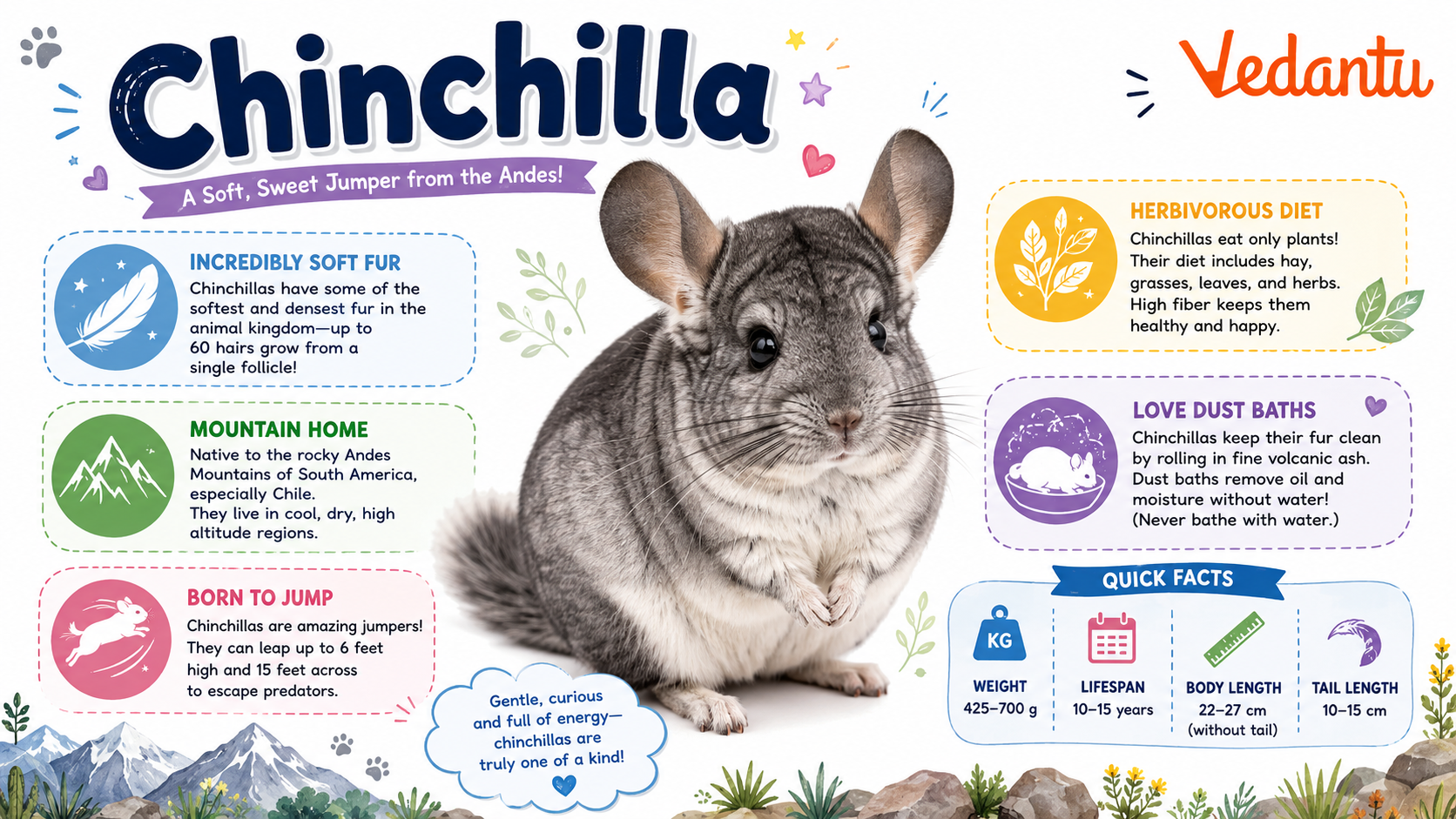
Quick Facts About Chinchilla
| Feature | Details |
|---|---|
| Common Name | Chinchilla |
| Scientific Name | Chinchilla lanigera |
| Animal Group | Mammal |
| Size | 23–38 cm (body length) |
| Weight | 400–800 grams |
| Lifespan | 10–20 years (in captivity) |
| Chinchilla Habitat | Rocky mountains of South America |
| Chinchilla Diet | Herbivore – grasses, seeds, leaves |
| Conservation Status | Endangered (in the wild) |
Appearance and Physical Characteristics
- Small, compact body with a long, bushy tail.
- Very large ears to detect even the slightest sound.
- Big, dark eyes adapted for night vision.
- Thick, velvety fur—over 50 hairs grow from a single hair follicle.
- Strong back legs that help them jump high.
Chinchilla Habitat and Distribution
- Originally found in the Andes Mountains of Chile, Peru, Bolivia, and Argentina.
- Prefer dry, rocky, and cold mountain regions.
- Live in burrows or hide between rocks for safety.
- Today, wild populations are very limited due to hunting in the past.
The natural chinchilla habitat includes high-altitude areas with cool temperatures. Their thick fur helps them survive the cold but makes them sensitive to heat.
Chinchilla Diet and Feeding Habits
- Chinchillas are herbivores.
- Main food: grasses, seeds, leaves, and small plants.
- They have continuously growing teeth.
- Need to chew often to keep their teeth from becoming too long.
In the food chain, chinchillas are prey animals for birds of prey and small carnivores.
Behaviour and Lifestyle
Chinchillas are most active at night and rest during the day.
They live in groups called herds in the wild.
Instead of water, they roll in dust to clean their fur.
They can jump up to 6 feet high to escape danger.
Life Cycle of a Chinchilla
- Birth: Baby chinchillas are called kits. They are born with fur and open eyes.
- Early Growth: Kits start nibbling solid food within a week.
- Young Stage: They stay with their mother for about 6–8 weeks.
- Adult Stage: Become fully grown by 8 months of age.
- Lifespan: Can live up to 20 years in captivity.
What Makes Chinchilla Special?
Temperament and Domestic Life
- Gentle and quiet pets.
- Need large cages with space to jump.
- Prefer cool environments.
- Require regular dust baths for hygiene.
- Can bond strongly with their owners.
Importance and Role in Nature
Amazing Chinchilla Facts
- One hair follicle can grow over 50 hairs.
- They cannot get wet easily because their fur dries very slowly.
- Chinchillas communicate using soft chirps and squeaks.
- They can rotate their ears to hear in different directions.
- Wild chinchilla populations are endangered.
- Their fur once made them heavily hunted animals.
Fun Facts for Kids
FAQs on Chinchilla: Complete Guide to Facts, Habitat, and Care
1. What is a chinchilla?
A chinchilla is a small, fluffy rodent known for its super-soft fur and playful personality.
- It is a type of small mammal and belongs to the rodent family.
- Chinchillas are native to the Andes Mountains in South America.
- They are related to guinea pigs and porcupines.
- They are popular as exotic pets because they are clean and quiet.
2. Where do chinchillas live in the wild?
Wild chinchillas live high in the cold, rocky Andes Mountains of South America.
- They are found in countries like Chile, Peru, Bolivia, and Argentina.
- They live in rocky crevices and burrows for protection.
- The mountain climate is cool and dry, which suits their thick fur.
3. Why do chinchillas have such soft fur?
Chinchillas have extremely soft fur to stay warm in cold mountain weather.
- Each hair follicle can grow up to 60–80 hairs.
- The dense fur keeps them warm in freezing temperatures.
- Their soft coat is one of the thickest in the animal world.
4. What do chinchillas eat?
Chinchillas are herbivores, which means they eat plants.
- Their main food is hay, especially timothy hay.
- They also eat chinchilla pellets made for small pets.
- In the wild, they eat grasses, leaves, and seeds.
- Fresh water is important for their health.
5. Are chinchillas good pets for kids?
Chinchillas can be good pets for older kids who handle them gently and responsibly.
- They are quiet and usually do not bite.
- They need careful handling because their bones are delicate.
- They are most active at night, which is called being nocturnal.
- They require daily care and a clean cage.
6. How long do chinchillas live?
Pet chinchillas can live a long time compared to other small animals.
- They often live 10 to 20 years with proper care.
- Wild chinchillas usually have shorter lifespans.
- Healthy food, exercise, and vet checkups help them live longer.
7. Do chinchillas take baths?
Chinchillas do not take water baths but clean themselves with dust baths.
- They roll in special chinchilla dust to keep their fur clean.
- Water can damage their thick fur and cause skin problems.
- Dust baths help remove oil and dirt naturally.
8. Are chinchillas endangered?
Some wild chinchilla species are endangered due to hunting and habitat loss.
- They were hunted for their valuable fur.
- Habitat destruction has reduced their population.
- Conservation programs help protect wild chinchillas today.
9. How big does a chinchilla grow?
A full-grown chinchilla is small but fluffy and round.
- They usually grow about 9–15 inches long.
- Their tail adds extra length and balance.
- They weigh around 1–2 pounds.
10. What makes chinchillas special compared to other rodents?
Chinchillas are special because of their unique fur, long lifespan, and playful behavior.
- They have one of the softest furs in the animal kingdom.
- They can jump up to 6 feet high.
- They live longer than many other small rodents like hamsters.
- They communicate using soft chirps and squeaks.
