



Are Pugs Good Family Dogs? Temperament, Health Issues, and Daily Care Tips
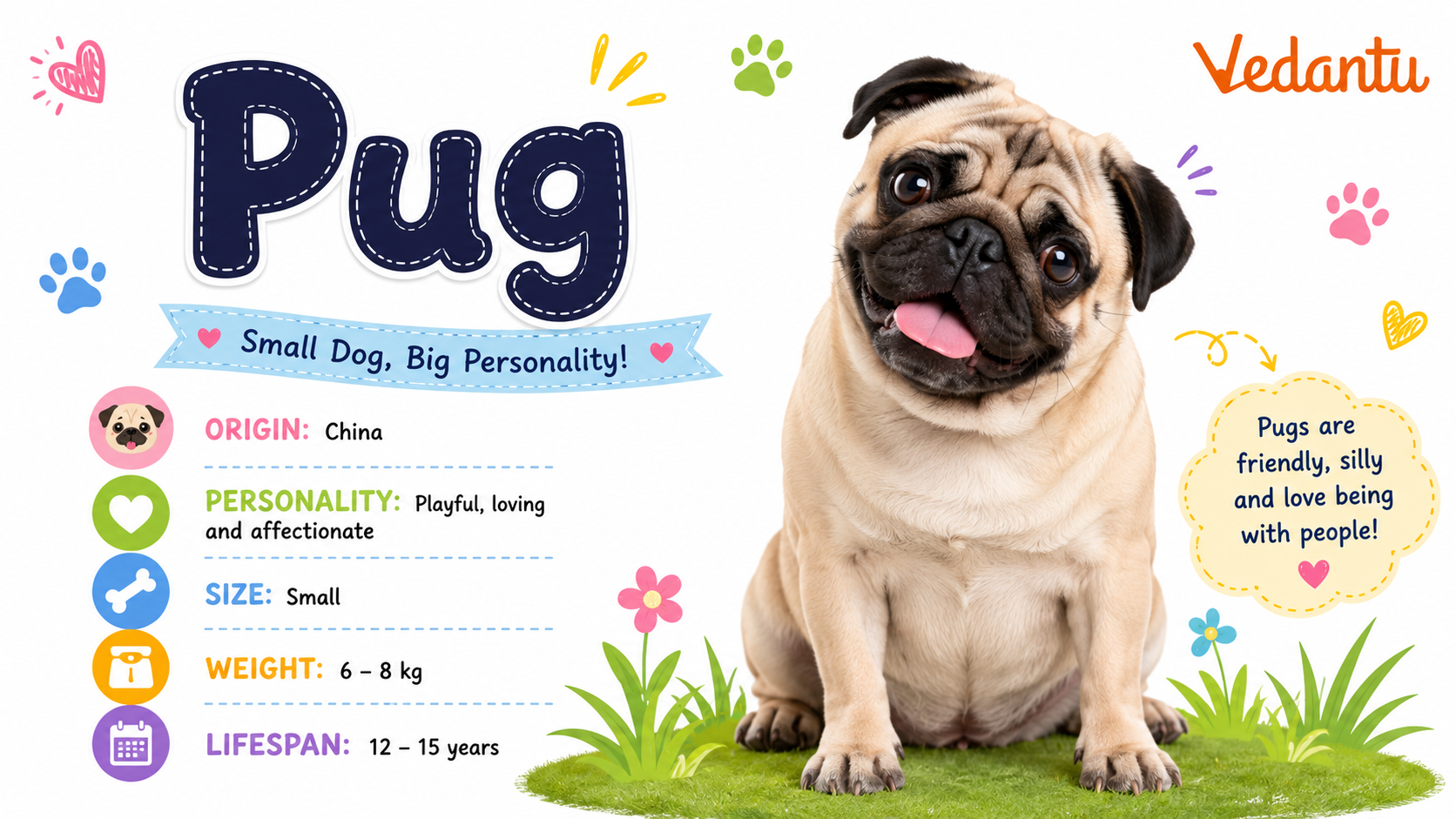
Quick Facts About Pug
| Feature | Details |
|---|---|
| Common Name | Pug |
| Scientific Name | Canis lupus familiaris |
| Animal Group | Mammal |
| Breed Type | Toy Dog |
| Height | 25–33 cm |
| Weight | 6–8 kg |
| Lifespan | 12–15 years |
| Diet | Omnivorous (dog food, meat, vegetables) |
| Origin | China |
| Young One | Puppy |
Appearance and Physical Characteristics
- Small, compact, and square-shaped body.
- Large, round, dark eyes that look very expressive.
- Short nose and flat face (brachycephalic breed).
- Deep wrinkles on the forehead and face.
- Curly tail that usually rests over the back.
- Short, smooth coat.
- Fawn (light brown with black mask)
- Black
- Silver or apricot (less common)
Pug Habitat and Living Environment
Since the Pug is a domestic dog breed, its habitat is not wild. Pugs live with humans and are perfectly suited for indoor life.
- Best suited for apartments and small homes.
- Prefer cool indoor environments.
- Do not tolerate extreme heat very well.
- Love staying close to their owners.
Pugs were first bred in China and later became popular in Europe and other parts of the world. Today, they are found globally as family pets.
Pug Diet and Feeding Habits
Pugs are omnivores and eat specially prepared dog food that contains meat, grains, and vegetables.
Pugs love food and can easily gain weight. Balanced meals are important.
Healthy treats can be given, but in small amounts.
Clean water should always be available.
A healthy Pug diet helps maintain ideal weight and supports long life.
Behaviour and Lifestyle
- Very friendly and affectionate.
- Enjoy being around people and other pets.
- Playful but not overly active.
- Can be a little stubborn during training.
- Known for funny expressions and charming behaviour.
Temperament and Domestic Life
- Excellent family dogs.
- Good with children.
- Suitable for first-time pet owners.
- Need regular grooming and wrinkle cleaning.
Pug Life Cycle
- Puppy Stage: Born in litters of 3–6 puppies. Very playful and energetic.
- Young Adult: Learns commands and basic training.
- Adult: Calm, loving, and fully grown by about 1 year.
- Senior: Slower movement, needs extra care after 8–10 years.
The average Pug lifespan is around 12 to 15 years with proper care.
What Makes the Pug Special?
Wrinkled forehead and flat nose make them easily recognizable.
Their tightly curled tail is a signature feature.
Despite small size, they are bold and confident.
Form deep emotional bonds with their owners.
Importance of Pugs
- Provide companionship and emotional support.
- Help reduce stress and loneliness.
- Teach children responsibility and empathy.
- Popular in therapy and support roles.
Amazing Pug Facts
- Pugs were once royal pets in ancient China.
- They were brought to Europe by traders in the 16th century.
- Pugs are known for making snorting and snoring sounds.
- They have a strong sense of smell.
- Pugs shed fur throughout the year.
- Their Latin motto is “Multum in parvo,” meaning “a lot in a little.”
- Pugs can adapt well to city life.
Interesting Facts About Pug
Fun Facts for Kids
- Pugs often tilt their heads when they are curious.
- They love cuddles and lap time.
- They can make funny grunting sounds.
- Pugs are small enough to travel easily with families.
- They enjoy short play sessions indoors.
FAQs on Pug Dog Breed: Complete Guide to Personality, Care, and Traits
1. What is a Pug dog?
A Pug is a small, friendly dog breed known for its wrinkled face and curly tail.
- Origin: Ancient China
- Size: Small toy breed
- Personality: Loving, playful, and loyal
- Special Feature: Flat face and big round eyes
- Often called a companion dog because they love being with people
2. Are Pugs good family pets?
Yes, Pugs are great family pets because they are gentle and enjoy attention.
- Friendly with children
- Get along with other pets
- Love cuddling and indoor play
- Do well in apartments and small homes
- Need supervision with very young kids
3. How big do Pugs get?
A full-grown Pug dog stays small and compact in size.
- Height: About 10–13 inches tall
- Weight: 14–18 pounds
- Classified as a toy breed
- Small but sturdy body shape
4. What do Pugs eat?
Pugs eat balanced dog food made for small breeds to stay healthy and active.
- High-quality dry kibble or wet food
- Fresh water every day
- Healthy treats in small amounts
- Avoid overfeeding to prevent obesity
5. Do Pugs have breathing problems?
Yes, Pugs can have breathing issues because of their flat faces.
- Known as Brachycephalic Syndrome
- May snore or snort
- Can struggle in hot weather
- Need cool spaces and gentle exercise
6. How long do Pugs live?
The average Pug lifespan is around 12 to 15 years with proper care.
- Healthy diet helps longer life
- Regular vet checkups are important
- Daily light exercise keeps them fit
- Indoor living improves safety
7. Are Pugs easy to train?
Pugs can be trained easily with patience and positive rewards.
- Respond well to treats and praise
- May be stubborn at times
- Short, fun training sessions work best
- Start puppy training early
8. Do Pugs shed a lot?
Yes, Pugs shed quite a bit despite their short hair.
- Have a double coat
- Shed year-round
- Regular brushing reduces loose fur
- Bathing helps keep coat clean
9. What colors do Pugs come in?
Pugs come in a few common coat colors recognized by breed standards.
- Fawn (light tan with black mask)
- Black
- Rare colors may exist but are less common
- All have a short, smooth coat
10. Why do Pugs have wrinkled faces?
Pugs have wrinkled faces because of selective breeding in ancient China.
- Wrinkles were seen as a sign of royalty
- Facial folds give them a cute expression
- Wrinkles need regular cleaning
- Part of the official Pug breed standard
