



Leghorn Chicken Egg Production, Temperament, and Care Needs
The Leghorn is one of the most famous and productive chicken breeds in the world. Originally from Italy, this energetic bird is best known for its excellent egg-laying ability. Leghorn chickens are widely raised on farms for white eggs and are popular in commercial poultry production. With their active nature, upright posture, and bright combs, they are easy to recognise. Let’s explore interesting Leghorn facts, habitat, diet, characteristics, life cycle, and importance in a fun and simple way.
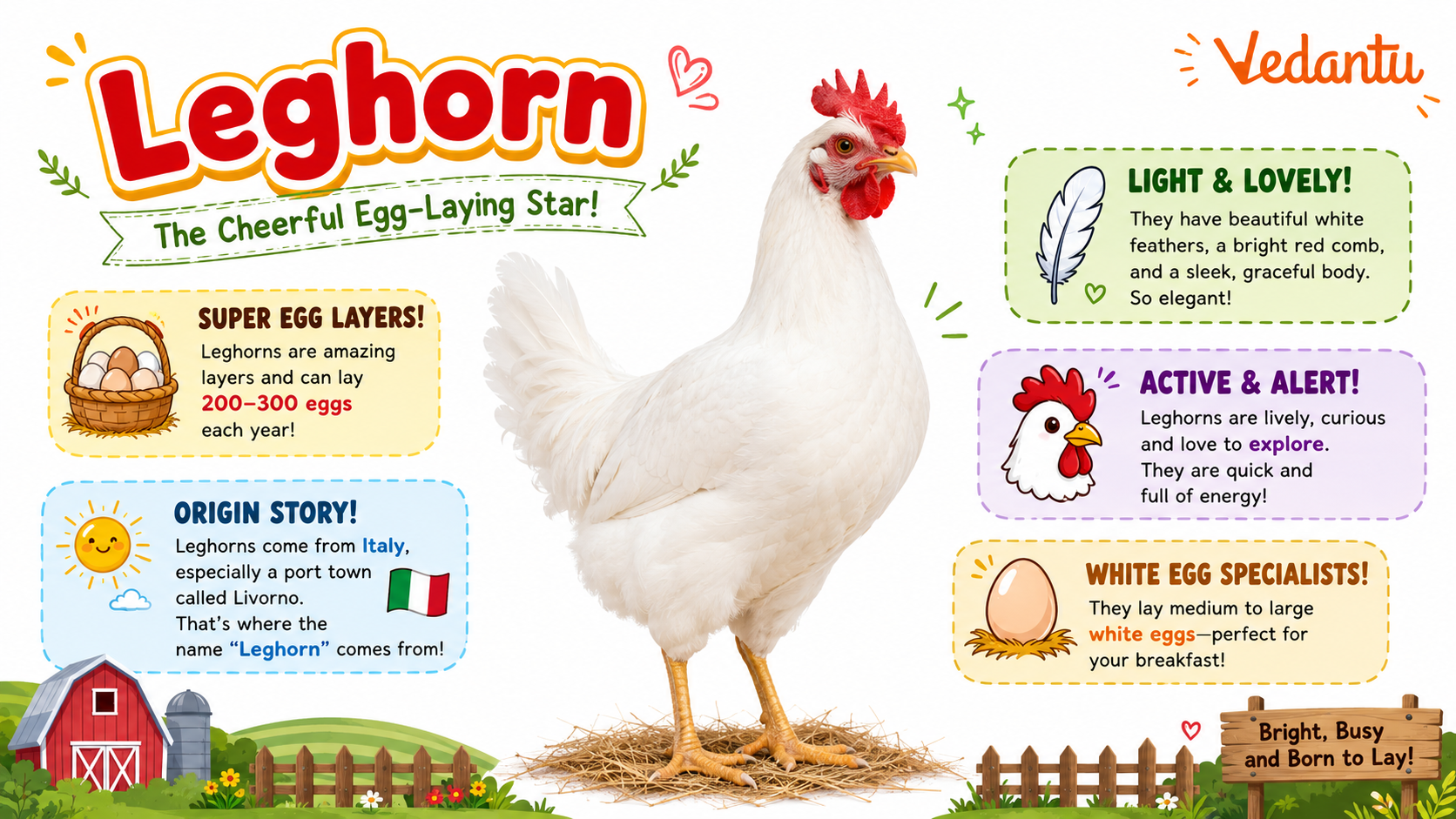
Quick Facts About Leghorn
| Feature | Details |
|---|---|
| Common Name | Leghorn |
| Origin | Italy (Livorno region) |
| Animal Group | Bird (Chicken breed) |
| Primary Use | Egg production |
| Egg Colour | White |
| Eggs per Year | 250–300+ eggs |
| Weight | Hen: 2–2.7 kg | Rooster: 2.5–3.4 kg |
| Lifespan | 5–8 years |
| Habitat | Farms, poultry houses, backyards |
Appearance and Physical Characteristics
- Body Shape: Slim and upright with a graceful posture.
- Feathers: Mostly white, but other colours also exist.
- Comb: Large red single comb (often floppy in hens).
- Earlobes: White, which is linked to white egg production.
- Legs: Yellow and strong for scratching the ground.
Habitat and Distribution
- Originally from Livorno, Italy.
- Now found in America, Europe, Asia, and Africa.
- Adapt well to both warm and moderate climates.
- Prefer dry, clean coops with open space for movement.
Diet and Feeding Habits
- Grains like corn and wheat.
- Commercial layer feed for egg production.
- Green plants and kitchen scraps.
- Insects and worms when free-ranging.
Leghorns are omnivores, which means they eat both plant and animal matter. Their active scratching helps control small insects on farms.
Behaviour and Lifestyle
Life Cycle of a Leghorn
- Egg Stage: Fertilised eggs hatch in about 21 days.
- Chick: Small, fluffy chicks grow rapidly.
- Pullet/Cockerel: Young females (pullets) begin laying eggs at 4–5 months.
- Adult: Hens lay eggs regularly for several years.
What Makes Leghorn Special?
Sound or Call
- Cluck: Normal communication sound.
- Crow: Roosters crow loudly, especially in the morning.
- Alarm Calls: Sharp sounds to warn others of danger.
Temperament and Domestic Life
- Hardworking and productive.
- Less friendly compared to pet breeds.
- Require secure fencing because they can fly short distances.
- Low maintenance and efficient egg producers.
Importance and Role in Farming
Amazing Leghorn Facts
- Leghorns are among the top egg-laying chicken breeds.
- They were introduced to America in the 1800s.
- Their name comes from the English version of “Livorno.”
- They are lighter than many meat chicken breeds.
- They start laying eggs earlier than most breeds.
- They are used to create many modern hybrid egg layers.
Fun Facts for Kids
FAQs on Leghorn Chicken Breed Guide: Traits, Eggs, and Personality
1. What is a Leghorn chicken?
A Leghorn chicken is a popular egg-laying breed known for producing lots of white eggs.
- The Leghorn comes from Italy.
- It is famous for laying many large white eggs.
- Leghorns are active, lightweight, and hardy birds.
- They are one of the most common commercial egg-laying breeds in the world.
2. Where did the Leghorn breed originate?
The Leghorn breed originated in Italy and became popular worldwide for egg production.
- It was first developed in the Italian port city of Livorno.
- The name “Leghorn” comes from the English version of Livorno.
- The breed was later improved in England and America.
- Today, it is a leading egg-producing chicken breed.
3. How many eggs does a Leghorn chicken lay?
A Leghorn hen can lay about 280–320 white eggs per year.
- They are known as top high egg production chickens.
- Most eggs are large and white.
- They start laying eggs at about 4–5 months old.
- They are often used on egg farms because of their productivity.
4. What do Leghorn chickens look like?
Leghorn chickens are slim, active birds with bright combs and white feathers.
- Most common color is white, but they also come in brown and black.
- They have a large single red comb.
- Their earlobes are usually white.
- They have a lightweight body and yellow legs.
5. Are Leghorn chickens friendly?
Leghorn chickens are active and alert but may not be very cuddly.
- They are energetic and like to move around.
- They can be a bit shy compared to other chicken breeds.
- They are smart and good at finding food.
- They do well in both farms and backyard flocks.
6. What do Leghorn chickens eat?
Leghorn chickens eat a balanced diet to stay healthy and lay many eggs.
- Main food is layer feed rich in protein and calcium.
- They also enjoy grains, seeds, and insects.
- Fresh water is very important every day.
- Calcium helps them produce strong eggshells.
7. How long do Leghorn chickens live?
Leghorn chickens usually live about 5–8 years with proper care.
- Lifespan depends on diet and living conditions.
- They lay the most eggs in their first 2–3 years.
- Healthy housing protects them from predators and disease.
- Regular care helps increase their longevity.
8. Are Leghorn chickens good for beginners?
Leghorn chickens are good for beginners who want lots of eggs.
- They are strong and adapt to many climates.
- They are low-cost due to high egg production.
- They may need secure fencing because they are active.
- Great choice for backyard chicken keepers.
9. Do Leghorn chickens lay brown or white eggs?
Leghorn chickens lay bright white eggs.
- They are famous for large white eggs.
- White earlobes usually mean white egg layers.
- Egg color does not change the taste or nutrition.
- They are one of the top white egg chicken breeds.
10. What makes Leghorn chickens special?
Leghorn chickens are special because they are champion egg producers.
- They lay more eggs than many other poultry breeds.
- They are lightweight and efficient eaters.
- Used widely in commercial egg farming.
- Recognized worldwide as a leading egg-laying hen.
