



Where Do Partridges Live? Habitat, Food, Nesting, and Survival Facts
The Partridge is a small to medium-sized bird known for its strong legs, rounded body, and quick movements on the ground. These birds are often found in grasslands, farmlands, and woodland edges. Partridge facts show that they are excellent at hiding in tall grass and are more comfortable running than flying. With beautiful patterned feathers and soft calls, partridges play an important role in maintaining balance in their ecosystem.
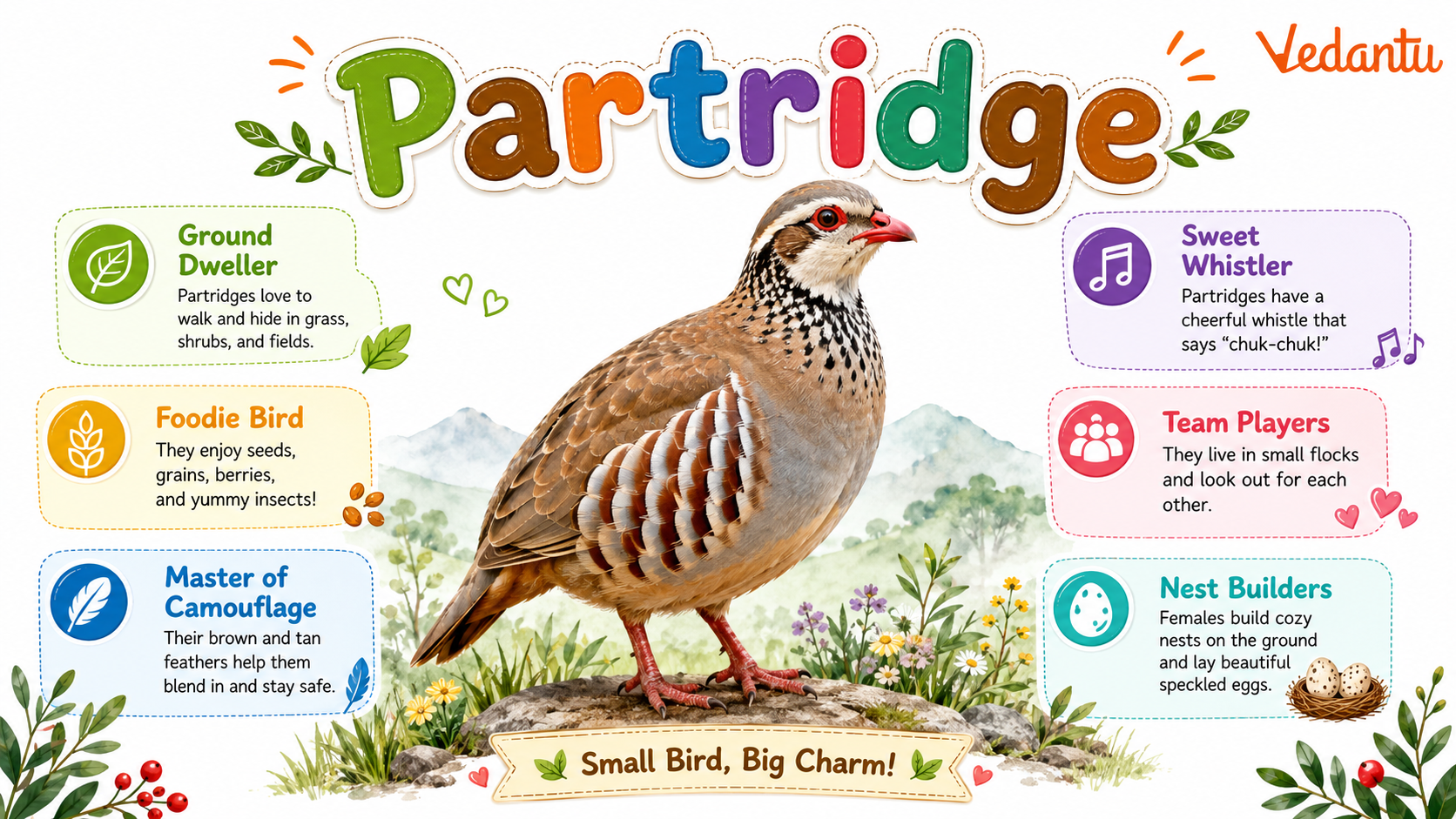
Quick Facts About Partridge
| Feature | Details |
|---|---|
| Common Name | Partridge |
| Scientific Family | Phasianidae |
| Animal Group | Bird |
| Size | 28–35 cm (varies by species) |
| Weight | 300–600 grams |
| Diet | Seeds, grains, insects |
| Habitat | Grasslands, farmlands, woodland edges |
| Lifespan | 2–5 years in the wild |
| Conservation Status | Varies by species (some declining) |
Appearance and Physical Characteristics
- Rounded body with a small head and short neck.
- Short, strong beak suited for picking seeds and insects.
- Powerful legs built for running quickly.
- Short wings and tail.
- Brown, grey, and reddish feathers with fine patterns for camouflage.
Habitat and Distribution
The Partridge habitat mainly includes open landscapes where they can easily find food and hide from predators.
- Grasslands and meadows
- Farmlands and crop fields
- Scrublands and woodland edges
- Found in Europe, Asia, Africa, and parts of North America (introduced)
Diet and Feeding Habits
Partridge diet: Omnivorous (mainly plant-based).
- Seeds and grains
- Grass shoots and leaves
- Small insects and larvae
They scratch the ground with their feet to find food and often feed in small groups.
Behaviour and Lifestyle
- Usually active during the day (diurnal).
- Live in small groups called coveys.
- Prefer running over flying.
- Use camouflage to hide from predators like foxes and hawks.
- Stay close to the ground and avoid tall trees.
Life Cycle of a Partridge
- Egg Stage: Female lays 10–20 eggs in a ground nest hidden in grass.
- Incubation: Eggs hatch after about 23–25 days.
- Chicks: Young ones can walk and feed themselves soon after hatching.
- Juvenile Stage: Grow quickly and stay with parents for protection.
- Adult Stage: Reach maturity within one year.
What Makes Partridge Special?
Sound or Call
- Make soft whistling or chirping sounds.
- Calls are used to warn group members of danger.
- Males may call loudly during breeding season.
Importance and Role in Nature
Amazing Partridge Facts
- Some species form lifelong pairs.
- They flatten their bodies against the ground to hide.
- Partridges rarely migrate long distances.
- They prefer dry climates and open land.
- They can run very fast for short bursts.
- Many species have beautiful chest markings.
Fun Facts for Kids
FAQs on Partridge Bird: Complete Guide to Habitat, Diet, and Behavior
1. What is a partridge?
A partridge is a small to medium-sized ground bird known for living in grasslands and farmlands.
- It belongs to the pheasant family (Phasianidae).
- It is a type of game bird.
- Partridges are related to quails, pheasants, and grouse.
- They are famous from the song “The Twelve Days of Christmas.”
2. Where do partridges live?
Partridges live in open habitats like grasslands, farms, and dry fields.
- Found in Europe, Asia, Africa, and parts of North America.
- Prefer farmland, meadows, and shrublands.
- Usually stay on the ground instead of trees.
- Hide in tall grass to stay safe from predators.
3. What do partridges eat?
Partridges mainly eat seeds and insects.
- Seeds and grains from grasses and crops.
- Small insects and bugs, especially in summer.
- Leaves and small plants.
- Chicks eat more protein-rich insects to grow strong.
4. What does a partridge look like?
A partridge is a round-bodied bird with short wings and a short tail.
- Brown, gray, or reddish feathers for camouflage.
- Strong legs for running quickly.
- Short curved beak.
- Some species, like the Red-legged Partridge, have bright-colored legs and face markings.
5. Can partridges fly?
Yes, partridges can fly, but they prefer running.
- They take short, fast flights when scared.
- Flight is usually low and noisy.
- Strong wings help them escape predators.
- They spend most of their time walking or running on the ground.
6. Are partridges the same as quails?
No, partridges and quails are different but closely related birds.
- Both belong to the pheasant family.
- Quails are usually smaller than partridges.
- Partridges have a rounder body shape.
- Both are types of game birds often found in grasslands.
7. How do partridges protect themselves?
Partridges protect themselves by hiding and running.
- Use feather colors for camouflage.
- Stay very still to avoid being seen.
- Run quickly through grass.
- Fly suddenly to surprise predators like foxes and hawks.
8. Do partridges live alone or in groups?
Partridges often live in small groups called coveys.
- Coveys help them stay safe.
- Groups usually include family members.
- They feed and move together.
- During breeding season, they form pairs.
9. How do partridges reproduce?
Partridges lay eggs in simple ground nests.
- Nests are hidden in tall grass or bushes.
- Females lay about 10–20 eggs.
- Eggs hatch in about 3–4 weeks.
- Chicks can walk and feed themselves shortly after hatching.
10. Why are partridges important?
Partridges are important for nature and farming ecosystems.
- Help control insect populations.
- Serve as food for wild predators.
- Are part of traditional wildlife conservation efforts.
- Symbolic in culture, especially in Christmas traditions.
