



Polar Bear Habitat, Diet, Behavior, and Survival in the Arctic
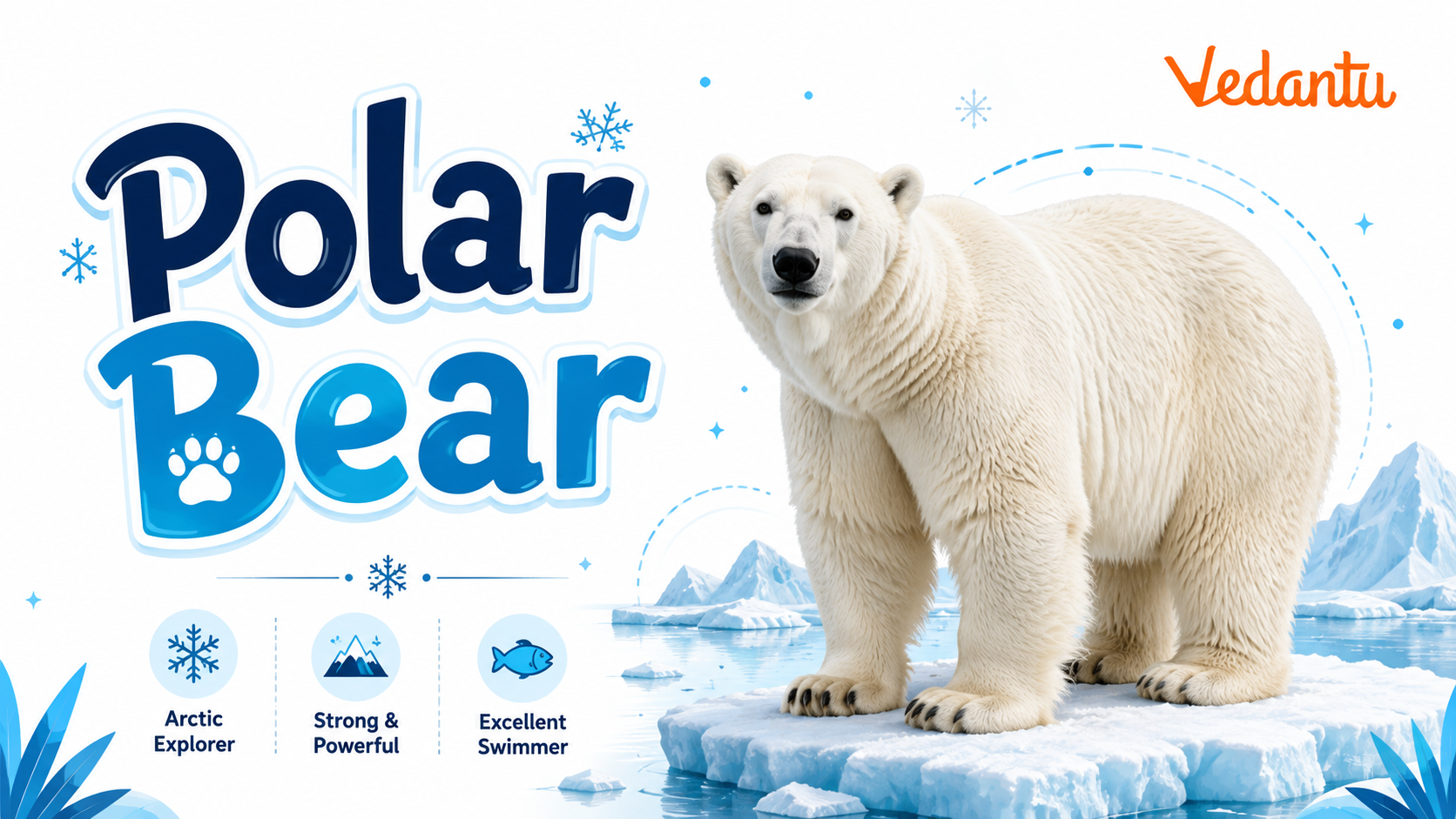
Quick Facts About Polar Bear
| Feature | Details |
|---|---|
| Common Name | Polar Bear |
| Scientific Name | Ursus maritimus |
| Animal Group | Mammal |
| Average Length | 2 – 3 metres |
| Weight | 350 – 700 kg (males are heavier) |
| Lifespan | 20 – 25 years in the wild |
| Habitat | Arctic sea ice and coastal regions |
| Diet | Mainly seals (Carnivore) |
| Conservation Status | Vulnerable |
Appearance and Physical Characteristics
- Large and powerful body built for cold climates.
- Thick white fur that helps in camouflage in snow.
- Black skin under the fur to absorb heat from the sun.
- Small ears and short tail to reduce heat loss.
- Large paws (up to 30 cm wide) for walking on ice and swimming.
- Sharp claws and strong teeth for catching prey.
Polar Bear Habitat and Distribution
- Found in the Arctic region around the North Pole.
- Live in countries like Canada, Russia, Greenland, Norway, and Alaska (USA).
- Prefer sea ice because they hunt seals there.
- Sometimes move to coastal areas during summer.
Polar Bear Diet and Feeding Habits
- Polar Bears are strict carnivores.
- Main food: seals (especially ringed and bearded seals).
- They wait quietly near seal breathing holes in the ice.
- Use their powerful sense of smell to detect prey from far away.
- Sometimes eat fish, bird eggs, or whale carcasses.
Behaviour and Lifestyle
- Mostly solitary animals.
- Active during the day and night.
- Strong swimmers; can swim for hours in icy water.
- Travel long distances in search of food.
- Mother bears are very protective of their cubs.
Polar Bear Life Cycle
- Mating: Takes place in spring.
- Birth: Cubs are born in snow dens during winter.
- Cubs: Usually 1–2 cubs; born blind and very small.
- Growth: Cubs stay with their mother for about 2 years.
- Adult Stage: Become independent hunters.
What Makes Polar Bear Special?
Importance and Role in Nature
Amazing Polar Bear Facts
- Polar Bears are classified as marine mammals.
- They can swim continuously for over 100 kilometres.
- Their sense of smell is extremely strong.
- Male Polar Bears are much larger than females.
- They can run up to 40 km/h for short distances.
- Their paws help them walk on slippery ice.
- They spend most of their lives on sea ice.
- Climate change is shrinking their icy home.
Interesting Facts About Polar Bear
Fun Facts for Kids
- Polar Bears look white but have black skin.
- They are called the “King of the Arctic.”
- Baby Polar Bears are smaller than a cat at birth.
- They love swimming in icy water.
- They can smell food from very far away.
FAQs on Polar Bear: Amazing Facts About the Arctic’s Largest Land Predator
1. What is a polar bear?
A polar bear is a large Arctic mammal that lives in icy regions and is known as the biggest land carnivore on Earth.
- Scientific name: Ursus maritimus
- Lives in the Arctic region near the North Pole
- Belongs to the bear family
- Expert swimmer and sea-ice hunter
- Often called a marine mammal because it depends on the ocean
2. Where do polar bears live?
Polar bears live in the cold Arctic Circle surrounding the North Pole.
- Found in Canada, Alaska (USA), Greenland, Russia, and Norway
- Prefer areas with sea ice
- Stay close to the Arctic Ocean
- Do not live in Antarctica
3. What do polar bears eat?
Polar bears mainly eat seals and are powerful Arctic predators.
- Favorite prey: ringed seals and bearded seals
- Sometimes eat fish, birds, and whale carcasses
- Rarely eat plants or berries
- Depend heavily on sea ice hunting
4. Why are polar bears white?
Polar bears look white to help them blend into snowy Arctic surroundings.
- Their fur is actually clear and hollow
- White appearance provides camouflage
- Helps them sneak up on seals
- Under their fur, they have black skin to absorb heat
5. How big do polar bears grow?
Polar bears are the largest land carnivores in the world.
- Adult males weigh 900–1,600 pounds
- Adult females weigh 330–650 pounds
- Can grow up to 10 feet long
- Have huge paws for walking on ice and swimming
6. Are polar bears endangered?
Polar bears are listed as vulnerable due to climate change and habitat loss.
- Main threat: melting sea ice
- Sea ice loss affects hunting
- Oil spills and pollution also harm them
- Protected by international wildlife laws
7. How do polar bears survive in the cold?
Polar bears survive Arctic temperatures with special body adaptations.
- Thick layer of blubber (fat) for warmth
- Dense, water‑repellent fur
- Small ears to reduce heat loss
- Large paws to walk on snow and swim in icy water
8. Can polar bears swim?
Yes, polar bears are excellent swimmers and can travel long distances in icy water.
- Swim between pieces of sea ice
- Use large front paws like paddles
- Can swim for hours without resting
- Strong swimmers in the Arctic Ocean
9. Do polar bears hibernate?
Only pregnant female polar bears hibernate in winter dens.
- Males usually stay active year-round
- Females dig snow dens
- Cubs are born during winter
- Mother and cubs leave the den in spring
10. How long do polar bears live?
Polar bears can live up to 25 years in the wild.
- Average lifespan: 15–25 years
- May live longer in zoos
- Face dangers like climate change and food shortage
- Survival depends on healthy Arctic habitats
