



What Is a Sambar Deer? Habitat, Behavior, Diet, and Conservation Explained
The Sambar Deer is one of the largest and most majestic deer species found in Asia. Known for its powerful build, thick brown coat, and impressive antlers, this forest giant plays an important role in maintaining ecosystem balance. Sambar Deer habitat mainly includes dense forests, grasslands, and hilly regions. In this page, explore Sambar Deer facts, characteristics, diet, behaviour, life cycle, and why this shy animal is so important to nature.
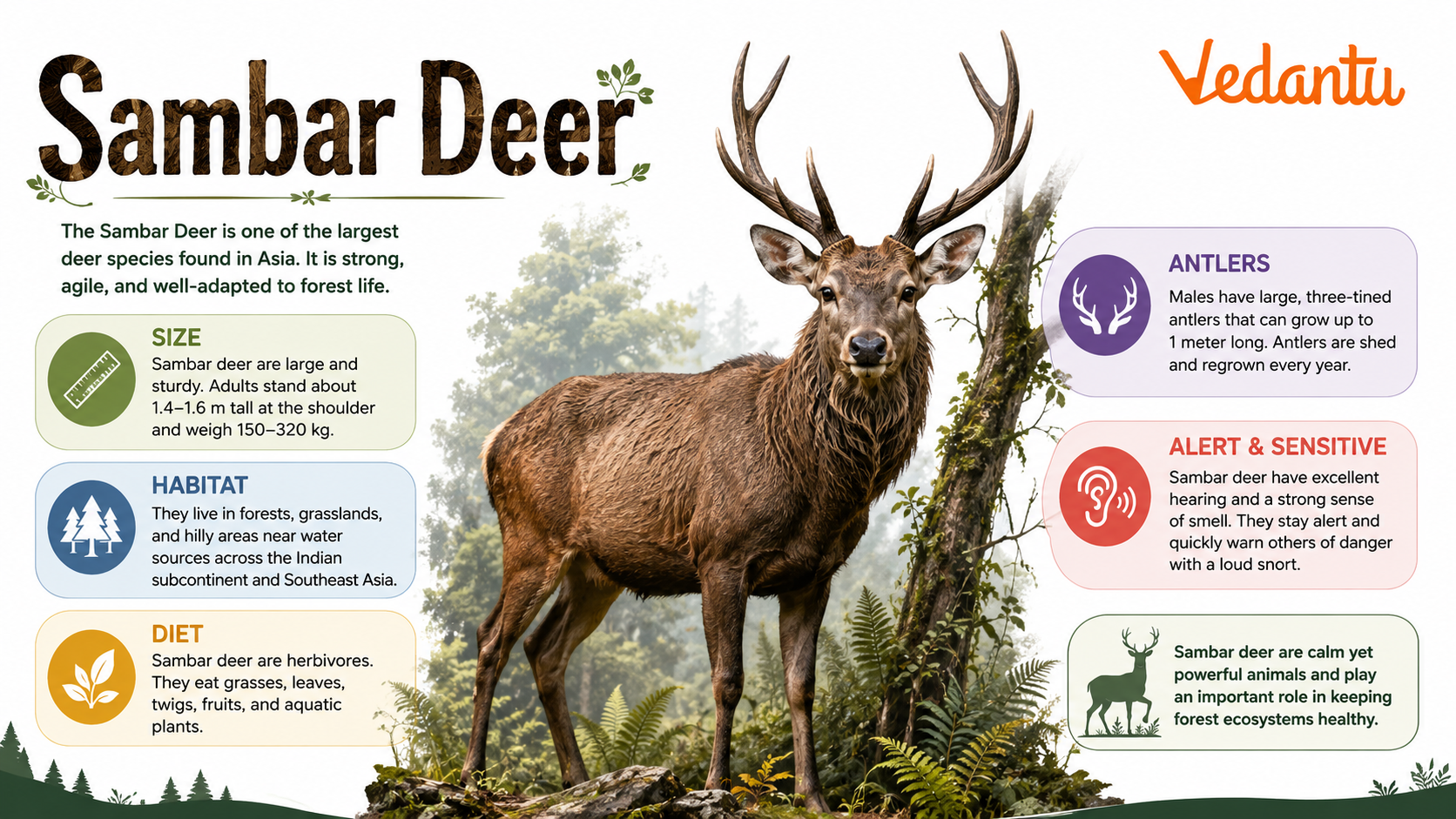
Quick Facts About Sambar Deer
| Feature | Details |
|---|---|
| Common Name | Sambar Deer |
| Scientific Name | Rusa unicolor |
| Animal Group | Mammal |
| Average Height | Up to 1.6 meters at the shoulder |
| Weight | 150–300 kg |
| Lifespan | 20–25 years (in the wild) |
| Habitat | Tropical forests, grasslands, hills |
| Diet | Leaves, grass, fruits, bark |
| Young One | Fawn |
| Conservation Status | Vulnerable |
Appearance and Physical Characteristics
- Dark brown or greyish-brown coat.
- Thick, coarse fur – especially in winter.
- Males have large, three-tined antlers.
- Long tail with a lighter underside.
- Large ears for sharp hearing.
- Strong legs built for walking in forests and hills.
Sambar Deer Habitat and Distribution
- Found in India, Sri Lanka, Nepal, Bhutan, and Southeast Asia.
- Prefer tropical and subtropical forests.
- Often live near rivers, lakes, and marshes.
- Can survive in hilly and mountainous regions.
They are excellent at hiding in thick vegetation. Their dark coat helps them blend into the forest, protecting them from predators like tigers and leopards.
Diet and Feeding Habits
- Grass
- Leaves
- Fruits
- Tree bark
- Young shoots and shrubs
They usually feed during early morning and evening. Their strong teeth help them chew tough plant material easily.
Behaviour and Lifestyle
Sound or Call
When they sense danger, Sambar Deer make a loud, sharp call. This warning sound alerts other animals in the forest about nearby predators.
Sambar Deer Life Cycle
- Mating Season: Usually during cooler months.
- Pregnancy: About 8 months.
- Birth: One fawn is born at a time.
- Growth: Fawns stay hidden in tall grass for protection.
- Adult Stage: Males develop antlers as they mature.
The Sambar Deer life cycle shows strong parental care. Mothers protect and nurse their young until they are strong enough to survive independently.
What Makes the Sambar Deer Special?
Importance and Role in Nature
Amazing Sambar Deer Facts
- Sambar Deer can run fast despite their large size.
- They are excellent swimmers.
- Their antlers are shed and regrown every year.
- They have a mane-like thick hair around the neck.
- Their sharp hearing helps detect predators early.
- They are mostly shy and avoid humans.
Interesting Facts About Sambar Deer
Fun Facts for Kids
- A baby Sambar Deer is called a fawn.
- Only males grow big antlers.
- They love staying close to water.
- They can jump and run quickly when scared.
- They use their nose and ears more than their eyes to stay safe.
FAQs on Sambar Deer: Size, Habitat, Diet, and Fascinating Facts
1. What is a Sambar Deer?
The Sambar Deer is a large species of deer native to Asia and known for its strong build and impressive antlers.
- Scientific name: Rusa unicolor
- One of the largest Asian deer species
- Found in India, Sri Lanka, Southeast Asia, and China
- Known for its thick brown fur and rugged appearance
- Commonly searched as: Indian sambar deer, large deer in Asia
2. Where do Sambar Deer live?
The Sambar Deer habitat includes forests, grasslands, and mountainous regions across South and Southeast Asia.
- Prefer tropical forests and woodlands
- Also found in swamps and near water sources
- Live in countries like India, Nepal, Thailand, and Indonesia
- Adapt well to both lowlands and high altitudes
- Often searched as: Where do sambar deer live?
3. What do Sambar Deer eat?
The Sambar Deer diet mainly consists of plants, making them herbivores.
- Eat grass, leaves, shrubs, and fruits
- Sometimes feed on bark and aquatic plants
- Usually graze during early morning and evening
- Play an important role in the forest ecosystem
- People also ask: What does a sambar deer eat?
4. How big is a Sambar Deer?
The Sambar Deer size makes it one of the largest deer species in Asia.
- Can weigh between 100 to 350 kg
- Stand about 1.5 meters tall at the shoulder
- Males are usually larger than females
- Have long, strong legs and a sturdy body
- Common search: How big can a sambar deer grow?
5. Do Sambar Deer have antlers?
Male Sambar Deer have large, three-tined antlers that they shed and regrow each year.
- Only males (stags) grow antlers
- Antlers can reach up to 1 meter long
- Used for fighting during mating season
- Shed annually and regrow stronger
- Also searched as: Sambar deer antlers facts
6. Are Sambar Deer endangered?
The Sambar Deer conservation status is currently listed as Vulnerable in some regions due to habitat loss and hunting.
- Threatened by deforestation and poaching
- Protected in many national parks and wildlife reserves
- Important prey for tigers and leopards
- Conservation programs help protect their habitat
- People also search: Is the sambar deer endangered?
7. What animals hunt Sambar Deer?
The main Sambar Deer predators are large carnivores found in Asian forests.
- Tigers are their biggest natural predator
- Also hunted by leopards and wild dogs (dholes)
- Fawns may be attacked by crocodiles
- Use loud alarm calls to warn others of danger
- Common query: What eats a sambar deer?
8. How long do Sambar Deer live?
The Sambar Deer lifespan depends on whether they live in the wild or captivity.
- Live about 20–25 years in captivity
- Usually 15–20 years in the wild
- Life expectancy affected by predators and habitat conditions
- Healthy diet and safe habitat increase survival
- Often searched as: How long do sambar deer live?
9. How do Sambar Deer communicate?
The Sambar Deer communication includes loud alarm calls and body signals to warn others.
- Make a sharp barking sound when threatened
- Use body posture to show dominance
- Communicate through scent marking
- Alarm calls help alert nearby animals of predators
- People also ask: Why do sambar deer bark?
10. Why are Sambar Deer important to the ecosystem?
The Sambar Deer plays a vital role in maintaining balance in the forest ecosystem.
- Serve as key prey for tigers and other predators
- Help control plant growth by grazing
- Spread seeds through their movement
- Support biodiversity in Asian forests
- Common search: Importance of sambar deer in ecosystem
