




What Is the Difference Between Incomplete Dominance and Codominance with Examples
Incomplete dominance and codominance are two important patterns of inheritance in genetics. They explain how certain traits or characteristics appear in offspring when parents carry different versions (alleles) of a gene. Although both involve interactions between alleles, they differ in the way these alleles influence each other’s expression. Below, let us explore these concepts clearly and simply.
What is Incomplete Dominance?
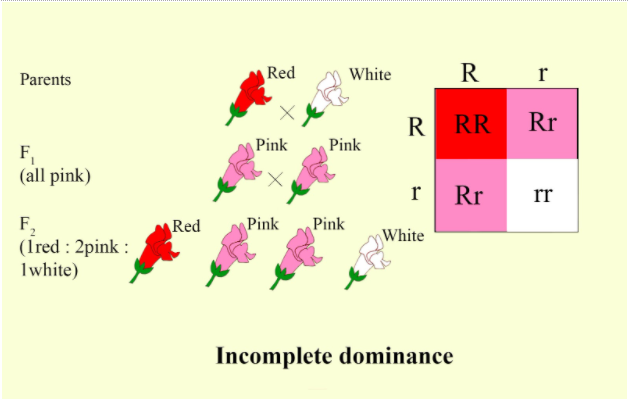
Incomplete dominance occurs when a dominant allele does not completely mask the effect of a recessive allele. As a result, the offspring shows a blend of the two parental traits. This is different from complete dominance, where one allele completely overshadows the other.
Incomplete Dominance Example:
A classic example is the cross between red-flowered (RR) and white-flowered (rr) snapdragons (also known as Antirrhinum majus). The heterozygous offspring (Rr) produce pink flowers, illustrating a blend of red and white traits.
Key Points:
Offspring display an intermediate phenotype (mixed appearance).
A new phenotype emerges in the hybrid generation.
It is different from complete dominance, where the dominant trait alone is visible in the heterozygous offspring.
What is Codominance?
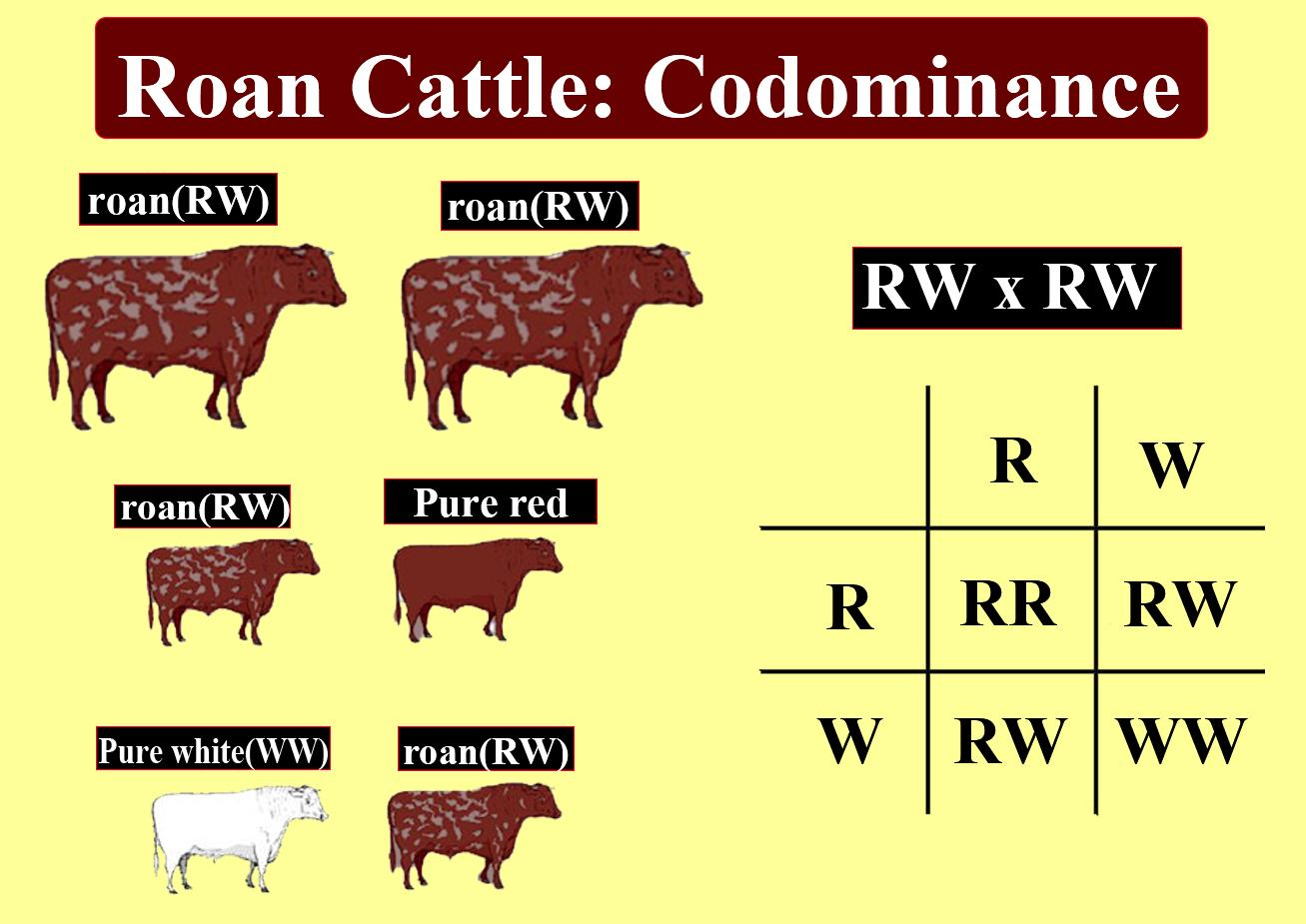
In codominance, both alleles in a heterozygous genotype express themselves equally and separately. Neither allele can mask the other, so both traits are visible in the offspring without blending.
Example: The blood Group ABO system in humans is the most well-known example. The A allele and the B allele are both dominant when compared to the O allele, but they are codominant relative to each other. Hence, a person inheriting one A allele and one B allele (genotype AB) will have a blood group that shows both A and B antigens on their red blood cells.
Key Points:
Both parental traits are clearly expressed without blending.
No new phenotype is formed, but rather, a combined effect of both alleles is observed.
Incomplete Dominance vs Codominance: Main Differences
Notice that in incomplete dominance vs codominance, the presence of an intermediate phenotype is a hallmark of incomplete dominance, whereas codominance allows each allele’s trait to be distinctly visible.
Difference Between Complete Dominance, Incomplete Dominance, and Codominance
Sometimes, it is helpful to compare all three inheritance patterns side by side:
Complete Dominance:
The dominant allele completely covers up the recessive allele.
The recessive trait remains unseen in heterozygotes.
Example: In peas, the purple flower colour is completely dominant over white.
Incomplete Dominance:
The dominant allele partially masks the recessive allele.
The offspring blend traits of both parents (pink flowers in snapdragons).
Codominance:
No allele hides the other.
The offspring show both traits separately (AB blood group).
Short Quiz (With Answers)
Try this quick quiz to strengthen your understanding:
Which inheritance pattern involves the blending of parental traits?
A. Codominance
B. Incomplete Dominance
C. Multiple Alleles
Answer: B. Incomplete Dominance
In codominance, which of the following statements is correct?
A. Both alleles are recessive
B. One allele is partially dominant
C. Both alleles are equally expressed.
Answer: C. Both alleles are equally expressed
Which example is associated with codominance?
A. Pink snapdragon flowers
B. AB Blood Group
C. White and red four o’clock plants
Answer: B. AB Blood Group
In incomplete dominance, a cross between a pure tall plant and a pure dwarf plant would produce
A. All tall plants
B. All dwarf plants
C. Plants of medium height
Answer: C. Plants of medium height
Related Topics


FAQs on Difference Between Incomplete Dominance and Codominance in Genetics
1. What is the difference between incomplete dominance and codominance?
The main difference between incomplete dominance and codominance is that incomplete dominance produces a blended phenotype, while codominance shows both alleles fully and separately in the heterozygote.
- In incomplete dominance, neither allele is completely dominant, so the heterozygous phenotype is intermediate (e.g., red × white flowers = pink).
- In codominance, both alleles are equally expressed without blending (e.g., AB blood group).
2. What is incomplete dominance in genetics?
Incomplete dominance is a pattern of inheritance in which one allele does not completely mask the other, resulting in an intermediate phenotype in the heterozygote.
- Occurs when neither allele is fully dominant.
- The heterozygous phenotype is a blend of the two homozygous traits.
- Example: snapdragon flower color (red × white = pink).
3. What is codominance in biology?
Codominance is a genetic condition in which both alleles in a heterozygote are fully and simultaneously expressed without blending.
- Both traits appear distinctly in the phenotype.
- No allele masks the other.
- Example: ABO blood group system, where both IA and IB alleles are expressed in AB individuals.
4. Can you give examples of incomplete dominance and codominance?
Common examples of incomplete dominance and codominance help illustrate how alleles interact differently.
- Incomplete dominance: Snapdragon flower color (red × white = pink).
- Codominance: AB blood type in humans.
- Codominance: Roan coat color in cattle (red and white hairs present together).
5. How does incomplete dominance affect phenotype?
Incomplete dominance affects phenotype by producing an intermediate or blended trait in heterozygous individuals.
- The dominant allele does not completely suppress the recessive allele.
- The phenotype appears as a mix of both parental traits.
- This pattern alters the typical Mendelian 3:1 phenotypic ratio to a 1:2:1 ratio.
6. How does codominance affect phenotype?
Codominance affects phenotype by allowing both alleles to be fully expressed in a heterozygous individual.
- No blending occurs.
- Both traits are clearly visible at the same time.
- Results in a 1:2:1 phenotypic ratio in monohybrid crosses.
7. What is the phenotypic ratio in incomplete dominance and codominance?
Both incomplete dominance and codominance typically produce a 1:2:1 phenotypic ratio in a monohybrid cross.
- 1 homozygous dominant phenotype
- 2 heterozygous phenotype (intermediate in incomplete dominance, dual expression in codominance)
- 1 homozygous recessive phenotype
8. Is the ABO blood group an example of incomplete dominance or codominance?
The ABO blood group system is an example of codominance because both IA and IB alleles are fully expressed in individuals with AB blood type.
- Allele IA produces A antigen.
- Allele IB produces B antigen.
- Both antigens appear together in AB individuals.
9. Why is pink flower color considered incomplete dominance?
Pink flower color is considered incomplete dominance because it results from the blending of red and white alleles in a heterozygous plant.
- Red flower genotype × White flower genotype.
- Heterozygous offspring produce less pigment than red.
- The phenotype appears pink, which is intermediate.
10. What are the key similarities between incomplete dominance and codominance?
Incomplete dominance and codominance are similar because both involve interaction of two alleles where neither is completely recessive.
- Both deviate from simple Mendelian dominance.
- Both commonly produce a 1:2:1 phenotypic ratio.
- Both involve expression of traits in heterozygous individuals.



