




Structure and Functions of the Human Brain with Diagram and Parts
The human brain is the command centre of our body, responsible for thoughts, memory, emotions, and coordination. It enables us to perceive the world, process information, and respond to our environment. In this article, we will explore the structure, functions, and significance of the human brain with an easy, student-friendly approach, perfect for school and competitive exam preparations.
What is the Human Brain?
The human brain is the most complex organ in the human body. It is located within the skull and is part of the central nervous system. The brain controls voluntary and involuntary actions, including thinking, movement, breathing, and heartbeat. Its intricate network of neurons allows humans to learn, remember, communicate, and solve problems. Understanding the brain helps in decoding how we function and stay healthy.
Structure of the Human Brain
The human brain is divided into several regions, each with a unique role. It consists of three main parts: the cerebrum, cerebellum, and brainstem. These structures work together to process and relay information throughout the body. The brain is protected by the skull and surrounded by cerebrospinal fluid for cushioning and nutrient transport.
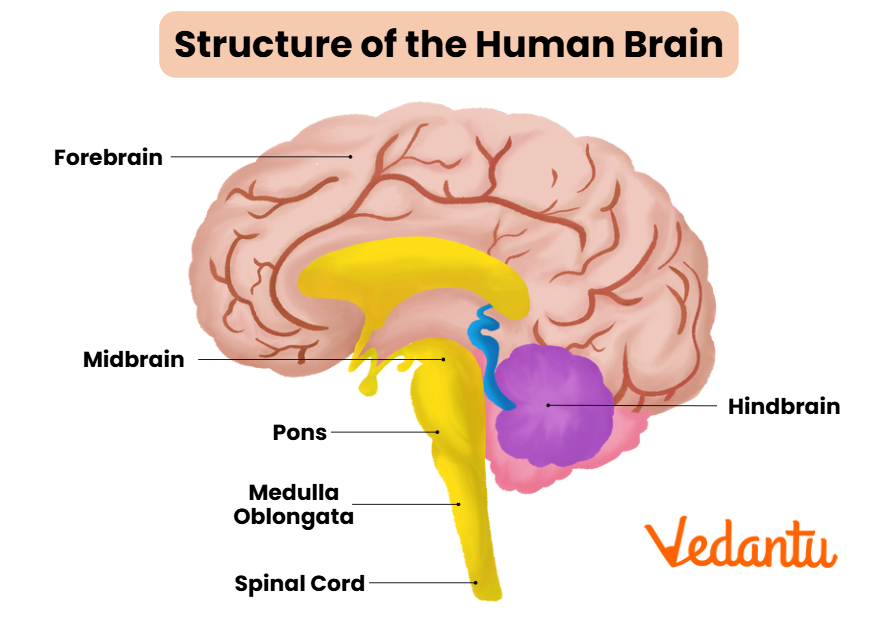
Main Parts of the Human Brain
- Cerebrum: The largest part, divided into right and left hemispheres. It controls reasoning, memory, senses, speech, and voluntary movements. Find more details on parts of the brain.
- Cerebellum: Located below the cerebrum, it manages posture, balance, and fine motor movements.
- Brainstem: Connects the brain to the spinal cord. It controls involuntary actions such as breathing, digestion, and heartbeat.
Each region contains millions of nerve cells or neurons that communicate through electrical and chemical signals. The brain also includes specialized structures like the hypothalamus and thalamus, which regulate hormones and sensory processing.
Functions of the Human Brain
The human brain manages a wide variety of vital functions that help us survive and thrive. Understanding these functions is important in learning, medicine, sports, and many real-life situations.
- Sensory Processing: Receives information from eyes, ears, skin, nose, and tongue, then interprets sensations like sight, sound, touch, taste, and smell. Explore sensory perception for in-depth details.
- Motor Control: Sends signals to muscles for movement, from walking and running to facial expressions.
- Cognition and Memory: Enables us to think, reason, learn, store, and recall information.
- Emotion and Behavior: Regulates feelings and responses such as happiness, anger, or fear.
- Regulation of Body Systems: Controls heartbeat, breathing, digestion, and other involuntary functions.
The brain also works closely with the endocrine system to produce hormones that influence growth, metabolism, and stress responses.
How the Human Brain Works
The human brain works by transmitting electrical impulses between billions of neurons. When sensory input is received, the brain analyzes it, decides on an action, and sends signals to relevant body parts. This process happens in fractions of a second and is vital for everything from reflex actions to conscious problem-solving.
- Sense organs detect changes and send signals via sensory nerves.
- The brain processes the information and makes decisions.
- Motor nerves carry out responses, like moving a hand away from a hot object.
The study of the nervous system and brain functions is known as neuroscience or biological science. For a deeper dive into nerves and their roles, visit neurons and nerve impulse.
Significance of the Human Brain
The human brain is essential for everything we do. It differentiates humans from other animals by supporting advanced language, creativity, and problem-solving skills. Good brain health is important for learning, daily activities, sports, and maintaining relationships. Disorders affecting the brain, such as dementia or stroke, can have severe impacts on overall well-being.
- It helps us adapt and react to the environment.
- Plays a major role in innovation, technology, and the arts.
- Maintains balance in body systems by interacting with organs like the heart, lungs, and muscles.
Proper nutrition, exercise, and rest support healthy brain function. For more about nutrients and their importance, see what do various nutrients do for our body.
Human Brain and Medicine
Medical science uses brain research to treat diseases such as epilepsy, brain tumors, and mental health conditions. Medicines, therapy, and surgery help restore brain functions when injuries or diseases occur. Studying the brain is crucial in developing therapies, learning aids, and treatments for people with special needs.
- Neurological exams assess brain health.
- Brain imaging (MRI, CT scan) helps in diagnosis.
- Understanding the human brain guides research in artificial intelligence and robotics.
Learn about tablet medicines and their impact on the nervous system at tablet medicine. Disorders of muscular tissue are also closely related to brain health (Muscular Tissue).
Interesting Facts About the Human Brain
- The adult human brain weighs about 1.4 kg and uses around 20% of the body’s energy.
- The brain contains over 86 billion neurons connected through trillions of synapses.
- Damage to specific brain regions causes distinct symptoms, helping doctors diagnose issues.
- The brain keeps developing and adapting throughout life, a property called neuroplasticity.
- Different types of nutrients and hormones, such as those produced by the endocrine system, are crucial for healthy brain function.
Related Topics and Further Learning
To expand your understanding of the human brain and body, explore related Vedantu topics:
- Difference between Brain and Mind
- Spinal Cord
- Parts of the Brain
- External and Internal Organs
- Central Nervous System
- Control and Coordination
You can also learn how acquired and inherited traits impact brain development here.
Summary
The human brain is the most advanced organ, directing thoughts, movement, and essential life functions. Learning about its structure and function helps us appreciate how we think, feel, and interact with the world. Understanding the brain is key to advances in health, technology, and education, which Vedantu supports for all students.


FAQs on Human Brain Anatomy Structure and Functions
1. What is the human brain and what does it do?
The human brain is the central organ of the nervous system that controls thoughts, emotions, movement, memory, and vital body functions. It acts as the body’s control center by:
- Receiving sensory information from eyes, ears, skin, and other organs
- Processing and interpreting that information
- Sending signals through the spinal cord and nerves to muscles and glands
- Regulating automatic functions like breathing, heartbeat, and temperature
2. What are the main parts of the human brain?
The human brain is mainly divided into the cerebrum, cerebellum, and brainstem. These major parts have distinct roles:
- Cerebrum – responsible for thinking, memory, voluntary movement, and sensory perception
- Cerebellum – coordinates balance, posture, and fine motor movements
- Brainstem – controls vital functions such as breathing, heart rate, and blood pressure
3. What is the function of the cerebrum?
The cerebrum is responsible for higher mental functions such as thinking, learning, memory, and voluntary movement. It performs several key roles:
- Processes sensory information (vision, hearing, touch, taste, smell)
- Controls voluntary muscle actions
- Enables language, reasoning, and problem-solving
- Stores long-term memories
4. What does the cerebellum do?
The cerebellum coordinates voluntary movements and maintains balance and posture. Its main functions include:
- Fine-tuning muscle movements for smooth action
- Maintaining body equilibrium and balance
- Supporting motor learning, such as learning to ride a bicycle
5. What is the brainstem and why is it important?
The brainstem is the lower part of the brain that connects it to the spinal cord and controls essential life functions. It consists of the midbrain, pons, and medulla oblongata, which:
- Regulate breathing and heart rate
- Control blood pressure
- Manage reflexes like swallowing and coughing
6. What are the lobes of the brain and their functions?
The cerebrum is divided into four lobes, each with specialized functions in the human brain. These lobes include:
- Frontal lobe – decision-making, planning, speech, and voluntary movement
- Parietal lobe – processing touch, temperature, and spatial awareness
- Temporal lobe – hearing, memory, and language comprehension
- Occipital lobe – vision and visual processing
7. How do neurons transmit signals in the brain?
Neurons transmit signals in the brain through electrical impulses and chemical messengers called neurotransmitters. The process occurs in steps:
- An electrical impulse called an action potential travels along the neuron’s axon
- The impulse reaches the synapse
- Chemical messengers known as neurotransmitters are released
- These chemicals bind to receptors on the next neuron, continuing the signal
8. What is the difference between grey matter and white matter?
The main difference between grey matter and white matter is that grey matter contains neuron cell bodies, while white matter contains myelinated axons. Specifically:
- Grey matter – involved in processing and interpreting information
- White matter – responsible for transmitting signals between different brain regions
9. How is the human brain protected?
The human brain is protected by the skull, protective membranes, and fluid cushioning. These protective structures include:
- The cranium (skull), which provides a hard outer shield
- Three membranes called the meninges (dura mater, arachnoid mater, pia mater)
- Cerebrospinal fluid (CSF), which cushions the brain and absorbs shock
10. What is the role of the left and right hemispheres of the brain?
The left and right hemispheres of the brain specialize in different but complementary functions. In general:
- Left hemisphere – language, logical reasoning, mathematics, and analytical tasks
- Right hemisphere – creativity, spatial ability, music, and emotional processing



