




What Is the Structure and Function of a Plant Cell
The plant cell is a fundamental building block of all plants, playing vital roles in growth, development, and survival. Unlike animal cells, plant cells have specific structures such as cell walls and chloroplasts that help them thrive. Understanding plant cells is essential for learning about photosynthesis, plant adaptations, and applications in agriculture and biotechnology.
What is a Plant Cell?
A plant cell is a basic unit of life found in the tissues of all plants. It is a eukaryotic cell, meaning it has a true nucleus and various specialized organelles. Unique features like the plant cell wall, chloroplasts, and large vacuole set it apart from animal cells. These structures enable plants to produce food, store energy, and maintain rigidity.
Plant Cell Structure
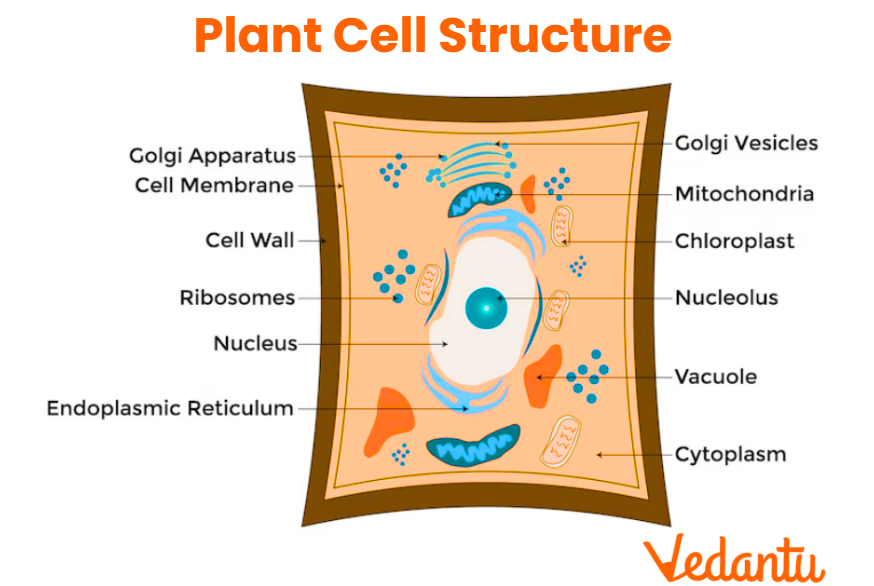
The plant cell structure is distinct due to certain key components. Here are the major parts found in a typical plant cell model:
- Cell Wall: A rigid outer layer made of cellulose that protects and gives shape to the cell.
- Plasma Membrane: The thin, flexible boundary inside the cell wall, controlling entry and exit of substances.
- Nucleus: Contains DNA and controls cellular activities.
- Chloroplasts: Organelles that perform photosynthesis using sunlight, water, and carbon dioxide.
- Vacuole: A large, fluid-filled sac that stores water, nutrients, and waste products.
- Cytoplasm: The jelly-like fluid where organelles are suspended.
- Mitochondria: Powerhouse of the cell, generating energy for cellular processes.
- Endoplasmic Reticulum (ER): Network helping in protein and lipid synthesis.
- Golgi Apparatus: Packages and transports proteins within the cell.
- Plasmodesmata: Channels between plant cells that allow transport and communication.
These organelles work together, enabling plants to perform vital functions such as growth, energy conversion, and nutrient storage.
Plant Cell Diagram
A well-labelled plant cell diagram helps in visualizing the locations and relationships of different organelles. Diagrams are commonly used in textbooks and exams to test understanding of the plant cell model.
Unique Features of Plant Cells
Plant cells possess certain unique structures that are not present in animal cells:
- Plant Cell Wall: Provides mechanical strength and protection; made from cellulose.
- Chloroplasts: Enable photosynthesis—conversion of sunlight into chemical energy (glucose).
- Large Central Vacuole: Maintains cell turgidity and stores vital substances.
- Plasmodesmata: Tiny channels that facilitate direct communication between adjacent plant cells.
These features help plants carry out functions essential for survival, growth, and adaptation to their environment. To explore how these unique adaptations affect plants in different conditions, read about adaptations in plants.
Comparison: Plant Cell vs. Animal Cell
| Feature | Plant Cell | Animal Cell |
|---|---|---|
| Cell Wall | Present (cellulose) | Absent |
| Chloroplasts | Present | Absent |
| Central Vacuole | Large and single | Small and multiple |
| Shape | Usually rectangular or square | Usually round or irregular |
This table highlights the main differences between plant and animal cells. To learn more, visit difference between plant cell and animal cell.
Functions of Key Plant Cell Organelles
Each plant cell organelle has a specific function:
- Cell Wall: Prevents bursting in hypotonic solutions and provides support.
- Chloroplasts: Capture sunlight and carry out photosynthesis.
- Vacuole: Maintains turgor pressure and stores nutrients.
- Nucleus: Contains genetic material and controls cell division.
- Mitochondria: Break down glucose to release energy via cellular respiration.
These organelles coordinate to ensure the plant cell survives and functions efficiently in its natural environment.
Plant Cell Model: Types and Uses
A plant cell model can be physical (3D), digital, or drawn for educational purposes. These models are used in classrooms, research, and biotechnology labs to:
- Demonstrate detailed plant cell structure and organelle arrangement.
- Support interactive learning for students through hands-on projects.
- Assist in plant biology research and genetic studies.
Building a plant cell model helps visualize organelle functions and their spatial relationships.
Plant Cell Wall: Composition and Importance
The plant cell wall, composed mainly of cellulose, is vital for:
- Maintaining cell shape and preventing collapse.
- Protecting against pathogens and mechanical injury.
- Facilitating communication between cells via plasmodesmata.
Plant cell walls also enable plants to stand upright and grow tall. To explore cell wall structure in depth, check structure of the cell wall.
Processes Involving Plant Cells
Plant cells are involved in various vital biological processes. Here’s how photosynthesis works in plant cells:
- Chloroplasts capture sunlight energy.
- This energy splits water molecules (photolysis) and produces oxygen.
- Carbon dioxide combines with hydrogen to form glucose.
- Glucose is used for energy and growth; oxygen is released as a byproduct.
This process not only sustains plant life, but also produces oxygen for humans and animals to breathe. Learn about the photosynthesis process for a deeper understanding.
Applications and Relevance of Plant Cells
Plant cells have wide-ranging importance in biology, agriculture, and medicine:
- Basis of plant tissue culture and genetic modification.
- Understanding plant diseases and immunity, as seen in studies on Tobacco Mosaic Virus.
- Research into crop improvement and sustainable agriculture.
- Significance in life processes, food production, and the environment.
For further reading about how plant biology connects to health and nutrition, see food and health on Vedantu.
Page Summary
Plant cells are the core of plant structure and function, characterized by specialized features like the cell wall, chloroplasts, and vacuole. Their study is essential for understanding plant life, agriculture, and environmental science. Mastering plant cell concepts opens doors to advanced topics in biotechnology, genetics, and sustainable crop management.


FAQs on Plant Cell Structure and Functions in Detail
1. What is a plant cell?
A plant cell is the basic structural and functional unit of plants that contains specialized organelles for photosynthesis and support.
Plant cells are eukaryotic cells, meaning they have a true nucleus and membrane-bound organelles. Key features include:
- A rigid cell wall made of cellulose
- Chloroplasts for photosynthesis
- A large central vacuole for storage and turgor pressure
2. What are the main parts of a plant cell?
The main parts of a plant cell include the cell wall, cell membrane, nucleus, chloroplasts, and central vacuole.
Important structures are:
- Cell wall – provides shape and protection
- Cell membrane – controls movement of substances
- Nucleus – contains genetic material (DNA)
- Chloroplasts – site of photosynthesis
- Central vacuole – stores water and maintains turgor pressure
- Mitochondria – produce ATP through cellular respiration
3. What is the function of the cell wall in a plant cell?
The cell wall in a plant cell provides structural support, protection, and maintains the cell’s shape.
It is primarily made of cellulose and:
- Prevents the cell from bursting due to water intake
- Maintains rigidity and strength
- Helps plants remain upright
4. What is the function of chloroplasts in plant cells?
The chloroplast is the organelle responsible for photosynthesis in plant cells.
Inside chloroplasts:
- Chlorophyll absorbs sunlight
- Light energy is converted into chemical energy
- Glucose is produced from carbon dioxide and water
5. What is the role of the central vacuole in a plant cell?
The central vacuole stores water, nutrients, and wastes while maintaining turgor pressure in plant cells.
Its main roles include:
- Keeping the cell firm and rigid
- Storing ions, pigments, and metabolic products
- Supporting plant structure by pressing against the cell wall
6. What is the difference between plant cells and animal cells?
The main difference between plant cells and animal cells is that plant cells have a cell wall, chloroplasts, and a large central vacuole.
Key differences:
- Cell wall – present in plants, absent in animals
- Chloroplasts – present in plants, absent in animals
- Vacuole – large and central in plants, small or temporary in animals
7. How does photosynthesis occur in a plant cell?
Photosynthesis occurs in the chloroplasts of plant cells where light energy is converted into chemical energy.
The process involves:
- Light absorption by chlorophyll
- Conversion of light energy into ATP and NADPH (light reactions)
- Formation of glucose from carbon dioxide in the Calvin cycle
8. Do plant cells have mitochondria?
Yes, plant cells contain mitochondria for cellular respiration.
Mitochondria:
- Break down glucose to produce ATP
- Support energy needs of the cell
- Work alongside chloroplasts in energy transformation
9. What is the function of the nucleus in a plant cell?
The nucleus controls cell activities and stores genetic information in plant cells.
It contains:
- DNA organized into chromosomes
- A nucleolus that produces ribosomes
10. Why are plant cells rectangular in shape?
Plant cells are typically rectangular because of their rigid cell wall.
The cell wall:
- Provides a fixed and regular shape
- Resists deformation from water pressure
- Allows cells to pack closely together in tissues



