Durga Puja 2026 Dates: When Does the Festival Begin and End?
Durga Puja 2026 will be celebrated from Saturday, 17 October, to Wednesday, 21 October, particularly in West Bengal, Odisha, Assam, Tripura, Bihar and Jharkhand. The festival honours Goddess Durga's victory over the demon Mahishasura, symbolising the triumph of good over evil.
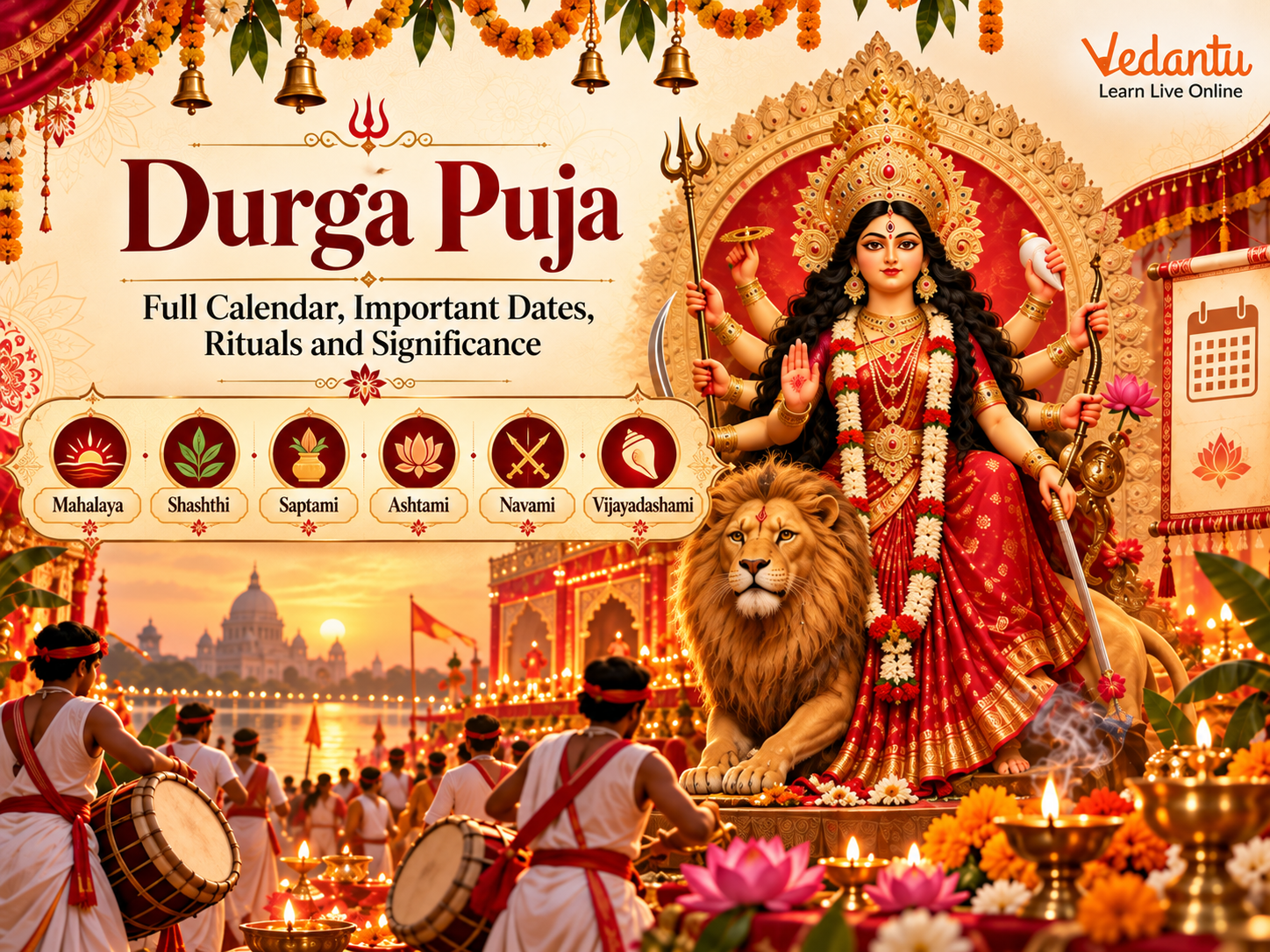
The celebrations begin earlier with Mahalaya on Saturday, 10 October 2026, which marks the end of Pitru Paksha and the beginning of Devi Paksha. The main festivities include Maha Shashthi, Maha Saptami, Maha Ashtami, Maha Navami and Vijaya Dashami.
Decorated pandals, traditional dhak music, Goddess Durga idols, cultural performances, festive food and community gatherings make Durga Puja one of India's most important religious and cultural celebrations.
According to the West Bengal government's 2026 Durga Puja calendar, the major festival dates run from 17 to 21 October. Exact puja rituals and Muhurats should be checked against the local Panchang.
Also Read: Navratri Colours and Their Significance
Durga Puja 2026 Calendar: Full List of Dates
The main Durga Puja celebrations in West Bengal follow the dates below.
Important 2026 Calendar Note: The West Bengal government lists Maha Navami on 20 October and Vijaya Dashami on 21 October. Drik Panchang lists Maha Navami Puja on 19 October under its tithi-based observance rules, with Navami Tithi continuing until 20 October. Drik Panchang also lists the general Vijayadashami observance on 20 October and Bengali Vijayadashami on 21 October.
This difference occurs because religious observances depend on lunar tithis, regional traditions and specific rules for selecting the puja day. Always follow your local Panchang for individual rituals.
Significance of Each Day of Durga Puja 2026
Each stage of Durga Puja has its own rituals and cultural importance. The festival begins with the invocation of Goddess Durga and concludes with her ceremonial farewell.
Mahalaya – 10 October 2026
Mahalaya marks the end of Pitru Paksha and the beginning of Devi Paksha, the period associated with the worship of Goddess Durga.
In Bengal, families traditionally listen to the Mahishasura Mardini devotional programme, which narrates the Goddess's victory over Mahishasura.
Many devotees also perform Tarpan, offering prayers and water in remembrance of their ancestors.
The tradition of Chokkhu Daan, or painting the eyes of Goddess Durga's idol, is closely associated with preparations for the festival, although the exact timing varies among artisans and traditions.
Maha Shashthi – 17 October 2026
Maha Shashthi marks the beginning of the main Durga Puja festivities in West Bengal.
Rituals such as Bodhon, Amantran and Adhivas are associated with welcoming and invoking Goddess Durga.
Beautifully decorated pandals open for visitors, and families gather to offer prayers and participate in community celebrations.
Maha Shashthi is also an important occasion for wearing traditional clothes, visiting pandals and enjoying cultural programmes.
Maha Saptami – 18 October 2026
Maha Saptami is associated with the Nabapatrika Snan ritual, in which nine plants are ceremonially bathed and brought into the puja area.
The Nabapatrika represents different divine powers and is an important part of Bengali Durga Puja traditions.
Devotees offer prayers, flowers and prasad to Goddess Durga while community celebrations continue across pandals.
Maha Ashtami – 19 October 2026
Maha Ashtami, also called Durga Ashtami or Mahashtami, falls on Monday, 19 October 2026, according to Drik Panchang.
It is one of the most important days of Durga Puja. Devotees offer Anjali, participate in special worship and seek the blessings of Goddess Durga.
Sandhi Puja, a significant ritual performed at the transition between Ashtami and Navami, also takes place on this day.
Sandhi Puja Muhurat for Delhi: 10:27 AM to 11:15 AM on 19 October 2026, according to Drik Panchang.
The Ashtami Tithi begins at 8:27 AM on 18 October and ends at 10:51 AM on 19 October in the supplied Delhi calendar.
The Sandhi Puja timing should be checked separately for the location where worship is performed.
Maha Navami – 19–20 October 2026
Maha Navami is associated with the worship of Goddess Durga as Mahishasuramardini, the destroyer of Mahishasura.
According to Drik Panchang, significant Maha Navami Puja observances fall on 19 October, while the Navami Tithi continues into 20 October.
The West Bengal government's festival calendar lists 20 October 2026 as Maha Navami.
Devotees perform special prayers, offer Bhog and participate in Navami Homa or Havan according to their traditions.
The supplied Drik Panchang calendar gives these Delhi timings:
Families should follow their regional Panchang and temple guidance when selecting the appropriate Navami ritual time.
Vijaya Dashami – 21 October 2026 in Bengal
Bengali Vijaya Dashami is observed on Wednesday, 21 October 2026, marking the ceremonial farewell to Goddess Durga.
In Bengali traditions, married women may participate in Sindoor Khela, offering vermilion to the Goddess and applying it to one another as part of the farewell celebrations.
The festival concludes with Durga Visarjan, the immersion of Goddess Durga's idol according to local customs and authorised arrangements.
Drik Panchang lists the general Vijayadashami observance and a Durga Visarjan Muhurat on 20 October 2026 for Delhi, while separately identifying Bengali Vijayadashami on 21 October.
The exact Visarjan schedule depends on local religious traditions, community arrangements and applicable guidelines.
What Is the History and Religious Significance of Durga Puja?
Durga Puja celebrates Goddess Durga's victory over Mahishasura, a powerful demon described in Hindu mythology.
According to the traditional account, Mahishasura gained great power and threatened the gods. Goddess Durga emerged through divine energy and defeated him after a fierce battle.
The story represents the victory of righteousness over evil and the importance of strength, courage and determination.
Goddess Durga is also worshipped as a manifestation of Shakti, the divine feminine power associated with creation, protection and transformation.
Beyond its religious significance, Durga Puja celebrates family bonds, community participation, artistic expression and the preservation of Indian cultural traditions.
How Is Durga Puja 2026 Celebrated Across India?
Although Durga Puja is especially prominent in West Bengal, it is also celebrated in several other parts of India.
In Kolkata, Durga Puja pandals are especially known for their artistic themes and creative designs.
Families visit different pandals, offer prayers, enjoy traditional food and take part in cultural programmes.
In many communities, the festival also encourages charitable activities, community service and support for local artisans.
What Are the Main Rituals Performed During Durga Puja?
Durga Puja includes several traditional ceremonies dedicated to Goddess Durga.
Common rituals include:
Bodhon: Invoking Goddess Durga during the main festival celebrations.
Nabapatrika Snan: Ceremonial bathing of nine plants during Maha Saptami.
Pushpanjali: Offering flowers and prayers to the Goddess.
Sandhi Puja: Special worship at the transition between Ashtami and Navami.
Navami Homa: A sacred fire ritual performed according to religious tradition.
Dhunuchi Naach: A devotional dance commonly associated with Bengali Durga Puja.
Sindoor Khela: A farewell tradition observed by many married Bengali women.
Durga Visarjan: Ceremonial immersion of the Goddess's idol.
These rituals may differ according to region, family custom and temple tradition.
Cultural Importance of Durga Puja 2026
Durga Puja is not only a religious festival but also a celebration of India's artistic and cultural heritage.
Community pandals bring together artists, sculptors, musicians, decorators and local organisations.
Traditional music, dance, festive food and handcrafted decorations contribute to the festival's unique atmosphere.
For students, Durga Puja offers opportunities to learn about mythology, cultural diversity, creativity and teamwork.
The festival also encourages respect for traditions and helps younger generations understand India's rich cultural heritage.
Also Check: 9 Lessons to Learn From Navratri
Chaiti Durga Puja 2026
Apart from the main autumn festival, Chaiti Durga Puja is observed during Chaitra Navratri in March or April.
Chaitra Navratri 2026 began on 19 March, with the traditional nine-day period extending through 27 March.
Chaiti Durga Puja is dedicated to Goddess Durga and is observed through prayers, fasting and regional religious traditions.
Although the celebrations are generally less elaborate than the major autumn Durga Puja festivities in Bengal, they share the central theme of Goddess worship and devotion.
How Can Students Celebrate Durga Puja Responsibly?
Students and families can celebrate Durga Puja while respecting cultural traditions and caring for the environment.
Visit community pandals and learn about their artistic themes.
Participate in school cultural programmes and educational activities.
Create drawings, posters or presentations about Goddess Durga.
Learn the meaning of important rituals such as Sandhi Puja and Visarjan.
Support local artists and traditional crafts.
Avoid littering and unnecessary plastic waste during celebrations.
Follow local guidelines for idol immersion and environmental protection.
These activities help students understand the festival while developing cultural awareness and social responsibility.
Quick Takeaways: Durga Puja 2026 Important Dates
The dates above distinguish the West Bengal festival calendar from tithi-based observances listed by Drik Panchang.
Celebrate Durga Puja 2026 With Devotion and Cultural Unity
Durga Puja 2026 brings together faith, art, music, family traditions and community celebrations.
From Mahalaya on 10 October to Bengali Vijaya Dashami on 21 October, the festival honours Goddess Durga and celebrates the victory of good over evil.
Whether through decorated pandals in Kolkata, traditional rituals in Odisha or community celebrations in Assam and other states, Durga Puja reflects the diversity and shared cultural heritage of India.
Celebrate responsibly, respect local traditions and enjoy the festival with family and friends.
Happy Durga Puja 2026!
FAQs on Durga Puja 2026: Full Calendar, Important Dates, Rituals and Significance
1. When is Durga Puja in 2026?
The main Durga Puja celebrations in West Bengal take place from 17 to 21 October 2026. Mahalaya is on 10 October, Maha Ashtami is on 19 October, and Bengali Vijaya Dashami is on 21 October.
2. When is Mahalaya in 2026?
Mahalaya falls on Saturday, 10 October 2026. It marks the end of Pitru Paksha and the beginning of Devi Paksha.
3. When is Maha Ashtami in Durga Puja 2026?
Maha Ashtami falls on Monday, 19 October 2026, according to Drik Panchang. Sandhi Puja is also observed on this date.
4. When is Maha Navami in 2026?
The West Bengal government's festival calendar lists Maha Navami on 20 October 2026. Drik Panchang also identifies Maha Navami Puja on 19 October under its tithi-based observance rules. Local traditions determine the appropriate ritual date.
5. When is Bengali Vijaya Dashami in 2026?
Bengali Vijaya Dashami falls on Wednesday, 21 October 2026. The general Vijayadashami observance is listed on Tuesday, 20 October.
6. What is Sandhi Puja during Durga Puja?
Sandhi Puja is a special ritual performed during the transition between Ashtami and Navami. It is dedicated to Goddess Durga and is considered an important part of Bengali Durga Puja.
7. Why is Durga Puja celebrated?
Durga Puja celebrates Goddess Durga's victory over Mahishasura. It symbolises the triumph of righteousness over evil and honours the divine feminine power known as Shakti.
8. What is the significance of Sindoor Khela?
Sindoor Khela is a traditional Bengali farewell ritual during Vijaya Dashami. Many married women offer vermilion to Goddess Durga and apply it to one another as part of the celebrations.
9. What is the difference between Durga Puja and Navratri?
Navratri is a broader nine-night festival dedicated to Goddess Durga and her different forms. Durga Puja is a major regional expression of Goddess worship, especially associated with Bengal and eastern India, with distinctive rituals and cultural traditions.
10. Is Durga Puja celebrated outside West Bengal?
Yes. Durga Puja is also celebrated in Odisha, Assam, Tripura, Bihar, Jharkhand and many other regions through community pandals, worship ceremonies and cultural programmes.