When Is Dussehra in 2026? Date and Festival Significance
Dussehra 2026 will be celebrated on Tuesday, 20 October 2026, in India. Also known as Vijayadashami or Dasara, the festival marks the victory of Lord Rama over Ravana and is associated with Goddess Durga's triumph over Mahishasura. It celebrates the victory of good over evil and follows the nine-night Shardiya Navratri festival.
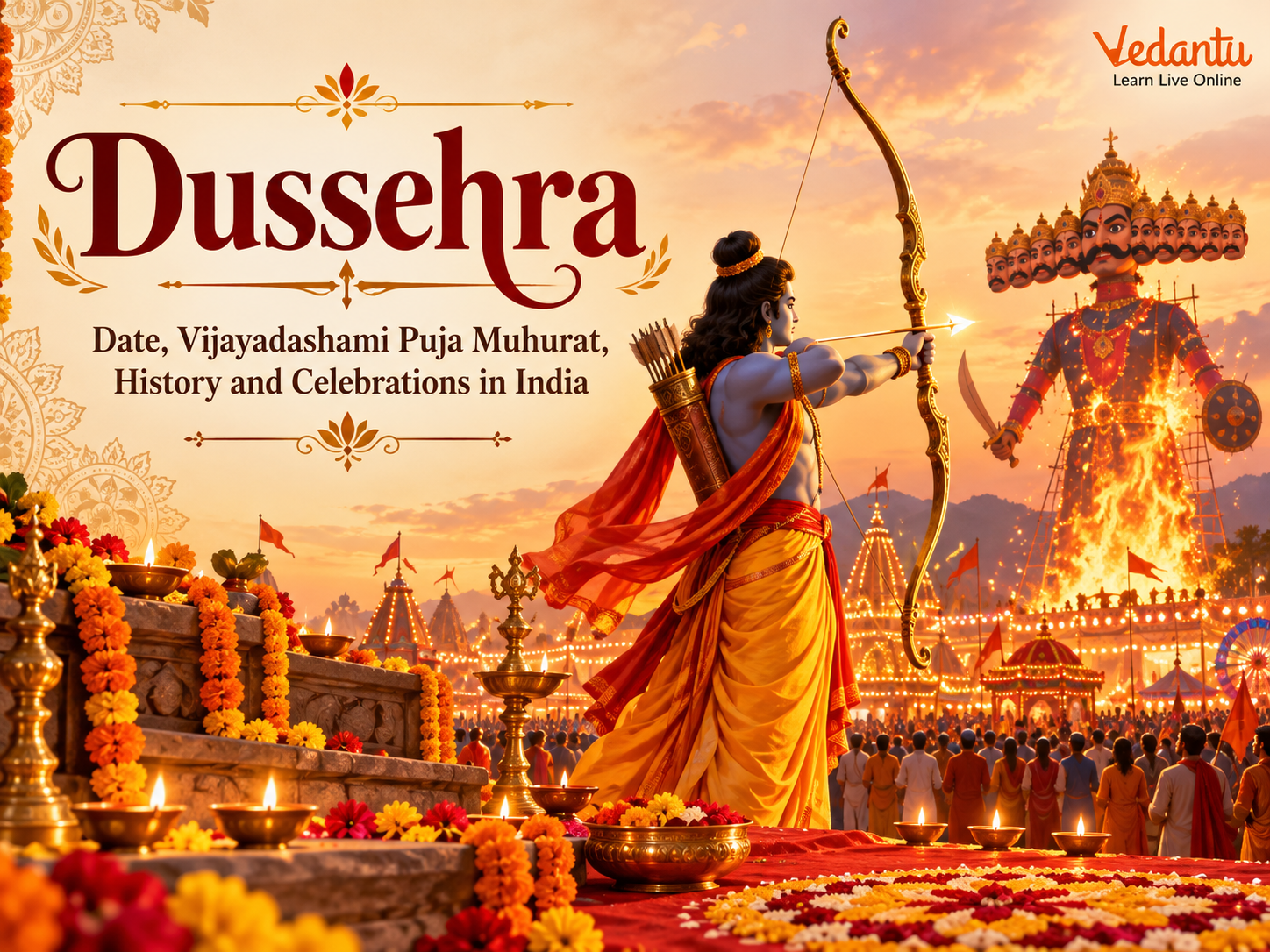
According to Drik Panchang, the Vijayadashami Puja Muhurat in Delhi is from 1:59 PM to 2:45 PM on 20 October 2026. Dussehra celebrations across India include Ramlila performances, Ravan Dahan, religious prayers, community fairs and regional traditions.
If you are searching for the Dussehra 2026 date in the India calendar, the main Vijayadashami festival falls in October, not May or June. Ganga Dussehra, which falls in May 2026, is a separate Hindu festival dedicated to Goddess Ganga.
Dussehra 2026 Date in India: Important Festival Details
The following table provides essential information about Dussehra in 2026.
Calendar reference: Drik Panchang, Delhi, India, 2026. Regional festivals may have separate observance dates and traditions.
Vijayadashami 2026 Puja Muhurat and Dashami Tithi Timings
Vijayadashami is observed on the Dashami Tithi of Shukla Paksha in the Hindu month of Ashwin.
According to Drik Panchang for Delhi, the following timings apply to Dussehra 2026.
Note: These Muhurat timings are for Delhi, India. The appropriate timings may vary by location and should be checked against the local Panchang.
What Is the Significance of Vijay Muhurat?
Vijay Muhurat is regarded as an auspicious period associated with Vijayadashami.
Traditional rituals such as Aparajita Puja, Shami Puja and Seema Avalanghan may be performed during the appropriate afternoon period, according to regional customs.
Many devotees also consider Vijayadashami a favourable occasion for beginning new activities, seeking blessings and reflecting on the importance of righteousness.
Ravan Dahan usually takes place during evening community celebrations. Its exact timing depends on the local programme and should not be confused with the afternoon Vijay Muhurat.
Why Is Dussehra Celebrated? History and Religious Significance
Dussehra is celebrated to honour the victory of righteousness over evil. The festival is associated with two important Hindu mythological traditions.
Lord Rama's Victory Over Ravana
According to the Ramayana, Ravana, the king of Lanka, abducted Sita, the wife of Lord Rama.
Lord Rama, supported by Lakshmana, Hanuman and the Vanara army, fought Ravana to rescue Sita. After a fierce battle, Rama defeated Ravana.
Dussehra commemorates this victory and highlights the importance of courage, duty, truth and justice.
In many parts of North India, the story is presented through Ramlila performances that culminate in the symbolic burning of Ravana's effigy.
Goddess Durga's Victory Over Mahishasura
Another important tradition associates Vijayadashami with Goddess Durga's victory over the demon Mahishasura.
According to Hindu mythology, Goddess Durga defeated Mahishasura after a prolonged battle, restoring peace and protecting righteousness.
This victory is especially significant in the context of Navratri and Durga Puja, when devotees worship Goddess Durga and celebrate her divine power.
The two traditions share a central message: good ultimately triumphs over evil.
What Does the Word Dussehra Mean?
Dussehra is commonly associated with the defeat of Ravana, the ten-headed king of Lanka.
The name Vijayadashami combines Vijaya, meaning victory, and Dashami, meaning the tenth lunar day.
The festival is celebrated on Ashwin Shukla Dashami and represents victory, renewal and the importance of choosing the right path.
How Is Dussehra Celebrated in India?
Dussehra is celebrated through religious rituals, cultural performances, festive gatherings and local traditions.
Although the celebrations differ between regions, they share a common message of victory, renewal and community participation.
Ramlila: Bringing the Ramayana to Life
Ramlila is a traditional theatrical performance that presents episodes from the Ramayana.
Actors portray characters such as Lord Rama, Sita, Lakshmana, Hanuman and Ravana through dialogue, songs and dramatic performances.
Ramlila is especially popular in Delhi, Uttar Pradesh and other parts of northern India.
Historic performances in Ayodhya, Ramnagar and Varanasi bring communities together and help preserve traditional storytelling.
UNESCO recognises Ramlila as part of the Intangible Cultural Heritage of Humanity.
Ravan Dahan: Symbolising the Victory of Good Over Evil
Ravan Dahan is one of the most recognisable Dussehra traditions.
Large effigies of Ravana, his brother Kumbhakarna and his son Meghnath are erected at public celebration grounds.
During the concluding celebrations, the effigies are set alight to symbolise the defeat of evil.
The event is commonly accompanied by cultural programmes, public gatherings and festive activities.
Families attending Ravan Dahan should follow organiser instructions and maintain a safe distance from fireworks and burning structures.
Dussehra Melas and Community Celebrations
Dussehra Melas are traditional fairs organised in many Indian towns and cities.
Visitors can enjoy cultural performances, traditional food, handicraft stalls, games and community activities.
These fairs provide opportunities for local artists, performers and small businesses to participate in the celebrations.
For children, Dussehra Melas are also a way to experience India's folk traditions and understand the festival's cultural significance.
Dussehra Celebrations Across Different States of India
Dussehra has several regional forms, each reflecting local religious and cultural traditions.
Dussehra in Delhi, Ayodhya and Varanasi
North Indian Dussehra celebrations are strongly connected with Lord Rama's victory over Ravana.
Delhi hosts Ramlila performances and public Ravan Dahan events. Ayodhya celebrates the Ramayana traditions associated with Lord Rama.
Ramnagar, near Varanasi, is especially known for its historic Ramlila performances, which attract devotees and visitors interested in traditional Indian theatre.
Kullu Dussehra 2026 in Himachal Pradesh
Kullu Dussehra is known for its distinctive traditions involving Lord Raghunath and local deities.
Unlike many Dussehra celebrations that conclude on Vijayadashami, the festival in Kullu begins around this period and continues for several days.
International Kullu Dussehra 2026 is scheduled from 21 to 27 October at Dhalpur Maidan, according to the Kullu district administration.
The festival includes traditional Rath Yatra, gatherings of local deities, folk dance and cultural performances.
Bastar Dussehra in Chhattisgarh
Bastar Dussehra is a distinctive regional festival associated with the worship of Goddess Danteshwari and local religious traditions.
Unlike Dussehra celebrations centred on Ravana Dahan, Bastar's festival is known for rituals, community participation and ceremonial processions.
Its traditions reflect the cultural heritage of the Bastar region.
Vijayadashami in West Bengal
In West Bengal, Vijaya Dashami marks the conclusion of Durga Puja celebrations.
Families participate in farewell rituals, including Sindoor Khela in communities where it is traditionally observed.
Durga idols are ceremonially immersed according to local customs and authorised arrangements.
Drik Panchang lists Bengali Vijayadashami on Wednesday, 21 October 2026, while the general Vijayadashami observance is on 20 October.
For the complete Durga Puja calendar and rituals, explore Vedantu's Durga Puja 2026 festival guide.
Mysuru Dasara in Karnataka
Mysuru Dasara is one of Karnataka's best-known cultural festivals.
It is associated with Goddess Chamundeshwari, the historic Mysore Palace, royal traditions and ceremonial processions.
The festival features distinctive cultural and historical traditions that deserve separate coverage.
Read Vedantu's dedicated Mysore Dasara 2026 page for the festival calendar, Jamboo Savari and Mysuru-specific celebrations.
When Do Navratri and Dussehra Begin and End in 2026?
Many readers searching for the Dussehra 2026 start date and end date are referring to the Navratri celebrations that lead up to Vijayadashami.
The important dates are:
Dussehra itself is the main Vijayadashami festival day. The preceding Navratri celebrations extend across multiple days.
The phrase Dussehra 2026 10 days generally refers to the traditional Navratri-to-Vijayadashami festive period, rather than ten separate days of Dussehra.
For more details about the nine-night festival, read Navratri Celebrations Across India.
Dussehra and Diwali 2026: Dates and Festival Timeline
Dussehra and Diwali are among India's most important autumn festivals.
In 2026, Dussehra falls on 20 October, while Diwali or Deepavali is celebrated on 8 November.
The two main festival dates are 19 calendar days apart in 2026.
Dussehra is associated with the victory of Lord Rama over Ravana and Goddess Durga over Mahishasura. Diwali has several religious and regional associations, including the return of Lord Rama to Ayodhya in the Ramayana tradition and the worship of Goddess Lakshmi.
Although both festivals celebrate positive values and renewal, they have their own rituals and significance.
Dussehra Holidays 2026: School Holidays and Telangana Schedule
Dussehra is a significant festival holiday in many parts of India. However, Dussehra holidays in 2026 do not follow one nationwide school vacation schedule.
Schools follow holiday calendars issued by their state education departments, education boards or individual institutions.
Dussehra Holidays 2026 for Schools in Telangana
According to the Telangana 2026–27 academic-calendar information reported by educational news sources, the Dasara vacation is scheduled as follows:
The Telangana government's 2026 holiday calendar also lists Maha Navami on 19 October, Vijayadashami on 20 October and the following day of Vijayadashami on 21 October.
Students and parents should confirm their school-specific reopening schedule through official notices, particularly if the institution follows a different academic calendar.
Are Dussehra Holidays the Same for All Schools in India?
No. The number of holidays varies according to state government notifications, school calendars, local traditions and institutional policies.
Some schools may observe a short break around Vijayadashami, while others provide a longer autumn vacation.
For accurate dates, students should refer to their school circulars and their state's education department.
Ganga Dussehra 2026 vs Vijayadashami: Are They the Same Festival?
Ganga Dussehra and Vijayadashami are two different Hindu festivals, although both contain the word Dussehra.
Ganga Dussehra is associated with the descent of Goddess Ganga to Earth. Vijayadashami marks the victory of good over evil and follows Shardiya Navratri.
According to Drik Panchang, Ganga Dussehra 2026 fell on Monday, 25 May 2026, not in June.
This distinction is especially useful for searches such as Jeth ka Dussehra kab hai 2026, Ganga Dussehra 2026 June, or Dussehra 2026 May.
The exact Ganga Dussehra puja timings depend on the city and local Panchang. They should not be confused with the October Vijayadashami Muhurat.
What Can Students Learn From Dussehra?
Dussehra offers valuable opportunities to understand Indian mythology, cultural traditions and the importance of ethical values.
Students can learn about:
Truth and righteousness: The importance of choosing the right path.
Courage: Standing up against wrongdoing.
Responsibility: Fulfilling duties with honesty and dedication.
Humility: Understanding the consequences of arrogance.
Cultural diversity: Respecting the different ways Indian communities celebrate festivals.
These lessons connect traditional stories with values that students can practise in everyday life.
How Can Schools and Families Celebrate Dussehra Responsibly?
Schools and families can use Dussehra as an opportunity for cultural learning and meaningful celebrations.
Activities can include Ramayana storytelling, short Ramlila performances, poster-making competitions and discussions about the victory of good over evil.
Children can also learn about the distinctive celebrations of Kullu, Bastar, Mysuru and Bengal through presentations or cultural exhibitions.
During public celebrations, families should follow safety instructions, avoid unnecessary waste and respect local environmental guidelines.
Happy Dussehra 2026 Wishes and Messages
Share these short Dussehra wishes with family, friends and teachers:
"Happy Dussehra 2026! May truth, courage and kindness guide you towards a brighter future."
"Wishing you and your family a joyful Vijayadashami filled with peace, prosperity and happiness."
"May the victory of good over evil inspire us to choose honesty and compassion every day."
"Celebrate the spirit of Dussehra with hope, positivity and new beginnings."
"On this Vijayadashami, may Lord Rama's example inspire strength, wisdom and righteousness."
Dussehra Wishes in Hindi
"दशहरा 2026 की हार्दिक शुभकामनाएं! आपके जीवन में सुख, शांति और सफलता बनी रहे।"
"विजयादशमी का यह पावन पर्व आपके जीवन में नई आशा और खुशियां लेकर आए।"
"बुराई पर अच्छाई की जीत का यह त्योहार हमें सत्य और धर्म के मार्ग पर चलने की प्रेरणा देता रहे। शुभ दशहरा!"
Conclusion: Celebrate Dussehra 2026 With Hope and Positivity
Dussehra 2026 falls on Tuesday, 20 October, bringing together religious traditions, cultural performances and community celebrations across India.
From Ramlila and Ravan Dahan in North India to Kullu Dussehra in Himachal Pradesh and Vijaya Dashami in Bengal, each celebration reflects India's cultural diversity.
The festival reminds us of the importance of courage, righteousness and kindness. Celebrate responsibly, learn about different traditions and share the joy of Vijayadashami with family and friends.
Happy Dussehra 2026!
FAQs on Dussehra 2026: Date, Vijayadashami Puja Muhurat, History and Celebrations in India
1. When is Dussehra in 2026?
Dussehra 2026 will be celebrated on Tuesday, 20 October 2026, across India. It is also known as Vijayadashami or Dasara and follows Shardiya Navratri.
2. 2026 mein Dussehra kab hai? (2026 में दशहरा कब है?)
वर्ष 2026 में दशहरा 20 अक्टूबर, मंगलवार को मनाया जाएगा। यह त्योहार भगवान राम की रावण पर विजय और बुराई पर अच्छाई की जीत का प्रतीक है।
3. Dussehra kab hai 2026 mein? (दशहरा कब है 2026 में?)
दशहरा 2026 की तारीख 20 अक्टूबर है। दिल्ली के लिए द्रिक पंचांग के अनुसार विजय मुहूर्त दोपहर 1:59 बजे से 2:45 बजे तक है।
4. What is the Dussehra 2026 date in India?
The Dussehra festival 2026 date in India is 20 October, Tuesday. Regional celebrations such as Bengali Vijayadashami and Mysuru Dasara may follow different observance dates.
5. When are Dussehra and Diwali in 2026?
Dussehra falls on Tuesday, 20 October 2026, and Diwali falls on Sunday, 8 November 2026. Both festivals are celebrated in the autumn season but have different religious significance and traditions.
6. What is the Dussehra 2026 start date and end date?
Dussehra is primarily observed on 20 October 2026. The associated Shardiya Navratri celebrations begin on 11 October. Some regional festivals, such as Kullu Dussehra, continue for several days.
7. How many days is Dussehra celebrated in 2026?
Vijayadashami is observed on one principal festival day. The wider Navratri and Dussehra festive period traditionally includes nine nights of worship followed by Vijayadashami, while some regional celebrations extend longer.
8. When is Kullu Dussehra 2026?
According to the Kullu district administration, International Kullu Dussehra 2026 is scheduled from 21 to 27 October at Dhalpur Maidan in Himachal Pradesh.
9. What are the Dussehra holidays 2026 for schools?
Dussehra school holidays differ by state, board and institution. Students should follow their school's approved academic calendar rather than assuming that every school has the same number of holidays.
10. When are Dussehra holidays for schools in Telangana in 2026?
The Telangana Dasara school vacation is scheduled from 10 to 22 October 2026, with reopening on 23 October, according to the reported 2026–27 academic calendar. Parents should confirm their institution's official notice.
11. Why do people burn Ravana's effigy on Dussehra?
Ravan Dahan symbolises Lord Rama's victory over Ravana and the defeat of evil. It is commonly performed during public Dussehra celebrations, especially in North India.
12. What is the difference between Dussehra and Mysore Dasara?
Dussehra is the broader festival of Vijayadashami celebrated across India. Mysore Dasara is a distinctive regional celebration in Karnataka associated with Goddess Chamundeshwari, the Mysore Palace and the Jamboo Savari procession.
13. What is the significance of Vijayadashami 2026?
Vijayadashami celebrates the victory of good over evil. It is associated with Lord Rama's victory over Ravana and Goddess Durga's victory over Mahishasura, and is observed through religious rituals and cultural traditions.