When Is Mysore Dasara 2026 and Why Is It Celebrated?
Mysore Dasara 2026 is celebrated from Sunday, 11 October, to Wednesday, 21 October 2026, in Mysuru, Karnataka. The grand festival, also called Mysuru Dasara, Mysore Dussehra or Nada Habba, honours Goddess Chamundeshwari's victory over the demon Mahishasura and celebrates Karnataka's royal and cultural heritage.
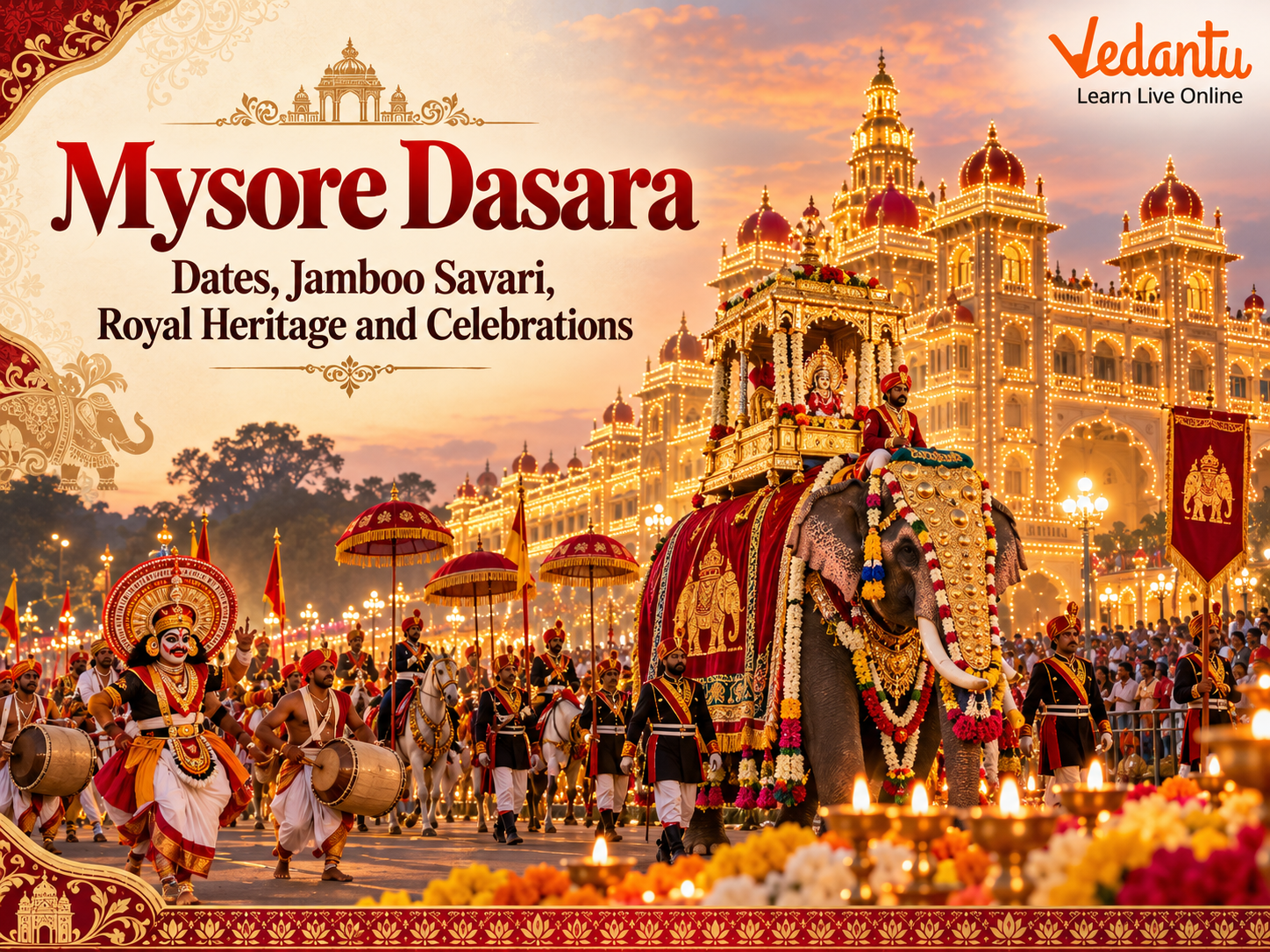
The celebrations began on 11 October with special prayers at Chamundeshwari Temple on Chamundi Hill. The main highlight is the Jamboo Savari procession on 21 October 2026, featuring the idol of Goddess Chamundeshwari carried in a golden howdah on a decorated elephant.
During Dasara, Mysore Palace is illuminated, cultural performances take place across the city, and visitors enjoy traditional music, folk dances, exhibitions, food festivals and ceremonial events.
The Mysore Dasara 2026 date is different from the general Vijayadashami date followed in many other parts of India. Drik Panchang lists the Mysuru procession on 21 October, while the general Dussehra observance falls on 20 October.
Also Read: Dussehra 2026: Date, Puja Muhurat and Celebrations in India
Mysore Dasara 2026 Dates and Important Festival Details
The following table provides the essential information about the Dasara 2026 celebrations in Mysuru.
Mysore Dasara is traditionally described as a ten-day festival associated with Navratri and Vijayadashami. However, the announced celebrations in 2026 extend across 11 calendar dates, from 11 to 21 October.
This distinction is important when reading the Mysore Dasara 2026 festival schedule.
Mysore Dasara 2026 Calendar: Important Events and Schedule
The 2026 celebrations include religious ceremonies, Palace programmes, cultural events and public activities across Mysuru.
Schedule reference: Mysuru Dasara 2026 programme published on the festival website. Dates, venues and event arrangements are subject to organiser updates.
What Happened at the Mysore Dasara 2026 Inauguration?
The 2026 festival began on 11 October at Chamundeshwari Temple on Chamundi Hill.
The inauguration was conducted by Sri Abhinava Gavisiddeshwara Swami of Gavi Mutt during the scheduled Dhanur Lagna Muhurat, from 11:50 AM to 12:13 PM.
The ceremony included prayers to Goddess Chamundeshwari and marked the beginning of Mysuru's cultural celebrations.
The festival programme also includes Palace performances, exhibitions and illumination throughout the celebration period.
Mysore Dasara 2026 Vijayadashami Muhurat and Jamboo Savari Timing
According to Drik Panchang for Mysore, Karnataka, Mysore Dasara falls on Wednesday, 21 October 2026.
These timings are specific to Mysuru, Karnataka, and should not be replaced with Delhi's Vijayadashami timings.
Jamboo Savari 2026: Ceremony and Procession Schedule
The Mysuru Dasara programme lists the following ceremonies on Wednesday, 21 October:
The ceremonies and Drik Panchang Muhurat are different types of timings. The Vijay Muhurat does not represent the exact departure time of the Jamboo Savari procession.
Visitors should confirm any last-minute changes to the procession route or schedule through the Mysuru Dasara organisers.
Why Is Mysore Dasara Celebrated? History and Religious Significance
Mysore Dasara celebrates the victory of Goddess Chamundeshwari over Mahishasura, symbolising the triumph of good over evil.
According to Hindu mythology, Mahishasura was a powerful demon who troubled the gods and other beings. Goddess Chamundeshwari, regarded as a form of Goddess Durga, defeated him and restored righteousness.
The festival honours this victory through worship, processions and cultural celebrations.
The name Mysuru is traditionally associated with Mahishasura and the area's connection with the Goddess's victory.
Chamundi Hill, home to the Chamundeshwari Temple, holds particular religious importance in the city's Dasara celebrations.
Why Is Mysore Dasara Called Nada Habba?
Mysore Dasara is popularly called Nada Habba, meaning the festival of the state or land.
It is celebrated as Karnataka's State Festival and brings together local history, religious traditions, performing arts and public celebrations.
The festival represents not only devotion to Goddess Chamundeshwari but also the cultural identity and artistic heritage of Karnataka.
History and Origin of Mysore Dasara: The Wadiyar Royal Tradition
The history of Mysore Dasara connects the traditions of the Vijayanagara Empire with the Wadiyar rulers of Mysuru.
The Vijayanagara rulers celebrated Mahanavami with ceremonies, military displays, performances and royal gatherings. Elements of these traditions later influenced Mysore Dasara.
In 1610, Raja Wadiyar I established the royal Dasara celebration at Srirangapatna, an important milestone in the festival's history.
Over the following centuries, the Wadiyar dynasty continued and expanded the celebrations.
The royal Durbar, ceremonial processions, cultural performances and Palace traditions became important parts of Mysuru's identity.
Mysore Dasara Historical Timeline
The Wadiyar family's ceremonial traditions remain an important part of Mysore Dasara, while public events are organised for residents and visitors.
What Is the Royal Durbar During Mysore Dasara?
The royal Durbar is a ceremonial gathering associated with the Wadiyar family and Mysore Palace.
During Navratri, the family maintains traditional observances involving the royal throne, prayers and Palace ceremonies.
These rituals represent the continuity of Mysuru's royal heritage.
Although the festival is now organised as a state celebration, its royal traditions remain an important part of the city's cultural identity.
What Is Jamboo Savari During Mysore Dasara?
Jamboo Savari, also called Jumbo Savari or Jumboo Savari, is the grand procession held during Mysore Dasara.
It is the festival's best-known event and one of Karnataka's important cultural processions.
The procession features a decorated elephant carrying the idol of Goddess Chamundeshwari in a golden howdah, known as the Ambari.
The golden Ambari is traditionally described as weighing approximately 750 kilograms.
It symbolises the royal heritage and devotional traditions associated with Mysore Dasara.
What Happens During the Mysore Dasara Elephant Procession?
The procession brings together several important elements of Karnataka's culture.
These commonly include:
Decorated elephants participating in the ceremonial procession.
The idol of Goddess Chamundeshwari carried in the golden Ambari.
Traditional musicians and folk dance groups.
Police bands and ceremonial units.
Cultural tableaux representing the heritage of Karnataka.
Decorated horses and other ceremonial participants.
The procession begins at Mysore Palace and moves towards Bannimantap.
It attracts large crowds who gather to witness one of the festival's most distinctive traditions.
How Are the Dasara Elephants Prepared?
The elephants selected for Jamboo Savari are prepared for the procession through a planned process involving forest officials, veterinary assessment, transportation and training.
The preparations include helping the elephants become familiar with the route, crowds, ceremonial equipment and the atmosphere of the event.
Their welfare, behaviour and ability to participate safely are important considerations.
In 2026, the festival programme includes the traditional Gaja Payana journey and Gaja Puja ceremonies before the main celebrations.
Mysore Palace Dussehra: Illumination and Royal Celebrations
Mysore Palace, also known as Amba Vilas Palace, is one of the main attractions during Mysore Dasara.
The historic Palace, associated with the Wadiyar dynasty, becomes a centre for cultural programmes and royal traditions.
Its distinctive Indo-Saracenic architecture and illuminated exterior make it one of Mysuru's most recognisable landmarks.
Mysore Palace Illumination During Dasara 2026
During Dasara, Mysore Palace is illuminated with approximately 97,000 electric bulbs, creating a striking view after sunset.
The 2026 festival programme lists Palace illumination every evening from 7:00 PM to 10:00 PM, with extended illumination on the final night.
The lighting is among the festival's most popular attractions and is especially associated with the celebration of Karnataka's royal heritage.
Visitors can enjoy the illuminated Palace while also experiencing nearby cultural events and festive decorations.
Cultural Performances at Mysore Palace
The Palace and surrounding cultural venues host music, dance and traditional performances during Dasara.
Programmes may include Carnatic music, classical dance, folk performances and presentations by regional artists.
The events provide opportunities to experience Karnataka's musical and performing-arts traditions.
Mysore Dasara 2026: Major Cultural Events and Attractions
Mysore Dasara extends beyond the royal procession, with cultural activities across the city.
Yuva Dasara and Youth Cultural Events
Yuva Dasara and related youth celebrations provide platforms for young artists, performers and students.
Programmes may include music, dance, contemporary performances and cultural presentations.
These events bring younger audiences into Mysuru's wider festival celebrations.
Torchlight Parade at Bannimantap
The Torchlight Parade, locally called Panjina Kavayathu, is a ceremonial programme associated with the conclusion of Mysore Dasara.
It features formations, bands, cavalry and coordinated displays.
The 2026 programme lists Torchlight Parade events at Bannimantap on 20 and 21 October, beginning at 7:00 PM.
The 21 October programme forms part of the festival's grand finale.
Aahara Mela: Mysore Dasara Food Festival
The Aahara Mela brings together food stalls and traditional dishes from different regions.
For 2026, the programme lists the food festival from 11 to 25 October at Maharaja's College Ground.
The event provides visitors with an opportunity to experience different cuisines and food traditions.
Dasara Flower Show and Exhibitions
The Dasara Fruit and Flower Show is scheduled from 11 to 21 October 2026 at Kuppanna Park.
It includes decorative floral arrangements, themed displays and horticultural exhibits.
Other exhibitions showcase handicrafts, artwork, traditional skills and local products.
Kusti, Sports and Heritage Activities
Mysore Dasara also includes wrestling, sporting competitions, heritage walks and cultural exhibitions.
Traditional Kusti competitions reflect Mysuru's long-standing interest in physical training and royal sports.
Heritage walks provide opportunities to learn about the city's historic buildings, public spaces and architecture.
These programmes make Mysore Dasara a broader cultural festival rather than only a single religious ceremony.
What Is the Theme of Mysore Dasara 2026?
Mysore Dasara is traditionally associated with the victory of good over evil, devotion to Goddess Chamundeshwari and the preservation of Karnataka's heritage.
The celebration does not need one universal theme to define every event.
Different programmes and exhibitions may have individual themes.
For example, the 2026 Dasara Fruit and Flower Show uses the theme Prajaprabhutvada Habba, meaning the festival of democracy.
Other activities highlight cultural diversity, traditional arts, environmental awareness, community participation and local heritage.
These programme-specific themes should not be presented as one officially declared theme for the entire festival.
Mysore Dasara 2026 Tickets, Gold Card and Entry Information
Many Mysore Dasara cultural activities can be experienced in public areas, but reserved seating and some major events may require tickets or passes.
The ticketing arrangements differ by venue and programme.
Ticket categories, availability and prices can change. Visitors should confirm the latest information through official Mysuru Dasara ticketing announcements rather than relying on previous years' prices.
How to Reach Mysuru for Dasara 2026
Mysuru is accessible by air, rail and road.
By Air
Mysuru Airport serves the city, although available routes depend on current airline schedules.
Kempegowda International Airport in Bengaluru is another option for travellers arriving from other parts of India or abroad.
By Train
Mysuru Junction connects the city with Bengaluru and other destinations through Indian Railways.
Train services can be convenient during the festival, but tickets may be in high demand around the final celebrations.
By Road
Mysuru is connected to Bengaluru and other Karnataka cities through major roads and bus services.
KSRTC and private operators provide transport options depending on the route and schedule.
Travellers should allow extra time for traffic restrictions during major Dasara events.
Tips for Visiting Mysore Dasara 2026
Visitors planning to experience Mysore Dasara should consider the following:
Plan around the main procession: Jamboo Savari takes place on 21 October 2026.
Reach early: Procession viewing areas may become crowded well before the event.
Check the latest programme: Timings and venue arrangements can change.
Book transport and accommodation early: Festival periods often attract high visitor demand.
Follow traffic and safety instructions: Roads near Mysore Palace and procession routes may have restrictions.
Carry essentials: Water, suitable footwear and a charged phone can be useful during outdoor events.
Respect religious traditions: Follow temple rules and photography restrictions.
Choose quieter days when possible: Earlier festival days may be more suitable for families interested in cultural events and sightseeing.
Inspiring Mysore Dasara Quotes and Slogans
Mysore Dasara is a celebration of devotion, history, art and cultural pride.
These original quotes and slogans can be used for school events, posters and festive greetings.
"Mysore Dasara brings Karnataka's royal heritage and living traditions together."
"Under the lights of Mysore Palace, history and culture come alive."
"Jamboo Savari celebrates faith, tradition and the spirit of Mysuru."
"Nada Habba is a festival of devotion, creativity and cultural unity."
"From Chamundi Hill to Mysore Palace, Dasara reflects Karnataka's timeless heritage."
How Can Students Learn About Mysore Dasara?
Mysore Dasara offers students an opportunity to understand India's regional history and cultural heritage.
Students can take part in activities such as:
Preparing a short speech about the history of Mysore Dasara.
Creating a poster showing Mysore Palace illumination or Jamboo Savari.
Researching the Wadiyar dynasty and its contribution to Karnataka's cultural traditions.
Learning about Goddess Chamundeshwari and the story of Mahishasura.
Exploring the significance of traditional music, dance and folk performances.
Discussing how cultural festivals help preserve art, history and community identity.
These activities help students connect classroom learning with India's living traditions.
Also Read: Dussehra Essay for Students
Mysore Dasara 2026: A Celebration of Karnataka's Royal Heritage
Mysore Dasara 2026, celebrated from 11 to 21 October, brings together Goddess Chamundeshwari's worship, Wadiyar royal traditions, Mysore Palace illumination, cultural performances and the famous Jamboo Savari procession.
The festival reflects Mysuru's history and Karnataka's artistic heritage while welcoming families, students and visitors to participate in its celebrations.
From the prayers at Chamundi Hill to the grand procession through Mysuru, each tradition contributes to the identity of Nada Habba.
More than a major cultural event, Mysore Dasara remains a symbol of devotion, heritage and community pride.
FAQs on Mysore Dasara 2026: Dates, Jamboo Savari, Royal Heritage and Celebrations
1. When is Mysore Dasara 2026?
Mysore Dasara 2026 is celebrated from 11 October to 21 October in Mysuru, Karnataka. The main Jamboo Savari procession takes place on Wednesday, 21 October 2026.
2. What is the Mysore Dasara 2026 date for Vijayadashami?
According to Drik Panchang, Mysore Dasara Vijayadashami falls on 21 October 2026. This is different from the general Dussehra observance on 20 October in many other parts of India.
3. How many days is Mysore Dasara celebrated in 2026?
Mysore Dasara is traditionally described as a ten-day festival, but the announced 2026 celebrations extend from 11 to 21 October, covering 11 calendar dates.
4. Why is Mysore Dasara celebrated?
Mysore Dasara celebrates Goddess Chamundeshwari's victory over Mahishasura. It symbolises the victory of good over evil and honours Karnataka's royal and cultural heritage.
5. What is Jamboo Savari during Mysore Dasara?
Jamboo Savari is the grand procession in which the idol of Goddess Chamundeshwari is carried in a golden Ambari on a decorated elephant, accompanied by cultural performers, musicians and ceremonial groups.
6. When is Jamboo Savari in 2026?
Jamboo Savari is scheduled for Wednesday, 21 October 2026. The Mysuru Dasara programme lists Pushparchane from 4:10 PM to 4:35 PM, followed by the procession's departure at 4:35 PM.
7. What is the Mysore Dasara 2026 Vijay Muhurat?
Drik Panchang lists the Vijay Muhurat for Mysuru from 2:06 PM to 2:53 PM on 21 October 2026. This is a religious Muhurat, not the procession's departure time.
8. Why is Mysore Dasara called Nada Habba?
Nada Habba means the festival of the state or land. Mysore Dasara is celebrated as Karnataka's State Festival, highlighting its religious traditions, history, art and cultural identity.
9. What is special about Mysore Palace during Dasara?
Mysore Palace is illuminated with thousands of lights and hosts cultural performances and traditional ceremonies. The illuminated Palace is one of the festival's best-known attractions.
10. When is the Mysore Dasara Torchlight Parade in 2026?
The 2026 programme lists Torchlight Parade events at Bannimantap on 20 and 21 October, from 7 PM. The closing parade is associated with the Vijayadashami celebrations.
11. Is Mysore Dasara the same as Dussehra?
Mysore Dasara is Karnataka's distinctive regional celebration of the wider Vijayadashami festival. It focuses on Goddess Chamundeshwari, royal traditions and the Jamboo Savari procession rather than the Ramlila and Ravana Dahan traditions common in North India.
12. Is Jamboo Savari free to watch?
Public viewing opportunities may be available along permitted sections of the procession route. Reserved seating may require tickets or passes. Visitors should follow the latest official entry and crowd-management arrangements.
13. What is the golden Ambari in Mysore Dasara?
The golden Ambari is the ceremonial howdah used to carry the idol of Goddess Chamundeshwari during Jamboo Savari. It is traditionally described as weighing about 750 kilograms and represents Mysuru's royal heritage.
14. What are the major events during Mysore Dasara 2026?
Important events include Chamundeshwari Puja, Palace illumination, Jamboo Savari, the Torchlight Parade, cultural programmes, the Flower Show, Aahara Mela, sports and heritage activities.
15. When is the best time to visit Mysuru for Dasara 2026?
Visitors interested in the grand procession should plan around 21 October. Those interested in cultural performances, Palace illumination and exhibitions can also visit on earlier festival days.
16. Who started the Mysore Dasara festival?
The Mysuru royal Dasara tradition is associated with Raja Wadiyar I, who began the celebration at Srirangapatna in 1610. Its roots also connect to the Mahanavami festivities of the Vijayanagara Empire.
17. What is the difference between Mysore Dasara and the general Dussehra festival?
The general Dussehra festival is celebrated across India through traditions such as Ramlila, Ravan Dahan and Vijayadashami Puja. Mysore Dasara is specifically associated with Karnataka's Chamundeshwari worship, Wadiyar heritage, Mysore Palace and Jamboo Savari.
18. What can students learn from Mysore Dasara?
Students can learn about Karnataka's history, the Wadiyar dynasty, traditional performing arts, religious heritage, community celebrations and the importance of preserving cultural traditions.