When Is Navratri 2026 and How Is It Celebrated Across India?
Shardiya Navratri 2026 began on Sunday, 11 October, with Ghatasthapana, marking the beginning of the autumn festival dedicated to Goddess Durga. The nine-day celebration continues through 19 October, while Vijayadashami or Dussehra falls on Tuesday, 20 October 2026. According to Drik Panchang, Durga Ashtami and Maha Navami are observed on 19 October in Delhi, with Navami-related rituals continuing into 20 October.
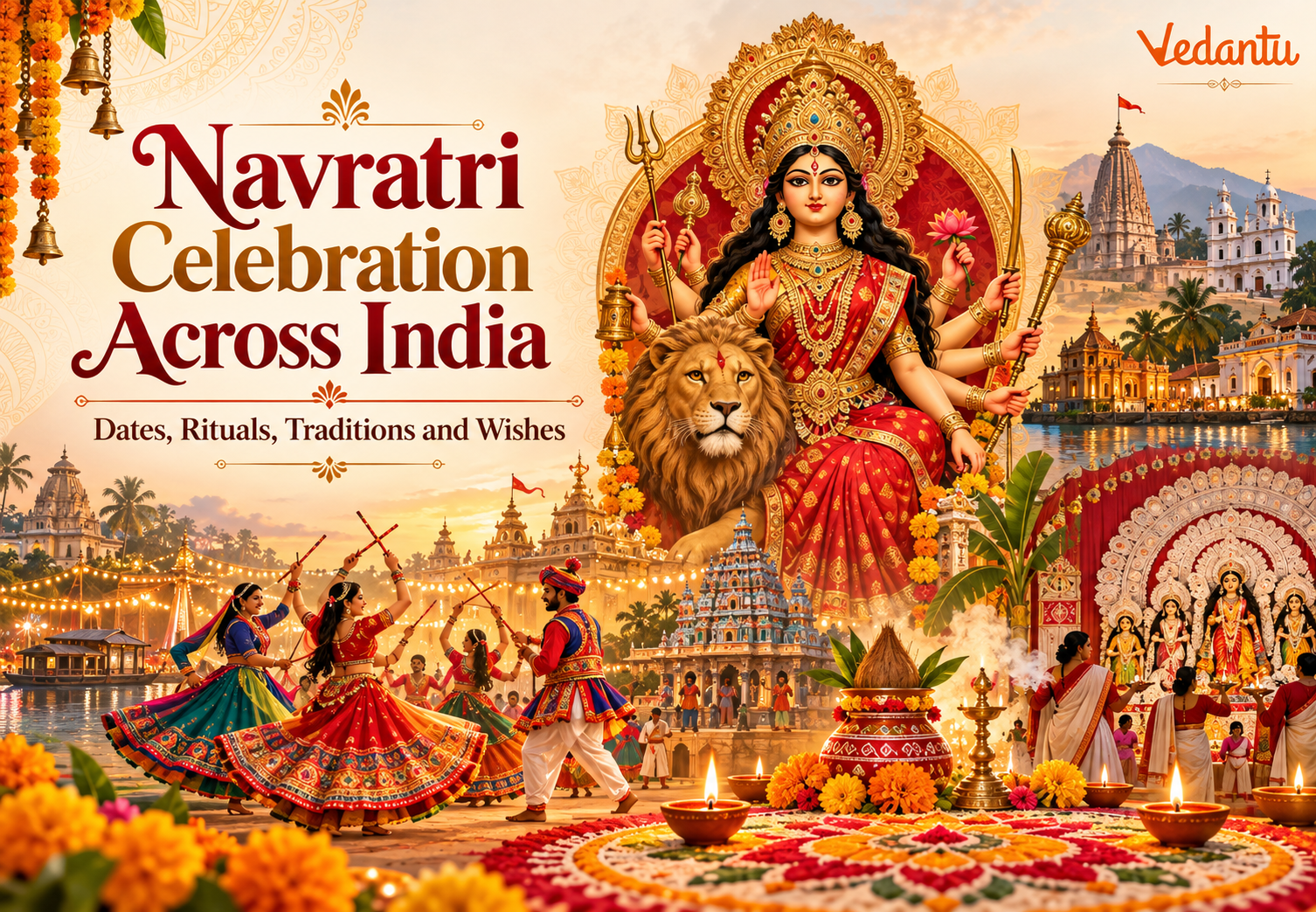
Navratri is one of India's most widely celebrated Hindu festivals, honouring the nine forms of Maa Durga and the divine feminine power known as Shakti. The festival brings families and communities together through prayers, fasting, music, dance and cultural traditions.
Navratri celebrations across India vary from Gujarat's lively Garba and Dandiya evenings to West Bengal's Durga Puja pandals, Maharashtra's Ghatasthapana rituals, Tamil Nadu's Golu displays and Karnataka's Mysuru Dasara festivities.
This guide covers the Navratri 2026 date in October, Ghatasthapana Muhurat, important puja observances, regional celebrations, traditional offerings, and Happy Navratri wishes to share with family and friends.
Also Check: Navratri 2026 Colours: Complete 9-Day List With Dates and Meanings
Shardiya Navratri 2026 Dates: When Does the Festival Start and End?
The Navratri date 2026 for the autumn celebration is 11 October, which falls on a Sunday. Shardiya Navratri is observed during Ashwin Shukla Paksha, according to the Hindu lunar calendar.
The important dates are:
Calendar reference: Drik Panchang, Delhi, India, 2026. Some observances vary according to regional traditions and local lunar-calendar calculations.
Why Are Durga Ashtami and Maha Navami on the Same Date in 2026?
In 2026, the lunar tithis create an unusual arrangement around Durga Ashtami and Maha Navami.
According to Drik Panchang for Delhi:
Ashtami Tithi begins at 8:27 AM on 18 October and ends at 10:51 AM on 19 October.
Navami Tithi begins at 10:51 AM on 19 October and ends at 12:50 PM on 20 October.
Durga Ashtami and Maha Navami Puja are listed on 19 October.
Navami Homa and Parana-related observances may continue on 20 October.
This is why the actual puja calendar should not be determined simply by counting the days from 11 October. Families should follow their regional Panchang when planning Ashtami, Navami, Kanya Pujan and fasting.
Ghatasthapana Muhurat 2026: Date and Auspicious Timings
Ghatasthapana 2026 falls on Sunday, 11 October. Also called Kalash Sthapana, it marks the beginning of Shardiya Navratri worship in many households.
According to Drik Panchang for Delhi, India, the Ghatasthapana timings are:
Note: All timings above are in Indian Standard Time for Delhi. Drik Panchang notes that the listed Ghatasthapana Muhurat falls during Chitra Nakshatra and Vaidhriti Yoga, which require particular consideration in traditional Muhurat selection. Timings should be checked for the city where the puja is performed.
How Is Ghatasthapana Performed During Navratri?
Ghatasthapana symbolises the invocation of Goddess Durga at the beginning of the festival. The exact procedure differs by family and region, but a commonly followed method involves:
Cleaning the puja space and placing a cloth on a suitable platform.
Preparing a vessel with soil and sowing barley seeds, where this tradition is followed.
Filling a clean Kalash with water and adding appropriate traditional offerings.
Placing leaves and a coconut on the Kalash according to household custom.
Offering flowers, incense and a lamp while praying to Maa Durga.
Performing aarti and maintaining the puja space throughout Navratri.
A Kalash, coconut, leaves, flowers, barley, soil, roli, akshat and diya are commonly used during the ceremony. The specific materials and prayers depend on the family's tradition.
Shardiya Navratri 2026: Puja Calendar and Important Observances
The following calendar provides a quick view of the major worship observances during Navratri in 2026, based on the Delhi calendar shared by Drik Panchang.
This is a festival-observance calendar, not a fixed assignment of one lunar tithi to each civil date. The day-wise Navadurga worship sequence is also followed according to religious and regional customs.
What Is the History and Significance of Navratri?
The word Navratri comes from the Sanskrit words Nava, meaning nine, and Ratri, meaning nights. The festival is dedicated to the worship of Goddess Durga and the divine feminine power called Shakti.
According to Hindu mythology, Goddess Durga fought the demon Mahishasura and ultimately defeated him. The story represents the victory of righteousness over evil and the strength of divine power in overcoming destructive forces.
The festival is rooted in Hindu devotional traditions, including accounts found in the Devi Mahatmya, a sacred text associated with Goddess worship.
Navratri is significant for several reasons:
Worship of Shakti: Devotees honour Goddess Durga as a source of strength, creation and protection.
Victory of good over evil: The festival commemorates the triumph of righteousness over destructive forces.
Spiritual discipline: Prayer, fasting and meditation are observed by many devotees.
Cultural unity: Families and communities come together through festivals, music and regional celebrations.
Respect for the divine feminine: The festival highlights the importance of feminine power and its spiritual significance.
The meaning of Navratri extends beyond religious observance. It is also a celebration of community, cultural identity and traditions passed from one generation to another.
How Is Navratri Celebrated Across Different States of India?
One of the most distinctive features of Navratri is the variety of traditions observed across the country. Although the festival centres on Goddess worship, each region celebrates through its own rituals, performances, music and community activities.
Gujarat: Garba and Dandiya Raas
Gujarat is especially known for Garba and Dandiya celebrations during Navratri.
Communities gather in traditional attire to perform Garba, a circular folk dance often organised around a lamp or shrine symbolising divine energy. Dandiya Raas uses decorated sticks and rhythmic movements.
In cities such as Ahmedabad, Vadodara and Surat, public celebrations bring together families, students and local communities.
Garba and Dandiya are more than entertainment. They are an important part of Gujarat's cultural identity and bring people together through music, devotion and dance.
West Bengal: Durga Puja and Pandals
In West Bengal, Navratri overlaps with Durga Puja, one of the state's most important cultural festivals.
Kolkata and other cities are known for elaborate Durga Puja pandals, beautifully crafted idols, traditional dhak music and cultural performances.
Important customs include Anjali, Dhunuchi Naach, Sandhi Puja, Sindoor Khela and Durga Visarjan, depending on the day and local tradition.
For 2026, the Delhi Panchang lists Durga Visarjan on 20 October, while Bengali Vijayadashami is listed on 21 October. These differences demonstrate the importance of regional observance calendars.
Maharashtra: Ghatasthapana and Bhondla Celebrations
In Maharashtra, Navratri is observed through Ghatasthapana, daily Goddess worship and visits to Devi temples.
Many households establish a Kalash and grow barley or other sacred seedlings according to their traditions.
Bhondla or Hadga celebrations are also associated with Navratri in parts of Maharashtra. Participants gather for traditional songs, games and community activities.
Some families also follow the popular practice of wearing a different colour on each day of the festival.
Tamil Nadu: Navratri Golu and Saraswati Puja
In Tamil Nadu, Navratri is celebrated through Golu or Kolu, a traditional display of dolls and figurines arranged on decorated steps.
Families invite relatives and neighbours to visit their Golu displays, sing devotional songs and exchange festive offerings.
The final days are especially associated with Saraswati Puja and Ayudha Puja.
Books, musical instruments, tools and objects used in daily work may be respectfully placed for worship.
The celebrations highlight learning, creativity, craftsmanship and family traditions.
Karnataka: Mysuru Dasara
Karnataka is known for the grand Mysuru Dasara celebrations, which honour Goddess Chamundeshwari.
The festival is associated with decorated palaces, cultural performances, traditional processions and the historic Jamboo Savari.
According to the 2026 Drik Panchang calendar supplied for this article, Mysore Dasara is listed on Wednesday, 21 October 2026.
Mysuru Dasara is an important celebration of Karnataka's history, royal traditions and cultural heritage.
Uttar Pradesh, Delhi and Northern India: Ramlila and Kanya Pujan
In many parts of North India, Navratri is observed through fasting, temple visits, devotional prayers and Kanya Pujan.
Families may perform daily aarti, recite Goddess prayers and prepare traditional satvik meals.
Ramlila performances narrate episodes from the Ramayana and culminate in Dussehra celebrations, often marked by Ravana Dahan.
The festivities combine religious worship with storytelling, theatre and community participation.
Himachal Pradesh: Kullu Dussehra
Himachal Pradesh is known for its distinctive local Devi traditions and the Kullu Dussehra festival.
Unlike many celebrations that conclude on Vijayadashami, Kullu Dussehra traditionally begins around Vijayadashami and continues with processions, gatherings of local deities and cultural activities.
These celebrations reflect the close connection between regional religious traditions and local communities.
Other Regional Navratri Celebrations in India
These traditions show how Navratri brings together different regional practices under a shared theme of devotion and cultural celebration.
What Are the Main Rituals Performed During Navratri?
Navratri rituals vary according to family traditions, religious beliefs and regional customs.
Daily Durga Puja and Aarti
Many devotees begin the day by cleaning the puja space, lighting a diya, offering flowers and performing aarti.
Some families recite the Durga Chalisa, Durga Saptashati or other devotional prayers.
Navratri Fasting
Fasting is a common practice during Navratri, although not everyone observes it in the same way.
Some devotees fast for all nine days, while others fast only on selected days.
Fruits, milk, sabudana, kuttu, singhara flour and other foods may be eaten according to family customs. Fasting is optional, and health needs should take priority.
Akhand Jyoti
Some households light an Akhand Jyoti, or continuously burning lamp, during Navratri.
The practice represents sustained devotion. Families observing it should keep the lamp away from flammable materials and arrange responsible supervision.
Kanya Pujan
Kanya Pujan, also known as Kanjak Puja, honours young girls as manifestations of the divine feminine.
Families may welcome girls into their homes, offer prayers and serve traditional food such as halwa, puri and chana.
The ritual is commonly performed on Ashtami or Navami according to family tradition.
Navami Homa and Havan
Some families perform Havan or Navami Homa as part of the concluding worship.
The ritual involves offering prescribed materials into a sacred fire while chanting prayers. It is commonly conducted under the guidance of a knowledgeable priest.
The date and Muhurat vary according to the local Panchang and religious tradition.
Navratri Bhog for 9 Days 2026 List
Many devotees offer different foods to the nine forms of Goddess Durga during Navratri. The Navratri bhog for 9 days 2026 list below includes commonly followed examples of traditional offerings.
These are examples of popular devotional traditions, not compulsory offerings. The exact bhog, preparation methods and puja dates may differ by household and region.
Keep the food clean and fresh, and follow the customs observed in your family or temple.
When Are Durga Ashtami, Maha Navami and Kanya Pujan in 2026?
Durga Ashtami and Maha Navami Puja fall on Monday, 19 October 2026, according to Drik Panchang for Delhi. The Navami Tithi continues into 20 October.
Durga Ashtami and Sandhi Puja 2026
Sandhi Puja takes place around the transition from Ashtami to Navami and is particularly significant in Durga Puja traditions.
Maha Navami and Navami Homa 2026
Both Navami Homa windows are shown in the supplied Drik Panchang calendar for different observance conventions.
When Should Kanya Pujan Be Performed in 2026?
Kanya Pujan is traditionally observed on Ashtami or Navami.
In many North Indian traditions, 19 October 2026 is an important day for Kanya Pujan. Families following Navami-specific rituals may observe them on 20 October according to their local Panchang.
The exact observance should follow local religious guidance rather than a generalised date alone.
When Is Vijayadashami 2026 and How Is It Celebrated?
Vijayadashami or Dussehra falls on Tuesday, 20 October 2026, according to Drik Panchang for Delhi.
The festival celebrates the victory of good over evil. In different traditions, it commemorates Lord Rama's victory over Ravana or Goddess Durga's victory over Mahishasura.
Important 2026 Details Include:
Vijayadashami is celebrated through Ramlila, Ravana Dahan, Durga idol immersion, Shami Puja, Ayudha Puja and other regional traditions.
The festival marks the conclusion of an important period of devotion and is considered an auspicious occasion for new beginnings in many communities.
For more information, read Dussehra Date, Puja Timing and Festive Wishes.
What Is the Theme of Navratri Celebration Across India in 2026?
Navratri does not have one universally declared national theme. Different schools, cultural organisations, neighbourhood groups and communities choose themes for their celebrations.
Common Themes Include:
Victory of Good Over Evil: Celebrating righteousness, courage and the defeat of negativity.
Women Empowerment: Recognising women's achievements, dignity and contributions.
Cultural Unity: Exploring how different Indian regions celebrate the same festival.
Eco-Friendly Celebrations: Encouraging responsible decorations and waste reduction.
Community Service: Supporting charitable activities and helping people in need.
These themes allow schools and communities to celebrate Navratri in a meaningful way while respecting regional traditions.
How Can Schools and Communities Celebrate Navratri?
Navratri provides opportunities for students to learn about Indian culture, history and regional diversity.
Schools and communities can organise:
Cultural performances: Garba, Dandiya, folk dances and devotional music.
State-wise exhibitions: Displays explaining how Navratri is celebrated across India.
Art and poster competitions: Creative work based on Shakti, festival traditions and cultural unity.
Storytelling sessions: Narratives about Goddess Durga, Mahishasura and Dussehra.
Speech and essay competitions: Topics such as the cultural significance of Navratri or unity in diversity.
Community activities: Donation drives, food distribution or neighbourhood celebrations.
Students can participate in an age-appropriate way and learn about different customs without needing to follow every religious practice.
For a deeper educational perspective, explore 9 Lessons to Learn From Navratri.
Happy Navratri Wishes 2026 in English
Sharing Navratri wishes is a simple way to express devotion, happiness and goodwill during the festival.
Here are some original Happy Navratri greetings suitable for family, friends, teachers and social media.
"Happy Navratri! May Maa Durga bless your family with happiness, peace and strength."
"May these nine sacred nights bring courage to your heart and positivity to your home. Happy Navratri 2026!"
"Wishing you a joyful Navratri filled with devotion, beautiful traditions and memorable celebrations."
"May Maa Durga guide you towards wisdom, kindness and success. Wishing you a blessed Navratri."
"Nine nights of devotion, countless moments of joy. Happy Navratri to you and your loved ones!"
"Celebrate the power of Shakti and the beauty of togetherness. Wishing everyone a wonderful Navratri."
"May Goddess Durga inspire us to choose courage over fear and kindness over negativity. Happy Navratri!"
Navratri Wishes in Hindi: नवरात्रि की शुभकामनाएं
If you are looking for Navratri wishes in Hindi, these short greetings can be shared with friends, relatives and family members.
"शारदीय नवरात्रि की हार्दिक शुभकामनाएं! मां दुर्गा आपके जीवन में सुख, शांति और समृद्धि लाएं।"
"मां दुर्गा की कृपा से आपके जीवन में नई ऊर्जा, साहस और खुशियां आएं। शुभ नवरात्रि!"
"नवरात्रि के पावन अवसर पर आपके परिवार को स्वास्थ्य, प्रेम और खुशहाली की शुभकामनाएं।"
"माता रानी आपके हर अच्छे प्रयास को सफल बनाएं और जीवन में सकारात्मकता भरें। जय माता दी!"
"शक्ति और भक्ति के इस पावन पर्व पर सभी को नवरात्रि 2026 की मंगलमय शुभकामनाएं।"
Inspiring Navratri Quotes and Slogans
Navratri quotes and slogans can be used in school programmes, posters, greeting cards and festival announcements.
"Celebrate devotion, share happiness and respect every tradition."
"Nine nights of worship, one message of courage and unity."
"Let the light of goodness guide every new beginning."
"Honour Shakti, celebrate culture and spread kindness."
"Navratri reminds us that courage and compassion belong together."
How Can We Celebrate Navratri in an Eco-Friendly Way?
Eco-friendly Navratri celebrations help communities enjoy the festival while reducing unnecessary waste.
Simple steps include:
Use reusable decorations, traditional fabrics and natural flowers.
Reduce single-use plastic during community events.
Choose environmentally responsible idol materials where applicable.
Avoid excessive noise and respect neighbourhood guidelines.
Follow local rules for immersion and waste disposal.
Encourage community food distribution with minimal packaging.
Responsible celebration helps preserve both cultural traditions and the environment.
Celebrate Navratri 2026 With Devotion and Cultural Unity
Navratri 2026 brings together prayer, music, dance, family traditions and community celebrations across India. From Ghatasthapana on 11 October to Vijayadashami on 20 October, the festival honours Goddess Durga and celebrates the victory of good over evil.
Whether through Garba in Gujarat, Durga Puja in Bengal, Golu in Tamil Nadu or Ramlila in North India, each region adds its own meaning to the celebration.
The spirit of Navratri lies in devotion, respect for traditions, cultural unity and kindness towards others. Happy Navratri 2026!
FAQs on Navratri Celebration Across India 2026: Dates, Rituals, Traditions and Wishes
1. When is Navratri in 2026?
Shardiya Navratri 2026 began on Sunday, 11 October, with Ghatasthapana. The nine-day colour calendar runs through 19 October, while Vijayadashami or Dussehra falls on Tuesday, 20 October. Important religious observances follow the local lunar Panchang.
2. Navratri kab hai 2026? (2026 में नवरात्रि कब है?)
शारदीय नवरात्रि 2026 की शुरुआत 11 अक्टूबर, रविवार से हुई है। घटस्थापना इसी दिन है। दुर्गा अष्टमी और महानवमी की प्रमुख पूजा 19 अक्टूबर को है, जबकि विजयादशमी 20 अक्टूबर 2026 को मनाई जाएगी।
3. Navratri kab se start hai 2026? (नवरात्रि कब से शुरू है?)
नवरात्रि 2026 की शुरुआत रविवार, 11 अक्टूबर से हुई है। इस दिन घटस्थापना और मां शैलपुत्री की पूजा होती है। पूजा के शुभ मुहूर्त शहर के अनुसार अलग हो सकते हैं।
4. What is the Navratri 2026 date in October?
The Navratri 2026 start date is 11 October. Durga Ashtami and Maha Navami Puja are observed on 19 October in Delhi, and Vijayadashami falls on 20 October.
5. Chaitra Navratri kab hai 2026? (चैत्र नवरात्रि 2026 कब थी?)
चैत्र नवरात्रि 2026 का आरंभ 19 मार्च को हुआ था और नौ दिनों का उत्सव 27 मार्च तक चला। शारदीय नवरात्रि अलग पर्व-काल है, जो अक्टूबर 2026 में मनाया जा रहा है।
6. Which day of Navratri is today?
The day depends on the date being checked. For example, 13 October 2026 is Day 3 of the popular Shardiya Navratri calendar, associated with Maa Chandraghanta. For religious observances, consult the local Panchang rather than relying only on a numbered day.
7. Which colour is today for Navratri?
8. What is the Ghatasthapana Muhurat for Navratri 2026?
According to Drik Panchang for Delhi, Ghatasthapana on 11 October 2026 has a main Muhurat from 6:19 AM to 10:12 AM, with an Abhijit Muhurat from 11:44 AM to 12:31 PM. Check the local Panchang for other cities.
9. Why is Navratri celebrated for nine days?
Navratri honours the nine forms of Goddess Durga and celebrates Shakti, the divine feminine power. It is associated with the victory of good over evil and is observed through prayers, fasting and regional cultural traditions.
10. How is Navratri celebrated across India?
Gujarat celebrates Garba and Dandiya, West Bengal is known for Durga Puja, Maharashtra observes Ghatasthapana, Tamil Nadu celebrates Golu, Karnataka hosts Mysuru Dasara, and North India is known for fasting, Kanya Pujan and Ramlila.
11. When is Durga Ashtami in Navratri 2026?
Durga Ashtami is observed on Monday, 19 October 2026, according to Drik Panchang for Delhi. The Ashtami Tithi begins on 18 October and ends on the morning of 19 October.
12. When is Maha Navami 2026?
Maha Navami Puja is listed on 19 October 2026 in the Delhi calendar. Navami Tithi continues until 12:50 PM on 20 October, when additional Navami-related rituals may be performed.
13. What is the Navratri bhog for 9 days 2026 list?
Common offerings include ghee for Maa Shailputri, mishri for Brahmacharini, milk for Chandraghanta, malpua for Kushmanda, bananas for Skandamata, honey for Katyayani, jaggery for Kalaratri, coconut for Mahagauri and halwa or fruits for Siddhidatri. Family customs may differ.
14. What are some Happy Navratri wishes in Hindi?
You can share: "शारदीय नवरात्रि की हार्दिक शुभकामनाएं! मां दुर्गा आपके जीवन में सुख, शांति और समृद्धि लाएं।" This greeting is suitable for family, friends and festive messages.
15. When is Vijayadashami or Dussehra in 2026?
Vijayadashami falls on Tuesday, 20 October 2026. Drik Panchang lists the Vijay Muhurat for Delhi from 1:59 PM to 2:45 PM. Bengali Vijayadashami and Mysore Dasara are listed on 21 October in the supplied regional calendar references.
16. Is there an official theme for Navratri 2026?
There is no single universally applicable national theme for Navratri 2026. Schools and community groups may select cultural unity, women's empowerment, environmental responsibility or the victory of good over evil as their celebration themes.
17. Is fasting compulsory during Navratri?
No. Fasting depends on personal belief, health and family tradition. Devotees can participate through prayers, aarti, charity or cultural activities without observing a strict fast.
18. What is the difference between Chaitra Navratri and Shardiya Navratri?
Chaitra Navratri occurs in the Hindu month of Chaitra, usually in March or April. Shardiya Navratri occurs during Ashwin, usually in September or October. Both honour Goddess Durga, but their seasonal context and regional celebrations differ.