






What Are the Main Uses Of Computer in Education Business and Everyday Activities
Computers play a vital role in modern life and are used in almost every field of work and study. From schools and offices to banks, hospitals, railway stations, and police departments, computers help people perform tasks quickly and accurately. Understanding the Uses Of Computer is important in computer science because it explains how technology improves efficiency, communication, data management, and decision making. Computers save time, reduce human effort, and handle large amounts of information with high speed and precision. Learning about their uses helps students understand their importance in daily life and professional environments.
Definition and Meaning
Uses Of Computer definition refers to the various purposes and tasks for which computers are applied in different fields. In computer science, it describes how computing systems help in processing data, storing information, performing calculations, and automating tasks.
- Data Processing - Converting raw data into meaningful information.
- Storage - Saving large amounts of information digitally.
- Automation - Performing repetitive tasks automatically.
- Communication - Sharing information through networks and the internet.
How It Works / Working Principle
The Uses Of Computer working is based on the Input - Process - Output cycle. A computer receives input, processes it using programs, and produces output. It also stores data for future use.
- Input - Data is entered using devices like keyboard, mouse, or scanner.
- Processing - The CPU processes the data according to instructions.
- Storage - Information is saved in memory or storage devices.
- Output - Results are displayed on a monitor, printed, or shared digitally.
This working principle allows computers to be used in education, business, healthcare, banking, and many other sectors.
Types and Classification
Computers are used in different sectors based on their purpose and functionality. Below are major areas where computers are widely applied.
- Educational Use - Online classes, digital drawing, research, and presentations.
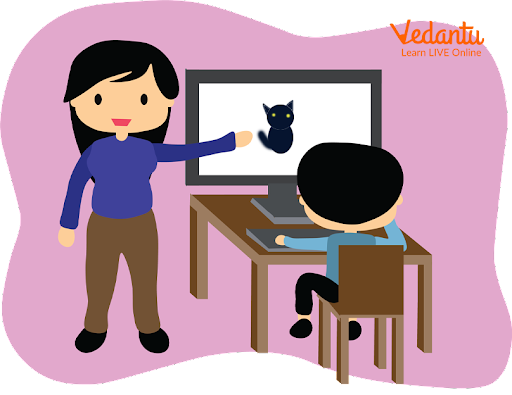
- Railway Reservation Systems - Ticket booking, schedule management.
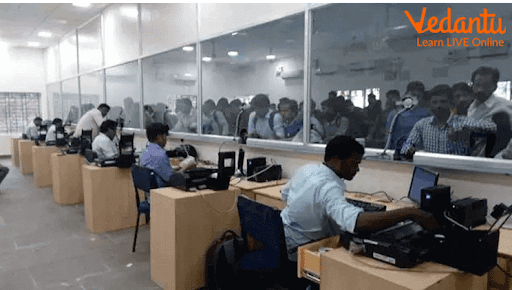
- Banking Systems - Account management, transactions, online banking.

- Office Work - Documentation, data analysis, communication.
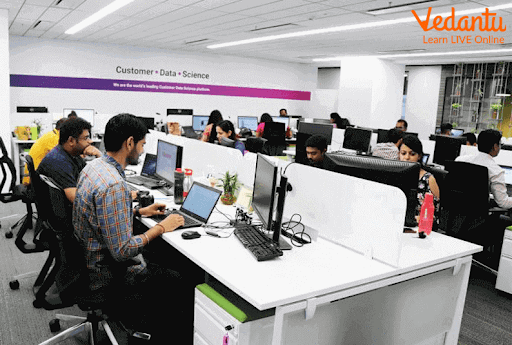
- Healthcare - Patient records, diagnostic reports, medical imaging.

- Police and Security - Crime record management, surveillance.
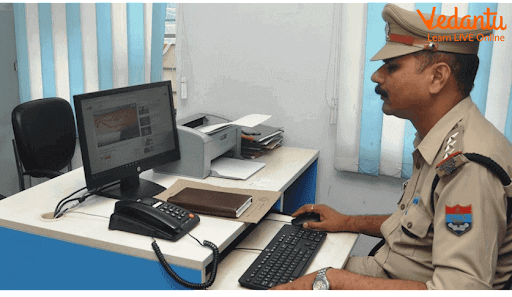
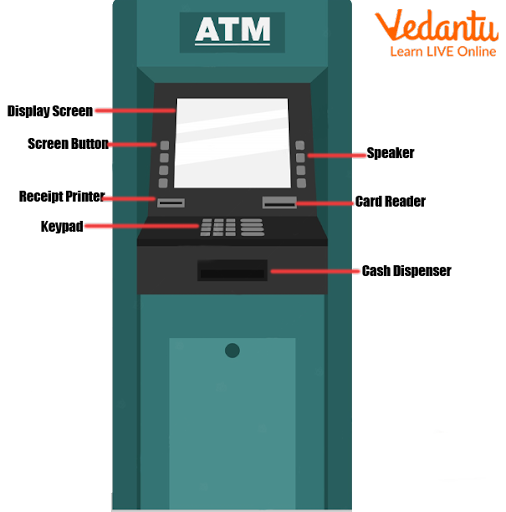
- ATM Services - Cash withdrawal, balance enquiry, fund transfer.
Components and Structure
The effective use of a computer depends on its main components working together.
- Central Processing Unit - CPU - Processes instructions and controls operations.
- Memory - RAM and ROM - Stores temporary and permanent data.
- Storage Devices - Hard disk, SSD for long term storage.
- Input Devices - Keyboard, mouse, scanner.
- Output Devices - Monitor, printer, speakers.
Features and Characteristics
- High Speed - Performs millions of calculations per second.
- Accuracy - Produces correct results if instructions are accurate.
- Large Storage Capacity - Stores huge volumes of data.
- Automation - Works automatically once programmed.
- Versatility - Used in multiple fields.
Advantages
- Saves time and effort.
- Reduces human errors.
- Improves productivity.
- Provides easy access to information.
- Supports online communication and collaboration.
Disadvantages / Limitations
- Dependence on electricity and internet.
- Risk of cybercrime and data theft.
- Health issues due to prolonged usage.
- Requires technical knowledge for operation.
Applications and Use Cases
- Education - Online learning, digital exams, research work.
- Business - Accounting, payroll, inventory management.
- Healthcare - Medical reports, diagnostics, patient database.
- Government - Record keeping, digital services.
- Entertainment - Gaming, movies, music editing.
- Communication - Email, video conferencing, social media.
Quick Facts About Uses Of Computer
| Category | Details | Examples |
|---|---|---|
| Educational Use | Learning and research | Online classes, digital drawing |
| Commercial Use | Business operations | Banking, accounting |
| Healthcare Use | Medical data management | Hospital systems |
| Security Use | Law enforcement support | Police databases |
These categories highlight how computers are integrated into different sectors to improve efficiency and accuracy.
Interesting Facts About Uses Of Computer
- Computers can perform billions of operations per second.
- Banks process millions of transactions daily using computers.
- Hospitals use computers for advanced imaging like MRI and CT scans.
- Railway systems depend on computers for real time scheduling.
- ATMs are specialised computers connected to banking networks.
- Police departments use computer databases to track criminal records.
- Students worldwide attend virtual classrooms using computers.
Conclusion
The Uses Of Computer cover almost every aspect of modern life, from education and banking to healthcare and security. Understanding how computers function and where they are applied helps students appreciate their importance in computer science and technology. Computers improve efficiency, accuracy, and communication, making them essential tools in today's digital world. Learning about their uses builds a strong foundation for further study in computing and related fields.
FAQs on Uses Of Computer and Their Importance in Modern Life
1. What are the main uses of computer in daily life?
The uses of computer in daily life include performing calculations, storing data, communication, learning, and entertainment.
- Education through e-learning platforms and online exams
- Communication using email, video conferencing, and social media
- Business operations like accounting, payroll, and inventory management
- Entertainment such as gaming, streaming, and multimedia editing
- Online services including banking, shopping, and ticket booking
2. What are the uses of computer in education?
Computers are widely used in education for digital learning, research, programming practice, and exam preparation.
- Access to e-learning platforms and virtual classrooms
- Preparing assignments using word processors and presentation software
- Learning programming languages like Python, C++, and Java
- Conducting online tests and competitive exam practice
- Research using digital libraries and databases
3. What are the uses of computer in business and industry?
In business and industry, computers are used for data processing, automation, communication, and decision-making.
- Accounting and payroll management using software
- Database management systems for storing customer data
- Enterprise resource planning (ERP) systems
- Online marketing and e-commerce platforms
- Data analysis using tools like spreadsheets and analytics software
4. How are computers used in healthcare?
Computers in healthcare help manage patient records, diagnostics, and hospital operations efficiently.
- Electronic Health Records (EHR) for storing patient data
- Medical imaging systems like CT scans and MRI
- Hospital management systems for appointments and billing
- Telemedicine through secure network communication
- Data analysis for research and disease prediction
5. What are the uses of computer in communication and networking?
Computers enable fast and reliable digital communication through networks and the internet.
- Sending emails using email servers
- Video conferencing through platforms like Zoom or Teams
- Social networking and instant messaging applications
- File sharing via cloud computing services
- Managing network infrastructure and cybersecurity systems
6. What are the uses of computer in science and research?
Computers are essential in scientific research for simulation, data analysis, and complex calculations.
- Running algorithms and simulations in physics and chemistry
- Analyzing large datasets using machine learning
- Genome sequencing and bioinformatics processing
- Weather forecasting using high-performance computing
- Publishing and documenting research digitally
7. What are the uses of computer in government and public services?
Governments use computers for record management, digital governance, and public service delivery.
- Maintaining citizen data in government databases
- Online portals for tax filing and public services
- E-governance systems for transparency
- Security monitoring and cybersecurity systems
- Election data processing and voter management
8. What are the uses of computer in banking and finance?
In banking and finance, computers handle transactions, account management, and financial analysis securely.
- Online banking and mobile banking applications
- ATM transaction processing systems
- Fraud detection using artificial intelligence
- Financial data analysis and reporting
- Secure payment gateways and encryption systems
9. What are the uses of computer in entertainment and media?
Computers are widely used in entertainment for gaming, content creation, and multimedia processing.
- Developing video games using game engines
- Video editing with software like Adobe Premiere Pro
- Music production using digital audio workstations
- Streaming movies and shows via online platforms
- Animation and graphic design using specialized tools
10. Why are computers important for students and competitive exams?
Computers are important for students because they support learning, coding practice, research, and computer-based exams.
- Practicing programming and data structures
- Preparing for computer-based tests (CBT)
- Accessing digital study materials and mock tests
- Improving technical skills for interviews
- Understanding core subjects like operating system, database, and network
