



What is Connective Tissue? Definition, Structure, and Key Functions Explained
Connective tissue is a tissue that supports, binds, links, cushions, and connects different tissues and organs of the body. It is mesodermal in origin and consists of cells, fibres, and an intercellular matrix or ground substance. Depending on the nature of the matrix and fibres, connective tissue may be loose, dense, supportive, or fluid.
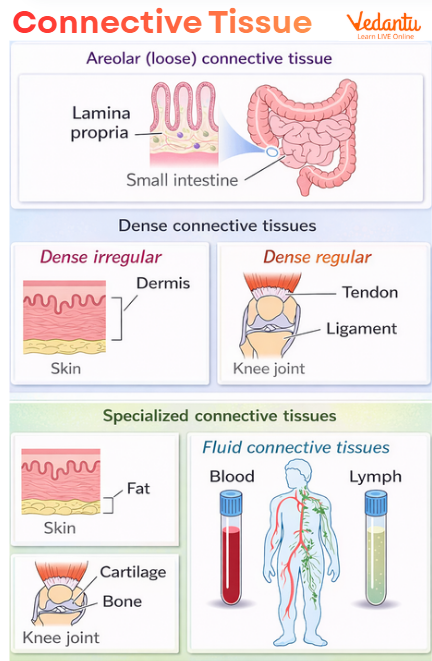
Unlike epithelial tissue, which mainly covers surfaces, connective tissue is found throughout the body and forms the framework that holds organs, tissues, blood vessels, nerves, and muscles together.
It is one of the four main tissue types in the human body, along with epithelial, muscular, and neural tissue.
Connective tissue is widely distributed in the body and performs both structural and protective roles.
It fills spaces, provides support, stores fat, protects organs, connects muscles to bones, joins bones to bones, forms blood and lymph, and also helps in healing and defence.
It originates from the mesoderm, the middle germ layer of the embryo.
Structure of Connective Tissue
The structure of connective tissue is different from other tissues because its cells are scattered within a large amount of intercellular material. This material includes fibres and matrix, which together determine the nature and function of the tissue.
A typical connective tissue has three major components:
1. Cells
The cells of connective tissue may be fixed or migrating. Different connective tissues contain different cell types. Common examples include:
fibroblasts
adipose cells
macrophages
mast cells
monocytes
Fibroblasts are among the most important cells. They are spindle-shaped cells found between collagen fibres and are involved in secreting fibre proteins and other matrix substances. They also play an important role in wound healing. Macrophages act as scavenger cells and remove bacteria, foreign particles, and tissue debris by phagocytosis.
2. Fibres
The fibres provide elasticity, flexibility, and strength. Connective tissue contains three main types of fibres:
Collagen fibres
These are the most abundant and widespread fibres. They are made up of fibrous protein collagen. Collagen fibres are flexible and have very high tensile strength.
Elastic fibres
These fibres form a network and can stretch and recoil. They are composed of elastin and help tissues return to their original shape after being stretched.
Reticular fibres
These are delicate fibres made of collagen and glycoproteins. They form a fine supporting network and help join connective tissues to neighbouring tissues.
3. Matrix or Ground Substance
The matrix is the intercellular substance present between cells and fibres. It is usually a gel-like material made largely of polysaccharides and proteins. The nature of the matrix decides whether the connective tissue is soft, firm, hard, or fluid. This is why cartilage, bone, and blood all fall under connective tissue even though they look very different.
Connective Tissue Function
The connective tissue function is broad because this tissue is distributed across almost every organ system. Its exact function depends on its type, but overall it supports and integrates the body.
Major functions of connective tissue include:
supporting organs and body parts
linking one tissue with another
binding muscles, bones, skin, nerves, and blood vessels
cushioning internal organs
storing fat and energy
transporting materials in the body through blood and lymph
protecting organs from injury
providing tensile strength and elasticity
helping in defence and repair
Classification of Connective Tissue
The classification of connective tissue is usually done into three major groups:
loose connective tissue
dense connective tissue
specialised connective tissue
This classification is based mainly on the nature of the fibres, cells, and matrix. Loose connective tissue has loosely arranged cells and fibres in a semi-fluid matrix. Dense connective tissue has closely packed fibres and fibroblasts. Specialised connective tissue includes supportive tissues such as cartilage and bone, and fluid connective tissue such as blood and lymph.
Types of Connective Tissue
The main types of connective tissue are:
1. Loose connective tissue
2. Dense connective tissue
3. Specialised connective tissue
Loose Connective Tissue
Loose connective tissue is found in many parts of the body where both support and flexibility are needed. It is present around blood vessels, nerves, and muscles. It also forms the subcutaneous layer below the skin together with adipose tissue.
In this tissue, the fibres and cells are loosely arranged in a semi-fluid matrix. It acts as a packing material between organs and also works as a shock absorber. Because of its matrix, it can also act as a reservoir for salts and fluid.
The main subtypes of loose connective tissue are:
areolar connective tissue
adipose connective tissue
reticular connective tissue
Areolar Connective Tissue
Areolar connective tissue is one of the most common connective tissues in the body. It is present below the skin and supports the epithelium. It contains randomly arranged fibres, fibroblasts, mast cells, and macrophages.
Functions of areolar connective tissue include:
supporting the epithelium
filling spaces between muscle fibres
wrapping around blood vessels and lymph vessels
supporting abdominal organs
acting as packing tissue between organs
Adipose Connective Tissue
Adipose connective tissue is a specialised form of loose connective tissue that stores fat. It is mainly found under the skin and around certain organs. It acts as:
fat storage tissue
thermal insulator
protective cushion
shock absorber
White adipose tissue is found in many locations and protects organs such as the kidneys. It is also found at the back of the eye, in the hump of camels, and in whale blubber. Brown adipose tissue is especially important in infants and animals living in cold regions because it contains more mitochondria and generates much more heat.
Reticular Connective Tissue
Reticular connective tissue is made up mainly of reticular fibres. It forms a supporting internal framework or stroma for organs such as:
spleen
liver
lymph nodes
This tissue creates a delicate supporting network inside certain soft organs and helps maintain their structure.
Dense Connective Tissue
Dense connective tissue contains closely packed collagen fibres and fibroblasts. It has less ground substance than loose connective tissue and is much stronger mechanically. Its main role is to support tissues and transmit mechanical forces.
Compared with loose connective tissue, dense connective tissue is less flexible but more resistant to stretching. Depending on the arrangement of fibres, it is divided into:
dense regular connective tissue
dense irregular connective tissue
1. Dense Regular Connective Tissue
In dense regular connective tissue, collagen fibres are arranged in parallel bundles. This regular arrangement increases tensile strength in one direction and allows the tissue to resist stretching along the direction of fibre arrangement.
Examples include:
Tendons
Tendons connect muscles to bones. They are strong and resist pulling forces generated during muscle contraction.
Ligaments
Ligaments connect bone to bone and help stabilise joints.
2. Dense Irregular Connective Tissue
In dense irregular connective tissue, the collagen fibres are arranged irregularly in many directions. This random arrangement gives the tissue strength from different directions rather than just one direction.
A major example is the dermis of the skin. Since the skin experiences pulling forces from multiple directions, this irregular arrangement is highly suitable.
Specialised Connective Tissue
The third major category in the classification of connective tissue is specialised connective tissue. These tissues have highly modified matrix and functions. They include:
cartilage
bone
blood
lymph
Cartilage and bone are supportive connective tissues, while blood and lymph are fluid connective tissue.
1. Cartilage
Cartilage is a firm but flexible connective tissue. It is especially important during embryonic development, where it forms a supporting skeleton before many bones develop fully. In adults, cartilage still supports certain body parts. It is found in:
external ear
nose
hands
between vertebrae
The cells of cartilage are called chondrocytes. They lie in spaces called lacunae either singly or in small groups. The matrix is hard and rubbery and is secreted by the chondrocytes themselves. Cartilage also contains collagen fibres that provide additional strength.
An important point for NEET is that cartilage does not have nerves, blood vessels, or lymph vessels. This makes its repair slower compared with many other tissues.
2. Bone
Bone is the hardest connective tissue in the body. It provides support, protects internal organs, and helps maintain body shape and posture. Its strength comes from abundant collagen fibres and calcium salts in the matrix.
The cells of bone are called osteocytes. These cells lie in lacunae and communicate through tiny channels called canaliculi. Bone has a substantial blood supply, which supports nourishment and repair.
3. Compact Bone and Spongy Bone
Bone has two major forms:
compact bone
spongy bone
Compact bone contains structural units called osteons. In each osteon, osteocytes are arranged in concentric layers called lamellae around a central Haversian canal through which nerves and blood vessels pass.
Spongy bone is present inside and surrounds the marrow spaces.
4. Bone Marrow
The marrow cavity contains:
yellow marrow, which stores fat
red marrow, which produces blood cells
This makes bone both a supportive and blood-forming tissue.
5. Fluid Connective Tissue
A very important NEET concept is fluid connective tissue. The body has two main fluid connective tissues:
blood
lymph
They are called connective tissues because they connect different parts of the body functionally by transporting materials, maintaining communication, and participating in defence.
Why Blood is Called Connective Tissue?
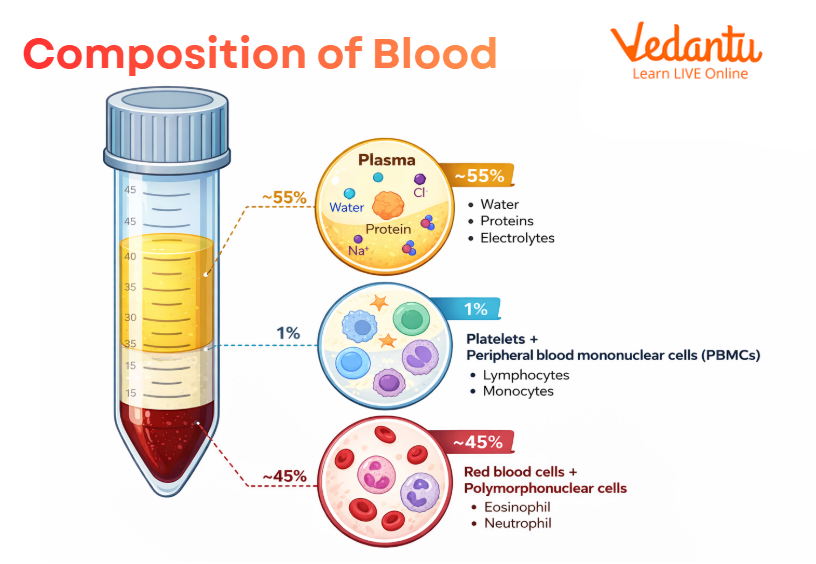
Blood is called a connective tissue because it has cells suspended in a fluid matrix called plasma, and it transports substances between different organs and tissues. In this way, it functionally connects the whole body.
Blood contains:
RBCs, which carry oxygen because of haemoglobin
WBCs, which help in defence
platelets, which help in clotting
plasma, which carries proteins, salts, hormones, and nutrients
Because its matrix is fluid, blood is classified as connective tissue with a fluid matrix.
Lymph
Lymph is another fluid connective tissue. It drains into the blood and helps transport absorbed fats that cannot directly enter the bloodstream. It also contains white blood cells and helps remove toxins and waste materials from tissues. Since it plays a major role in immunity and transport, it is an important specialised connective tissue.
Connective Tissue Examples
Some common connective tissue examples include:
areolar tissue
adipose tissue
reticular tissue
tendons
ligaments
cartilage
bone
blood
lymph
These examples show how varied connective tissue can be, from soft packing tissue to hard bone to fluid blood.
Connective Tissue Disorders
A connective tissue disorder can affect one or many connective tissues of the body. Since connective tissue includes bone, cartilage, blood, ligaments, tendons, skin, and fluid tissues, disorders may be tissue-specific or may affect several connective tissues together.
Examples of tissue-specific conditions include the following broad groups:
Bone Conditions and Diseases
Bone-related disorders include:
bone bruises
fractures
osteoporosis
Paget’s disease of bone
rickets
These conditions affect the structural and supportive role of bone.
Blood Disorders and Diseases
Conditions affecting blood include:
Since blood is a fluid connective tissue, these disorders are also included under connective tissue conditions.
Cartilage Diseases and Conditions
Cartilage is prone to:
osteoarthritis
autoimmune arthritis such as rheumatoid arthritis
lupus-associated joint issues
psoriatic arthritis
Sjögren’s syndrome-related joint involvement
gout or pseudogout
spinal or vertebral disc disease
These conditions affect movement, cushioning, and joint function.
Ligament and Tendon Conditions
Ligaments and tendons may be affected by:
sprains
tears
inflammation such as tendonitis
inherited disorders like Marfan syndrome
Ehlers-Danlos syndrome
These tissues are vital for joint stability and force transmission, so their injury can affect movement significantly.
Skin Disorders
Since the skin has major connective tissue components, it may show conditions such as:
acne
athlete’s foot
cellulitis
eczema
hidradenitis suppurativa
jock itch
rosacea
ringworm
burns
lacerations
abrasions
skin cancers such as basal cell carcinoma, squamous cell carcinoma, and melanoma
Mixed Connective Tissue Disease and Other Disorders
Students may also come across the term mixed connective tissue disease. This refers to an autoimmune condition in which features of more than one connective tissue disease occur together. It is generally discussed clinically along with systemic autoimmune disorders affecting connective tissues.
Inherited disorders such as Marfan syndrome and Ehlers-Danlos syndrome are also important because they affect connective tissue proteins and may alter body structure, flexibility, and joint stability.
Common Symptoms of Connective Tissue Disorder
The signs and symptoms of a connective tissue disorder vary widely because many different tissues are included under connective tissue. Still, some common symptoms seen across many conditions include:
bleeding
bruising
fatigue
pain
limited range of movement
lumps or bumps under the skin
skin changes
swelling
Some connective tissue disorders may also affect body appearance or movement patterns. One well-known example is excessive joint flexibility, also called hypermobility. Some disorders may change bone structure, height, or body proportions.
Common Tests to Check for Connective Tissue Issues
Several tests may be used to identify connective tissue problems. Common tests include:
Imaging Tests
X-rays
CT scans
MRI
Ultrasound
X-rays and CT scans are especially useful for bone-related issues, while MRI and ultrasound are often more helpful for soft tissues such as ligaments, tendons, cartilage, and muscles.
Lab Tests
blood tests
urine tests
immune marker tests
genetic testing
These can help detect autoimmune disease, blood disorders, inherited connective tissue problems, or inflammatory changes.
Physical Examination
A healthcare provider may also use physical examination to look for visible or palpable signs such as swelling, skin changes, joint instability, tenderness, or deformity.
Treatment of Connective Tissue Conditions
Treatment varies greatly depending on the specific disorder, the tissue affected, severity, age, and overall health of the person.
Possible management approaches may include:
rest and protection in injuries
medicines for inflammation or autoimmune disease
nutritional support in deficiency-related conditions
physiotherapy and rehabilitation
surgery in fractures, tears, or severe structural problems
targeted treatment for blood disorders or cancers
Since connective tissue includes many tissue types, there is no single universal treatment. Management always depends on the exact problem involved.
FAQs on Connective Tissue for NEET: Types, Structure, Function, Diagram, Examples and Disorders
1. What are 7 types of connective tissue?
The main types of connective tissue can be grouped into different categories. A simple list of 7 commonly studied ones includes:
Areolar connective tissue
Adipose connective tissue (body fat)
Reticular connective tissue
Dense connective tissue (tendons and ligaments)
Cartilage
Bone
Fluid connective tissue (blood and lymph)
These together cover loose, dense, and specialised connective tissues.
2. What are connective tissues?
Connective tissue is one of the four main tissue types in the body. It supports, connects, binds, and protects different organs and tissues.
It is made up of:
cells (like fibroblasts, fat cells, immune cells)
fibres (collagen and elastic fibres)
matrix (ground substance)
Examples of connective tissue include bone, cartilage, blood, adipose tissue, ligaments, and tendons. Its main role is to provide structure, support, transport, and protection.
3. What are the 4 main types of tissue?
The four main types of tissue in the human body are:
Epithelial tissue – covers and protects surfaces
Connective tissue – supports and connects body parts
Muscle tissue – helps in movement
Nervous tissue – controls and coordinates body functions
4. What is another name for connective tissue?
Another name for connective tissue is fibrous tissue or supportive tissue. It is also sometimes called stroma, which means the supporting framework of organs.
5. What are the 4 characteristics of connective tissue?
The main characteristics of connective tissue include:
It supports and binds different body parts
It protects organs
It stores energy (especially in adipose connective tissue)
It transports substances (like blood carrying oxygen and nutrients)
6. Why is blood called connective tissue?
Blood is called a fluid connective tissue because:
It has cells (RBCs, WBCs, platelets) suspended in a fluid matrix called plasma
It connects different parts of the body by transporting oxygen, nutrients, hormones, and wastes
It is formed from the mesoderm, like other connective tissues
So, blood acts as a transport medium that links all organs.
7. What is the most common connective tissue disorder?
The most common connective tissue disorder is rheumatoid arthritis. It is an autoimmune disease that causes inflammation, pain, and swelling in the joints.
Other common connective tissue disorders include:
Lupus
Sjögren’s syndrome
Scleroderma
These disorders mainly affect joints, skin, and other connective tissues in the body.
