



What is Endosperm? Structure Development, Types, and Function
Endosperm is a specialized nutritive tissue present inside seeds that provides nourishment to the developing embryo. This tissue is rich in essential nutrients such as starch, proteins, and oils, which support embryo growth and later help in seed germination. The endosperm generally develops after fertilisation and surrounds the embryo within the seed, acting as a food reserve.
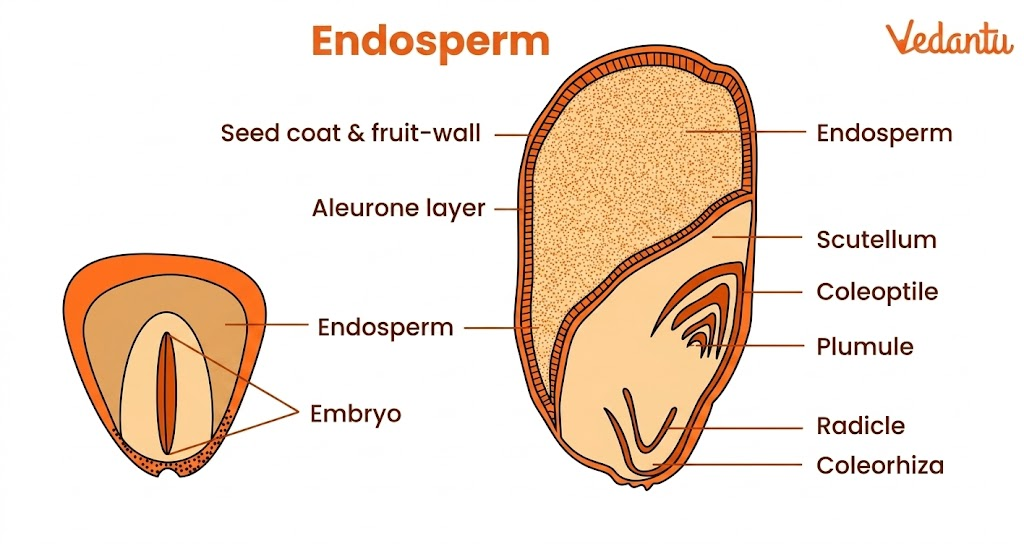
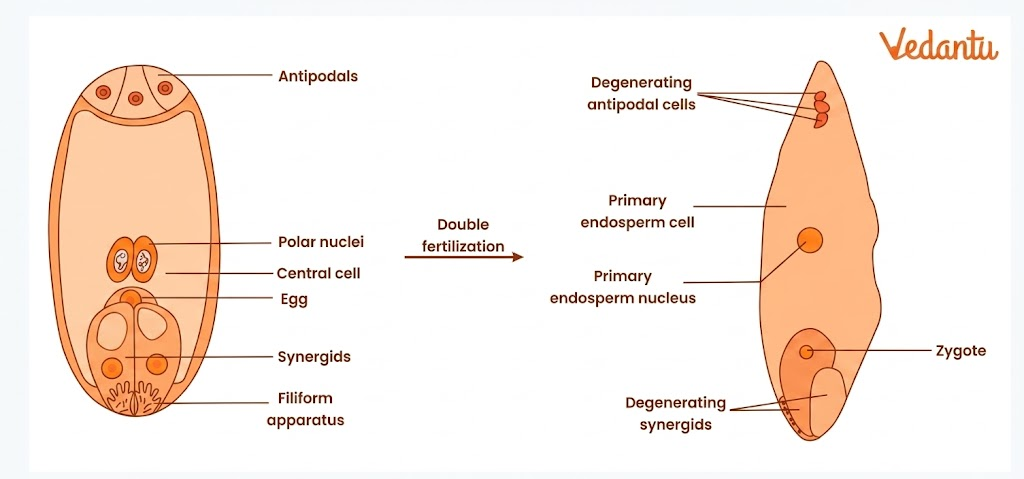
In flowering plants, endosperm is usually triploid (3n) in nature. It is formed as a result of double fertilisation, a unique feature of angiosperms. During this process, one male gamete fertilizes the egg to form the embryo, while the second male gamete fuses with two polar nuclei in the central cell to form the primary endosperm nucleus, which later develops into endosperm.
Endosperm develops inside the embryo sac and acts as a nutritive tissue for embryo development. It supplies nutrients, regulates embryo growth, and sometimes persists in mature seeds. Based on the pattern of development, endosperm is classified into nuclear endosperm, cellular endosperm, and helobial endosperm. Each type shows distinct developmental characteristics.
Structure of Endosperm
The structure of the endosperm varies depending on plant species. Initially, it appears as a multinucleate cytoplasmic mass. Later, it may become cellular. Endosperm cells contain stored food materials.
General structural features:
Triploid tissue
Rich in starch grains
Contains protein bodies
Oil droplets present
Surrounds embryo
May persist in mature seed
In cereals like wheat and maize, endosperm occupies most of the seed and serves as food reserve.
Development of Endosperm
The development of endosperm begins immediately after triple fusion. The primary endosperm nucleus divides repeatedly by mitosis to produce endosperm tissue. During early stages, the endosperm may remain multinucleate, and later cellularization may occur depending on the type.
Steps involved in endosperm development:
Triple fusion forms primary endosperm nucleus (3n)
Primary endosperm nucleus divides mitotically
Multinucleate endosperm formed
Cellularization may occur depending on type
Endosperm surrounds embryo
Nutrients accumulate in tissue
Endosperm development usually precedes embryo development, ensuring that nutrients are available for embryo growth.
Endosperm Development Precedes Embryo Development: Why Is It So?
Endosperm develops earlier because the embryo requires immediate nourishment after fertilisation. The early formation of endosperm ensures availability of food reserves. These nutrients help in:
embryo cell division
differentiation of tissues
proper seed development
early seedling growth
Without early endosperm formation, embryo development would be delayed or incomplete.
Types of Endosperm
Depending on the mode of development, three types of endosperm are found:
Nuclear endosperm
Cellular endosperm
Helobial endosperm
Nuclear Endosperm
Nuclear endosperm is also called free nuclear endosperm. In this type, the primary endosperm nucleus undergoes repeated divisions without formation of cell walls. As a result, many nuclei remain free in a common cytoplasm.
This creates a multinucleate syncytial structure. Cellularization may occur later.
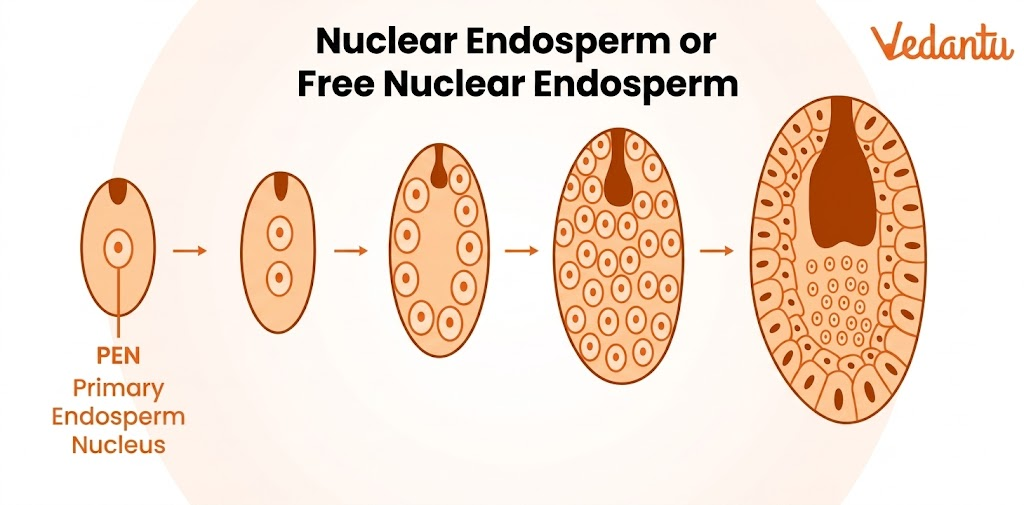
Characteristics:
Free nuclear divisions
No cytokinesis initially
Multinucleate cytoplasm
Syncytial structure
Rapid development
Examples:
Coconut
Maize
Wheat
Cellular Endosperm
In cellular endosperm, each nuclear division is followed by cytokinesis. Cell walls are formed after every division, producing a multicellular structure.
Each cell contains a single nucleus. This type of endosperm develops gradually and forms a compact tissue.
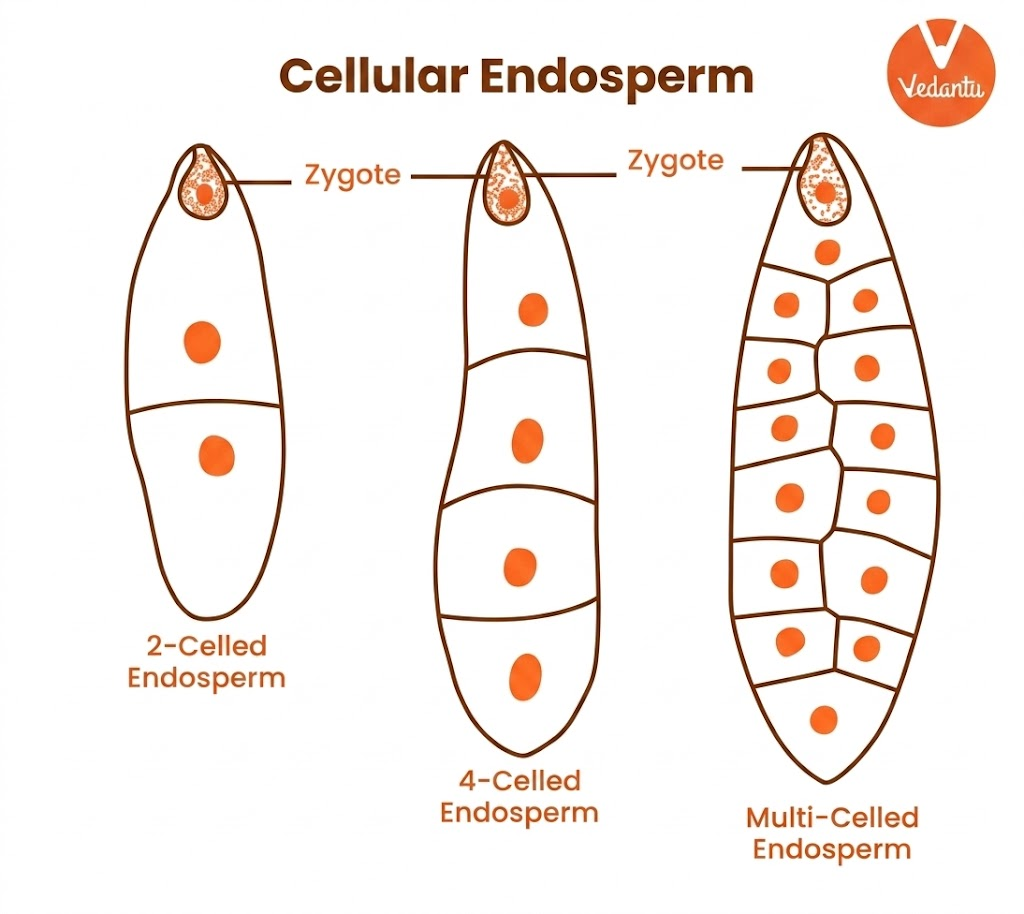
Characteristics:
Cytokinesis after each division
Multicellular tissue formation
Cells with single nucleus
Structured development
Example:
Datura
Petunia
Helobial Endosperm
Helobial endosperm is intermediate between nuclear and cellular types. In this type, the first division of primary endosperm nucleus is accompanied by formation of a transverse wall.
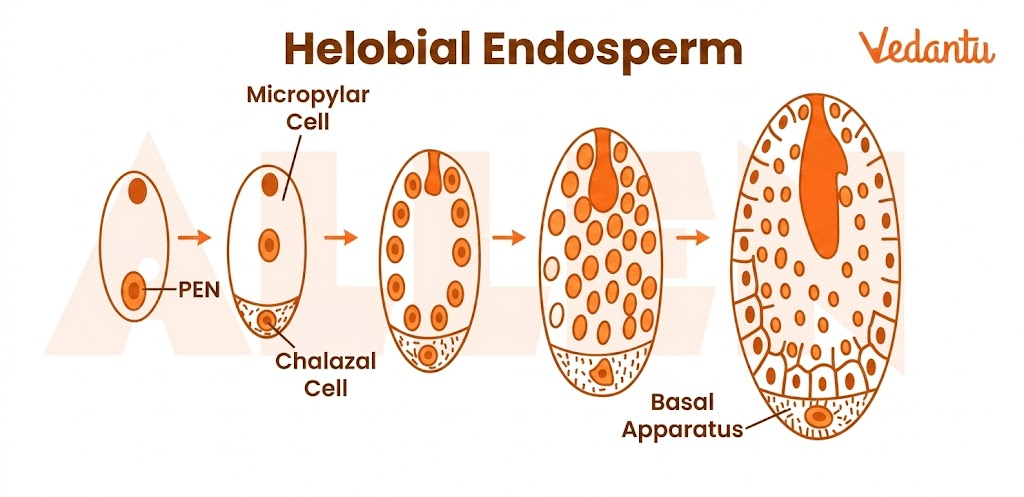
This creates two chambers:
Larger micropylar chamber
Smaller chalazal chamber
Both chambers undergo free nuclear divisions, but the micropylar chamber develops faster. Later, cellularization occurs mainly in the micropylar chamber.
Characteristics:
First division forms two chambers
Unequal chamber formation
Free nuclear divisions
Later cellularization
Example:
Vallisneria
Alisma
Distinct Features of Endosperm
Endosperm Formation and Characteristics
Endosperm is typically triploid, containing three sets of chromosomes. This triploidy results from double fertilisation. It contains both maternal and paternal chromosomes, which contributes to hybrid vigor.
Endosperm may be absent in some plant families such as:
Orchidaceae
Podostemaceae
Trapaceae
Significance for Human Nutrition
Endosperm is a major source of calories in the human diet. Many staple foods are derived from endosperm.
Examples:
Rice endosperm
Wheat endosperm
Maize endosperm
Products derived from endosperm include:
Cornflakes
Popcorn
Beer
Cooking oils
Industrial oils
Utilization as Food
Cereal grains contain large amounts of endosperm. These grains are consumed worldwide.
Important sources:
Wheat flour
Rice grains
Maize kernels
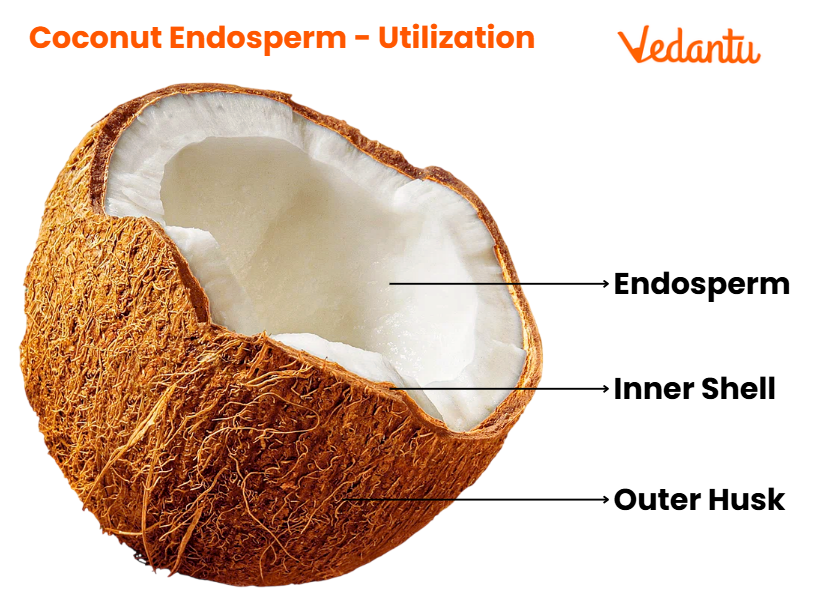
Coconut endosperm
Corn oil
Palm oil
These products make endosperm economically important.
In gymnosperms, endosperms differ from angiosperms. It is haploid and formed before fertilisation. It develops from female gametophyte.
Function of Endosperm
Endosperm performs multiple functions.
Nutrition of Embryo
Endosperm stores starch, proteins, and lipids. These nutrients support embryo growth.
Regulation of Embryo Development
Endosperm controls embryo growth and differentiation.
Protection of Embryo
Endosperm cushions the embryo and protects it.
Metabolic Activity
Endosperm synthesizes enzymes and hormones.
Food Reserve
Endosperm acts as storage tissue in seeds.
What Experts Have to Conclude?
Endosperm is nutritive tissue formed after fertilisation. It is triploid in angiosperms. It provides food to the embryo. Three types exist: nuclear, cellular, and helobial. Endosperm supports embryo development and seed germination.
Topics for NEET Revision
FAQs on Endosperm in Plants Explained With Types, Structure, Development, Functions, and Labelled Diagram
1. What is the function of an endosperm?
The main function of an endosperm is to provide food to the developing embryo inside the seed. It stores nutrients such as starch, proteins, and oils, which support early growth and seed germination. In many seeds, endosperm also protects the embryo and helps regulate its development.
2. What are the types of endosperm?
The types of endosperm are three:
Nuclear endosperm – nuclei divide freely without immediate cell wall formation
Cellular endosperm – each nuclear division is followed by cell wall formation
Helobial endosperm – the first division forms two chambers, and later development is partly free nuclear and partly cellular
3. Which plants have endosperm?
Endosperm is found in the seeds of most flowering plants (angiosperms). It is especially common in cereals such as wheat, rice, and maize. In some seeds it remains in the mature seed, while in others it is used up during embryo development.
4. What do you mean by endosperm?
Endosperm is a nutritive tissue present inside the seed that nourishes the developing embryo. It is usually rich in starch, proteins, and fats. In angiosperms, it is generally triploid and forms after double fertilisation.
5. What is the endosperm of a flower?
The endosperm of a flowering plant is the food-storing tissue inside the seed that develops after fertilisation. It surrounds or lies near the embryo and supplies nutrition during development and germination. It is usually formed from the primary endosperm nucleus after triple fusion.
6. What is an example of endosperm?
Common examples of endosperm include wheat, rice, maize, coconut, and castor. In cereals, the starchy part of the grain is mainly endosperm. In coconut, both the white kernel and coconut water are forms of endosperm at different stages.
7. Is the endosperm living or dead?
Endosperm may be living in the developing seed, but in many mature seeds, much of it becomes non-living. For example, in cereals, the mature endosperm is mostly dead tissue, except for the outer aleurone layer, which remains living.
8. How to identify an endosperm?
You can identify endosperm as the food-storage tissue inside the seed. It is usually found around the embryo and often appears as the starchy or nutritive part of the seed. In wheat and maize, the large inner food-filled portion is endosperm. In coconut, the white edible part and liquid are examples of endosperm.
9. What is the structure of an endosperm?
The structure of an endosperm depends on its type, but in general it is made of food-rich cells or nuclei containing starch, proteins, and oils. It develops from the primary endosperm nucleus and may remain free nuclear at first or become cellular later.
10. What is the development of an endosperm?
The development of endosperm starts after triple fusion in flowering plants. The primary endosperm nucleus divides repeatedly and forms the nutritive tissue that supports the embryo. Depending on the pattern of division and wall formation, it develops into nuclear, cellular, or helobial endosperm.
