



All You Need To Know About Assisted Reproductive Technology
Assisted reproductive technology, or ART, refers to a group of medical procedures used to help individuals or couples achieve pregnancy when natural conception is difficult or not possible. In these techniques, eggs, sperm, or embryos are handled outside the body in a controlled medical setting to achieve fertilisation and pregnancy more effectively.
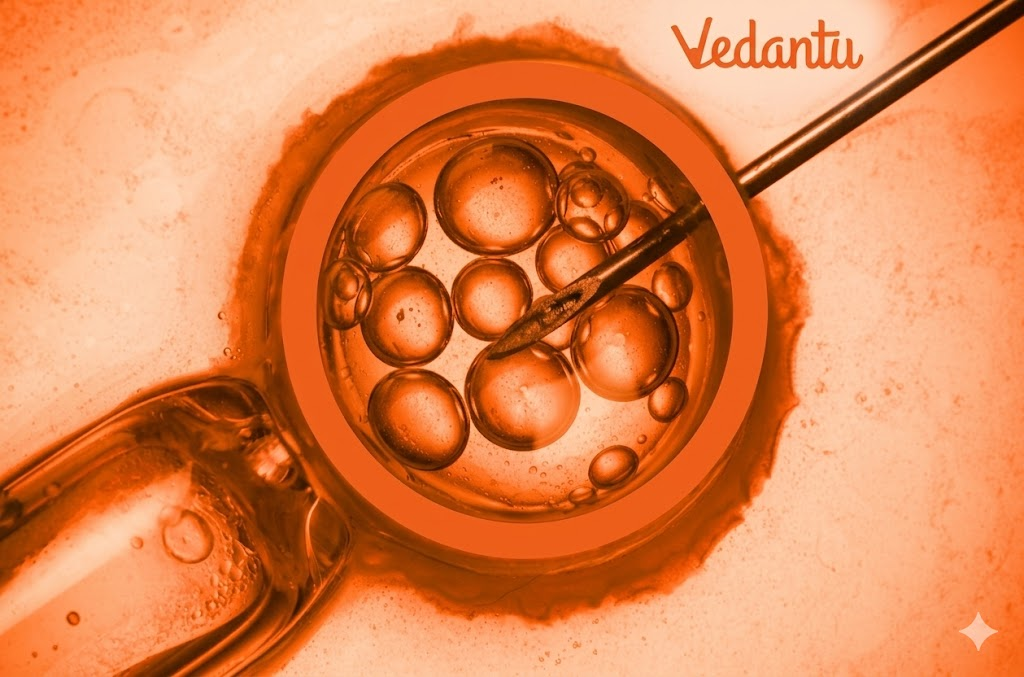
It combines biological concepts such as gamete formation, fertilisation, embryo development, implantation, infertility, and medical intervention.
In simple words, ART includes advanced fertility methods in which doctors help bring the sperm and egg together, form an embryo, and then place that embryo into the uterus.
Among all ART procedures, in vitro fertilisation (IVF) is the most commonly known.
However, ART is a broader term and includes several methods such as IVF, ICSI, donor gametes, embryo freezing, egg freezing, and gestational surrogacy.
Why is ART used?
The main reason for using ART is infertility. Infertility means difficulty in achieving pregnancy even after regular unprotected intercourse for a considerable time. ART offers a scientific and planned way to improve the chances of conception.
Assisted reproductive technology may be used in situations such as:
blocked or damaged fallopian tubes
low sperm count or poor sperm motility
ovulation disorders
unexplained infertility
age-related decline in fertility
need for donor sperm or donor eggs
Repeated failure of normal fertilisation
fertility preservation before medical treatment
The risk of passing a genetic disease to the child
Types of Assisted Reproductive Technology
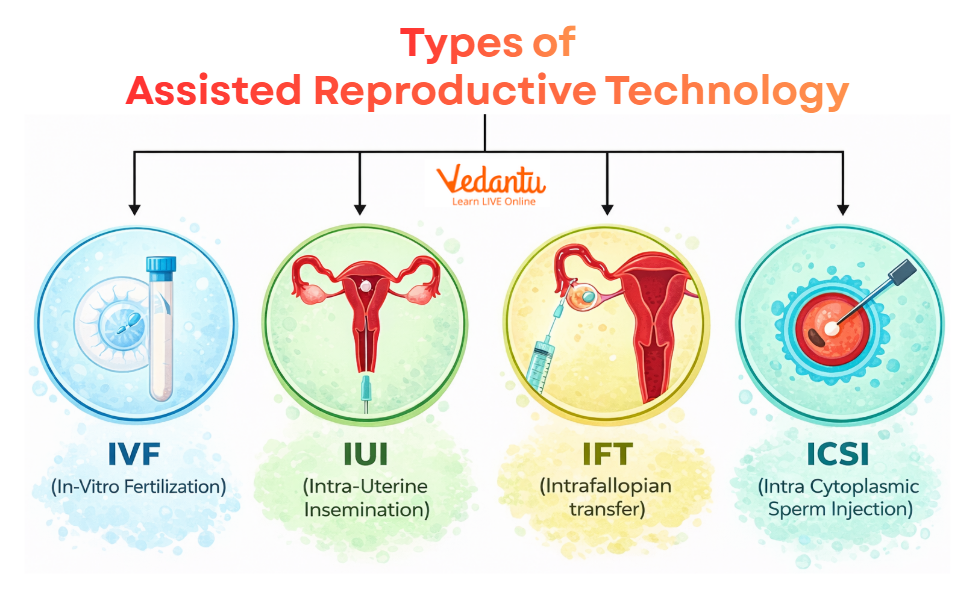
ART includes several medically assisted fertility procedures. The major types are listed below.
1. In Vitro Fertilisation (IVF)
IVF is the most common ART method. In this process, eggs are collected from the ovaries and fertilised with sperm outside the body in a laboratory. The resulting embryo is then transferred into the uterus.
2. Intracytoplasmic Sperm Injection (ICSI)
In ICSI, a single sperm is directly injected into the cytoplasm of an egg. This method is especially useful when sperm count is very low or sperm are unable to fertilise the egg naturally.
3. Donor Sperm
In this method, sperm from a donor is used for fertilisation when the male partner’s sperm is unavailable, unsuitable, or carries a risk of genetic disorder.
4. Donor Eggs
In some cases, eggs from a donor are used when the female partner cannot produce healthy eggs or when there is a high genetic risk.
5. Embryo Freezing
Embryos formed in a laboratory can be frozen and stored for later use. This allows pregnancy to be attempted in a future cycle without repeating all early treatment steps.
6. Egg Freezing
Egg freezing is used to preserve fertility. Mature eggs are collected and frozen for future use.
7. Gestational Surrogacy
In gestational surrogacy, an embryo created using the intended parents’ or donors’ gametes is transferred into another woman’s uterus, and she carries the pregnancy.
Different Types of Assisted Reproductive Technology in Detail
To understand the different types of assisted reproductive technology, it is useful to group them by purpose.
ART Methods Used to Achieve Fertilisation
These methods directly help in fertilising the egg:
IVF
ICSI
use of donor sperm
use of donor eggs
ART Methods Used to Preserve Fertility
These methods help in future family planning:
egg freezing
embryo freezing
ART Methods Used to Support Pregnancy
These methods help when pregnancy cannot be carried naturally:
gestational surrogacy
IVF and Its Main Steps
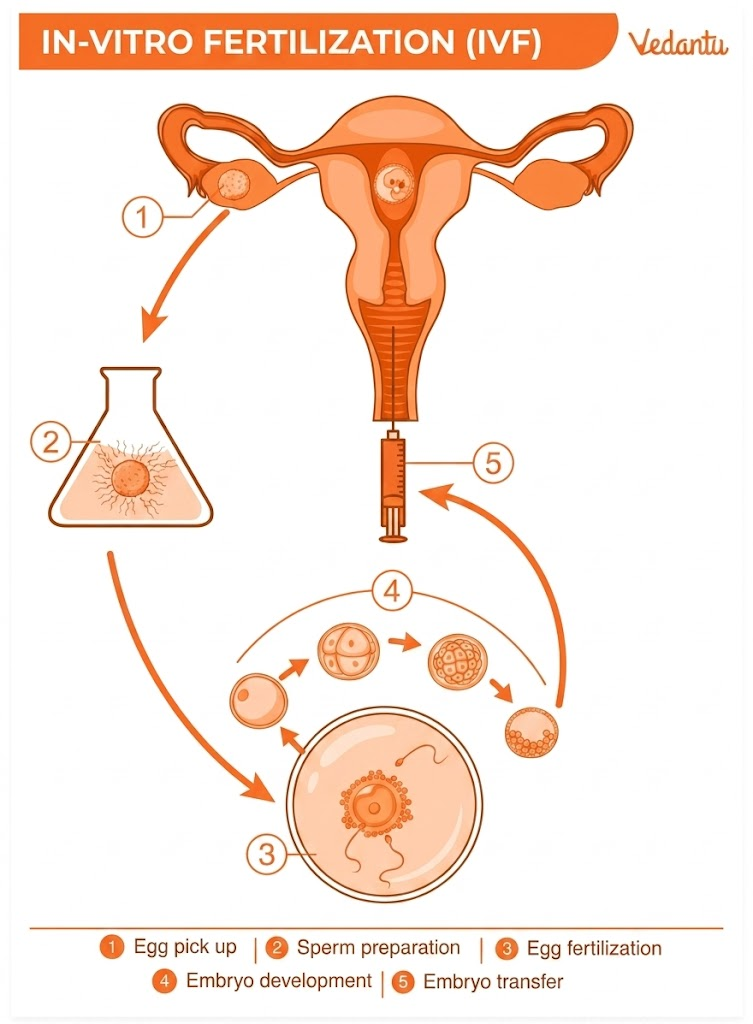
Since IVF is the most common ART method, it deserves detailed attention. IVF stands for in vitro fertilisation, where fertilisation occurs outside the body in laboratory conditions.
The steps of IVF generally include the following:
1. Ovarian Stimulation
Hormonal medicines are given to induce the ovaries to produce multiple mature eggs rather than a single egg. This increases the chances of obtaining healthy eggs for fertilisation.
2. Monitoring of Follicles
Doctors monitor the ovaries through scans and hormone levels to check whether follicles are developing properly.
3. Egg Retrieval
A thin needle is used to collect mature eggs from the ovaries. This step is done carefully under medical guidance.
4. Sperm Preparation
A semen sample is processed in the laboratory. The healthiest and most active sperm are selected using a method called sperm washing.
5. Fertilisation
The collected eggs are combined with sperm in the lab. If natural mixing is not sufficient, ICSI may be used to inject sperm directly into the egg.
6. Embryo Culture and Monitoring
The fertilised eggs develop into embryos in an incubator. The embryos are observed for several days to select the highest-quality embryo.
7. Embryo Transfer
The selected embryo is transferred into the uterus. If implantation occurs, pregnancy begins.
8. Pregnancy Testing and Follow-Up
After embryo transfer, hormonal testing is done to confirm whether implantation and pregnancy have occurred.
This complete sequence explains why IVF is considered a carefully planned and medically supervised reproductive procedure.
Interesting Question: Assisted Reproductive Technology IVF Involves Transfer of What?
IVF involves the transfer of an embryo into the uterus.
More specifically, in IVF, the egg is fertilised outside the body, and the resulting embryo is later transferred into the female reproductive tract, usually the uterus, to allow implantation.
For NEET, this distinction is important:
IVF does not involve the direct transfer of sperm
IVF does not involve the transfer of an unfertilised egg
IVF involves the transfer of the embryo
This is one of the most important factual points from ART.
Methods of Assisted Reproductive Technology
The phrase methods of assisted reproductive technology includes all clinical steps and related fertility techniques used to support conception and pregnancy.
The major methods include:
ovarian stimulation
egg retrieval
sperm preparation
fertilisation in laboratory conditions
Intracytoplasmic sperm injection
embryo culture
embryo freezing
egg freezing
embryo transfer
donor gametes
gestational surrogacy
preimplantation genetic testing in some cases
These methods may be used individually or together, depending on the patient's needs.
For example:
If sperm quality is poor, IVF may be combined with ICSI
If pregnancy is planned later, embryos may be frozen
If a woman cannot produce healthy eggs, donor eggs may be used
If a woman cannot carry a pregnancy, gestational surrogacy may be considered
A typical assisted reproductive technology diagram shows the following flow:
Ovary stimulation → Egg retrieval → Sperm collection and washing → Fertilisation in lab → Embryo formation → Embryo culture → Embryo transfer into uterus
In some diagrams, extra branches may show:
donor sperm or donor eggs
ICSI during fertilisation
freezing of eggs or embryos
surrogacy pathway
When studying an assisted reproductive technology diagram, focus on these key ideas:
Eggs are obtained from the ovary
sperm are prepared separately
Fertilisation occurs outside the body
An embryo is formed in the laboratory
The embryo is transferred into the uterus
This sequence helps distinguish ART from natural fertilisation.
Advantages of Assisted Reproductive Technology
There are several advantages of assisted reproductive technology, especially in the treatment of infertility.
1. Helps Achieve Pregnancy
The biggest advantage is that ART helps couples and individuals conceive when natural conception is difficult or not possible.
2. Gives Hope in Infertility
ART offers a scientifically planned option in cases of low fertility, blocked tubes, sperm-related issues, or unexplained infertility.
3. Supports Future Family Planning
Egg or embryo freezing allows fertility preservation and gives flexibility in planning pregnancy later.
4. Helps Avoid Certain Genetic Risks
In some situations, preimplantation testing may be done to reduce the chance of transferring embryos affected by certain genetic conditions.
5. Makes Use of Donor Cells Possible
Donor sperm and donor eggs expand reproductive options for many families.
6. Useful in Severe Male Factor Infertility
ICSI is especially useful when normal fertilisation is not likely because of serious sperm issues.
7. Makes Parenthood Possible in More Situations
Gestational surrogacy and donor-based methods allow pregnancy and childbirth options even when standard methods fail.
So, the advantages of assisted reproductive technology are both medical and social, since ART increases reproductive choice and opportunity.
Risks and Limitations of ART
Although ART has many benefits, it also has some disadvantages and risks.
1. Risk of Multiple Pregnancy
When more than one embryo develops, or multiple embryos are transferred, there is a higher chance of twins or more babies.
2. Ovarian Hyperstimulation Syndrome
Hormonal stimulation may rarely lead to ovarian hyperstimulation syndrome or OHSS. This occurs when the ovaries respond too strongly to medicines.
3. Emotional Stress
ART may require repeated attempts. This can create emotional, physical, and financial stress.
4. High Cost
Fertility treatments may be expensive, and not all medical insurance plans cover them fully.
5. Slightly Higher Risk of Ectopic Pregnancy
ART may carry a somewhat increased risk of implantation outside the uterus compared with natural conception.
6. Uncertain Outcome
Success is not guaranteed on the first attempt. The process may take more than one cycle.
Recovery and Outlook
After egg retrieval and embryo transfer, patients are usually monitored carefully. Recovery depends on the procedure performed.
Egg retrieval may involve a short recovery.
Embryo transfer is usually simple and does not require a major recovery time.
Follow-up tests are needed to confirm pregnancy
Frozen embryo cycles may involve fewer steps than a full IVF cycle
The long-term outlook depends on age, reproductive health, embryo quality, and the exact technique used.
Success Rate of Assisted Reproductive Technology
The success of ART varies from case to case. It is not the same for every person or every cycle. Average success rates vary by age, cause of infertility, method used, and the quality of the fertility laboratory.
A cycle begins when fertility treatment starts or when ovarian monitoring begins. Success is usually measured by the number of pregnancies or live births achieved per cycle. Overall, success is influenced by biological, medical, and technical factors rather than by a single step.
Factors Affecting ART Success
The major factors that affect ART success are:
1. Age
Age is one of the most important factors. Younger eggs generally have better fertilisation and implantation potential.
2. Cause of Infertility
Blocked tubes, ovulation disorders, severe male factor infertility, and unexplained infertility may affect the outcome differently.
3. Embryo Quality
Good-quality embryos have a higher chance of implantation.
4. Underlying Health Conditions
Hormonal health, uterine condition, and overall reproductive health influence the success rate.
5. Use of Own Eggs or Donor Eggs
Sometimes donor eggs may improve success when ovarian function is low.
6. Clinic and Laboratory Quality
Success also depends on how well the eggs, sperm, and embryos are handled in the laboratory.
This is why ART is always individualised rather than identical for everyone.
Quick Revision Points
Assisted reproductive technology is used to help with pregnancy when natural conception is difficult.
ART includes handling of eggs, sperm, or embryos outside the body.
IVF is the most common ART method.
ICSI involves direct injection of sperm into the egg.
ART may use donor sperm or donor eggs.
Embryos and eggs can be frozen for future use.
Gestational surrogacy means another female carries the pregnancy.
IVF involves the transfer of the embryo into the uterus.
ART can help in infertility, fertility preservation, and some genetic-risk situations.
FAQs on Assisted Reproductive Technology: Types, IVF Process, Methods, Diagram, Advantages and Risks
1. What are the five types of assisted reproductive technology?
The main types of assisted reproductive technology include:
In vitro fertilisation (IVF) – fertilisation happens outside the body, and the embryo is transferred to the uterus
Intrauterine insemination (IUI) – sperm is directly placed into the uterus
Intracytoplasmic sperm injection (ICSI) – a single sperm is injected into an egg
Frozen embryo transfer (FET) – previously frozen embryos are thawed and transferred
Gamete or embryo donation – donor sperm or eggs are used for fertilisation
2. Is ART the same as IVF?
No, ART is not the same as IVF.
Assisted reproductive technology (ART) is a broad term that includes all fertility treatments where eggs, sperm, or embryos are handled outside the body.
IVF is just one type of ART and is the most commonly used method.
3. How much is 1 round of IVF?
The cost of one IVF cycle in India usually ranges from ₹1,00,000 to ₹3,50,000, with an average of about ₹2,00,000 to ₹2,50,000 per cycle.
The cost may vary depending on:
clinic location
complexity of the case
additional procedures like ICSI or donor services
4. What is the difference between IVF and ART?
The difference is simple:
ART (Assisted Reproductive Technology) is the overall category of fertility treatments
IVF (In Vitro Fertilisation) is one specific method under ART
So, IVF is a part of ART, but ART includes many other techniques like ICSI, embryo freezing, and donor methods.
5. What is the success rate of ART?
The success rate of assisted reproductive technology varies based on age, health, and treatment type.
On average, the success rate per cycle is around 20% to 40%.
Women under 35 generally have higher success rates
Success decreases with age
Chances improve if multiple cycles are done
So, ART success depends on several biological and medical factors.
